Kurze Antwort
AI-Capex ist die enorme Investitionsausgabe, die Tech-Unternehmen in KI-Infrastruktur wie Rechenzentren, Chips und Energie stecken, um KI-Modelle zu bauen und zu betreiben. Dieser Boom treibt die Nachfrage nach Chipherstellern und Energie, wirft aber Fragen zu Renditen und Leistungsgrenzen auf. Für Trader prägt AI-Capex die Aussichten für Tech-Aktien, Chiphersteller und Energiemärkte.
Investitionen in Finanzprodukte sind mit Risiken verbunden. Verluste können den Wert Ihrer ursprünglichen Investition übersteigen.
Das Marktnarrativ ist laut. Ihre Kontrollen müssen lauter sein.
Megacap-Tech-Werte treiben mittlerweile einen Großteil der Indexrenditen an. Anfang 2025 machten die 10 größten S&P 500-Unternehmen fast 40 % des Index aus, ein Wert, der dem der Dotcom-Ära entspricht oder diesen sogar übertrifft [1].
Unterdessen kamen im US-Arbeitsmarktbericht für Juli nur 73.000 neue Stellen hinzu. Noch wichtiger ist, dass die Zahlen für Mai und Juni durch Revisionen um 258.000 Stellen nach unten korrigiert wurden. Dies reichte aus, um sowohl die Debatte über Zinssenkungen als auch den Diskontierungssatz in Portfoliomodellen zu verändern [2].
Gleichzeitig hat KI den Ausbau von Rechenzentren zu einer der am schnellsten wachsenden Stromlasten der Welt gemacht. Im Jahr 2024 verbrauchten diese Standorte rund 415 TWh Strom, und die Nachfrage steigt weiterhin rapide [3]. Hyperscale-Einrichtungen benötigen oft Anschlüsse von über 100 MW. Daher wird Strom, nicht GPUs, zum eigentlichen Engpass [4]. Mehrere Prognosen gehen nun davon aus, dass sich der weltweite Strombedarf von Rechenzentren bis 2030 verdoppeln wird [5].
Die Handelspolitik sorgt für zusätzlichen Druck. Im Jahr 2024 weitete die USA die Zölle gemäß Section 301 auf Halbleiter, Batterien und mehr aus [6]. Im August 2025 weitete Washington diese Maßnahmen dann auf mehrere Partner aus. Infolgedessen sind Tech-Lieferketten mit höheren Kosten und mehr Unsicherheit konfrontiert [7].
Die Investitionswelle ist real, und ungleichmäßig
Für Ideen zur breiteren Diversifizierung lesen Sie unseren KI-Krypto-Leitfaden, Informationen zu DePIN-Infrastruktur und unsere Asset-Allokationsstrategie.
- Alphabet erhöhte die Investitionsprognose für 2025 auf ca. 85 Mrd. USD unter Verweis auf Server und neue Rechenzentren [8].
- Meta prognostizierte 66-72 Mrd. USD für 2025, einschließlich Finanzierungsleasing für KI-Infrastruktur [9].
- Microsoft hält an seinem auf KI ausgerichteten Plan von ca. 80 Mrd. USD fest, obwohl sich das Tempo verlangsamen wird [10].
- Amazon hat ein Investitionsziel von ca. 100 Mrd. USD, hauptsächlich für AWS und kundenspezifische Chips [11].
Investitionen in dieser Größenordnung werden zu einer makroökonomischen Kraft. Sie beeinflussen die Nachfrage der Versorger, die Industrieproduktion, Halbleiterbestellungen und sogar die Landnutzung für Rechenzentren. Sie schaffen auch ein Einzelwertrisiko. Wenn ein Hyperscaler seine Ausgaben verzögert, kann sich der Effekt gleichzeitig auf mehrere Lieferketten auswirken.
Warum „Mustererkennung“ immer noch auf Physik, und die Gewinn- und Verlustrechnung, trifft
Große Sprachmodelle sind leistungsstarke Mustererkenner. Sie skalieren jedoch nur so lange, bis sie an Grenzen bei Daten, Rechenleistung und Energie stoßen.
Dies ist nicht nur Theorie. Im Jahr 2021 warnten Bender und Kollegen vor den sinkenden Erträgen immer größerer Modelle [13]. Im Gegensatz dazu überzeugten die „Skalierungsgesetze“ von 2020 viele davon, dass größer immer besser bedeutet [14]. Heute sagen selbst führende Köpfe wie Yann LeCun, dass für den nächsten großen Sprung neue Architekturen erforderlich sein werden [13].
Für Investoren ist die Lektion klar: Bewerten Sie dauerhaft hohe Renditen nicht nur anhand der Modellgröße. Fordern Sie stattdessen den Nachweis der Stückökonomie, einen Datenvorteil und einen stabilen Zugang zu Energie.
Ein praktisches Handbuch für CIOs und PMs
1) Positionsgrößenbestimmung für Konzentrationsrisiken
Setzen Sie klare Grenzen für das Megacap-Engagement innerhalb Ihres Mandats.
Testen Sie Szenarien eines Rückgangs von 20-30 % bei KI-Marktführern, falls sich Investitionen verlangsamen oder Stromengpässe auftreten.
Beziehen Sie Zollschocks in diese Tests ein, um höhere Importkosten zu modellieren.
Balancieren Sie das Engagement durch die Kombination von kapitalgewichteten Beständen mit gleichgewichteten oder Mid-Cap-Werten [1].
2) Machen Sie Strom zu einem Sorgfaltspunkt, nicht zu einem ESG-Häkchen
Fragen Sie Partner nach Anschlussterminen, Strombezugsbedingungen und Notfallplänen.
Modellieren Sie Projektverzögerungen basierend auf Netzzugang, Kühlbedarf und Wasserversorgung [3][4][5].
3) Übersetzen Sie Zollrisiken in reale Zahlen
Ordnen Sie Ihre Kosten den Zollpositionen zu.
Quantifizieren Sie Änderungen der Einstandskosten und wie viel Sie an Kunden weitergeben können.
Planen Sie Zeitpläne für die Beschaffungsumstellung, bevor politische Änderungen greifen [6][7].
4) Achten Sie auf Signale für Investitionsdisziplin
Verfolgen Sie: Umsatz pro Investitionsdollar, Beschleunigernutzung, Cash-Konvertierung und Geschwindigkeit der KI-Monetarisierung.
Achten Sie auf die Sprache in den Prognosen, Alphabets Erhöhung um 10 Mrd. USD, Metas Spanne von 66-72 Mrd. USD, Microsofts verlangsamtes Tempo und Amazons Plan von ca. 100 Mrd. USD enthalten alle Signale [8][9][10][11].
5) Halten Sie eine antizyklische Asset-Komponente bereit
Zentralbanken blieben im 2. Quartal 2025 trotz eines langsameren Tempos Netto-Goldkäufer [12].
Passen Sie die Allokationen an Ihre Liquiditätsbedürfnisse und Ihr Mandat an.
Signale, die zählen
- Netz-Updates: Genehmigungen oder Zurückstellungen in der Nähe von Rechenzentrumsstandorten [3][5].
- Zollkalender: Mitteilungen des USTR und Reaktionen der Partner [6][7].
- Investitionskadenz: vierteljährliche Erhöhungen oder Kürzungen in Ausgabenplänen [8][9][10][11].
- Arbeitsmarktdaten: Gehaltsabrechnungen und Revisionen wie die +73k/-258k im Juli [2].
Fazit für das 2. Halbjahr 2025
KI-Investitionen sind eine mächtige Strömung. Energiegrenzen und Handelspolitik bilden jedoch die Küstenlinie, die ihre Reichweite bestimmen wird.
Belohnen Sie daher Unternehmen, die Ausgaben in Cash-Renditen umwandeln, nicht nur in Modellstarts. Diversifizieren Sie zudem abseits jedes einzelnen Narrativs, indem Sie das Engagement über Marktkapitalisierungen und Regionen hinweg mischen.
Volity
Volity gibt Investoren die Werkzeuge an die Hand, um mit institutioneller Ausführungsqualität und Zugang zu globalen Märkten nach diesem Handbuch zu handeln, wo jedes Volumen Agilität findet. Die Plattform bietet professionellen und zuverlässigen Handel mit mühelosem, erschwinglichem und transparentem Zugang über alle Anlageklassen hinweg.
Referenzen
[1] Anfang 2025 machten die 10 größten S&P 500-Unternehmen fast 40 % des Index aus.
[2] BLS: Juli 2025 Gehaltsabrechnungen +73k; Mai-Juni Netto-Revisionen -258k.
[3] IEA-Schätzung: Stromverbrauch von Rechenzentren ≈ 415 TWh im Jahr 2024.
[4] IEA: große Hyperscale-DCs erfordern oft Anschlüsse von 100 MW+.
[5] IEA: weltweite DC-Nachfrage könnte sich bis 2030 verdoppeln.
[6] USTR: 2024 Ausweitungen auf E-Fahrzeuge, Batterien, Halbleiter.
[7] 1. Aug. 2025: US-Zollmaßnahmen auf weitere Partner ausgeweitet.
[8] Alphabet Q2 2025: Investitionsprognose ≈ 85 Mrd. USD.
[9] Meta Q2 2025: 66-72 Mrd. USD Investitionen (inkl. Finanzierungsleasing).
[10] Microsoft GJ25: ~ 80 Mrd. USD KI-Investitionen, langsameres Wachstum.
[11] Amazon 2025: ~100 Mrd. USD Investitionen.
[12] WGC: Zentralbanken Netto-Goldkäufer, Q2 2025.
[13] Bender et al. (2021): „Stochastic Parrots“-Kritik.
[14] Kaplan et al. (2020): Skalierungsgesetze für neuronale Modelle.
Von Alexander Bennett, Volity Research Desk.
Was unsere Analysten beobachten: Drei Lesarten verankern eine ernsthafte Sicht auf den KI-Zyklus, die das lautere Narrativ filtert. Das Verhältnis von Investitionen zum operativen Cashflow über die Hyperscaler-Kohorte zeigt Ihnen, welche Bilanzen den Aufbau absorbieren versus ihn zu hebeln; der Wendepunkt liegt dort, wo das Verhältnis für zwei aufeinanderfolgende Quartale 60 Prozent überschreitet. Der Durchsatz der PJM- und ERCOT-Verbindungswarteschlangen gegenüber der angekündigten Nachfrage von Rechenzentren zeigt, wo der echte Netzengpass liegt, was heute die bindende Investitionsbeschränkung ist, nicht die Chip-Verfügbarkeit. Und die Free-Cashflow-Rendite bei den „Picks-and-Shovels“-Werten gegenüber der langfristigen Treasury-Rendite trennt strukturell bewertete Compounder von Momentum-Trades am späten Zyklus, die sich beim nächsten Makro-Schock neu bewerten.
Häufig gestellte Fragen
Wie groß ist die KI-Investitionswelle tatsächlich, in geprüften Zahlen für 2025?
Die gemeldeten Investitionsausgaben der vier größten US-Hyperscaler im Kalenderjahr 2025 lagen bei über 300 Milliarden USD, wobei die vierteljährlichen Run-Rates Mitte 2025 darauf hindeuten, dass das Kalenderjahr 2026 vor einer zyklischen Pause noch höher ausfallen wird. Die Federal Reserve Finance and Economics Discussion Series bietet Arbeitspapiere, die den Investitionsschub in einen makroökonomischen Kontext zu historischen Investitionszyklen stellen. Die strukturelle Lesart für Allokatoren: Investitionen in dieser Größenordnung ziehen typischerweise zwei bis drei Jahre Nachfrage nach Stromausrüstung, fortschrittlicher Verpackung und Netzdienstleistungen vor, und die Auftragsbücher bei den „Picks-and-Shovels“-Zulieferern sind der sauberste Frühindikator.
Wie sieht die Strom- und Netzbeschränkung im Jahr 2026 tatsächlich aus?
Die US-Verbindungswarteschlangen bei PJM und ERCOT enthalten mittlerweile Multi-Gigawatt-Aggregationen von Rechenzentrumsbedarf mit Rückständen, die den vierteljährlichen Genehmigungsdurchsatz übersteigen. Die Berichterstattung von Investopedia über die Ökonomie von Rechenzentren erläutert die Kostenstruktur, mit einer klaren Einführung, wie Strom heute die dominierenden Grenzkosten darstellt. Die praktische Implikation für die Aktienauswahl: Werte, die über langfristige Stromkapazitäten zu Sub-Netz-Tarifen verfügen oder diese vertraglich binden, werden mit signifikanten Aufschlag-Multiplikatoren gehandelt, und dieser Aufschlag hat sich über mehrere vierteljährliche Resets hinweg gehalten.
Wie sollten Privatanleger das KI-Zyklus-CFD-Engagement gemäß EU-Regeln dimensionieren?
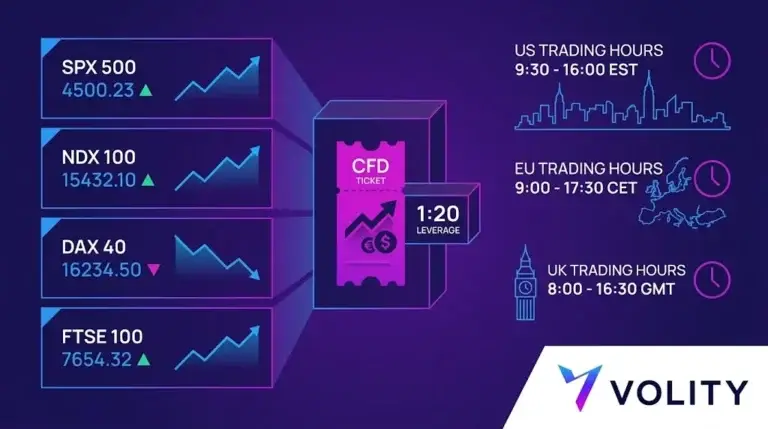
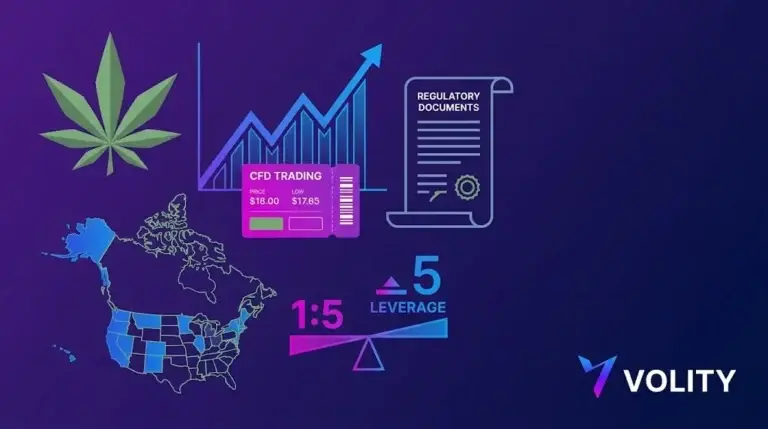
Der ESMA-Produktinterventionsrahmen für Retail-CFDs setzt die EU-Basislinie für Risikowarnungen, Hebelobergrenzen (5:1 bei Einzelaktien, 20:1 bei Hauptindizes), Schutz vor negativem Kontostand und standardisierte Offenlegung. Die CME veröffentlicht zudem Daten zum Volatilitätsregime von Aktienindizes, die institutionelle Desks nutzen, um Positionen im KI-korrelierten Korb zu dimensionieren. Volity, zugänglich über UBK Markets und beaufsichtigt durch die CySEC unter Lizenz 186/12, listet liquide Aktienindex- und Einzelaktien-CFDs mit getrennten Kundengeldern und standardisierter Offenlegung für Privatanleger.
Verwandte Leitfäden
- Beste KI-Aktien für Investitionen
- Aktieninvestitionen für Anfänger
- Beste Aktienhandelsplattformen in Europa
- Beste Handelsplattformen
- Risikomanagement
Volity betreibt eine Handelsplattform und veröffentlicht außerdem Bildungs- und Analyseinhalte zum Thema Trading. Die Inhalte dieser Seite dienen ausschließlich Bildungszwecken und sind nicht als Finanzberatung zu verstehen. Volity kann kommerziell profitieren, wenn Leser über Links auf dieser Website Handelskonten eröffnen.
Unsere Inhalte werden nach dokumentierten redaktionellen Standards erstellt und geprüft; siehe unsere Vergleichs- und Bewertungsmethodik.