Investitionen in Finanzprodukte sind mit Risiken verbunden. Verluste können den Wert Ihrer ursprünglichen Investition übersteigen.
Quick answer
Ein Contract for Difference (CFD) ist eine Vereinbarung zwischen einem Trader und einem Broker, um die Differenz des Preises eines Basiswerts zwischen Eröffnung und Schließung des Kontrakts auszutauschen. Der Trader besitzt den Basiswert nicht. CFDs funktionieren für Forex, Aktien, Indizes, Rohstoffe und Krypto. Die Hebelwirkung für Privatkunden in der EU ist je nach Anlageklasse auf 1:30 bis 1:2 begrenzt, bei obligatorischem Schutz vor Nachschusspflicht.
Der CFD-Handel befindet sich an der Schnittstelle von drei Eigenschaften, die für Privatanleger wichtig sind: Hebelwirkung, Zugang zu mehreren Anlageklassen und die Möglichkeit, mit einem Klick Long oder Short zu gehen. Es gibt kein anderes für Privatanleger zugängliches Instrument, das alle drei Aspekte über Forex, Aktien, Krypto, Indizes und Rohstoffe hinweg kombiniert. Die Kosten bestehen aus dem Risiko gehebelter Verluste, Übernachtfinanzierung und dem Kontrahentenrisiko beim Broker. Dieser Leitfaden behandelt die Mechanismen, die Regeln, die Kosten, die Strategie und die ehrlichen Bereiche, in denen CFDs gegenüber Spot, Futures und Spread Betting im Vorteil sind.
Wie funktioniert ein CFD-Handel eigentlich?
Ein CFD ist ein zweiseitiger Vertrag. Der Trader und der Broker vereinbaren, die Preisdifferenz eines Basiswerts zwischen dem Zeitpunkt der Eröffnung und der Schließung der Position auszutauschen. Wenn der Trader kauft (Long geht) und der Preis steigt, zahlt der Broker die Differenz. Wenn der Preis fällt, zahlt der Trader. Short zu gehen ist symmetrisch: Der Trader profitiert, wenn der Preis fällt.
Drei mechanische Punkte definieren jeden CFD-Handel:
- Der Basiswert wird referenziert, nicht besessen. Der Trader hat keinen Anspruch auf die tatsächliche Aktie, Währung oder das Fass Öl. Es gibt keine Stimmrechte, keine Dividenden in Form von Sachwerten (nur Barausgleich), keine Lieferverpflichtung.
- Margin ist die Sicherheitsleistung, nicht die Kosten. Eine CFD-Position erfordert, dass der Trader einen Bruchteil des Gesamtexposure (die Margin) als Sicherheit hinterlegt. Dieser Bruchteil hängt von der Anlageklasse und der regulatorischen Hebelbegrenzung ab (siehe unten). Das restliche Exposure wird vom Broker bereitgestellt.
- Gewinn und Verlust sind mark-to-market und kontinuierlich. Gewinn und Verlust fallen in Echtzeit an, während sich der Preis bewegt. Die Position kann jederzeit geschlossen werden, wenn der Markt geöffnet ist, wodurch der aktuelle Gewinn oder Verlust realisiert wird. Übernachtfinanzierung wird bei jedem Rollover berechnet oder gutgeschrieben.
Ein praktisches Beispiel verdeutlicht den Ablauf. Angenommen, EUR/USD notiert bei 1,0850 und ein Trader glaubt, dass er auf 1,0750 fallen wird. Der Trader verkauft (shortet) ein Standard-CFD-Lot von EUR/USD. Die Standard-Lotgröße bei EUR/USD beträgt 100.000 EUR. Mit einem Hebel von 1:30 für Privatkunden beträgt die erforderliche Margin 100.000 / 30 = 3.333 EUR (etwa 3.617 USD zum Eröffnungskurs). Wenn EUR/USD wie vorhergesagt auf 1,0750 fällt, hat sich der Preis um 100 Pips gegen die Eröffnung bewegt. Jeder Pip bei einem Standard-Lot entspricht 10 USD. Der Gewinn beträgt 100 × 10 USD = 1.000 USD, abzüglich Spread und etwaiger Übernachtfinanzierung, falls die Position über den Rollover hinaus offen blieb. Wenn EUR/USD stattdessen auf 1,0950 steigen würde, würde der Trader 1.000 USD plus Kosten verlieren.
Dieses Beispiel zeigt, warum die Positionsgröße wichtiger ist als die Fähigkeit beim Einstieg. 1.000 USD zu riskieren, um 1.000 USD zu verdienen, ist ein Risiko-Ertrags-Verhältnis von 1:1; bei einem Konto von 10.000 USD ist das ein Drawdown von 10 %, wenn man falsch liegt. Der disziplinierte CFD-Trader bemisst Positionen so, dass ein einzelner Verlusttrade nicht mehr als 1 % des Kapitals ausmacht. Forex-Risikomanagement behandelt den Rahmen im Detail.
Welche Anlageklassen können als CFDs gehandelt werden?
CFDs decken das gesamte Spektrum liquider Märkte ab, auf die jeder Privatbroker zugreifen kann. Die fünf Hauptklassen sind:
- Forex-CFDs: Wichtige, weniger wichtige und exotische Währungspaare. Der häufigste Einstiegspunkt für neue CFD-Trader. Die Liquidität ist bei EUR/USD, GBP/USD und USD/JPY während der Überschneidung von London und New York am höchsten.
- Aktien-CFDs: Einzelaktien (Apple, Tesla, Nvidia, Microsoft usw.), die Long oder Short gehandelt werden, ohne die Aktie zu besitzen. Nützlich für kurzfristige taktische Positionen und Leerverkäufe rund um Quartalszahlen.
- Index-CFDs: S&P 500, NASDAQ 100, DAX 40, FTSE 100, Nikkei 225. Diversifiziertes Exposure zu einem Marktkorb, ohne die Bestandteile zu halten. CFD-Indexhandel geht tiefer ins Detail.
- Rohstoff-CFDs: Gold (XAU/USD), Silber, Rohöl (WTI, Brent), Erdgas, landwirtschaftliche Güter. CFD-Goldhandel ist die beliebteste Unterklasse.
- Krypto-CFDs: BTC, ETH und ausgewählte Altcoins als reine Preiskontrakte, ohne Verwahrung. CFD-Bitcoin-Handel behandelt die Mechanismen.
Jede Klasse hat ihre eigene Spread-Struktur, Margin-Anforderung und Handelszeiten. Forex wird 24/5 gehandelt (Sonntagabend bis Freitagabend), Indizes und Rohstoffe 23/5 (mit einer kurzen täglichen Pause) und Krypto-CFDs 24/7, passend zum zugrunde liegenden Spotmarkt. Volity bietet über 350 handelbare Instrumente aus allen fünf Klassen von einem Konto aus.
Was sind die Hebelbegrenzungen für EU-Privatkunden?
Die Europäische Wertpapier- und Marktaufsichtsbehörde (ESMA) hat 2018 dauerhafte Hebelbegrenzungen für CFD-Privatkunden eingeführt, und der Rahmen bleibt 2026 unter MiCA-konformen nationalen Regeln in Kraft. Die Obergrenzen sind spezifisch für die Anlageklasse, da die Volatilität zwischen den Anlageklassen variiert; die Obergrenze ist in etwa umgekehrt proportional zur typischen Volatilität.
| Anlageklasse | Max. Privatkunden-Hebel | Erforderliche Margin |
| Wichtige Forex-Paare (EUR/USD, USD/JPY, GBP/USD) | 1:30 | 3,33 % |
| Andere FX-Paare, Gold, wichtige Aktienindizes | 1:20 | 5 % |
| Andere Rohstoffe, weniger wichtige Indizes | 1:10 | 10 % |
| Einzelaktien | 1:5 | 20 % |
| Kryptoassets | 1:2 | 50 % |
Der obligatorische Schutz vor Nachschusspflicht bedeutet, dass ein Privatkonto nicht mehr als das eingezahlte Kapital verlieren kann, selbst bei extremen Marktbewegungen. Wenn eine Position das Konto ins Minus drücken würde, übernimmt der Broker den verbleibenden Verlust. Ein Margin-Close-out bei 50 % der ursprünglichen Margin ist ebenfalls obligatorisch: Positionen werden automatisch geschlossen, bevor das Konto auf Null fällt. Professionelle Kunden können einen höheren Hebel beantragen, vorbehaltlich einer Eignungsprüfung gemäß MiFID II, verlieren aber im Gegenzug den Schutz für Privatkunden.
Volity operiert unter der Aufsicht der CySEC über UBK Markets Ltd (Lizenz 186/12), daher unterliegen alle Privatkonten diesen Obergrenzen und Schutzmaßnahmen. Die vollständige Risikohinweis-Seite behandelt den regulatorischen Rahmen im Detail.
Was kostet eine CFD-Position eigentlich?
Die Marketing-Antwort lautet „nur Spread“. Die ehrliche Antwort besteht aus vier Kostenkomponenten, und das Ignorieren einer dieser Komponenten macht gewinnbringende Strategien zu Verlustgeschäften.
- Spread. Die Geld-Brief-Spanne, die der Broker bei jedem Round-Trip berechnet. Bei EUR/USD liegen die Spreads für Privatkunden bei 0,6 bis 1,0 Pips auf Standard-Konten und 0,0 bis 0,2 Pips auf Raw/ECN-Konten (letztere berechnen stattdessen eine Kommission pro Lot). Bei Gold liegen die Spreads bei 0,2 bis 0,5 Dollar. Bei Bitcoin-CFDs bei 30 bis 100 USD.
- Kommission. Raw/ECN-Konten berechnen eine feste Kommission pro Lot zusätzlich zu einem engeren Raw-Spread. Typischerweise 3 bis 7 USD Round-Trip pro Standard-FX-Lot. Aktien-CFDs können eine prozentuale Kommission (0,05 % bis 0,10 % pro Seite) berechnen.
- Übernachtfinanzierung (Swap). Wird täglich für Positionen berechnet oder gutgeschrieben, die über den Rollover des Brokers (typischerweise 22:00 GMT) hinaus gehalten werden. Finanziert durch die Differenz zwischen den Referenzzinssätzen der Zentralbanken der beiden Währungen im Paar, zuzüglich des Broker-Aufschlags. Long EUR/USD zahlt die Kosten der JPY-Seite, wenn der JPY-Zinssatz niedriger ist als der EUR-Zinssatz; Short zahlt das Gegenteil. Krypto-CFD-Positionen im Perpetual-Stil berechnen eine kontinuierliche Finanzierungsrate.
- Slippage. Die Differenz zwischen dem angeforderten Ausführungspreis und dem tatsächlichen Ausführungspreis in schnellen Märkten. Ein regulierter A-Book-Broker gibt die tatsächliche Ausführung des Liquiditätsanbieters weiter; ein B-Book- oder Dealing-Desk-Broker kann zusätzliche Aufschläge anwenden. Slippage ist bei wichtigen Nachrichten (FOMC, NFP, CPI-Veröffentlichungen) am größten.
Die Gesamtkosten für einen typischen EUR/USD Round-Trip auf einem Raw-Konto betragen ungefähr: 0,1 Pip Spread + 7 USD Kommission + 0,5 Pip Slippage während normaler Handelszeiten = ca. 12,50 USD pro Standard-Lot Round-Trip. Auf einem Standard-Konto: 1,0 Pip Spread + 0,5 Pip Slippage = 15 USD. Das „kostenlose“ Marketing nur mit Spread ist irreführend; die Kosten sind real und sollten gemessen werden.
CFDs versus Spot, Futures und Spread Betting
CFDs sind nicht die einzige Möglichkeit, gehebelte oder gerichtete Positionen einzugehen. Das richtige Instrument hängt von der Gerichtsbarkeit, dem Kapital, dem Zeithorizont und der steuerlichen Behandlung ab.
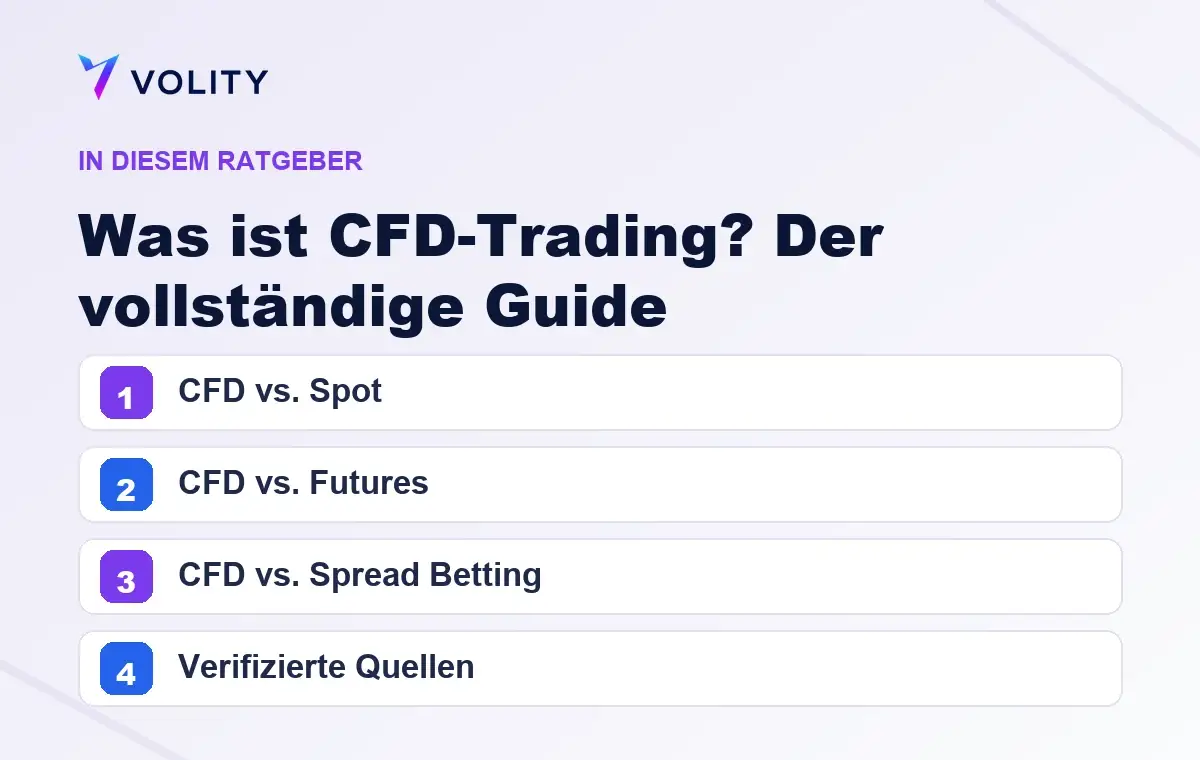
CFD vs. Spot
Der Spot-Handel kauft das tatsächliche Eigentum am Vermögenswert zur sofortigen Abwicklung. Der Trader kann selbst verwahren, on-chain übertragen (bei Krypto) oder langfristig ohne Übernachtfinanzierung halten. Spot gewinnt bei Buy-and-Hold, on-chain Nutzung und steuerfreundlichen Kapitalgewinnen. CFDs gewinnen bei kurzfristiger Spekulation, Short-Positionen, Hebelwirkung und Kapitaleffizienz. Krypto-CFD vs. Spot erläutert die Kompromisse.
CFD vs. Futures
Futures sind börsengehandelte Kontrakte mit festen Verfallsdaten und standardisierten Kontraktgrößen. Sie werden an regulierten Börsen (CME, ICE) mit zentralem Clearing gehandelt. Futures gewinnen bei institutioneller Größe (niedrigere Kommission pro Trade als Prozentsatz des Nominalwerts), steuerlicher Behandlung (je nach Wohnsitzland unterschiedlich) und Sicherheit der Gegenpartei (zentrales Clearing vs. Kontrahentenrisiko beim Broker). CFDs gewinnen bei der Zugänglichkeit für Privatanleger (niedrigere Mindestbeträge), keinem Kontraktverfall bei den meisten Symbolen für Privatanleger und 24/5-Zugang ohne Einschränkungen der Börsensitzungen.
CFD vs. Spread Betting
Nur für Einwohner des Vereinigten Königreichs sind Gewinne aus Spread Betting von der Kapitalertragsteuer befreit. Die Mechanismen sind fast identisch mit CFDs (gehebelte Spekulation, kein Eigentum am Vermögenswert), aber die Wette ist als Wette und nicht als Finanzkontrakt strukturiert. CFD-Gewinne sind nach dem jährlichen Freibetrag von 3.000 GBP mit den Standard-Kapitalertragsteuersätzen steuerpflichtig. Spread Betting eignet sich für Einwohner des Vereinigten Königreichs; CFDs eignen sich für Nicht-UK-Einwohner und Trader, die Verluste mit anderen Kapitalgewinnen verrechnen möchten. CFD vs. Spread Betting behandelt die steuerlichen Mechanismen.
Wer sollte CFDs handeln und wer nicht?
CFDs belohnen disziplinierte Risikokontrolle und bestrafen deren Fehlen. Mehrere Studien von Regulierungsbehörden (FCA, ASIC, ESMA) berichten konsistent, dass 70-80 % der CFD-Privatkonten Geld verlieren. Der Prozentsatz der profitablen Konten konvergiert über verschiedene Gerichtsbarkeiten und Zeiträume hinweg bei etwa 20-30 %. Die richtige Interpretation ist nicht, dass CFDs unrentabel sind, sondern dass CFDs unnachgiebig gegenüber Tradern sind, die keinen dokumentierten Vorteil gegenüber der Kostenstruktur haben.
Geeignet für den CFD-Handel:
- Trader mit mindestens 5.000 USD Risikokapital, die das Geld innerhalb der nächsten 12 Monate nicht benötigen.
- Trader, die eine Strategie mit einem positiven Erwartungswert gegenüber der Kostenstruktur dokumentieren können.
- Trader, die Positionen mit 0,5-1 % des Kapitals pro Trade bemessen und tägliche/wöchentliche Maximalverlustgrenzen durchsetzen.
- Trader, die ein schriftliches Journal führen und Trades systematisch überprüfen (nicht nur die Gewinner).
Nicht geeignet:
- Trader, die es sich nur leisten können, Geld einzuzahlen, dessen Verlust ihren Lebensstil beeinträchtigen würde.
- Trader, die den Handel als Glücksspiel oder Unterhaltung betrachten und nicht als Problem einer probabilistischen Kante.
- Trader, die Positionen bemessen, um Verluste „schnell wieder reinzuholen“ (Varianz-Compounding vernichtet Konten).
- US-Einwohner (CFDs sind gemäß CFTC-Regeln eingeschränkt; US-Trader nutzen direkt Futures oder Aktien).
Wie man bei Volity mit dem CFD-Handel beginnt
Der Einstieg ist unkompliziert und dauert von der Anmeldung bis zum ersten Live-Trade 24-72 Stunden:
- Konto eröffnen. Wählen Sie eine Stufe: Markets (1 USD Minimum), Pro (500 USD) oder VIP (10.000 USD). Alle drei bieten dieselben Instrumente; Spreads und Ausführung unterscheiden sich. Eröffnung eines CFD-Handelskontos führt durch die Schritte.
- Identität verifizieren. KYC erfordert einen behördlich ausgestellten Lichtbildausweis sowie einen Adressnachweis, der nicht älter als drei Monate ist. Volity bearbeitet die Verifizierung innerhalb von 24-72 Stunden.
- Konto aufladen. Einzahlungen per Karte und Krypto erfolgen sofort; SEPA wird innerhalb eines Geschäftstages abgewickelt. Alle Einzahlungen sind kostenlos.
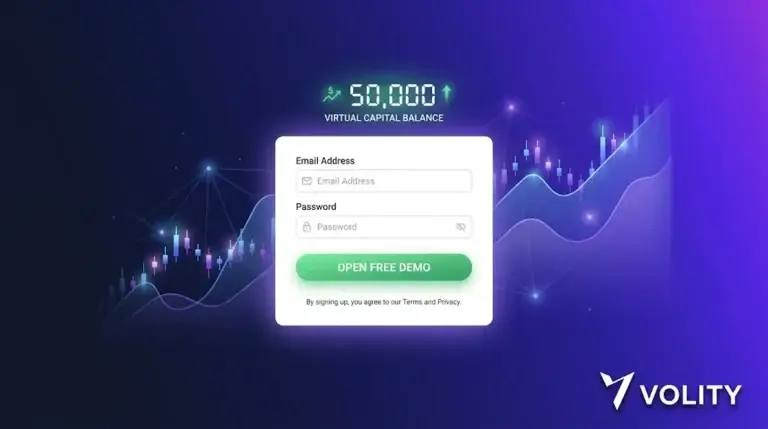
- Auf Demo starten. Das Demokonto von Volity verwendet 100.000 USD in virtuellem Guthaben mit denselben Live-Marktdaten. Führen Sie mindestens 30 Demo-Trades durch, um jede Strategie zu validieren, bevor Sie live gehen.
- Ersten Live-Trade platzieren. Beginnen Sie mit der kleinsten Positionsgröße, die nicht mehr als 0,5 % des Kontokapitals riskiert, bei einem Instrument eines wichtigen Paares mit engen Spreads (EUR/USD, USD/JPY).
Volity bietet MetaTrader 4 und MetaTrader 5 neben seiner nativen Schnittstelle an. Wie man mit dem CFD-Handel beginnt behandelt das risikobewusste Setup im Detail.
Häufig gestellte Fragen zum CFD-Handel
Ist der CFD-Handel reguliert?
Ja, in jedem entwickelten Markt. Die Europäische Wertpapier- und Marktaufsichtsbehörde (ESMA) legt die Regeln für Privatkunden in der gesamten EU fest, wobei nationale Regulierungsbehörden wie CySEC (Zypern), BaFin (Deutschland), AMF (Frankreich) und CONSOB (Italien) diese umsetzen. Die britische FCA setzt nahezu identische Regeln durch. Die australische ASIC und die singapurische MAS wenden ähnliche Obergrenzen an. In einigen Jurisdiktionen sind CFDs auf professionelle Kunden beschränkt; Privatkunden im EWR und im Vereinigten Königreich greifen unter den Regeln von ESMA und FCA darauf zu. Überprüfen Sie immer die von der Regulierungsbehörde ausgestellte Lizenz des Brokers, bevor Sie einzahlen.
Wie viel Geld brauche ich, um mit dem CFD-Handel zu beginnen?
Das Minimum zur Eröffnung eines Kontos bei den meisten regulierten Brokern liegt bei 50 bis 250 USD. Das Minimum, um mit einem echten Vorteil zu handeln, liegt eher bei 5.000 USD. Unter 5.000 USD werden Positionsgrößen, die die 1 %-Regel pro Trade respektieren, zu klein, um feste Kommissionen zu überwinden. Unter 1.000 USD kann der Round-Trip-Spread bei einem einzelnen Trade 5-10 % des Kapitals ausmachen, was einen konsistenten Gewinn fast unmöglich macht, ohne unvorsichtige Hebelwirkung einzusetzen.
Kann ich mehr verlieren, als ich einzahle?
Nicht auf einem Privatkonto bei einem EU-regulierten Broker. Der Schutz vor Nachschusspflicht ist gemäß ESMA-Regeln obligatorisch: Der Broker übernimmt jeden verbleibenden Verlust, der das Konto ins Minus drücken würde. Bei Offshore-Brokern außerhalb der EU ohne Schutz vor Nachschusspflicht können Sie mehr verlieren, als Sie eingezahlt haben. Dies ist ein Grund, warum die Wahl der Regulierungsbehörde wichtiger ist als der Vergleich von Funktionen.
Was ist der Unterschied zwischen CFDs und einer regulierten Anlage?
CFDs sind gehebelte Derivatkontrakte; sie sind Spekulation, keine Investition. Eine regulierte Anlage (eine Aktie, eine Anleihe, ein ETF) gibt dem Inhaber einen anteiligen Anspruch auf einen realen wirtschaftlichen Vermögenswert und zahlt Renditen durch Dividenden, Kupons oder Kapitalzuwachs, der an den zugrunde liegenden Geschäftswert gebunden ist. CFDs sind Nullsummenspiele gegen den Broker (oder bei A-Book-Ausführung gegen einen anderen Marktteilnehmer). Langfristiger Vermögensaufbau nutzt regulierte Anlagen; CFDs sind Werkzeuge für taktische kurzfristige Positionierungen.
Wie funktionieren Dividenden bei Aktien-CFDs?
Der CFD-Trader erhält keine tatsächlichen Dividenden, da er die zugrunde liegende Aktie nicht besitzt. Broker wenden einen Barausgleich an, der den Dividendeneffekt annähert: Long-Positionen werden mit dem Dividendenäquivalent gutgeschrieben (oft nach Abzug der Quellensteuer), Short-Positionen werden belastet. Der Ausgleich erfolgt am Ex-Dividenden-Tag. Das Halten eines Aktien-CFDs über Quartalszahlen oder Ex-Dividenden-Termine führt zu zusätzlichem Preisrisiko (Gap-Bewegungen), das bei der Positionsgrößenbestimmung berücksichtigt werden sollte.
Was passiert, wenn mein Margin-Level unter die Wartungsschwelle fällt?
Der Broker stellt einen Margin Call aus und kann automatisch einige oder alle Positionen schließen, um das Margin-Level wieder über die Wartungsschwelle zu heben. Gemäß ESMA-Regeln erfolgt das Close-out für Privatkunden bei 50 % der ursprünglichen Margin: Wenn das Kontokapital auf 50 % der gesamten Margin fällt, die von offenen Positionen verwendet wird, werden Positionen automatisch geschlossen, beginnend mit dem größten Verlusttrade. Was ist ein Stop-out erläutert die Mechanismen im Detail.
Häufige Fragen
Ist der CFD-Handel in der Europäischen Union legal?
Ja. CFDs sind in der EU und im Vereinigten Königreich gemäß MiFID II / FCA-Regeln legal. Volity leitet die Ausführung über UBK Markets Ltd, autorisiert und reguliert durch die CySEC unter der Lizenz 186/12. Privatkunden erhalten Schutz vor Nachschusspflicht, begrenzte Hebelwirkung nach Anlageklasse und standardisierte Risikowarnungen. Einige EU-Gerichtsbarkeiten erlassen zusätzliche nationale Regeln.
Wie unterscheidet sich ein CFD vom Kauf des Basiswerts?
Ein CFD ist ein Kontrakt, dessen Wert den Basiswert (eine Aktie, ein Währungspaar, einen Rohstoff oder Krypto) verfolgt, ohne Eigentumsübertragung. Sie profitieren oder verlieren an der Preisdifferenz, können mit einem Klick Short gehen und Hebel innerhalb regulatorischer Obergrenzen nutzen. Spot-Besitz gibt Dividenden und Stimmrechte; CFDs geben Flexibilität.
Was bedeutet Schutz vor Nachschusspflicht?
Das bedeutet, dass ein Privatkunde nicht mehr verlieren kann als das auf seinem CFD-Konto eingezahlte Guthaben, selbst wenn eine Position gegen eine ungewöhnlich große Preislücke liquidiert wird. Der Schutz ist gemäß CySEC- und ESMA-Privatkundenregeln obligatorisch. CFDs sind komplexe Instrumente und bergen aufgrund der Hebelwirkung ein hohes Risiko, schnell Geld zu verlieren.
Volity betreibt eine Handelsplattform und veröffentlicht außerdem Bildungs- und Analyseinhalte zum Thema Trading. Die Inhalte dieser Seite dienen ausschließlich Bildungszwecken und sind nicht als Finanzberatung zu verstehen. Volity kann kommerziell profitieren, wenn Leser über Links auf dieser Website Handelskonten eröffnen.
Unsere Inhalte werden nach dokumentierten redaktionellen Standards erstellt und geprüft; siehe unsere Vergleichs- und Bewertungsmethodik.
Neu bei der Plattform? Sehen Sie, wie Volity jeden Markt auf einem CFD-Handelskonto zusammenbringt.