Das Krypto-Trading-Starterset
Ein verständliches PDF: was Sie vor dem Handeln prüfen sollten, wie Orders und Risiko wirklich funktionieren und welche Fehler Sie vermeiden. Gratis.
Zentralisierte Börsen (CEX) bergen Verwahrungsrisiko, bei dem die Börse Ihre privaten Schlüssel und Gelder hält. Nach den jüngsten Marktereignissen müssen Nutzer Handelsplätze mit verifiziertem Proof of Reserves priorisieren. Die vergangene Performance ist kein Indikator für zukünftige Ergebnisse. Kapital ist gefährdet.
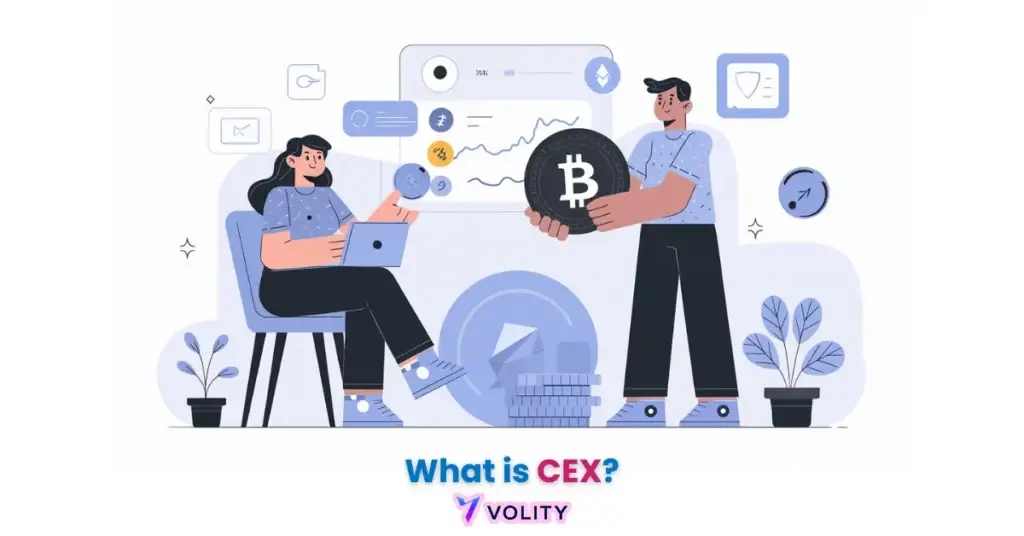
Eine zentralisierte Börse (CEX) bezeichnet eine Verwahrungsplattform, die als Finanzvermittler fungiert, um den Kryptowährungshandel zu erleichtern. Diese Handelsplätze zeigen 2026 eine Marktdominanz von 88,4 % und bieten hohe Liquidität und wesentliche Fiat-Einstiegsrampen. Das Identifizieren regulierter Plattformen mit Echtzeit-Proof-of-Reserves zeigt den Weg zur sicheren Teilnahme an digitalen Vermögenswerten.
Zentralisierte Börsen (CEX) bezeichnen die primären Zugänge für die globale Kryptowährungsakzeptanz und erleichterten Anfang 2026 über 88,4 % des gesamten täglichen Handelsvolumens. Diese Plattformen zeigen ein zentralisiertes Orderbuch-Modell, das Käufer und Verkäufer abgleicht, während es die Verwahrung der privaten Schlüssel und Gelder der Nutzer aufrechterhält. In der aktuellen Landschaft haben sich CEXs zu Hochleistungs-Finanzknotenpunkten entwickelt, die traditionelle Bankfunktionen mit der Innovation digitaler Vermögenswerte integrieren.
Der Markt 2026 ist durch die „Utility-Ära“ definiert, in der Nutzer Plattformen mit transparentem Proof of Reserves und strenger regulatorischer Compliance unter Rahmen wie dem GENIUS Act priorisieren. Während dezentralisierte Alternativen Autonomie bieten, bleiben CEXs für ihre tiefe Liquidität und ihre Ausführungsgeschwindigkeiten im Submillisekundenbereich unverzichtbar. Dieser Leitfaden untersucht die Mechanik der Börsenmodelle 2026 und identifiziert die kritischen Sicherheitsstandards, die für eine sichere Teilnahme erforderlich sind.
Das Verständnis von Centralized Exchange (CEX) ist wichtig, doch echtes Wachstum entsteht erst durch die Anwendung dieses Wissens. Kostenloses Krypto-Handelskonto erstellen, um mit einem kostenlosen Demokonto zu üben und Ihre Strategie zu testen.
Was ist eine zentralisierte Börse (CEX) und wie funktioniert sie?
Für unternehmensorientierte L1s bei der Zahlungsfinalität siehe XDC Network.
Eine zentralisierte Börse (CEX) ist eine digitale Plattform, die von einem zentralen Unternehmen betrieben wird und als Vermittler fungiert, um den Kauf, Verkauf und die Verwahrung von Kryptowährungen zu erleichtern. Diese Vermittlerrolle unterscheidet CEXs vom Peer-to-Peer-Trading und dezentralisierten Alternativen.
Das Vermittlermodell erklärt, warum CEXs als „Mittelsmann“ des Marktes fungieren. Wenn Sie auf Binance oder Coinbase traden, traden Sie nicht direkt mit einer anderen Einzelperson. Stattdessen platzieren Sie Orders bei der Börse, die Ihre Kauforder mit der Verkaufsorder eines anderen abgleicht. Die Börse erhebt eine Gebühr für diesen Abgleichdienst und verdient Spread-Einnahmen aus der Differenz zwischen Kauf- und Verkaufspreisen.
Die Orderbuch-Mechanik zeigt, wie dieser Abgleich geschieht. Die Börse führt eine digitale Aufzeichnung aller ausstehenden Kauf- und Verkaufsorders für jedes Trading-Paar (z. B. BTC/USDT). Wenn Ihre Kauforder eintrifft, paart die Matching-Engine, ein ausgeklügeltes KI-gesteuertes System, sie sofort mit der besten verfügbaren Verkaufsorder und optimiert für Preis und Geschwindigkeit. Dieser Off-Chain-Abgleich geschieht in Mikrosekunden und bietet Ausführungsgeschwindigkeiten, die auf Blockchain-Netzwerken unmöglich sind.
Fiat-Einstiegsrampen identifizieren, warum CEXs für die Akzeptanz unverzichtbar sind. Der primäre Zugang für neue Krypto-Nutzer beinhaltet die Umwandlung von traditionellem Geld (Dollar, Euro, Yen) in digitale Vermögenswerte. Nur zentralisierte Börsen unterhalten Bankbeziehungen, die direkte Einzahlungen von Ihrem Bankkonto erlauben. Eine DEX kann diesen Dienst nicht bieten, weil ihr die rechtliche Befugnis zur Handhabung von Fiat-Währung fehlt.
Verwahrungs-Wallets repräsentieren den Vertrauenskompromiss. Wenn Sie Krypto auf einer CEX einzahlen, kontrolliert die Börse die privaten Schlüssel, die mit Ihrem Konto verbunden sind. Das bedeutet, dass Sie Ihre Vermögenswerte nicht direkt kontrollieren; die Börse tut es. CEXs werden 2026 voraussichtlich 88,4 % des Marktanteils der Krypto-Börsen halten und ihre Dominanz über dezentralisierte Handelsplätze aufrechterhalten (Market Trends, 2026).
Das Verständnis von Was ist eine DEX (dezentralisierte Börse) bei Krypto? zeigt das alternative Verwahrungsmodell.
Bereit, Ihr Trading auf das nächste Level zu bringen?
Sie haben das Wissen. Jetzt fehlt die Plattform. Schließen Sie sich Tausenden erfolgreichen Tradern an, die Volity für leistungsstarke Tools, schnelle Ausführung und engagierten Support nutzen.
Erstellen Sie Ihr Konto in unter 3 MinutenWie man die CEX-Sicherheit bewertet: Proof of Reserves und Vorschriften 2026
Die CEX-Sicherheit identifiziert die Kombination aus On-Chain-Transparenz, durch Merkle-Tree-Proof-of-Reserves, und regulatorischer Aufsicht durch nationale Finanzbehörden. Diese zwei Elemente schaffen die Grundlage des Börsenvertrauens 2026.
Proof of Reserves mit Merkle Trees demonstriert die Zahlungsfähigkeit der Börse. Ein Merkle Tree ist eine kryptografische Struktur, die beweist, dass eine Börse alle Vermögenswerte besitzt, die sie zu halten behauptet, ohne individuelle Kundensalden offenzulegen. Täglich aktualisierte Dashboards zeigen nun das gesamte von Plattformen gehaltene BTC/ETH/USDT und schaffen Transparenz, die in früheren Marktzyklen fehlte. Diese Innovation adressiert die primäre Angst nach dem FTX-Kollaps: Ist die Börse tatsächlich zahlungsfähig, oder ist sie insolvent, während sie betrügerisch Reserven behauptet?
MiCA und der GENIUS Act etablieren regulatorische Rahmen, die Nutzer schützen. Europas MiCA (Markets in Crypto-Assets Regulation) verlangt von allen in der EU operierenden Börsen, Lizenzen zu erlangen, Kapitalreserven zu unterhalten und Krypto in von den Betriebsgeldern getrennten Konten zu halten. Der United States GENIUS Act schreibt ähnlich Compliance-Standards vor. Die kumulativen Sicherheitsverletzungen erreichten 2025 2,17 Milliarden $ und treiben die Branche zu obligatorischem Echtzeit-PoR (Troniex, 2026).
Cold-Storage-Benchmarks zeigen Sicherheitspraktiken. Top-Börsen halten 95 %+ der Vermögenswerte in Offline-Hardware-Tresoren, unzugänglich für Hacker, die Online-Systeme ins Visier nehmen. Dieser „Air-Gapped“-Ansatz bedeutet, dass selbst wenn ein Hacker die Hauptserver durchbricht, 95 % der Kundengelder unberührt bleiben. Die verbleibenden 5 % bleiben online für sofortige Liquidität.
Versicherungsfonds bieten ein zusätzliches Sicherheitsnetz. Plattformen wie Coinbase unterhalten eine „Börsenversicherung“, die bestimmte Arten von Hacks abdeckt. Wenn eine Verletzung auftritt, entschädigt der Versicherungsfonds betroffene Kunden. Das unterscheidet sich von der traditionellen Bank-FDIC-Versicherung, die Einlagen garantiert, bietet aber bedeutenden Schutz im Krypto-Kontext.
Das Verständnis von KYC & AML bei Krypto: Warum Compliance wichtig ist zeigt, wie regulatorische Anforderungen Nutzer weiter schützen.
Zusätzliche Perspektive: ESMA investor protection
WARNUNG: Die EU-DAC8-Richtlinie 2026 hat die Anonymität beim CEX-Trading in Europa beendet. Alle Transaktionsdaten werden nun automatisch den Steuerbehörden gemeldet, was die volle Steuer-Compliance zu einer nicht verhandelbaren Anforderung für Nutzer macht.
Wie legen zentralisierte Börsen Preise fest und verwalten Liquidität?
Die professionellen Firmen hinter dieser Liquidität werden in unserem Leitfaden zu Krypto-Market-Makern vorgestellt.
Die Preisfindung an einer zentralisierten Börse identifiziert den jüngsten Ausführungspunkt zwischen einem Käufer und einem Verkäufer im proprietären Orderbuch der Plattform. Dieser Preis entsteht aus der kontinuierlichen Auktion zwischen Angebot und Nachfrage.
KI-gesteuerte Matching-Engines paaren Orders in Mikrosekunden, um Slippage zu minimieren. In dem Moment, in dem Ihre Market-Order in das System eintritt, bewertet die Matching-Engine alle verfügbaren Verkaufsorders und führt gegen die besten verfügbaren Preise aus. Wenn Sie 0,5 BTC zum Markt kaufen, erhalten Sie möglicherweise 0,3 BTC zu $100.000 und 0,2 BTC zu $100.005, was zu einem durchschnittlichen Ausführungspreis von $100.001 führt. Dieses „Ausführungs-Slippage“ repräsentiert die wahren Kosten von Market-Orders über die Provisionsgebühren hinaus.
Market Maker gewährleisten konsistente Liquidität. Große institutionelle Trader fungieren als „Market Maker“, indem sie kontinuierlich anbieten, zu engen Spreads zu kaufen und zu verkaufen. Wenn ein Binance-Nutzer Bitcoin kaufen möchte, füllt er oft eine von einem Market Maker platzierte Order, der bereit ist zu verkaufen. Market Maker profitieren vom Spread, bieten aber die Liquidität, die es Retail-Tradern erlaubt, große Orders sofort auszuführen.
Arbitrage synchronisiert Preise über mehrere Börsen hinweg. Wenn Bitcoin auf Binance zu $100.000 und auf Kraken zu $100.500 handelt, kaufen Arbitrageure sofort auf Binance und verkaufen auf Kraken und sichern sich die Differenz von $500. Dieser automatisierte Prozess geschieht tausende Male pro Minute und stellt sicher, dass Preise über Börsen hinweg synchronisiert bleiben. Binance hält einen dominanten Anteil von 31,7 % am Spot-Volumen 2026 YTD und dient als globale primäre Liquiditätsquelle (MEXC News, 2026).
Die Spread-Mechanik erklärt die „Einstiegskosten“ des Tradings. Selbst wenn Sie eine Limit-Order platzieren, die kein Slippage auslöst, zahlen Sie einen „Spread“, die Differenz zwischen dem höchsten Kaufpreis und dem niedrigsten Verkaufspreis im Orderbuch. Bei illiquiden Paaren kann dieser Spread 1 %+ erreichen und erhebliche Kosten verursachen. Bei Bitcoin an großen Börsen fallen die Spreads unter 0,01 %.
Das Verständnis optimaler Zeitrahmen für technische Muster hilft, das Ausführungs-Timing zu kontextualisieren.
💡 KERNERKENNTNIS: Tiefe Liquidität ist der größte Vorteil der CEX. 2026 nutzen Top-Börsen KI-gesteuerte Matching-Engines, um sicherzustellen, dass das Slippage selbst bei großen sechsstelligen Retail-Orders unter 0,1 % bleibt.
CEX-Marktanteil und Performance-Benchmarks 2026
CEX-Markt-Benchmarks zeigen das massive Ausmaß des institutionellen Kapitals und die sich verschiebende Volumenführung über den Sektor digitaler Vermögenswerte 2026 hinweg. Die folgende Tabelle demonstriert Marktstruktur und Konzentration:
| CEX-Metrik | Kategorie | Wert |
| CEX-Branche | Marktanteil | 88,4 % (Market Trends, 2026) |
| Binance | Spot-Marktanteil | 31,7 % (MEXC News, 2026) |
| Coinbase | BTC-Reserven | > 800.000 BTC (KuCoin, 2026) |
| Sicherheitsverletzungen | Gesamt 2025 | 2,17 Milliarden $ (Troniex, 2026) |
| EU-Regulierung | Compliance-Regel | DAC8-Berichterstattung (Jan 2026) (EU, 2026) |
Quellen: BIZ: Project Agorá und Integration digitaler Vermögenswerte
Wissen in Gewinn verwandeln
Sie haben gelesen, jetzt ist es Zeit zu handeln. Der beste Weg zu lernen ist durch Praxis. Eröffnen Sie ein kostenloses, risikofreies Demokonto und üben Sie Ihre Strategie noch heute mit virtuellem Guthaben.
Kostenloses Demokonto eröffnenWas ist der Unterschied zwischen CEX und DEX 2026?
Der primäre Unterschied zwischen einer CEX und einer DEX identifiziert den Kompromiss zwischen zentralisierter Verwahrungssicherheit und dezentralisierter, nicht verwahrender Autonomie. Das Verständnis dieser Wahl zeigt, wie man die Plattformauswahl an seine Anlageziele anpasst.
Die Verwahrung repräsentiert die fundamentale Unterscheidung. Bei einer CEX vertrauen Sie der Börse, Ihre Gelder zu sichern. Bei einer DEX (dezentralisierten Börse) vertrauen Sie dem Smart-Contract-Code und behalten die Kontrolle über Ihre privaten Schlüssel. Das bedeutet, dass DEX-Nutzer nie den Zugang zu ihren Vermögenswerten aufgrund einer Börseninsolvenz verlieren können, aber sie können auch keine Gelder zurückerhalten, wenn sie sie an eine falsche Adresse senden.
Die Geschwindigkeit begünstigt den zentralisierten Abgleich. CEXs führen Orders off-chain in Mikrosekunden aus. DEXs führen Orders on-chain in Sekunden bis Minuten aus, wobei Transaktionskosten (Gasgebühren) $5-$50+ pro Trade hinzufügen. Für häufige Trader ist dieser Unterschied erheblich.
Die Regulierung trennt diese Modelle weiterhin. CEXs erfordern KYC-Verifizierung (Know Your Customer) und halten sich an lokale Vorschriften. Die meisten DEXs tun das nicht (obwohl sie 2026 unter Druck geraten, da Regulierungsbehörden „Nutzerverifizierung“ fordern). Das bedeutet, dass DEX-Trading schneller und privater, aber rechtlich weniger geschützt ist.
Der Hybrid-Trend 2026 zeigt Konvergenz. „HEX“-Modelle (Hybrid Exchange) entstehen, um CEX-Geschwindigkeits-Abgleich mit DEX-artiger Verwahrung zu bieten. Nutzer zahlen in einen Smart Contract statt an ein Unternehmen ein, und die DEX gleicht Orders über Automated Market Maker ab. Das repräsentiert das „Beste aus beiden Welten“, opfert aber etwas Ausführungseffizienz.
Das Verständnis standardmäßiger Margin- & Hebelregeln hilft, Unterschiede beim gehebelten Trading zu kontextualisieren.
Wie man eine zentralisierte Börse auswählt
Die Wahl einer zentralisierten Börse erfordert eine systematische Überprüfung ihres regulatorischen Status, ihrer Reserventransparenz und ihrer Asset-Liquidität für Ihre spezifische Region. Dieser schrittweise Ansatz identifiziert sichere Plattformen.
Schritt 1 beinhaltet die Verifizierung der regulatorischen Lizenz. Besuchen Sie die ESMA-Website (EU), die FCA-Website (Vereinigtes Königreich) oder die Finanzaufsichtsbehörde Ihres Landes und bestätigen Sie, dass die Börse eine gültige Lizenz hält. Plattformen wie Coinbase und Kraken zeigen diese Lizenzen prominent auf ihren Websites. Unlizenzierte Plattformen, die in regulierten Jurisdiktionen operieren, sind wahrscheinlich betrügerisch.
Schritt 2 erfordert die Überprüfung der Proof-of-Reserves-Häufigkeit und -Tiefe. Besuchen Sie das offizielle PoR-Dashboard der Börse und verifizieren Sie, dass die Daten täglich aktualisiert werden. Das Dashboard sollte BTC-, ETH- und USDT-Bestände zeigen. Gleichen Sie das mit Ihrem Kontosaldo ab, um zu schätzen, welcher Anteil der Reserven der Börse Ihre spezifischen Bestände deckt.
Schritt 3 analysiert die Gebührenstruktur. Vergleichen Sie Maker/Taker-Gebühren (typischerweise 0,01 %-0,1 % pro Trade) mit Abhebungskosten (typischerweise 0,0005-0,001 BTC pro Abhebung). Niedrigere Gebühren deuten nicht immer auf besseren Wert hin; einige Plattformen bieten niedrige Handelsgebühren, erheben aber hohe Abhebungsgebühren.
Schritt 4 bewertet die App-UX und den Kundensupport. Laden Sie die mobile App der Plattform herunter und versuchen Sie einen Test-Trade. Prüfen Sie, wie schnell das Support-Team auf Hilfeanfragen reagiert (Ziel: maximal 24 Stunden). Eine Plattform mit schlechter UX oder langsamem Support erzeugt Reibung während Marktstress, wenn Sie reaktionsschnellen Zugang benötigen.
Echtes Trading-Beispiel: Ein Bitcoin-Spot-Kauf über $10.000 auf Binance 2026. Der Trader führt sofort mit 0,1 % Slippage ($10 Kosten) aus; die Vermögenswerte werden sofort im Verwahrungs-Wallet sichtbar, wobei die PoR-Verifizierung die Zahlungsfähigkeit von Binance bestätigt. Die vergangene Performance ist kein Indikator für zukünftige Ergebnisse.
Das Verständnis von Wie man das beste Krypto-Wallet wählt ergänzt die CEX-Auswahl mit Cold-Storage-Planung.
Zusätzliche Perspektive: IWF: Stablecoins und die Zukunft des Zahlungsverkehrs (2026)
Wichtige Erkenntnisse
- Zentralisierte Börsen (CEX) erleichtern 2026 88,4 % des gesamten Krypto-Handelsvolumens und dienen als die primären Liquiditätsknotenpunkte des Marktes.
- Der „Smart Migration“-Trend 2026 zeigt, wie Liquidität sich für schnellere Preisfindung und niedrigere Gebühren zu retail-fokussierten Plattformen bewegt.
- Proof of Reserves mit täglich aktualisierten Merkle-Tree-Dashboards ist 2026 zum Industriestandard für die Verifizierung der Börsen-Zahlungsfähigkeit geworden.
- Die DAC8-Richtlinie der EU schreibt nun vor, dass alle zentralisierten Plattformen Transaktionsdaten automatisch den Steuerbehörden melden.
- CEXs unterscheiden sich von DEXs durch das Bereitstellen von Verwahrungsdiensten, was bedeutet, dass die Börse Ihre privaten Schlüssel in Ihrem Namen verwaltet und sichert.
- Die institutionelle Akzeptanz konzentriert sich auf regulierte Handelsplätze wie Coinbase, das ab 2026 über 800.000 BTC in verifizierten Reserven hält.
Häufig gestellte Fragen
Dieser Artikel enthält Verweise auf zentralisierte Börsen, Kryptowährungshandel und Marktmechanik und erwähnt Volity, eine regulierte CFD-Trading-Plattform. Dieser Inhalt wird nur zu Bildungszwecken erstellt und stellt keine Finanzberatung oder Empfehlung zur Nutzung einer Börse oder eines Trading-Dienstes dar. Überprüfen Sie stets den aktuellen regulatorischen Status und die Sicherheitspraktiken, bevor Sie traden. Einige Links in diesem Artikel können Affiliate-Links sein.
Worauf unsere Analysten achten: Unser Krypto-Desk verfolgt drei CEX-Gesundheitssignale. Erstens, die Aktualität und Methodik des Proof of Reserves: monatliche Merkle-Tree-Attestierungen von einem Big-Four-Auditor überwiegen vierteljährliche selbstberichtete Momentaufnahmen. Zweitens, die regulatorische Haltung pro Jurisdiktion, da die MiCA-Durchsetzung (seit Dezember 2024 in Kraft) die europäische Marktstruktur umgestaltet hat und die regulatorische Durchsetzung weiterhin Handelsplätze in weniger streng regulierten Jurisdiktionen belastet. Drittens, die Reservenkonzentration, bei der eine Überexposition gegenüber einem einzelnen Token im eigenen Ökosystem des Handelsplatzes (FTT-Stil) historisch Zahlungsfähigkeitsereignissen vorausläuft. Wenn alle drei Signale grün bleiben, behandeln wir die CEX als für die Größe geeignet; wenn eines auf Gelb umschaltet, reduzieren wir die Allokation.
Verwandte Leitfäden
- Kryptowährungs-Trading
- Krypto-Trading-Leitfaden
- Spot-Trading-Plattformen
- Bitcoin erklärt
- Beste Krypto-Investments
Volity betreibt eine Handelsplattform und veröffentlicht außerdem Bildungs- und Analyseinhalte zum Thema Trading. Die Inhalte dieser Seite dienen ausschließlich Bildungszwecken und sind nicht als Finanzberatung zu verstehen. Volity kann kommerziell profitieren, wenn Leser über Links auf dieser Website Handelskonten eröffnen.
Unsere Inhalte werden nach dokumentierten redaktionellen Standards erstellt und geprüft; siehe unsere Vergleichs- und Bewertungsmethodik.