Kurze Antwort
Krypto-Liquiditätspools sind in einem Smart Contract gesperrte Token-Pools, die die Liquidität für dezentrale Börsen bereitstellen und Nutzern den Handel ohne klassisches Orderbuch ermöglichen. Wer Token einzahlt, sogenannte Liquidity Provider, verdient einen Anteil an den Handelsgebühren. Pools bergen Risiken wie Impermanent Loss und Smart-Contract-Fehler, also verstehen Sie sie, bevor Sie Liquidität bereitstellen.
Das Krypto-Trading-Starterset
Ein verständliches PDF: was Sie vor dem Handeln prüfen sollten, wie Orders und Risiko wirklich funktionieren und welche Fehler Sie vermeiden. Gratis.
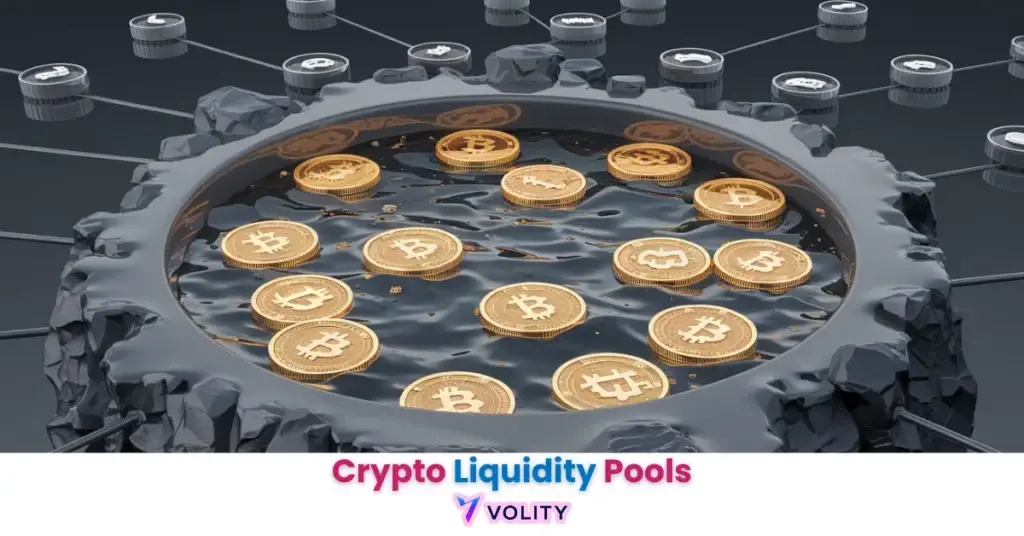
Ein Krypto-Liquiditätspool ist eine per Smart Contract gesperrte Sammlung von Token-Paaren, die dezentrales Trading über Automated Market Maker (AMMs) antreibt. 2026 erzielen Top-Pools 4-40 % APY, abhängig von Volatilität und Anreizen. Die zwei Hauptrisiken sind Impermanent Loss und Smart-Contract-Exploits. Beide quantifizierbar, beide beherrschbar.
Das Bereitstellen von Liquidität für Krypto-Pools ist mit hohem Risiko verbunden, einschließlich des Totalverlusts des Kapitals durch Smart-Contract-Exploits oder extremen Impermanent Loss. 2026 führten DeFi-Schwachstellen nachweislich zu über 600 Millionen US-Dollar an verlorenen Geldern. Impermanent Loss bezeichnet das Szenario, in dem das Halten von Vermögenswerten in einem Wallet das Bereitstellen von Liquidität während volatiler Märkte übertrifft. Die vergangene Performance ist kein Indikator für zukünftige Ergebnisse. Kapital ist gefährdet.
Ein Krypto-Liquiditätspool bezeichnet eine Sammlung von Token, die in einem Smart Contract gesperrt sind und dezentrales Trading über AMMs ermöglichen. Diese Pools zeigen 2026er-Benchmarks von 4 %-40 % APY, abhängig von der Asset-Volatilität und den Anreizen des Liquiditäts-Minings. Das Identifizieren von Risiken wie Impermanent Loss und Contract-Exploits ist für nachhaltiges Yield Farming unerlässlich.
Krypto-Liquiditätspools bezeichnen die dezentralen Reserven, die zum Antreiben moderner Automated Market Maker erforderlich sind und es Nutzern ermöglichen, Vermögenswerte ohne zentralisierten Vermittler zu tauschen. Dieser Mechanismus zeigt einen reifen 2026er-DeFi-Sektor, in dem über 4,2 Milliarden US-Dollar nachweislich in einem einzigen Protokoll wie Uniswap V3 gesichert sind und Milliarden an täglichem Handelsvolumen unterstützen. Durch das Beitragen von Token zu diesen Pools verdienen Liquiditätsanbieter (LPs) einen proportionalen Anteil an Transaktionsgebühren und Protokollbelohnungen (siehe CoinDesk: Was ist ein Liquiditätspool?).
Das 2026er-Renditeumfeld ist definiert durch eine Verschiebung hin zu konzentrierter Liquidität und automatisierten Verwaltungstools, die versuchen, die Kapitalerosion durch Impermanent Loss zu mildern. Da die institutionelle Beteiligung wächst und Regulierungsbehörden sich auf die Smart-Contract-Sicherheit konzentrieren, ist das Verständnis der mathematischen x*y=k-Grundlage und der regionalen steuerlichen Auswirkungen unerlässlich. Dieser Leitfaden identifiziert die leistungsstärksten Liquiditätspools für 2026 und zeigt die strategischen Benchmarks für die professionelle Renditeoptimierung.
Das Verständnis von Liquidity Pools ist wichtig, doch echtes Wachstum entsteht erst durch die Anwendung dieses Wissens. Kostenloses Krypto-Handelskonto erstellen, um mit einem kostenlosen Demokonto zu üben und Ihre Strategie zu testen.
Was ist ein Krypto-Liquiditätspool und wie erleichtert er das Trading?
Ein Krypto-Liquiditätspool ist ein Smart-Contract-basiertes Reservoir digitaler Vermögenswerte, das Trades vertrauenslos identifiziert und ausführt und nachweislich die Notwendigkeit traditioneller Orderbücher oder menschlicher Market Maker beseitigt.
Gepoolte Vermögenswerte schaffen einen rund um die Uhr verfügbaren Handelsplatz für jedes Token-Paar. Wenn Trader eine Tausch-Order übermitteln, gleicht der Smart Contract sie sofort gegen die Pool-Reserven ab, ohne Market-Maker-Eingriff, ohne zentralisierten Server. Dieses erlaubnisfreie Teilnahmemodell zeigt, warum jeder Nutzer mit digitalen Vermögenswerten als Liquiditätsanbieter auftreten und proportionale Gebühren aus aller Handelsaktivität verdienen kann. Liquiditätsstufen unterscheiden zwischen stabilen Pools (USDC/USDT), bei denen die Beziehung gepeggt ist, und volatilen „exotischen“ Pools (PEPE/ETH), bei denen die Preisdivergenz sowohl Chancen als auch Risiken schafft. Die 2026er-Landschaft identifiziert Uniswap V3 mit 4,2 Mrd. USD TVL als Liquiditätsknotenpunkt der Branche, der einen erheblichen Teil der 18,83 Billionen USD an jährlichem Krypto-Handelsvolumen unterstützt.
Slippage bei Krypto: Ausführung meistern & Gewinne schützen zeigt, wie die Pool-Tiefe die Ausführungskosten bei großen Trades beeinflusst.
Bereit, Ihr Trading auf das nächste Level zu bringen?
Sie haben das Wissen. Jetzt fehlt die Plattform. Schließen Sie sich Tausenden erfolgreichen Tradern an, die Volity für leistungsstarke Tools, schnelle Ausführung und engagierten Support nutzen.
Erstellen Sie Ihr Konto in unter 3 MinutenWie Krypto-Liquiditätspools über Automated Market Maker (AMMs) funktionieren
Für das zentralisierte Gegenstück, Hochfrequenzfirmen, die Liquidität auf CEXs bereitstellen, siehe unseren Leitfaden zu Krypto-Market-Makern.
Automated Market Maker (AMMs) bezeichnen die algorithmischen Protokolle, die Liquiditätspools verwalten und nachweislich Asset-Preise durch mathematische Beziehungen statt durch Käufer-Verkäufer-Abgleich bestimmen.
Die AMM-Evolution schritt von grundlegenden XYK-Modellen (Uniswap V1) zu konzentrierter Liquidität (Uniswap V3) und Multi-Asset-Behältern (Balancer) voran. Preiskurven passen sich automatisch an, um den aktuellen Marktwert zu identifizieren: Wenn Trader Token A entfernen und Token B hinzufügen, erhöht die Formel den Preis von Token B, um seine Knappheit innerhalb des Pools auszugleichen. Arbitrage-Schleifen stellen sicher, dass externe Trader Pools nachweislich neu ausbalancieren, wann immer interne Preise von globalen Wechselkursen abweichen, wodurch ein selbstheilender Mechanismus entsteht, der Arbitragemöglichkeiten beseitigt. Die StableSwap-Invariante (von Curve Finance vorangetrieben) identifiziert ein überlegenes Modell für peg-abgeglichene Vermögenswerte wie Stablecoins und ermöglicht tiefere Liquidität bei Preisen sehr nahe an 1:1 ohne das extreme Slippage, das XYK einführen würde.
Was ist ein Automated Market Maker (AMM) bei Krypto? Definition und Mechanik erklärt, wie verschiedene AMM-Architekturen unterschiedliche Trading-Profile bedienen.
Die Mechanik der Konstantprodukt-Formel (x*y=k)
Die Konstantprodukt-Formel (x * y = k) ist die grundlegende mathematische Identität der meisten AMMs und identifiziert eine Beziehung, bei der das Gesamtprodukt der Asset-Mengen während eines Tauschs nachweislich unverändert bleiben muss.
Die Formel aufgeschlüsselt: „x“ steht für die Menge von Token A, „y“ steht für die Menge von Token B, und „k“ ist das konstante Produkt, das sich nie ändert. Wenn ein Trader Token A einzahlt, erhöht die Formel automatisch den Preis von Token B, um sicherzustellen, dass das Produkt k bleibt. Dieser deterministische Liquiditätsmechanismus stellt sicher, dass ein Pool unabhängig von der Trade-Größe niemals „geleert“ werden kann, jedoch nähern sich die Preise der Unendlichkeit, wenn eine Seite des Pools erschöpft. Die Uniswap-V2-Dokumentation hat dieses Modell nachweislich populär gemacht und Milliarden an DeFi-Volumen ermöglicht, indem sie einen mathematischen Rahmen bereitstellte, den jeder Entwickler umsetzen konnte. Bei großen Trades verursacht das XYK-Modell erhebliches Slippage, da sich der Preis deutlich entlang der Kurve bewegt, wodurch dieser Mechanismus am effizientesten für kleine, häufige Tauschvorgänge ist.
Smart Contracts: Der selbstausführende Code, der Anwälte & Banken ersetzt beschreibt die Sicherheitsarchitektur, die diese automatisierten Systeme unterstützt.
2026er Yield-Farming-Benchmarks und EAV-Tabelle
Liquiditätspool-Benchmarks zeigen die APY-Bereiche und Kapitaleffizienzmetriken, die erforderlich sind, um im 2026er-Yield-Farming-Sektor wettbewerbsfähig zu bleiben.
| Plattform | TVL (2026 geschätzt) | Primärer Mechanismus | Gebührenstufe |
| Uniswap V3 | 4,2 Milliarden $ | Konzentrierte Liquidität | 0,01 % – 1,0 % |
| Curve Finance | 2,8 Milliarden $ | StableSwap-Invariante | 0,04 % |
| PancakeSwap | 2,1 Milliarden $ | CPMM (BSC) | 0,25 % |
| Balancer | 1,4 Milliarden $ | Multi-Asset-Pools | Variabel |
| SushiSwap | 1,1 Milliarden $ | CPMM (Multi-Chain) | 0,30 % |
Quellen: DefiLlama-Renditen und offizielle Protokoll-Transparenz-Dashboards (April 2026)
DefiLlama: Top-Liquiditätspools nach TVL und Rendite verifiziert die 2026er-Benchmark-Raten über aktive Protokolle hinweg.
Wissen in Gewinn verwandeln
Sie haben gelesen, jetzt ist es Zeit zu handeln. Der beste Weg zu lernen ist durch Praxis. Eröffnen Sie ein kostenloses, risikofreies Demokonto und üben Sie Ihre Strategie noch heute mit virtuellem Guthaben.
Kostenloses Demokonto eröffnenRisiken verstehen: Impermanent Loss und Smart-Contract-Schwachstellen
Die Risiken der Liquiditätsbereitstellung identifizieren sich als Kompromiss zwischen Gebühreneinnahmen und dem Potenzial für Impermanent Loss (IL) oder nachweislich permanentes Smart-Contract-Versagen.
Impermanent Loss zeigt sich, wenn sich das Verhältnis der Pool-Vermögenswerte dramatisch von Ihrem anfänglichen Einstieg ändert. Eine Studie von 2025 belegte nachweislich, dass 60 % der Uniswap-V3-Liquiditätsanbieter aufgrund von IL Nettoverluste erlitten, selbst nach dem Einnehmen von Gebühren. Preisdivergenz in volatilen Paaren (z. B. PEPE/ETH) schafft einen mathematischen Nettoverlust gegenüber dem bloßen Halten von Token: Wenn PEPE relativ zu ETH abstürzt, zwingt die Neuausbalancierung des Pools die LPs, ihr PEPE automatisch zu niedrigeren Preisen zu verkaufen. Der Contract-Exploit-Kontext identifiziert das Auditing als Sicherheitsanforderung Nr. 1: Die über 600 Mio. $ an DeFi-Verlusten 2026 zeigen, warum das Einsetzen von Kapital in nicht auditierte Protokolle nachweislich zum Totalverlust des Kapitals einlädt. Risikominderungsstrategien umfassen reine Stablecoin-Pools oder automatisierte IL-Management-Tools wie Gamma oder Arrakis.
DeFi-Liquiditätsbereitstellung: Erträge maximieren, Impermanent Loss minimieren erkundet fortgeschrittene Techniken zur Verlustreduzierung.
Die Top 10 Krypto-Liquiditätspools, die man 2026 im Auge behalten sollte
Die Top 10 Krypto-Liquiditätspools 2026 identifizieren die zuverlässigsten und innovativsten Plätze der Branche sowohl für die stabile Vermögenserhaltung als auch für aggressives Yield Farming.
Uniswap V3 (Ethereum/Arbitrum) zeigt die beste Option für flexible Gebührenstufen und tiefe Liquidität über große Token-Paare hinweg. Curve Finance identifiziert den Marktführer für Stablecoin- und LST-Tauschvorgänge (Liquid Staking Token) mit geringem Slippage, mit spezialisierten Pools für peg-abgeglichene Vermögenswerte. PancakeSwap rangiert als bevorzugt für niedrige Gaskosten und ertragsstarke Altcoin-Paare auf der Binance Smart Chain. Yearn Finance identifiziert das erstklassige Vault-System für automatisiertes Rendite-Compounding, bei dem algorithmische Strategien Positionen ohne manuellen Eingriff neu ausbalancieren. Balancer zeigt Exzellenz für das Portfoliomanagement über 80/20-Multi-Asset-Pools, die konsistente Gewichtungen beibehalten. Rocket Pool und Lido identifizieren den 2026er-Standard für ETH-Staking-Liquidität.
Echtes Trading-Beispiel: ETH/USDC konzentrierte Liquidität auf Uniswap V3. Eine Studie von 2025 belegte nachweislich, dass konzentrierte Liquidität innerhalb einer 5%-Spanne dreimal mehr Gebühren verdiente als die Bereitstellung über eine breite Spanne. Die Strategie identifizierte hohe Kapitaleffizienz, erforderte aber eine aktive tägliche Neuausbalancierung, um IL-Exposition zu vermeiden. Die vergangene Performance ist kein Indikator für zukünftige Ergebnisse.
Stablecoin bei Krypto: Typen, Anwendungsfälle und Risiken erklärt die Rollen von Stablecoins in risikoarmen Farming-Strategien.
Uniswap V3: Whitepaper zur konzentrierten Liquidität verifiziert die mathematischen Grundlagen der Mechanismen konzentrierter Liquidität.
Wichtige Erkenntnisse
- Krypto-Liquiditätspools identifizieren die dezentralen Reservoirs von Token, die einen automatisierten Marktabgleich ohne Vermittler ermöglichen.
- Das AMM-Modell (x*y=k) identifiziert die grundlegende Mathematik, die nachweislich die Asset-Preisbildung über Pool-Verhältnisse bestimmt.
- Uniswap V3 zeigt seine 2026er-Dominanz mit 4,2 Milliarden $ an TVL und nutzt ein Modell konzentrierter Liquidität für maximale Effizienz.
- Impermanent Loss wird als das primäre Risiko für LPs identifiziert, wobei Studien von 2025 eine Nettoverlustrate von 60 % für passive Anbieter zeigen.
- Der DeFi-Sicherheitskontext zeigt, dass Anfang 2026 über 600 Millionen $ an Smart-Contract-Exploits verloren gingen, was Audits unerlässlich macht.
- Stablecoin-Pools identifizieren einen risikoarmen 2026er-Einstiegspunkt, der 3 %-5 % APY bietet und Impermanent Loss nachweislich eliminiert.
Wie es von hier aus weitergeht
Liquiditätspools sind ein Ausschnitt des Krypto-Rendite-Universums. Drei angrenzende Pfade decken den Rest ab:
- Für tiefe Einblicke in die zugrunde liegenden Token, die in den meisten Pools gegen ETH und Stables gepaart werden, siehe unsere Berichterstattung zu Cardano (ADA) Netzwerkstatistiken und Fetch.ai (FET). dem KI-Token-Narrativ.
- Wenn Sie auch traditionelle Märkte traden, decken unsere Reviews der besten Forex-Trading-Plattformen 2026 und der besten Copy-Trading-Plattformen 2026 die manuellen und Copy-Trading-Alternativen zur DeFi-Rendite ab.
- Wenn Sie das Pool-Management lieber ganz überspringen möchten, kann das Copy-Trading von Walen, die Liquiditätsstrategien auf Protokollen wie Uniswap betreiben, ein passiver Einstieg sein. Siehe den oben verlinkten Copy-Trading-Leitfaden.
Für Echtzeit-TVL- und APY-Daten zu jedem in diesem Leitfaden erwähnten Protokoll sind die öffentlichen Dashboards bei DeFiLlama Yields und die Uniswap-V3-Dokumentation die kanonischen Quellen, gegen die wir unsere Zahlen abgeglichen haben.
Worauf unsere Analysten achten: Unser DeFi-Desk filtert Pools durch drei Risikotore. Erstens, Audit-Aktualität und Auditor-Reputation: Ein Pool, dessen zugrunde liegender Contract innerhalb von 12 Monaten von Trail of Bits, OpenZeppelin oder Halborn auditiert wurde, trägt weit weniger Smart-Contract-Risiko als ein nicht auditierter Fork. Zweitens, das TVL-zu-Volumen-Verhältnis, bei dem Pools mit einem durch Söldnerkapital aufgeblähten TVL im Verhältnis zum echten Tauschvolumen dünnere reale Renditen erzeugen als die Schlagzeilen-APYs vermuten lassen. Drittens, Oracle-Abhängigkeit: Pools, die sich auf ein einziges Preis-Oracle verlassen, haben wiederholt Exploit-Verluste erzeugt; Designs mit mehreren Oracles und auf TWAP-Basis sind wesentlich sicherer. Rendite ohne Audit-Historie ist keine Rendite, sie ist ein aufgeschobener Verlust.
Häufig gestellte Fragen
Wie generieren Liquiditätspools Rendite?
Drei Quellen stapeln sich. Erstens, Tauschgebühren: ein Teil jedes durch den Pool geleiteten Trades, typischerweise 0,01 % bis 1 % je nach Volatilitätsstufe, fällt den LPs proportional zu ihrem Anteil zu. Zweitens, Liquiditäts-Mining-Belohnungen: Viele Protokolle geben Governance-Token an LPs aus, um die Tiefe anzukurbeln. Drittens, externe Anreize von Token-Emittenten, die LPs dafür bezahlen, ihren Token in einem Pool zu halten, um liquide Märkte zu gewährleisten. Die erste Quelle ist nachhaltige Rendite; die zweite und dritte sind Anschub-Subventionen, die verfallen, wenn die Emissionspläne auslaufen. CoinDesks Liquiditätspool-Einführung geht jede Renditequelle durch.
Was ist Impermanent Loss und wie ernst ist er?
Impermanent Loss ist die Lücke zwischen dem passiven Halten von Token und dem Bereitstellen in einem Liquiditätspool, wenn der Pool-Preis vom Einzahlungsverhältnis abweicht. Er ist nur dann „impermanent“, wenn die Preise zum Einzahlungsverhältnis zurückkehren; in der Praxis kristallisiert sich der Verlust bei der Abhebung, wenn ein Token stark steigt oder abstürzt. Für einen Stablecoin-Stablecoin-Pool ist der Verlust nahe null; für einen volatil-volatilen Pool erzeugt eine relative Preisbewegung von 50 % ungefähr 5,7 % Verlust gegenüber dem Halten. Pools mit konzentrierter Liquidität (Uniswap V3 und V4) verstärken sowohl Gebühren als auch Impermanent Loss innerhalb engerer Spannen.
Sind Liquiditätspools sicherer als Yield Farming?
Sie sind in der Regel dieselbe Aktivität. „Liquiditätsbereitstellung“ beschreibt die Mechanik; „Yield Farming“ beschreibt die Strategie, Liquidität zwischen Pools zu verschieben, um die beste risikobereinigte Rendite zu jagen. Risiken summieren sich über Smart-Contract-Bugs, Oracle-Exploits, Governance-Angriffe, Rug Pulls bei illegitimen Pools und Impermanent Loss. Stablecoin-Pools auf auditierten Blue-Chip-Protokollen (Curve 3pool, Uniswap V4 USDC/USDT) sitzen am sichereren Ende des Spektrums; ertragsstarke Neu-Token-Pools auf nicht auditierten Forks sitzen am riskanteren Ende. Der IWF Global Financial Stability Report hat das Konzentrationsrisiko von DeFi-Pools als systemisches Thema markiert.
Wie wähle ich einen sicheren Liquiditätspool aus?
Wenden Sie vor dem Einzahlen einen Fünf-Fragen-Filter an. Wurde das zugrunde liegende Protokoll innerhalb der letzten 12 Monate von einer renommierten Firma auditiert, mit öffentlichen Audit-Berichten? Ist das TVL stabil, idealerweise über 10 Mio. $, was eine echte Adoption statt eines Launchpad-Forks anzeigt? Erzeugt das Gebühren-/Volumen-Verhältnis eine reale Rendite-APY abzüglich Token-Emissionen? Sind die Token im Pool beide Blue-Chip mit etablierten Preis-Oracles? Und ist die Protokoll-Governance dezentralisiert statt von einem kleinen Multisig kontrolliert, das Liquidität abziehen könnte? Das Scheitern an einer der fünf Flaggen schiebt die Position in „spekulativ“. Die vierteljährliche BIZ-Forschung zu strukturellen DeFi-Risiken bleibt ein nützlicher Rahmen für eine Due Diligence auf institutionellem Niveau.
Volity betreibt eine Handelsplattform und veröffentlicht außerdem Bildungs- und Analyseinhalte zum Thema Trading. Die Inhalte dieser Seite dienen ausschließlich Bildungszwecken und sind nicht als Finanzberatung zu verstehen. Volity kann kommerziell profitieren, wenn Leser über Links auf dieser Website Handelskonten eröffnen.
Unsere Inhalte werden nach dokumentierten redaktionellen Standards erstellt und geprüft; siehe unsere Vergleichs- und Bewertungsmethodik.
Möchten Sie Ihre Strategie lieber automatisieren? Siehe unseren Leitfaden zu Krypto-Trading-Bots.