Réponse rapide
Une plateforme de trading de matières premières vous permet de négocier des matières premières comme l’or, le pétrole, l’argent et le gaz naturel sous forme de CFD, avec effet de levier et la possibilité d’acheter ou de vendre à découvert. Volity est une plateforme de trading de matières premières où vous négociez métaux, énergie et plus depuis un seul compte, avec des spreads serrés, des coûts transparents et un effet de levier jusqu’à 1:500 (selon le produit), le tout sous la supervision de CySEC 186/12 via UBK Markets. Vous pouvez ouvrir un compte pour $0 et passer votre première position à partir de $1.
Les CFD sur matières premières sont des produits à effet de levier à haut risque. Une proportion élevée de traders particuliers perd de l’argent en négociant ces instruments. La forte volatilité de l’énergie et des métaux peut se retourner contre vous rapidement. Assurez-vous de comprendre les exigences de marge et les risques avant de négocier. Les performances passées ne préjugent pas des résultats futurs. Capital à risque.
Une plateforme de trading de matières premières est l’endroit où vous prenez position sur des matières premières telles que l’or, le pétrole, l’argent et le gaz naturel. Sur Volity, vous négociez les matières premières sous forme de CFD depuis un compte unique, sur la plateforme Volity MT, avec des spreads serrés, un effet de levier jusqu’à 1:500 (selon le produit) et des coûts que vous pouvez lire avant de vous engager. Que vous vous couvriez contre l’inflation ou négociez la volatilité intrajournalière, la plateforme définit votre base de coûts et la qualité de votre exécution.
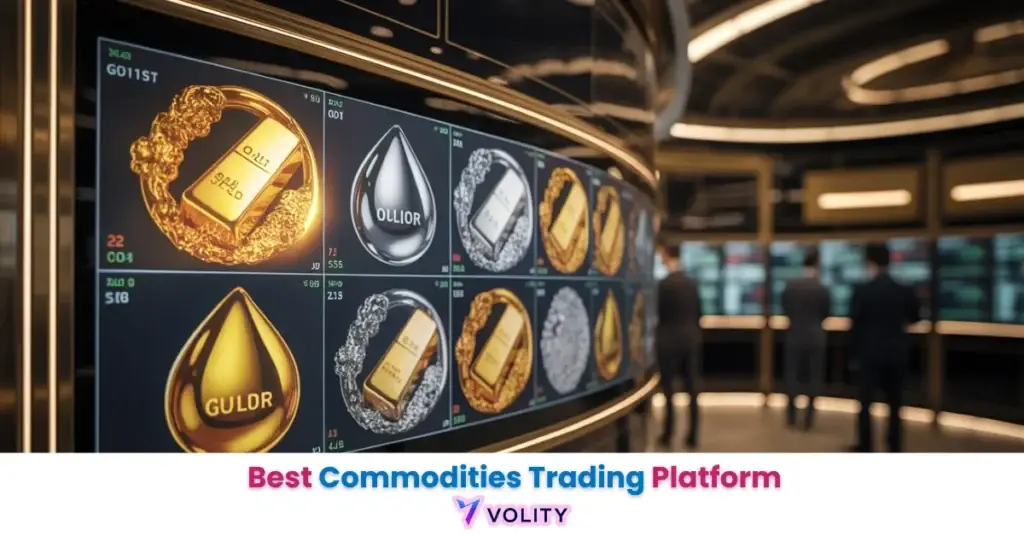
Les matières premières sont les ressources de base qui font tourner le monde : métaux précieux comme l’or et l’argent, énergie comme le pétrole brut et le gaz naturel, métaux industriels et produits agricoles. Une plateforme de trading de matières premières vous offre un seul endroit pour prendre position sur leurs prix, à la hausse ou à la baisse, sans acheter les biens physiques. Sur Volity, vous les négociez sous forme de CFD, ce qui vous donne une exposition avec effet de levier et la possibilité d’acheter ou de vendre à découvert sur les métaux, l’énergie et plus encore.
L’attrait des matières premières tient à ce qu’elles se comportent différemment des actions et bougent souvent le plus fort quand les autres marchés sont agités. Cela en fait un élément naturel d’un portefeuille diversifié, et cela rend la qualité de l’exécution déterminante, car les plus fortes variations des matières premières se concentrent autour des actualités, de la météo et des chocs d’offre. Cette page explique comment fonctionne le trading de matières premières sur Volity, ce qu’exige une bonne plateforme de trading de matières premières, et comment passer votre première position.
Comprendre le trading de matières premières est important, mais la vraie progression commence en appliquant ces connaissances. Créez votre compte de trading forex gratuit pour vous entraîner sur un compte démo gratuit et mettre votre stratégie à l’épreuve.
Que pouvez-vous négocier sur une plateforme de matières premières ?
Volity vous donne accès aux marchés de matières premières qui offrent une réelle liquidité, tous sous forme de CFD sur un seul compte :
- Métaux précieux : or, argent, platine et palladium, les classiques valeurs refuge et couvertures contre l’inflation.
- Énergie : pétrole brut WTI et Brent et gaz naturel, les CFD sur matières premières les plus activement négociés.
- Métaux industriels : cuivre et autres métaux de base liés au cycle de croissance mondial.
- Produits agricoles : marchés saisonniers qui évoluent selon la météo et les cycles de récolte.
Comme les matières premières se trouvent sur le même compte que vos autres positions, vous pouvez passer d’une position CFD en énergie, métaux, indices et forex à mesure que les conditions changent, sans répartir votre capital entre plusieurs courtiers. Pour la mécanique d’un marché précis, notre guide du trading du pétrole brut détaille le comportement des positions sur l’énergie.
💡 POINT CLÉ : La force d’un compte CFD sur matières premières, c’est la flexibilité. Un seul solde sur la plateforme Volity MT vous permet de négocier l’or, le pétrole et le cuivre côte à côte, en achetant ou en vendant à découvert selon l’évolution du contexte macroéconomique, au lieu d’être enfermé dans un seul marché.
Prêt à faire passer votre trading au niveau supérieur ?
Vous avez les connaissances. Il vous manque la plateforme. Rejoignez des milliers de traders qui choisissent Volity pour ses outils puissants, son exécution rapide et son support dédié.
Créez votre compte en moins de 3 minutesComment fonctionnent les CFD sur matières premières
Un CFD sur matières premières est un contrat sur la différence de prix d’une matière première. Vous ne prenez jamais livraison du baril ni du lingot. Vous négociez plutôt le mouvement du prix entre l’ouverture et la clôture de votre position, ce qui maintient la barrière d’entrée basse et vous permet d’utiliser l’effet de levier. Sur Volity, cela signifie :
- Achat ou vente à découvert sur chaque marché, pour négocier aussi bien une hausse du pétrole qu’une baisse.
- Effet de levier jusqu’à 1:500 (selon le produit), le ratio disponible étant fixé par l’instrument et votre compte.
- Taille fractionnée, pour prendre de petites positions contrôlées plutôt qu’un contrat standard complet.
Deux coûts comptent avant tout : le spread que vous payez à l’entrée et le financement overnight (swap) sur les positions conservées après la clôture quotidienne. Volity garde les deux visibles avant que vous ne négociez. Notre guide sur la marge et l’effet de levier explique comment la taille de position et la marge interagissent, et comment choisir un courtier propose un cadre d’évaluation valable pour toutes les classes d’actifs.
Commencez par les matières premières les plus liquides. L’or et le pétrole brut affichent les spreads les plus serrés et le comportement technique le plus clair, ce qui en fait un point de départ sensé pour bâtir une stratégie sur les matières premières avant de passer à des marchés plus étroits.
Comment commencer à négocier les matières premières sur Volity
- Ouvrez un compte pour $0. Inscrivez-vous et vérifiez votre identité en quelques minutes, sans frais.
- Entraînez-vous sur une démo. Négociez l’or et le pétrole avec des fonds virtuels avant de risquer un capital réel.
- Approvisionnez et débutez petit. Vous pouvez commencer à investir à partir de $1 et passer une position réelle sur matières premières à partir de $1.
- Ouvrez votre position. Choisissez un marché, définissez votre taille et votre stop, et négociez à l’achat ou à la vente à découvert sur la plateforme Volity MT.
Ce qu’il faut vérifier avant d’approvisionner un compte de matières premières
Les matières premières sont à effet de levier et volatiles, aussi quelques vérifications vous tiennent à l’écart des opérateurs à éviter :
- Régulation. Volity opère sous CySEC 186/12 via UBK Markets, avec des entités à Sainte-Lucie et Chypre.
- Effet de levier réaliste. Méfiez-vous des courtiers offshore qui annoncent des ratios comme 1:1000 sur l’or ou le pétrole, conçus pour liquider les comptes sur de petits mouvements.
- Protection contre solde négatif, pour que vous ne puissiez pas perdre plus que les fonds de votre compte.
- Coûts transparents, avec spreads et swaps overnight affichés avant de négocier, et non cachés ensuite.
- Retraits propres, restitués sans conditions inventées ni délai.
AVERTISSEMENT : Les courtiers proposant un effet de levier de 1000:1 sur l’or ou le pétrole sont un signal d’alarme, pas une opportunité. Un effet de levier extrême sur des matières premières volatiles rend la liquidation instantanée probable lors des annonces. Vérifiez le statut réglementaire d’un prestataire avant d’approvisionner.
Notre guide de gestion du risque couvre des techniques de dimensionnement de position qui s’appliquent directement à un portefeuille de matières premières, et le guide du trading de l’or approfondit la gestion du carry et de l’effet de levier sur les positions conservées plus longtemps.
Transformez vos connaissances en profit
Vous avez lu, il est temps d’agir. La meilleure façon d’apprendre, c’est en pratiquant. Ouvrez un compte démo gratuit et sans risque et entraînez votre stratégie avec des fonds virtuels dès aujourd’hui.
Ouvrir un compte démo gratuitPoints clés
- Une plateforme de trading de matières premières vous permet de négocier des ressources de base comme l’or, le pétrole, l’argent et le gaz naturel sans les posséder.
- Sur Volity, vous négociez les matières premières sous forme de CFD depuis un seul compte, à l’achat ou à la vente à découvert, sur la plateforme Volity MT.
- L’effet de levier est disponible jusqu’à 1:500 (selon le produit), avec spreads et swaps affichés avant de négocier.
- Vous pouvez ouvrir un compte pour $0, commencer à investir à partir de $1 et passer une position à partir de $1.
- L’or et le pétrole brut offrent les spreads les plus serrés et constituent le point de départ naturel des traders de matières premières.
- Volity opère sous CySEC 186/12 via UBK Markets, avec protection contre solde négatif sur les comptes particuliers.
Questions fréquemment posées
Cet article explique le trading de matières premières et le fonctionnement de Volity comme plateforme de trading de matières premières. Il est produit à des fins uniquement éducatives et ne constitue pas un conseil financier ni une recommandation de négocier une matière première en particulier. Les CFD sur matières premières sont des produits à effet de levier comportant un risque élevé de perte. Comprenez toujours les risques et vérifiez le statut réglementaire avant d’ouvrir un compte.
Ce que surveillent nos analystes : Le choix d’une plateforme de matières premières récompense les traders qui raisonnent en termes de plusieurs instruments plutôt que de comparer un seul produit. Deux lectures concentrent la décision. La qualité du spread sur l’ensemble des matières premières pendant les sessions de forte volatilité, car les métaux et l’énergie bougent souvent sur la météo, la géopolitique, les décisions de l’OPEP et les données de stockage qui se concentrent en dehors des heures habituelles, et les plateformes qui tiennent des spreads raisonnables lors de ces événements sont celles conçues pour un trading sérieux de matières premières. Et la gestion du roll et du carry sur les positions conservées dans le temps, où un financement overnight transparent et des coûts de swap clairs font économiser de l’argent réel face aux plateformes qui laissent ces coûts opaques. Volity opère sous la supervision de CySEC 186/12 via UBK Markets, avec des entités à Sainte-Lucie et Chypre, et le choix de la plateforme sous-tend chaque position sur matières premières de votre portefeuille.
Volity exploite une plateforme de trading et publie également du contenu éducatif et analytique sur le trading. Le contenu de cette page est uniquement à des fins éducatives et ne doit pas être considéré comme un conseil financier. Volity peut bénéficier commercialement lorsque les lecteurs ouvrent des comptes de trading via les liens présents sur ce site.
Notre contenu est produit et révisé selon des standards éditoriaux documentés ; consultez notre méthodologie de comparaison et de revue.