Investing in financial products involves risk. Losses may exceed the value of your original investment.
AI is scaling faster than any tech in history. But are you investing with strategy or just hype?
In a world propelled by lightning-speed AI evolution, understanding current trends is no longer a luxury-it’s essential. This article synthesises BOND’s “Trends – Artificial Intelligence (May 30, 2025)” [1] and incorporates fresh data to offer actionable insights for technologists, investors, and business leaders.
1. 📈 Exponential User & Developer Adoption
The AI-crypto intersection is covered in our AI crypto guide; for the infrastructure layer, see DePIN.
- ChatGPT gained 1 million users in just five days, and over 100 million MAUs within two months-making it the fastest‑growing consumer internet service ever [2][3].
- As of mid‑2025, weekly active users exceed 500 million, with a $10 billion annualised revenue run‑rate, despite a $5 billion loss in 2024 [4][5].
- NVIDIA has seen its developer numbers multiply six‑fold since 2018, illustrating the shift to AI developer ecosystems [1].
Takeaway: Building AI‑centric platforms requires a robust developer community and rapid feedback loops.
2. 🏗 Infrastructure Spending & Compute Scaling
- CapEx reached $212 billion in 2024, up 63% over a decade [1].
- OpenAI is diversifying compute via partnerships with Google Cloud, SoftBank, Oracle, and CoreWeave-moving beyond Microsoft Azure [6].
- JPMorgan warns of potential investor concern as OpenAI could burn $46 billion in the next four years, and doesn’t expect profitability until 2029 [7].
Implication: Scalability demands compute diversification and cost control; ROI-driven investment is paramount.
3. ⚖ Geopolitical & Open‑Source Rivalries
- Alibaba’s Qwen 2.5 (and variants like Qwen 2.5‑Omni‑7B and Qwen 2.5‑Coder) are open‑source, boasting performance rivaling GPT‑4o [8][9].
- China has also announced Qwen 3, a multimodal MoE model with 235 B parameters, developed over 36 trillion tokens [10].
Strategy: A hybrid stance-proprietary + open-source-ensures resilience and relevance in a fragmented global AI landscape.
4. 🏥 AI Penetration in Enterprises & Physical World
- Bank of America’s Erica has surpassed 2.5 billion interactions, serving over 20 million clients monthly [3].
- Kaiser Permanente’s Ambient AI Scribe has logged 2.5 million+ patient encounters, saving ~16,000 clinician hours [11][12].
Action: Scale domain‑specific AI solutions-healthcare, finance, hospitality-while quantifying benefits like time‑saved and cost‑avoidance.
5. 💡 Model Scale, Efficiency & Economics
- Qwen 2.5 was pre-trained on 18 trillion tokens and fine‑tuned via RLHF, delivering top‑tier benchmarks [8].
- The compute required for LLM training and inference costs OpenAI ~$5 billion per annum vs $4 billion revenue, emphasising fragility of margins [5].
Recommendation: Invest in algorithmic efficiency and model pruning to optimise compute ROI.
6. 💷 Monetisation & Financial Roadmaps
- OpenAI’s annualised revenue soared from $5.5 billion (Dec 2024) to $10 billion (July 2025) [4][13], despite not hitting profitability.
- It is also exploring in-app payment checkout in ChatGPT to enable native e-commerce flows [14].
Insight: Diversify revenue-from subscriptions to commerce partnerships and transactional features.
7. 🛡 Compliance, Sovereignty & Regulation
- The Bletchley Declaration (Nov 2023) marked a turning point in global AI governance [1].
- National infrastructure initiatives, like NVIDIA’s partnerships with 20+ countries, show sovereign AI infrastructure becoming strategic [1].
- OpenAI has secured a $200 million contract with the U.S. Department of Defense [15].
Guidance: Embed governance frameworks early-ethical, data‑privacy, regulatory-especially in public and critical sectors.
8. 👩💼 Workforce Transformation
- AI-related job listings in the U.S. have surged +448% since 2018, while traditional IT roles declined -9% [1].
- Kaiser’s rollout shows tangible impact-7,260+ physicians actively using AI scribes [12].
Imperative: Investment in training, internal academies, and partnerships is a business-critical priority.
Volity in Finance: A New Trading Frontier
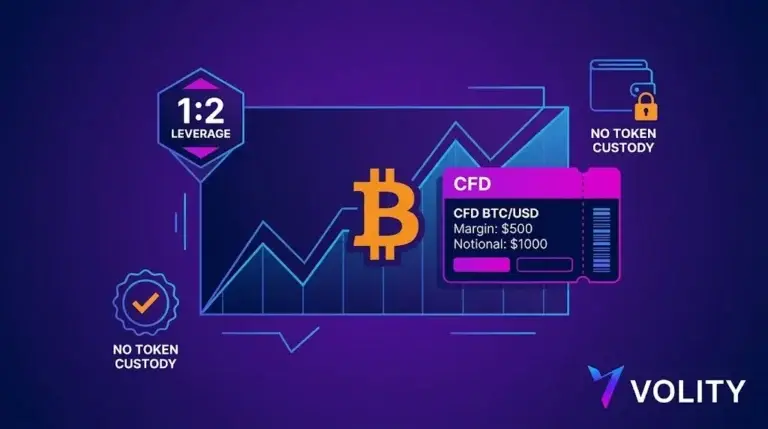
AI-powered trading gateways like Volity are redefining financial access. Volity offers over 350 CFD instruments-including equities, indices, forex, metals, and crypto-backed by ultra-fast execution, transparent pricing, and robust risk tools for both beginners and seasoned traders [16]. Built on an intuitive, TradingView-powered interface with real-time data, mobile/web support and VIP-level advisory services, Volity empowers users to access global financial markets with unmatched efficiency. Where volume meets agility.
Strategic Recommendations
| Objective | Recommended Action |
| Build Ecosystems | Launch APIs/SDKs, host hackathons and open-source contributions |
| Optimise Infrastructure | Combine cloud, on-prem and algorithmic efficiency; negotiate diversified compute deals |
| Embed Governance | Innovate with ethics-first models; maintain regulatory alignment proactively |
| Monetise Effectively | Scale revenue via subscriptions, commerce integrations, and usage-linked services |
| Reskill Workforce | Develop internal AI academies; integrate training in real-world deployments |
| Balance Open & Proprietary | Use open-source layers for speed; proprietary IP for differentiation |
🔍 Sources
- BOND, Trends – Artificial Intelligence, May 2025.
- Exploding Topics, ChatGPT Usage Growth Stats 2025.
- Reuters, Bank of America’s Erica crosses 2 bn interactions, April 2024.
- Yahoo Finance, OpenAI hits $10B revenue run-rate, July 2025.
- Business Insider, OpenAI CFO warns of $5B losses, July 2025.
- Reuters, OpenAI taps Google for cloud compute despite Microsoft deal, June 2025.
- Business Insider, JPMorgan: OpenAI may burn $46B before 2029, July 2025.
- arXiv, Qwen 2.5 Technical Report, December 2024.
- Forbes, Alibaba releases Qwen 2.5 and challenges Western LLMs, January 2025.
- Alibaba, Qwen 3 Model Overview, July 2025.
- Becker’s Hospital Review, AI scribes save 16,000 clinician hours, June 2025.
- AMA News, Ambient AI adoption in healthcare, June 2025.
- Business Insider, OpenAI’s CFO on tripling revenue in 2025, February 2025.
- Reuters, OpenAI working on in-app payment checkout, July 2025.
- The Information, OpenAI wins $200M Pentagon AI contract, June 2025.
- Volity.io, AI-powered CFD trading platform overview, 2025.
What Alexander Bennett watches: Three macro reads frame AI exposure beyond the daily narrative. Capex-to-revenue ratios across the four major hyperscalers, which signal whether the spend is generating commercial returns or front-running adoption. Power-grid constraints on AI data-centre buildout in the US and EU, which determine how much of the announced capacity actually comes online inside guidance windows. And earnings revisions on the applied-AI cohort versus the infrastructure cohort, which reveals where the value is accruing in real time. Infrastructure has led the cycle so far; the question through 2026 is whether applied AI starts generating margin expansion that reweights the leadership board. When applied-AI revisions accelerate while infrastructure revisions plateau, the rotation has begun.
Frequently asked questions
How do agentic AI systems differ from chatbot LLMs?
Chatbot LLMs are designed for single-turn or short-conversation question answering. Agentic AI systems plan multi-step workflows, call external tools and APIs, maintain persistent memory across long horizons, and execute tasks autonomously within defined guardrails. The Investopedia AI reference covers the broader category framing as it has evolved through the agentic transition.
What are realistic 2026 risks for AI-exposed equities?
Capex-to-revenue compression if hyperscaler customers slow AI inference spending, energy and grid bottlenecks delaying announced data-centre rollouts, regulatory action on AI training data and model deployment in major jurisdictions, and competitive margin pressure as the model layer commoditises. The Federal Reserve publishes economic-conditions reports that contextualise the broader capex cycle.
How do tokenised AI projects (FET, AGIX, OCEAN) fit the picture?
The Artificial Superintelligence Alliance merger consolidated FET, AGIX, and OCEAN into a single token (rebranded as ASI), targeting decentralised agent protocols and AI-data marketplaces. The CoinDesk learning library tracks the on-chain AI ecosystem with current project context. Tokenised AI is a small share of total AI exposure but trades on AI news cycles with high beta to the broader category.
How should investors think about position sizing in AI-themed exposure?
Concentration risk is real: a handful of names (Nvidia, the top hyperscalers, a few applied-AI leaders) account for a disproportionate share of index-level performance. Position sizing within a diversified equity allocation rather than concentrated bets gives the cleanest path to capturing the trend without taking single-name idiosyncratic risk. The SEC investor education resources cover the broader framework for managing thematic exposure.
Related guides
- Best AI stocks to invest in
- Stocks investing for beginners
- Best stock trading platforms in Europe
- Best trading platforms
- Risk management
Volity operates a trading platform and also publishes educational and analytical content about trading. The content on this page is for educational purposes only and should not be considered financial advice. Volity may benefit commercially when readers open trading accounts through links on this site.
Our content is produced and reviewed under documented editorial standards; see our comparison and review methodology.