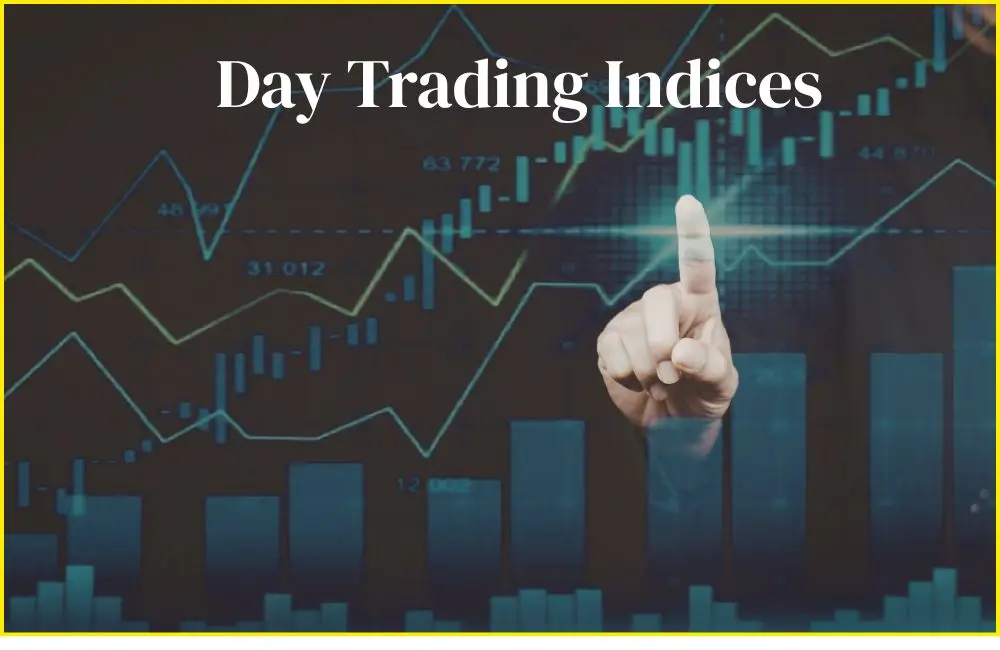
In up-to-date economic markets, daily marketing catalogues have been one of the most well-known systems.
Marketers concentrate on the representation of the whole market premise instead of dealing with personal investment, and they try to earn from temporary value transactions within one marketing session.
Some of the highly liquid, for instance, the S&P 500, NASDAQ-100, Dow Jones Industrial Average, and Europe’s DAX.
These signals present huge teams of industries and demonstrate the average instruction of a large economic bazaar.
For several marketers, the catalogue provides facilities such as deep liquidity, strong market fluctuation, and minimizes the disaster in the industry-centric.
Due to the benchmark identity, various factories are tracked by a single investment, and they often shift into more visible structures, making them lucrative for same-day techniques.
In this extensive framework, you will perceive what the day marketing catalogue exactly refers to, various approaches to deal with these indicators for similar marketing, confirmed techniques utilized by the marketers, and disaster mitigation strategies, so that agents and brokers can apply them in signaling marketing.
To make a more formed and controlled marketing method, by perceiving how indicators are treated within the marketing, without considering your position.
What Is Day Trading an Index?
The day trading schedule refers to purchasing and buying tools that monitor an investment list within the day marketing.
The purpose is to catch tiny value movements that happen within the marketing period.
Other than permanent donation, day marketers generally halt all situations in front of the market stop to remove all threatening disasters.
Understanding Stock Market Indices
The action and presentation of a couple of traders is calculated by a stock market list. It stands as an indicator that contemplates the soundness and instruction of a unique market or sector.
For instance, the S&P 500 tracks 500 of the biggest U.S. industries, the NASDAQ-100 concentrates extensively on IT companies, and the Dow Jones Industrial Average includes 30 large U.S. organizations.
The symptom value is volatile within the day and relies on the transactions of the stocks
Major issues can instigate these activities, such as economic views that illustrate interest value’s transaction, corporate savings and expenditure information, and global market volatility.
Since indices shadow the broader market operation, they are usually calculated more unprotectably comparatively less than personal investments.
Why Day Traders Prefer Indices
Several same-day marketers choose a catalogue over merely an investment for various reasons.
High Liquidity
Many indexes have a large marketing price, making it simple to access and leave conditions rapidly.
Lower Company-Specific Risk
Sudden information about the industry can lead to intense value shifts, while marketing an investment as indices expand the threat across several factories.
Strong Intraday Volatility
Indices often run importantly within many marketing systems, making facilities for temporary earnings.
Clear Market Trends
Broader financial fluctuations are tracked by indices in real time, making interpretation easier using electronic signals and other software. So now take them seriously.
Ways to Trade Indices
It is quite tough to purchase or sell an index straightaway. Marketers utilize economic tools that investigate or reflect the presentation of the index instead.
Here are some famous systems:
Index Futures
Index futures are agreements that permit marketers to come up with the predicted value of an investment.
One of the most extensively traded characteristics is the E-mini-S&P 500 Futures, which precisely identifies the S&P 500 index.
Key features of futures trading include: high liquidity, leverage through margin trading, and nearly 24-hour trading availability.
Because of leverage, even small price movements can result in significant gains or losses.
Index ETFs
Exchange-traded funds (ETFs) investigate the presentation of a preface and market such as constant investment in goods permutations.
A famous instance is the SPDR S&P 500 ETF Trust that reflects the execution of the S&P 500.
ETFs’ facilities are an easy entry for peddle marketers, less loan capital compared to upcoming destinations, and visible values.
ETFs are generally applied by freshers who seek manifestation to index marketing except critical accumulations.
CFDs for Index Trading
Contracts for Difference (CFDs) permit marketers to speculate on index values transactions without preserving the hidden resources.
Key benefits of CFDs such as capabilities to deal with both temporary and permanent, leverage selections, and access to global experts from one agent. However, CFD marketing includes extensive disasters due to leverage and expansion price.
Options on Indices
Selection offers marketers the ability to accurately and mandatorily purchase or sell an index at a unique value prior to a particular period.
Skilled marketers often present selection for protecting positions, earning techniques, and assumptive marketing.
Since choices engage more critical valuing frameworks, they are normally consulted by skilled marketers.
Best Indices for Day Trading
Not all prefaces are treated in a similar way. Some provide ideal situations for same-day marketing because of higher liquidity or volatility.
For instance, the S&P 500 is one of the most liquid economic markets in the globe.
Why marketers choose it: massive marketing volume, tight spreads, clear technical patterns. It is widely considered the benchmark index for U.S. markets.
NASDAQ-100
The NASDAQ-100 is extremely valued in the device or electronic industries.
Characteristics: higher volatility, strong reaction to tech sector news, rapid price movements
Because of its volatility, it is popular among scalpers and momentum traders.
Dow Jones Industrial Average
The Dow Jones Industrial Average includes 30 major companies and often moves more steadily than other indices.
There are some advantages of Dow Jones smooth price action, strong correlation with economic data. Some traders prefer the Dow because it can be easier to analyze technically.
DAX
Germany’s DAX is known for large intraday price swings.
Features: high volatility, active during European sessions, and large daily ranges. This makes the DAX a favorite among European day traders.
Best Time to Day Trade Indices
In intraday marketing glory, time management plays a crucial role. A couple of periods during marketing day attempt to generate powerful value fluctuations.
London Session
In world economic markets, the London assembly is the most operative period.
European indices like the DAX and FTSE 100 experience powerful fluctuations within this period because of the demonstration of financial views, institutional marketing mobility.
New York Session
The New York session is especially paramount for U.S. indices. Most marketing activity happens while the New York Stock Exchange is open.
Key characteristics: high volatility at market open, strong institutional participation, and major economic announcements. So, by this process, it has been done within an agent.
Market Overlap
The overlap between the London and New York sessions often produces the largest price movements of the day.
Traders typically observe three phases: strong directional moves, lower volume, and institutional position adjustments.
Perceiving these phases helps traders choose the best time to enter trades.
Popular Day Trading Strategies for Indices
Effective day marketers generally depend on formative techniques rather than indiscriminate marketing selections. Here are several widely used approaches.
Trend Following Strategy
Trend following involves identifying the market’s direction and trading in the same direction.
Traders often use moving averages, trendlines, and momentum indicators. For example, if an index is consistently making higher highs and higher lows, traders may focus on buying pullbacks within the trend.
Breakout Trading
Breakout trading concentrates on price fluctuation beyond prime assistance or resistance levels.
When an indicator intrudes above the threshold, marketers hope for the right moment to proceed upward.
Breakouts are simple within the opening of the market, several declarations, and meeting expansion.
Scalping
Scalping includes leading and maintaining tiny markets throughout the day.
Characteristics: very short holding periods, small profit targets, high trade frequency. Scalpers rely heavily on fast execution and tight spreads.
Mean Reversion
Mean-reversion techniques assume that values will return to their mid-range after intense moves.
Indicators often used include the Relative Strength Index (RSI), moving averages, and Bollinger Bands.
When an index becomes overbought or oversold, traders anticipate a reversal.
Risk Management for Index Day Trading
Risk management is one of the most significant issues in effective marketing. Even the ideal techniques can fail if the disaster is not contained.
Use Stop Loss Orders
A stop loss automatically closes a trade if the market moves against your position. This helps protect marketers from significant losses during unexpected market shifts.
Position Sizing
Skilled marketers generally allocate only 1-2% of their trading capital to risk. This ensures that a series of losses does not significantly damage the trading account.
Maintain a Risk-Reward Ratio
Several marketers’ goal is a risk-to-reward ratio of less than 1.2. This means that potential profits should be at least twice the potential loss.
Avoid Overtrading
Overmarketing is a general misdeed among freshers. Opening too many trades often leads to emotional decisions, higher transaction costs, and reduced discipline. Developing patience and sticking to a trading plan is essential
Best Tools for Day Trading Indices
Update marketing agents offer strong instruments that assist marketers in interpreting traders and lead deal proficiently.
Two extensively trending agents, for instance, TradingView and MetaTrader 5. These platforms provide: advanced charting tools, technical indicators, custom trading scripts, and market alerts.
Other useful tools include: economic calendars for tracking news releases, trading journals for performance tracking, and back testing tools for testing strategies.
Using the right tools can significantly improve trading efficiency and analysis.
Best Brokers for Trading Indices
Selecting a trustworthy agent is significant for same-day marketing success. Many famous global agents give index marketing services.
Examples include Interactive Brokers, IG Group, and Plus500. When choosing a broker, think about the following issues: provision and safety, marketing payment, agent characteristics, leading speed, and attainable leverage. A trustworthy broker ensures fair pricing and reliable order execution.
Common Mistakes New Index Traders Make
Several freshers make escapable misdeeds while beginning with index marketing. Some common mistakes include marketing techniques that were accessedwithout a defined plan, which often leads to inconsistent results.
Also, ignoring economic news, top financial declarations can cause quick market fluctuations.
Additionally, using huge leverage that enhances strong profits, it incurs losses.
But revenge marketing is another mistake that tries to recapture the losses rapidly, which has consequences of multiple wrongs.
Finally, the mitigation of risk maintenance fails to manage the risk that causes loss. Avoiding these mistakes can significantly improve long-term performance.
Pros and Cons of Day Trading Indices
Like any trading approach, day trading indices has both advantages and disadvantages.
Pros of day marketing indices are high liquidity, diversification across multiple companies, and strong and predictable trends.
Whereas cons of day marketing catalogue require experience and discipline, high volatility during major news events, and leverage can amplify losses.
Perceiving both sides assists marketer improve practical desires.
Frequently Asked Questions
Is day trading indices profitable?
Obviously, profit depends on skill, management, discipline and risk mitigation. Though combination of experience, it can be profitable.
Which index is best for beginners?
The S&P 500 is often suggested for freshers because of its smooth fluctuation and comparatively steady value transaction.
How much money do you need to day trade indices?
The demanded investment relies on the marketing tools. Future marketing simply urges higher border, while ETFs and CFDs may permit tinier input balance.
Are indices better than stocks for day trading?
Several marketers choose indices for they reflect the whole markets rather than personal industries, minimizing the consequences of company- based information.
What is the best indicator for index trading?
There is no single best indicator. Many traders combine tools such as moving averages, RSI, and VWAP to analyze market trends and momentum.