Investing in financial products involves risk. Losses may exceed the value of your original investment.
The Crypto Trading Starter Kit
A plain-English PDF: what to check before you trade, how orders and risk really work, and the mistakes to skip. Get it free.
Injective Protocol is a specialized Layer 1 blockchain engineered for decentralized finance (DeFi) and advanced financial applications, offering sub-second transaction finality and MEV resistance. It provides robust infrastructure for building powerful decentralized exchanges, derivatives, and other financial primitives, empowering open and accessible finance. This guide explores Injective’s unique architecture, INJ tokenomics, and the opportunities it presents for both users and developers in the Web3 finance ecosystem.
While understanding Injective is important, applying that knowledge is where the real growth happens. Create Your Free Crypto Trading Account to practice with a free demo account and put your strategy to the test.
What is Injective Protocol?
Injective Protocol is a fast Layer 1 blockchain specifically optimized for decentralized finance (DeFi) and advanced financial applications. It serves as an open, interoperable platform that enables developers to build powerful decentralized applications (dApps) for various financial use cases. Unlike general-purpose blockchains, Injective focuses on delivering high-performance trading experiences with features essential for professional financial markets.
What problem does Injective solve?
Injective addresses several critical limitations prevalent in traditional and early decentralized finance systems. These include high transaction fees, slow processing speeds, and the lack of advanced trading features such as margin trading and derivatives. Existing DeFi solutions often struggle with congestion and scalability, making complex financial instruments (stocks, forex, crypto) impractical. Injective aims to overcome these challenges by providing a specialized Layer 1 blockchain infrastructure designed for efficient, secure, and permissionless financial transactions, offering a robust alternative to centralized exchanges.
How does Injective work?
Injective functions as a highly specialized blockchain that provides a fully decentralized order book exchange, enabling users to trade a wide array of financial products without intermediaries. It achieves its high performance and security through a unique combination of architecture and consensus mechanisms. At its core, Injective leverages the Cosmos SDK framework, which allows for modular development and customization tailored for financial applications. This foundation supports its robust infrastructure, facilitating rapid transaction processing and ensuring a seamless trading experience for its users.
Injective utilizes the Cosmos SDK and Tendermint Proof-of-Stake consensus mechanism. The Cosmos SDK is a modular framework that allows developers to build custom blockchains, granting Injective the flexibility to optimize for financial use cases. Tendermint provides the underlying consensus engine, ensuring instant transaction finality and strong security guarantees. This combination allows Injective to maintain high throughput and low latency, crucial for demanding trading environments, while benefiting from the interoperability of the broader Cosmos ecosystem.
Is Injective a Layer 1 or Layer 2?
Injective is unequivocally a Layer 1 blockchain, meaning it operates as an independent, sovereign network with its own consensus mechanism and security. This design choice offers significant advantages over Layer 2 solutions, which typically rely on the security of an underlying Layer 1 chain. As a sovereign Layer 1, Injective enjoys direct control over its security, governance, and upgrade paths, allowing it to tailor its architecture specifically for decentralized finance applications. This provides greater flexibility and performance optimization for financial markets.
What are the key features of Injective?
Key features of Injective include its fully decentralized central limit order book (CLOB), cross-chain interoperability, and advanced financial primitives. The CLOB model provides a familiar trading experience similar to traditional exchanges, supporting complex order types and robust liquidity. Inter-Blockchain Communication (IBC) enables seamless asset transfers and data exchange with other Cosmos-based blockchains, building a highly connected ecosystem. Additionally, Injective supports a range of sophisticated financial products like perpetuals, options, and futures, expanding the scope of decentralized trading.
How fast is Injective blockchain?
The Injective blockchain achieves sub-second block times, providing near-instant transaction finality, which is a significant speed advantage in the blockchain space. This rapid processing is primarily due to its use of the Tendermint Proof-of-Stake consensus mechanism, optimized for high-performance applications. Compared to other prominent Layer 1 networks that may experience block times ranging from several seconds to minutes, Injective’s speed ensures that trades are executed and settled almost immediately. This minimizes latency and enhances the overall responsiveness for traders on its decentralized exchange.
Ready to Elevate Your Trading?
You have the information. Now, get the platform. Join thousands of successful traders who use Volity for its powerful tools, fast execution, and dedicated support.
Create Your Account in Under 3 MinutesThe INJ Token: Fueling the Injective Ecosystem
The INJ token is the native utility and governance token of the Injective Protocol. It serves multiple essential functions within the ecosystem, acting as the primary medium for transaction fees, staking, and participation in the protocol’s decentralized governance. The INJ token is integral to the economic security and operational efficiency of the network, ensuring that users have a direct stake in its development and future direction. Its multi-faceted utility underpins the entire Injective ecosystem.
| INJ Token Utility | Description | Benefit |
| Transaction Fees | Pays for all network operations | Low-cost DeFi |
| Staking | Secures the network via validators | Earn rewards, network security |
| Governance | Votes on protocol upgrades/changes | Community control |
| Token Burn | Deflationary mechanism for value accrual | Reduced supply, potential value increase |
The Weekly Token Burn
Injective implements a unique and robust deflationary tokenomics model centered around a weekly token burn mechanism. This process is designed to reduce the circulating supply of INJ tokens over time, potentially increasing its scarcity and value. Specifically, 60% of all fees collected from dApps built on Injective are periodically auctioned off and subsequently burned. This weekly burn auction demonstrates a transparent and consistent approach to value accrual for INJ token holders.
Benefits of Using Injective
The benefits of using Injective are extensive, particularly for participants in decentralized finance. These advantages include access to a high-speed trading environment with sub-second block times, significantly reduced or zero gas fees for most trading activities, and robust MEV (Maximal Extractable Value) resistance. Furthermore, users can engage in staking their INJ token to earn rewards and participate in the protocol’s governance, influencing its future direction. This comprehensive suite of features creates a highly efficient and user-centric platform for advanced DeFi applications.
Injective’s Core Features & Advantages
Decentralized trading on Injective offers a robust and transparent alternative to traditional centralized exchanges, providing users with complete control over their assets. The platform is built around a fully decentralized central limit order book (CLOB), a familiar trading model that enables sophisticated order types and efficient price discovery. This architecture ensures that all trades are executed on-chain, minimizing counterparty risk and improving transparency. Injective’s focus on a truly decentralized trading experience directly addresses what makes it genuinely decentralized for trading.
What makes Injective truly decentralized for trading?
Injective achieves true decentralized exchange (DEX) functionality by operating a central limit order book (CLOB) directly on its Layer 1 blockchain. Unlike Automated Market Maker (AMM) models, which rely on liquidity pools, Injective’s CLOB matches buy and sell orders directly, ensuring full transparency and preventing manipulation. All order matching and settlement occur on-chain, eliminating the need for centralized intermediaries. This design provides users with self-custody of their funds throughout the trading process, reinforcing the core principles of decentralization.
Injective’s Key Use Cases
Injective’s use cases extend across a broad spectrum of decentralized finance, enabling a wide range of sophisticated financial products beyond basic token swaps. The platform supports spot trading, perpetuals, futures, and options, offering comprehensive tools for both retail and institutional traders. Its infrastructure allows for the creation of custom financial markets, including unique derivatives and synthetic assets. Furthermore, Injective facilitates advanced trading strategies through support for trading bots and programmatic access, catering to users who require more complex functionalities than typical decentralized exchanges.
MEV Resistance & Fair Trading
One of the most significant benefits of using Injective is its inherent MEV (Maximal Extractable Value) resistance, which ensures a fairer and more equitable trading environment. MEV refers to the profit validators or miners can extract by reordering, censoring, or inserting transactions within a block. Injective’s unique frequent batch auction model for order matching effectively neutralizes MEV, protecting users from predatory practices like front-running and sandwich attacks. This design ensures that all participants have an equal opportunity to execute trades at fair market prices, building trust and integrity within its decentralized exchange.
Why a Dedicated DeFi L1 Matters
When comparing Injective to Ethereum, the fundamental difference lies in their specialized focus and architectural design. Ethereum is a general-purpose Layer 1 blockchain that supports a vast array of dApps, from DeFi to NFTs, but often faces challenges with network congestion and high gas fees, particularly during peak demand. In contrast, Injective is purpose-built as a dedicated DeFi Layer 1, optimized specifically for financial applications. This specialization allows Injective to offer sub-second block times, significantly lower transaction costs (often near-zero), and advanced trading features that are difficult to implement efficiently on a general-purpose chain like Ethereum. Injective’s architecture prioritizes the demands of a high-performance financial market.
Projects & Opportunities in the Injective Ecosystem
The Injective ecosystem is rapidly expanding, attracting a diverse range of projects and developers committed to building the future of decentralized finance. This growth signifies Injective’s position as a foundational layer for Web3 finance, providing the necessary infrastructure for innovation. The ecosystem includes various dApps, infrastructure tools, and community initiatives that collectively improve the platform’s utility and reach. As more projects launch and integrate with Injective, it solidifies its role as a vibrant hub for open and permissionless financial applications.
dApps Built on Injective Today
Several specific dApps are actively built and operational on Injective, offering users tangible opportunities to engage with the ecosystem today. Helix stands as a premier decentralized exchange, offering spot and perpetual markets with a familiar order book interface. Astroport, a prominent AMM (Automated Market Maker) on Cosmos, has expanded its reach to Injective, providing liquidity and swapping services. Additionally, projects like Frontrunner leverage Injective’s infrastructure to offer decentralized sports prediction markets. These dApps demonstrate the practical utility and diverse applications thriving within the Injective Protocol environment.
Bridging Traditional & Decentralized Systems
Injective is strategically positioned to bridge the gap between traditional finance and decentralized systems, attracting significant interest from potential institutional adoption. Its robust infrastructure, high performance, and unique features like MEV resistance are particularly appealing to institutional players seeking reliable and efficient trading environments. The platform’s interoperability, facilitated by IBC, also allows for seamless asset transfer from other blockchains, further enhancing its appeal. This focus on institutional-grade infrastructure positions Injective as a key player in the evolution towards a more integrated and accessible global financial system.
Turn Knowledge into Profit
You have done the reading, now it is time to act. The best way to learn is by doing. Open a free, no-risk demo account and practice your strategy with virtual funds today.
Open a Free Demo AccountINJ Price, Risks & Future Outlook
Investing in the INJ token involves understanding its market dynamics, inherent risks, and long-term potential within the decentralized finance landscape. As the native asset of a specialized Layer 1 blockchain, INJ’s value is closely tied to the growth and adoption of the Injective ecosystem. Potential investors should consider both the technological strengths of the Injective Protocol and the broader market trends affecting the crypto space. This section provides an overview of its current market performance, factors influencing its value, and the inherent risks associated with such investments.
Current INJ Price & Market Dynamics
The INJ price and its market cap move constantly, so any figure printed in an article is out of date by the time you read it; take both from a live quote screen rather than from a guide. The price of INJ token, like all cryptocurrencies, is subject to significant market volatility, influenced by factors such as overall crypto market sentiment, new protocol developments, ecosystem growth, and global economic conditions. Investors can monitor its live price chart and market cap on various reputable platforms to stay informed about its real-time performance.
Is INJ a Good Investment?
Whether Injective suits a given portfolio depends on individual risk tolerance and objectives, and nothing here is a recommendation to buy. What can be stated factually is the design: the INJ token has a tokenomics model built around a weekly burn auction that removes supply. The Injective Protocol boasts unique technical features like MEV resistance, sub-second block times, and a growing decentralized exchange (DEX) ecosystem. Continued adoption of its dApps, further integrations within the Cosmos network, and potential institutional adoption could drive long-term value. However, the inherent market volatility of cryptocurrencies always presents risks.
Risks of Investing in INJ
Investing in INJ token carries inherent risks common to the cryptocurrency market, including extreme market volatility that can lead to rapid price fluctuations. Regulatory changes in various jurisdictions could impact the adoption and legality of decentralized finance projects. Competition from other Layer 1 blockchains and DEXs also poses a challenge, as innovation in the crypto space is constant. Additionally, technical challenges, security vulnerabilities, or a slower-than-expected adoption rate for the Injective Protocol could affect its long-term viability. Investors should conduct thorough due diligence and only invest what they can afford to lose.
Accessibility for Beginners
While Injective offers powerful and advanced features for decentralized finance, its ecosystem might present a steeper learning curve for absolute beginners compared to simpler swap platforms. The complexity of a central limit order book, derivatives trading, and concepts like MEV resistance may require some prior knowledge. However, users can start with basic spot trading on dApps like Helix, and gradually explore more advanced functionalities. The growing number of educational resources and user-friendly interfaces are continuously improving accessibility for new users interested in the Injective Protocol.
Buying, Staking & Using Injective dApps
Engaging with the Injective Protocol ecosystem involves several key steps, from acquiring the INJ token to participating in network activities like staking and using its decentralized finance applications. Understanding these processes is crucial for maximizing your interaction with this specialized Layer 1 blockchain. This section provides actionable guidance on how to get started and navigate the Injective ecosystem effectively.
Where to Buy INJ Coin
The INJ token trades on a wide range of centralised venues as well as on Injective’s own on-chain order books, so availability is rarely the constraint. What differs between venues is the pair you can trade (fiat or crypto-quoted), the fee schedule, the withdrawal route back to your own wallet, and whether the operator is licensed in your jurisdiction. Check the licence on the regulator’s own register and confirm that on-chain withdrawal works before you move size through any platform.
Wallets Supporting INJ
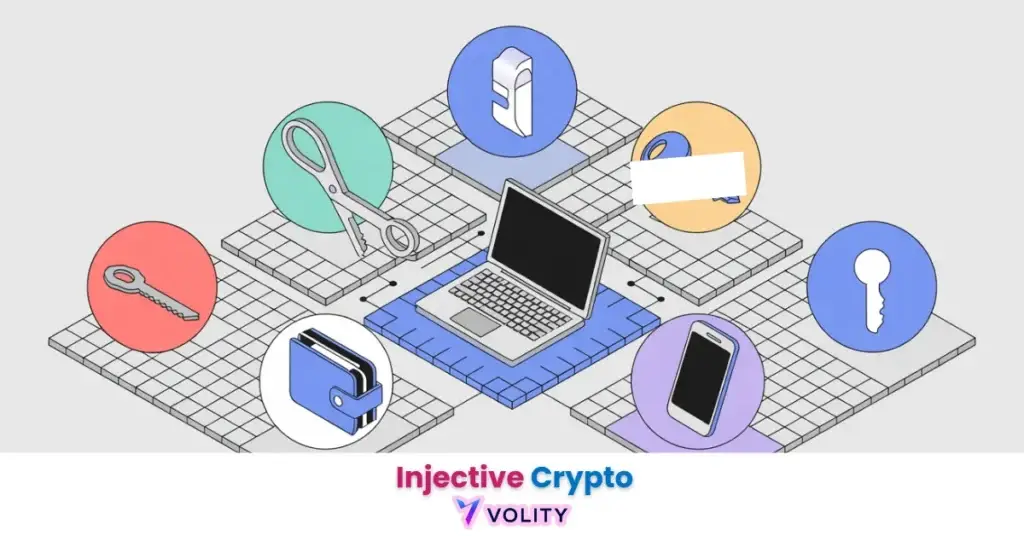
To hold INJ yourself you need a wallet that supports the network. Two things decide the shortlist rather than the brand: whether the wallet speaks the Cosmos inter-blockchain standard natively, and whether it keeps the private key offline. Hardware wallets keep the key off an internet-connected device, which is the single largest reduction in risk available to a self-custody holder. Cosmos-native software wallets connect to Injective without extra configuration; Ethereum-tooled wallets generally need a custom RPC endpoint added first. Check the current supported-wallet list in Injective’s own documentation rather than in a guide, because it changes.
How to Stake INJ for Rewards & Governance
Staking INJ is a fundamental way to secure the Injective Protocol network, earn rewards, and participate in its governance. To stake, first transfer your INJ token to a compatible wallet like Keplr. Next, navigate to the Injective Hub or a staking interface provided by your wallet. Here, you can select a validator from the active set to delegate your INJ. Delegating your tokens contributes to the network’s security and, in return, you receive validator rewards and gain the ability to vote on governance proposals, influencing the protocol’s future.
How to Use Injective dApps
Using Injective dApps typically involves connecting a compatible wallet to the decentralized application’s interface. Once your wallet (e.g., Keplr, MetaMask) is connected, you can interact with the dApp’s functionalities, such as trading on Helix, providing liquidity on Astroport, or participating in prediction markets. Each dApp will have its own specific user interface and set of instructions, but the general principle involves approving transactions through your connected wallet. Familiarizing yourself with the dApp’s documentation is recommended for a smooth user experience within the Injective Protocol ecosystem.
Bottom Line
Injective Protocol stands out as a specialized Layer 1 blockchain, purpose-built for high-performance decentralized finance. Its unique architecture, INJ tokenomics, and MEV resistance offer a robust platform for advanced trading and dApp development. As the ecosystem expands, Injective continues to bridge traditional finance with the Web3 world, presenting significant opportunities for traders and developers alike.
Key Takeaways
- Injective is a specialized Layer 1 blockchain optimized for decentralized finance (DeFi) with sub-second finality and MEV resistance.
- The INJ token fuels the ecosystem, enabling transaction fees, staking, governance, and features a deflationary weekly burn mechanism.
- Injective offers a decentralized central limit order book (CLOB), cross-chain interoperability, and supports advanced financial products like perpetuals and options.
- Key benefits include high-speed trading, near-zero gas fees, and protection against predatory practices through MEV resistance.
- Users can buy INJ on major exchanges, store it in compatible wallets like Keplr, and stake it to earn rewards and participate in governance.
Frequently Asked Questions
What Volity analysts watch: Three diagnostics separate Injective from generic Layer 1 marketing. First, the burn auction itself: 60 percent of dApp protocol fees are pooled weekly and used to buy back INJ from open auction, then burned. The cumulative burned supply is a public on-chain metric, and it correlates directly with on-chain trading volume rather than narrative cycles. Second, the inEVM rollout: Ethereum-tooled DeFi developers can now deploy on Injective without rewriting in CosmWasm, which materially expanded the addressable builder base in 2024 and 2025. Third, perpetual open interest concentration: a finance-focused L1 is only as durable as the depth of its derivative books, and Injective’s share of cross-chain perp volume is the cleaner KPI than total value locked. Burn-auction history is published on-chain by the protocol itself, which is where it should be read rather than from a secondary tracker.
Related guides
Volity operates a trading platform and also publishes educational and analytical content about trading. The content on this page is for educational purposes only and should not be considered financial advice. Volity may benefit commercially when readers open trading accounts through links on this site.
Our content is produced and reviewed under documented editorial standards; see our comparison and review methodology.