Keilmuster neigen bei geringer Liquidität zu Fehlausbrüchen. Insbesondere steigende Keile erzeugen oft „Bull Traps“, bei denen der Kurs über die obere Trendlinie ausbricht, nur um wieder zu fallen, sobald die Stop-Loss-Orders von Privatanlegern ausgelöst werden. Die Anforderung an die Berührungspunkte ist nicht absolut. Bulkowski verlangt mindestens fünf Berührungen über beide Trendlinien hinweg, und ein dünn berührtes Muster ist weit leichter zu zeichnen als zu handeln. Hohes Volumen am Ausbruchstag verbessert einen bullischen Keil, doch Krypto-Keile brechen häufig bei gewöhnlichem Volumen aus, was falsche Signale erzeugt und Händler in die Falle lockt. Ein Abdriften am Apex führt zu einer seitwärts gerichteten, unruhigen Kursbewegung, die das Muster vollständig entwertet, doch viele Händler halten an Verlustpositionen fest, in der Hoffnung auf einen verzögerten Ausbruch. Keilmuster werden bei wichtigen Nachrichtenereignissen wie NFP oder Entscheidungen der Zentralbanken unzuverlässig, wenn institutionelle Kapitalströme die technische Struktur überlagern. Die Wertentwicklung in der Vergangenheit ist kein Indikator für zukünftige Ergebnisse. Kapital ist gefährdet.
Keilmuster sind technische Chartformationen, die durch zwei konvergierende Trendlinien gekennzeichnet sind und vor einem Ausbruch einen „Volatilitäts-Squeeze“ signalisieren. In Thomas Bulkowskis getesteter Bullenmarkt-Stichprobe bricht ein fallender Keil in 68 % der Fälle nach oben aus, und 26 % dieser Aufwärtsausbrüche schaffen es nicht, 5 % über den Ausbruch hinauszulaufen; ein steigender Keil bricht in 60 % der Fälle nach unten aus, und 51 % dieser Abwärtsausbrüche scheitern am selben Test. Beide liegen in der unteren Hälfte seiner Tabellen, ein Keil ist also eine Struktur, die man vorsichtig handelt, und keine Konfiguration mit hoher Trefferwahrscheinlichkeit.
Keilmuster fungieren als primäre strukturelle Indikatoren für einen bevorstehenden Marktausbruch. Diese Formationen bestehen aus zwei konvergierenden Trendlinien, die in die gleiche Richtung verlaufen und signalisieren, dass der aktuelle Trend bei gleichzeitig abnehmendem Volumen an Schwung verliert. In der technischen Landschaft des Jahres 2026 stellen sie die ultimative „gespannte Feder“ für Umkehr- und Fortsetzungsszenarien dar.
Die Effektivität eines Keils hängt stark von seiner „Reife“ und dem begleitenden Volumenprofil ab. Da die Märkte zunehmend algorithmisch geprägt sind, müssen Händler anhand der Zahl der Trendlinienberührungen zwischen validen strukturellen Keilen und vorübergehendem Kursrauschen unterscheiden.
Das Verständnis von Handel mit Keilmustern ist wichtig, doch echtes Wachstum entsteht erst durch die Anwendung dieses Wissens. Kostenloses Forex-Handelskonto erstellen, um mit einem kostenlosen Demokonto zu üben und Ihre Strategie zu testen.
Was sind Keilmuster und wie entstehen sie?
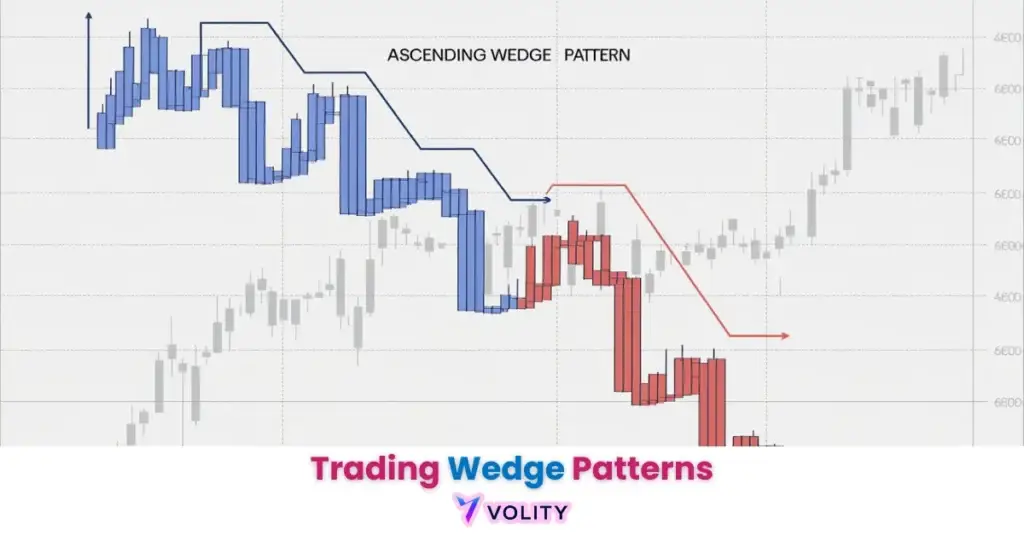
Ein Keilmuster ist eine Chartformation, die durch zwei konvergierende Trendlinien gekennzeichnet ist, die in die gleiche Richtung verlaufen und eine Phase der Preiskonsolidierung sowie nachlassender Dynamik anzeigen. Im Gegensatz zu symmetrischen Dreiecken, bei denen die Trendlinien in unterschiedlichen Winkeln aufeinander zulaufen, behalten Keile die gleiche Neigungsrichtung bei, entweder beide nach unten oder beide nach oben.
- Der fallende Keil (bullische Tendenz): Konvergierende Abwärtsneigungen signalisieren die Erschöpfung der Verkäufer und eine potenzielle Umkehr zu höheren Preisen.
- Der steigende Keil (bärische Tendenz): Konvergierende Aufwärtsneigungen signalisieren die Erschöpfung der Käufer und eine potenzielle Umkehr zu niedrigeren Preisen.
- Der Berührungstest: Bulkowski verlangt insgesamt mindestens fünf Berührungen, drei an der einen und zwei an der anderen Trendlinie, sowie eine Mindestdauer von drei Wochen; alles Kürzere ist ein Wimpel.
Fallende Keile brechen in 68 % der Fälle nach oben aus, gemessen an Bulkowskis Bullenmarkt-Stichprobe von mehr als 800 Trades. Die Ausbruchsrichtung ist nicht dasselbe wie die Performance: Er reiht den fallenden Keil auf Platz 31 von 39 Mustern mit Aufwärtsausbruch ein und bezeichnet ihn als schwachen Performer, die Richtungstendenz ist also ein Ausgangspunkt und kein Vorteil.
Der „Apex Squeeze“ und Volatilitätsexpansion
Die Volatilitätsexpansion beschreibt die Kursbewegung nach dem Ausbruch. Bulkowski misst den durchschnittlichen Ausbruch bei 61 % bis 62 % des Weges zum Apex für einen fallenden Keil und bei 67 % für einen steigenden, die meisten Muster lösen sich also deutlich auf, bevor die Trendlinien tatsächlich zusammentreffen. Die sich verengenden Trendlinien erzeugen eine Analogie zur „Zahnpastatube“, bei der der Preis in einen immer engeren Bereich komprimiert wird und potenzielle Energie speichert.
Die Volumenkontraktion während der Bildung ist eine unverzichtbare Voraussetzung. Bleibt das Volumen während der Keilbildung erhöht, gelingt es dem Muster nicht, den Preis in den notwendigen engen Bereich zu komprimieren. Das Volumen fällt bis zum Ausbruch bei 72 % bis 75 % der fallenden Keile und bei 79 % der steigenden Keile, und bullische Keile, die bei hohem Volumen ausbrechen, schneiden besser ab als solche, bei denen das nicht der Fall ist.
Bereit, Ihr Trading auf das nächste Level zu bringen?
Sie haben das Wissen. Jetzt fehlt die Plattform. Schließen Sie sich Tausenden erfolgreichen Tradern an, die Volity für leistungsstarke Tools, schnelle Ausführung und engagierten Support nutzen.
Erstellen Sie Ihr Konto in unter 3 MinutenStatistische Performance: Fallende vs. steigende Keile im Jahr 2026
Vergleichende Leistungsdaten im Jahr 2026 zeigen eine signifikante Zuverlässigkeitslücke zwischen bullischen fallenden Keilen und bärischen steigenden Keilen. Diese Asymmetrie spiegelt wider, dass Umkehrungen von der Unterstützung (fallende Keile) eine höhere Überzeugungskraft haben als Umkehrungen vom Widerstand (steigende Keile).
Fallender Keil (bullisch): 26 % der Aufwärtsausbrüche schaffen es nicht, 5 % über den Ausbruch hinauszulaufen, und der durchschnittliche Anstieg über den Rest beträgt 38 %, gemessen an US-Aktien. Steigender Keil (bärisch): 51 % der Abwärtsausbrüche scheitern an demselben Test, und der durchschnittliche Rückgang beträgt 9 %, weshalb Bulkowski den steigenden Keil als letztes der 36 Muster mit Abwärtsausbruch einordnet. Throwbacks und Pullbacks sind die Regel und nicht die Ausnahme: 62 % bis 74 % der Ausbrüche kehren zunächst zur Trendlinie zurück, wer also bei der ersten Bewegung aussteigt, erwischt nur einen Teil davon.
Die veröffentlichten Statistiken stammen aus US-Aktien. Für Keile in Gold, FX oder Krypto existiert keine vergleichbare getestete Stichprobe, jede für diese Märkte genannte „Erfolgsquote“ ist daher eine Behauptung und keine Messung.
Marktvolatilitätsregime bestimmen, ob Keile sauber bleiben oder verzerrt werden. In Phasen extremer Volatilität führt ein Abdriften am Apex oft dazu, dass Muster entwertet werden, bevor ein Ausbruch erfolgt.
Zählen Sie die Berührungspunkte, bevor Sie das Muster handeln: Bulkowski will mindestens fünf über beide Trendlinien verteilt, drei an der einen und zwei an der anderen, bei einer Formationsdauer von drei Wochen oder mehr.
Schritt-für-Schritt-Strategie
Die Bestätigung, die Bulkowski tatsächlich testet, ist ein Schlusskurs außerhalb einer der beiden Trendlinien; hohes Volumen am Ausbruchstag ist ein Qualitätsfilter darauf und kein Ersatz dafür. Professionelle Händler folgen einem Vier-Schritte-Plan, der Fehlausbrüche herausfiltert, bevor Kapital eingesetzt wird.
Die Identifizierung beinhaltet das Zeichnen von Trendlinien mit mindestens drei Berührungspunkten und die Sicherstellung einer Verengung von mindestens 60 % von der Basis des Musters bis zum Apex, um zu bestätigen, dass der Preis tatsächlich komprimiert ist. Die Bestätigung erfordert das Abwarten eines Volumenschubs um das 2- bis 3-fache bei der Ausbruchskerze, um die institutionelle Beteiligung zu validieren. Die Einstiegswahl hängt von der Risikotoleranz ab. Der konservative „Retest-Einstieg“ wartet darauf, dass der Kurs zur gebrochenen Trendlinie zurückkehrt, während der aggressive „Momentum-Schlusskurs“ sofort einsteigt, wenn die Kerze jenseits der Trendlinie schließt. Die Zielsetzung nutzt die Berechnung der „gemessenen Bewegung“, indem die Höhe des Keils (vom oberen zum unteren Apex) gemessen und dieser Abstand vom Ausbruchsniveau projiziert wird.
Nach Bulkowskis eigener Messregel gerechnet: Nehmen Sie die Höhe vom höchsten Hoch bis zum tiefsten Tief im Muster, multiplizieren Sie sie mit dem Prozentsatz, der das Ziel historisch erreicht, also 62 % für einen nach oben ausbrechenden fallenden Keil, und addieren Sie das Ergebnis auf den Ausbruchskurs. Das ergibt ein Ziel, das die Statistik stützt, statt der vollen Musterhöhe, die sie nicht stützt. Die Wertentwicklung in der Vergangenheit ist kein Indikator für zukünftige Ergebnisse.
WARNING: Hüten Sie sich vor dem „Apex-Drifting“, bei dem der Preis den Keil seitwärts ohne Volumensprung verlässt. Diese Formationen entwerten das Muster und deuten auf einen Wechsel von einem Trendregime zu einem unruhigen, seitwärts gerichteten Markt hin.
Warum Keilmuster scheitern
Die statistische Analyse gescheiterter Muster zeigt, dass geringes Volumen und das Abdriften am Apex die Hauptursachen für die Entwertung von Keilmustern sind. Ein Keil erfordert das gleichzeitige Zusammenwirken mehrerer Bedingungen für einen erfolgreichen Ausbruch.
| Keil und Ausbruch | Wie oft er so ausbricht | Break-even-Fehlerquote | Durchschnittliche Bewegung | Throwback / Pullback |
| Fallender Keil, aufwärts | 68% | 26% | +38% | Throwback 62% |
| Fallender Keil, abwärts | 32% | 29% | -14% | Pullback 74% |
| Steigender Keil, aufwärts | 40% | 19% | +38% | Throwback 72% |
| Steigender Keil, abwärts | 60% | 51% | -9% | Pullback 72% |
Bullenmarkt-Statistiken von Thomas Bulkowskis Seiten zum fallenden Keil und zum steigenden Keil, gestützt auf mehr als 800 bzw. mehr als 1.400 perfekte Trades.
Lesen Sie die Fehlerquoten-Spalte statt der Richtungsspalte. Ein fallender Keil, der nach oben ausbricht, ist der beste der vier Fälle und scheitert dennoch bei jedem vierten Mal am 5-Prozent-Test; ein steigender Keil, der nach unten ausbricht, also der Fall, den die meisten Leitfäden als verlässliches bärisches Signal beschreiben, scheitert häufiger als er funktioniert. Ein Abdriften am Apex kommt in der getesteten Menge gar nicht vor, was ein Grund ist, beiseitezustehen, und kein Grund zu halten.
💡 KEY INSIGHT: Der durchschnittliche Anstieg von 38 % ist eine US-Aktien-Zahl, gemessen an den Mustern, die den Break-even-Test überstanden haben, und sie steht neben einer Fehlerquote von 26 % und einem Performance-Rang in der unteren Hälfte. Zitieren Sie den ganzen Satz oder keinen davon.
Wissen in Gewinn verwandeln
Sie haben gelesen, jetzt ist es Zeit zu handeln. Der beste Weg zu lernen ist durch Praxis. Eröffnen Sie ein kostenloses, risikofreies Demokonto und üben Sie Ihre Strategie noch heute mit virtuellem Guthaben.
Kostenloses Demokonto eröffnenBeste Zeitrahmen und Assetklassen für den Keilhandel
Höhere Zeitrahmen wie 4-Stunden- und Tagescharts liefern die saubersten Keilsignale, indem sie algorithmisches Intraday-Rauschen herausfiltern. Der zusätzliche Kontext höherer Zeitrahmen ermöglicht es Händlern zu bewerten, ob sich Keile innerhalb größerer bullischer oder bärischer Trends bilden, was die Wahrscheinlichkeit erfolgreicher Ausbrüche erhöht.
Gold (XAU/USD) ist im Jahr 2026 das zuverlässigste Asset für Fortsetzungen durch fallende Keile, mit sauberer Preisaktion und konsistenter Volumenausweitung bei Ausbrüchen. Krypto profitiert von einer 24/7-Liquidität, was 4H-Keile „lückenlos“ und technisch genauer macht als Forex-Paare, die über Nacht Gaps aufweisen. Forex stellt Herausforderungen dar, da die durch NFP getriebene Volatilität Keile oft bricht, bevor sie den Apex erreichen, was Händler dazu zwingt, bei überraschenden Wirtschaftsdaten vorzeitig auszusteigen.
Technische Indikatoren für den Handel integrieren die Keilerkennung in automatisierte Systeme. Händler können Scanner verwenden, um Muster gleichzeitig über mehrere Assets und Zeitrahmen hinweg zu finden.
Unterschied zwischen Keil-, Wimpel- und Flaggenmustern
Die strukturelle Analyse zeigt, dass sich Keile, Wimpel und Flaggen in ihrer Trendlinienneigung und Dauer unterscheiden. Wimpel haben zwei konvergierende Trendlinien, die in entgegengesetzte Richtungen verlaufen (wie ein symmetrisches Dreieck), während Flaggen enge rechteckige Konsolidierungen ohne konvergierende Linien sind. Keile behalten parallel geneigte, konvergierende Trendlinien bei, was sie visuell von Wimpeln und Flaggen unterscheidet, obwohl sie ähnliche Funktionen bei der Volatilitätsexpansion erfüllen.
Auch die Richtungsneigung unterscheidet sich. Keile erben die Richtungsneigung vom vorangegangenen Trend, während Wimpel und Flaggen reine Fortsetzungen sind. Händler müssen zwischen diesen Mustern unterscheiden, um falsche Einstiege zu vermeiden, da ein Flaggenmuster nach einem gescheiterten Schlusskurs außerhalb des Konsolidierungshochs entwertet wird, während ein Keil gültig bleibt, solange der Preis innerhalb der Trendlinien bleibt.
Wichtige Erkenntnisse
- Keilmuster sind Chartformationen mit zwei konvergierenden Trendlinien, die in die gleiche Richtung verlaufen und eine Preiskonsolidierung vor einem Ausbruch anzeigen.
- Fallende Keile brechen in 68 % der Fälle nach oben aus; 26 % dieser Aufwärtsausbrüche schaffen es nicht, 5 % über den Ausbruch hinauszulaufen, gegenüber 51 % bei den Abwärtsausbrüchen steigender Keile.
- Bulkowski verlangt mindestens fünf Trendlinienberührungen und eine Mindestdauer von drei Wochen; eine kürzere konvergierende Formation ist ein Wimpel und kein Keil.
- Das Volumen fällt während der Formation bei rund drei Vierteln der Keile, und hohes Volumen am Ausbruchstag geht mit besserer bullischer Performance einher.
- Die Technik der „gemessenen Bewegung“ nutzt die Keilhöhe zur Projektion von Zielniveaus, was es Händlern ermöglicht, Risiko-Ertrags-Verhältnisse vor dem Einstieg festzulegen.
- Apex-Drifting (Seitwärtsbewegung am Apex ohne Volumenausweitung) entwertet das Muster und signalisiert einen Wechsel zu unruhigen, seitwärts gerichteten Märkten.
Häufig gestellte Fragen
Dieser Artikel enthält Verweise auf Handelskeilmuster, Chartmuster und Volity, eine regulierte CFD-Handelsplattform. Dieser Inhalt dient ausschließlich Bildungszwecken und stellt keine Finanzberatung oder Empfehlung zum Kauf oder Verkauf von Finanzinstrumenten dar. Überprüfen Sie immer den aktuellen regulatorischen Status und die Plattformdetails, bevor Sie einen Handelsdienst nutzen. Einige Links in diesem Artikel können Affiliate-Links sein.