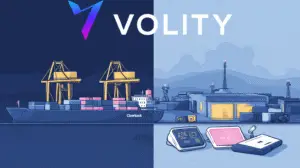
Tokenization: From Narrative to Market Driver
In 2025, tokenization has surged from a buzzword to a central trend in market infrastructure. A recent column on Crypto.news declared, “2025 was the year of tokenization,” and that’s no exaggeration. Assets ranging from private credit and income protocols to classic bonds are now being tokenized.
Recent news has been flooded with compelling cases:
- The launch and growth of tokenized private credit is emerging as a significant sector, promising market-beating returns while raising concerns about the risk management of crypto-lending protocols.
- Projects such as Spectra on Flare are innovating with tokenized yield, transforming income into tradable tokens and enabling novel strategies for delta-neutral funds and staking.
- Traditional players are joining the fray; WisdomTree recently launched Europe’s first fully staked Ethereum ETP using Lido, essentially creating tokenized ETH staking wrapped in an exchange-traded format.
Analysts’ insights converge on a singular thought: whoever controls the infrastructure for tokenizing real assets and incomes will capture a lion’s share of the new capital flow. For traders, this signals the need to monitor not just the coin prices but also the emerging wrappers and derivative products created around them.
XRP: ETF Inflows Pour In While Price Drops
The day’s main drama revolves around XRP. The spate of inflows into XRP spot ETFs continues unabated. According to data from SoSoValue and industry media, these funds have seen inflows of approximately $900 million so far, with nearly $1 billion under management and not a single day of outflows. ETFs are methodically absorbing the market: estimates suggest that around 473.5 million XRP have already been “locked” under regulation, accounting for nearly 0.5% of circulation.
However, the token itself is declining. XRP has fallen to the $2.00-$2.05 range, down more than 40% from its yearly high, despite a news backdrop that would have previously sparked significant price movements.
For short-term traders, the picture looks like this:
Fundamentals: Record ETF inflows, growing institutional interest, and integration into payment solutions.
Technical analysis: Weakening momentum, RSI below neutral levels, raising the risk of retesting the $2.00-$2.05 zone or lower.
Derivatives: Falling open interest in futures signals the market is steadily unwinding leverage and leaving behind overheated conditions.
This sets up a classic conflict of timeframes for investors: while institutions gradually build positions through ETFs, short-term traders are pulling speculative air out of the market.
How to Trade XRP Under Current Conditions
Don’t confuse ETF inflows with immediate price growth. Money pouring into funds doesn’t negate the fact that the broader market is reducing risk and leverage.
Monitor the $2.00-$2.05 zones and recent lows. A sustained break below could open the door to deeper levels, while holding could signal the start of a relief rally.
Keep an eye on volume structure. If volumes fall alongside the price, it indicates a fatigued correction. If volumes increase on the declines, someone is still actively offloading.
Separate investment cases from trading opportunities. ETF strategies are long-term; leveraged speculations are best suited for days.
Market: Altcoins in the Red, Altcoin Season Postponed
The overall sentiment across major exchanges shows that total crypto market capitalization hovers just above $3.1 trillion, down approximately 2% in a day. Bitcoin trades within a broad range of $88,000-$91,000, currently at around $89,000 and slightly down. This has led to a wave of liquidations: a single recent move in BTC and ETH wiped out over $400 million in long positions within approximately half an hour.
Among larger altcoins, the picture mirrors this trend:
- ETH is down about 3% in the last day.
- SOL has lost more than 3%, though it remains in focus due to bridging and ecosystem projects.
- DOGE is continuing its aggressive downtrend, testing yearly lows around $0.08-$0.14 amid criticisms of its “uselessness” and weak utility model.
The Crypto Fear & Greed Index indicates a persistent state of fear among traders, suggesting that the classic “altseason” remains elusive. The appetite for risk is shifting from meme coins to more structured themes like income tokenization, real assets, staking ETPs, and infrastructure tokens such as Chainlink and layer-two solutions.
Tokenized Income, Staking, and New ETPs
Concurrently with the decline in speculative interest, the market is actively constructing income-generating infrastructure:
- The WisdomTree staked ETH ETP on Lido formally enables traditional investors to engage in what DeFi users have been doing for years: earning income through staking in an exchange-traded format.
- Tokenized private credit is boosting yields, but analysts and regulators are cautioning that the risk profile here is closer to high-yield bonds than “crypto deposits.”
- Cloud mining services and “asset growth solutions” are aggressively marketing passive income ideas ahead of Christmas; for professional players, this represents more of an arbitrage opportunity and a due diligence project rather than a ready-made product.
The general trajectory is clear: the market is seeking stable income sources within crypto infrastructure, and tokenization allows wrapping this income into understandable, liquid instruments-from on-chain tokens to exchange-traded ETPs.
Regulation, Stablecoins, and Institutions
Amid all this, regulatory concerns are taking on increased significance:
- The IMF warns that dollar-backed stablecoins could undermine monetary sovereignty, highlighting that attention to global stablecoin projects will intensify.
- European and Italian regulators are moving the industry towards full adoption of MiCA, with specific deadlines set for crypto service providers to obtain licenses.
- Europe has launched both staking ETPs and spot XRP ETFs, while banks in Asia, such as Woori, are embedding Bitcoin pricing directly into trading floors-crypto is becoming a standard part of traders’ work environments.
The institutional signal is straightforward: crypto assets are gradually being legalized within conventional formats (ETFs, ETPs, tokens tied to real assets), but with this comes tighter regulatory oversight.
Practical Guide for Traders and Investors
1. Prioritize Sectors
Tokenization and infrastructure: Focus on protocols underpinning ETFs, tokenized income, stablecoins, and bridges (oracles, L1/L2 with practical uses, custody solutions).
Income strategies: Assess not just the claimed yields but also the legal structures (ETP vs on-chain token), counterparties, and income generation logic.
High-risk: Meme coins and experimental DeFi protocols are currently underperforming compared to more cautious phases, suggesting a rational reduction or strict limitation of their weight in portfolios.
2. Manage Risk in High Volatility
Watch for liquidations and open interest in futures: Where leverage flows, short-term volatility follows.
Avoid averaging down in a falling leveraged market without a clear plan: BTC and XRP movements demonstrate how quickly overheated positions can evaporate.
Consider the ETF factor as a backdrop rather than a catalyst: While funds change demand structures, they don’t eliminate cyclical behaviors and overheating phases.
3. Look to 2026 Through the Lens of Tokenization
Anticipate growth in tokenization of real assets: bonds, private credit, real estate funds.
Expect an expanded range of staking and income ETPs in Europe and Asia.
Prepare for stricter requirements on stablecoin issuers and crypto providers under MiCA and similar frameworks.
The new cycle in crypto resembles less of the wild west of 2017 and increasingly resembles an experimental floor of global capital markets. In 2025, tokenization has been prominent on this floor. For those trading and investing today, the fundamental question is no longer “which token will soar tenfold?” but rather “which tokens will underpin the new financial infrastructure-and how can I position myself early?”
Volity: Trust and Flexibility in a Borderless Money World
In a world where both money and information move instantly across borders, your infrastructure has to be as trustworthy as your message. Volity positions itself as one account to invest, hold, and pay across borders-a vertically integrated financial hub for borderless finance. By giving users a single, compliant environment to manage cross-border assets and payments, platforms like Volity help reduce the complexity, fragmentation, and scam-exposure that often accompanies global financial flows.