Crypto has lost its easy plot. Regulation is offering hope, bond yields are taking it away, and Bitcoin’s exchange-traded funds have stopped doing all the heavy lifting. Meanwhile, tokenisation projects from Saudi Arabia to South Korea are making the market look less like a casino floor and more like a half-built exchange for everything.
That shift matters. Traders can still chase candles, memes and presales. However, the tape now answers to Washington, the Treasury curve and institutional plumbing. In this market, a good token story is not enough. It also needs oxygen from liquidity.
Regulation brings relief, then reality
The week’s big political spark came from the CLARITY Act, a Senate bill designed to separate crypto securities from non-securities. If passed, it would reduce years of guessing around SEC jurisdiction.
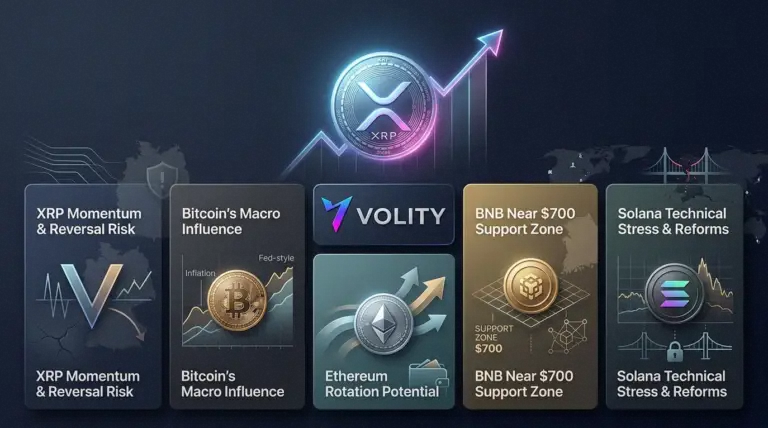
Initially, traders treated the committee vote like a starting gun. XRP led the move, as investors bet that fewer legal shadows could revive older altcoin trades. Some chart watchers quickly pointed toward the $2 area.
However, the bill still faces a bruising Senate path. Ethics concerns over lawmakers’ crypto exposure may complicate the 60-vote threshold. Therefore, the market is pricing a cleaner rulebook before Congress has written the final page.
That gap creates risk. Santiment flagged a sharp turn toward Bitcoin euphoria after the headlines. Historically, that mix of legal optimism and crowded longs has often marked local tops.
So, clarity may de-risk crypto over time. For now, it also gives fast money another headline to overtrade.
Bitcoin feels the bond market again
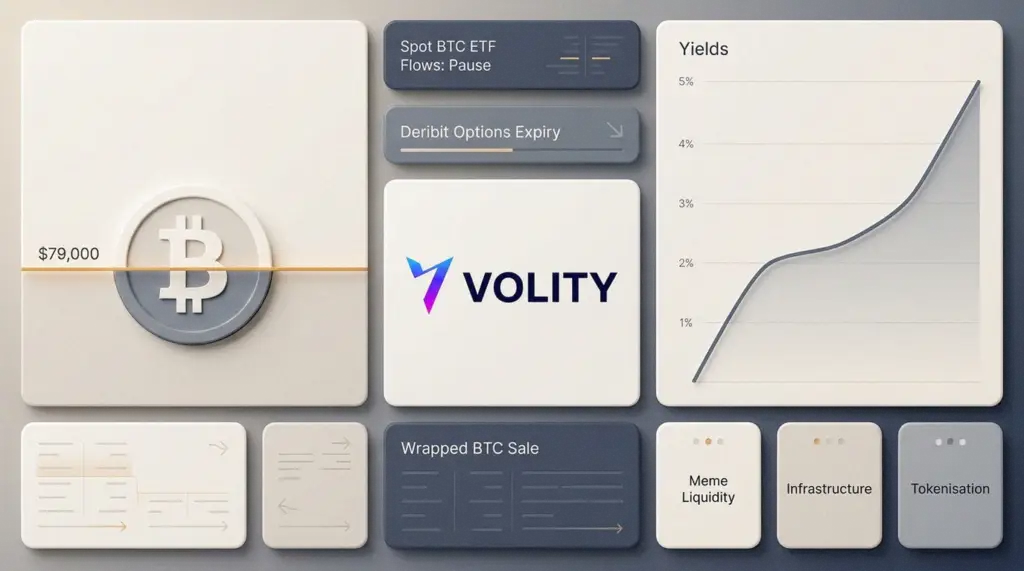
Behind the regulatory cheer, macro quietly took charge. Bitcoin slipped below $79,000 as Treasury yields reached their highest levels in a year. That move changed the tone across risk assets.
Higher risk-free returns hurt Bitcoin’s relative appeal. Pension funds do not price portfolios with memes. They compare volatility, drawdowns and Sharpe ratios.
Meanwhile, Bitcoin spot ETFs ended a six-week run of net inflows. That streak had brought roughly $1 billion of cumulative demand into the market. Once it stopped, traders had to test a less comfortable thesis: institutional adoption may not move in a straight line.
Options also added pressure. A $2.6 billion Deribit expiry forced dealers and leveraged traders to adjust positions. In thin moments, those mechanical flows can matter more than the grand narrative.
Then came whale watching. A sale of 250 wrapped Bitcoin on KuCoin, worth about $20.3 million, reinforced the sense that larger holders were selling into strength. It was not a market-breaking trade. Still, it changed the mood.
By the numbers
- $79,000: Bitcoin’s key level as yields rose and ETF demand cooled.
- $1 billion: Approximate cumulative demand from the broken six-week ETF inflow streak.
- $2.6 billion: Deribit options expiry that tightened short-term positioning.
- 250 wBTC: Large KuCoin sale worth about $20.3 million.
- 42: Crypto Fear and Greed Index reading, still in fear territory.
Altcoins split into tribes
Altcoins are no longer moving as one bloc. Instead, the market is separating meme liquidity, infrastructure demand and pure hope.
Dogecoin follows the story
Dogecoin remains the market’s strangest liquidity thermometer. This time, traders are linking possible upside to Gulf energy stress and ADNOC pipeline chatter. The logic is loose, but DOGE has never needed courtroom-grade evidence.
Technically, the token is flirting with a rounded bottom. If Bitcoin holds support, bulls may aim for $0.15. However, the “cheap crypto” pitch often arrives late in a move.
Therefore, DOGE still works best as a trading vehicle, not a conviction asset. It rewards timing and punishes sermons.
Chainlink gets the grown-up bid
Chainlink has a cleaner institutional story. Lombard joined Chainlink’s CCIP protocol as departures from LayerZero-related routes topped $4 billion in value. That shift puts cross-chain trust back in focus.
LINK is not behaving like a moonshot. However, it remains useful for portfolios that want infrastructure exposure. Oracles and messaging rails do not trend like memes, but they sit closer to real settlement flows.
Toncoin waits on confirmation
Toncoin is holding near the $2 area, where technical traders are watching for a possible golden cross. Confirmation could revive interest in Telegram-linked payment and wallet activity.
Meanwhile, TON-based agentic wallets are drawing attention. These bot-driven wallets can hold and spend funds. That makes TON a bridge between consumer apps and programmable payments.
Flare and hyperliquid move differently
Flare led parts of the altcoin board after its fAssets upgrade. The change aims to bring non-smart-contract assets into DeFi more gracefully. It sounds dull, but dull infrastructure often compounds quietly.
Hyperliquid faces a sharper kind of attention. Bitwise has launched a spot HYPE ETF, yet CME and ICE have asked regulators to examine possible market manipulation. As a result, traders must price platform risk alongside normal market risk.
Tokenisation becomes the serious trade
The liveliest long-term story sits away from the price charts. State Street is rolling out tokenised fund servicing, a plumbing change with large consequences. If the rails work, fund shares can move faster and settle more cleanly.
RedStone is also pushing into real-world collateral. Its settlement layer targets tokenised assets inside DeFi, where usable collateral matters more than slogans.
Meanwhile, governments are moving. Saudi Arabia is exploring tokenisation across parts of its vast economy. South Korea has set a July deadline for rules on tokenised securities. Those developments make the sector harder to dismiss as a fringe experiment.
Visa, State Street and other large financial groups are testing on-chain flows as well. Eventually, stablecoin spending may feel less like crypto and more like ordinary banking. That would be a profound change, even if users never see the chain.
Machines enter the dealing room
Another shift is happening in execution. Gemini has introduced agentic trading, where models can direct exchange order flow. Bitget’s AI trading tools have crossed 1 million users and $1.2 billion in volume.
Meanwhile, Telegram-linked wallet bots are starting to act like spenders. They can receive funds, hold balances and make decisions inside defined limits.
That means retail traders are no longer only trading against other people. Increasingly, they face machines that scan headlines, flows and order books without fatigue.
Rules tighten around the edges
CeFi is also changing shape. Revolut won approval from the UK’s FCA to launch private banking services. That gives the fintech another route into wealth management, including crypto-flavoured portfolios.
Poland passed a MiCA-aligned crypto bill while fraud probes into Zondacrypto deepened. The message is plain: Europe wants rules, but it also wants enforcement.
Elsewhere, Myanmar proposed life imprisonment for crypto scam operators. That is an extreme penalty. However, it shows how some governments still view digital assets through crime and capital-flight risks.
Related coverage on Volity
More from this Bitcoin storyline this week:
- Bitcoin Holds $78,000 as CLARITY Act Tightens Crypto Rules
- UK Investors Flock to Safer Yields Amid Crypto Market Wobble
- Bitcoin Eyes $100k as CLARITY Act Drives Crypto Markets
- How to Navigate Crypto and Investment Hype for Smart Returns
- Bitcoin Near $80k as Tokenised Treasuries Hit $15bn
The slide continued with Bitcoin dipping below $77,000 as spot ETF outflows hit $1bn two days later.
Key takeaways
- Watch yields first: Bitcoin rallies look fragile while Treasury returns keep rising.
- Treat regulation as volatility: The CLARITY Act is not law yet.
- Separate memes from rails: DOGE and presales are trades, not infrastructure.
- Price platform risk: Scrutiny around Hyperliquid may affect positioning.
- Follow tokenisation: Fund servicing, collateral and settlement may drive durable adoption.
The crypto market is no longer just fighting for belief. It is competing with bonds, lawmakers, banks and machines. That makes the game harder. However, it also makes the signals better for anyone still willing to read the whole board.