Crypto’s new fault lines: regulation tightens, XRP stays in the spotlight, and institutions keep buying infrastructure
Crypto is ending June with a familiar twitch in prices and a less familiar shift underneath. Tokens are still jumping at headlines. However, the market’s machinery is becoming more grown-up by the week.
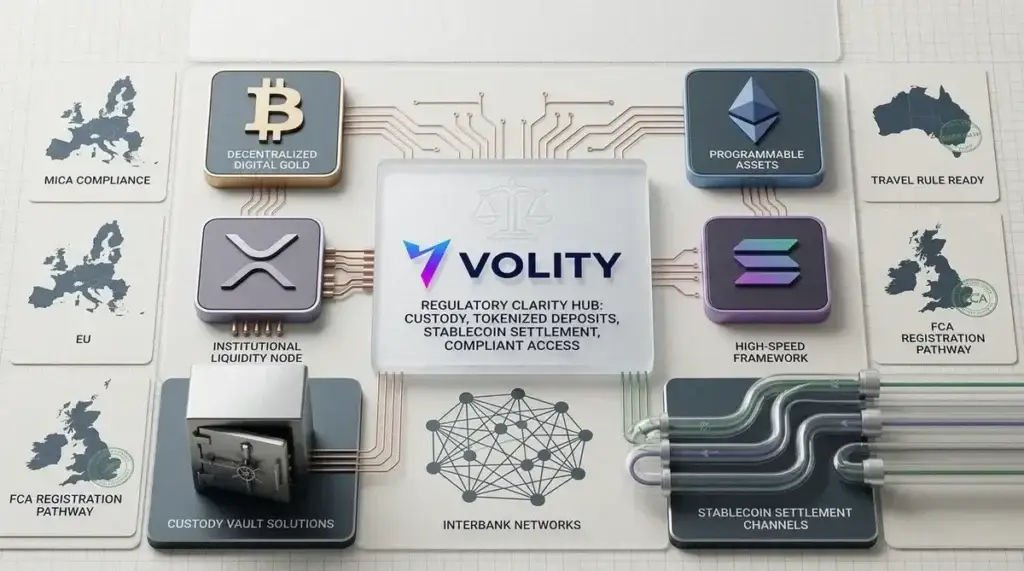
That gap now defines the sector. Bitcoin still sets the mood, XRP still draws legal and speculative heat, and Solana remains a favourite for risk-seeking traders. Meanwhile, banks, brokers and regulators are quietly redrawing the map around custody, tokenised cash and settlement.
For traders, the message is not subtle. Price action matters, but the next winners may come from market structure. In crypto, the rails are starting to matter as much as the coins.
The institutional bid has moved below the surface
Large financial firms are not acting as if crypto has gone away. They are acting as if it needs better pipes.
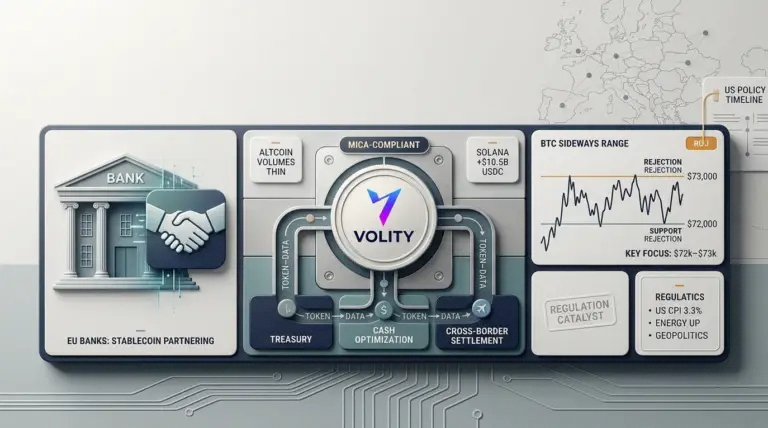
A group of major banks, including JPMorgan Chase, Citigroup, Bank of America, Wells Fargo, BNY, HSBC and PNC, has pushed plans for a shared tokenised deposit network. That is not retail speculation in a hoodie. It is balance-sheet finance looking for faster settlement.
Meanwhile, BNY has enabled USDC minting and redemption for institutional clients. That move matters because stablecoins increasingly resemble market infrastructure, not just crypto trading chips.
Therefore, the more durable story sits in custody, settlement, tokenised deposits and regulated access. These areas do not always move a token 12% before lunch. Still, they tell investors where serious money is building.
Notably, ARK has been buying listed crypto names, including Coinbase, Circle, Bullish and Robinhood. Securitize is also preparing for a New York Stock Exchange debut after a $400 million SPAC deal. So, even with spot markets choppy, equity investors keep paying for access to the rails.
XRP remains the market’s legal weather vane
XRP still trades like more than a token. It has become a proxy for legal clarity, payments ambitions and speculative positioning.
Recent market snapshots put XRP around $1.24 to $1.30 in early June. However, the chart has not looked especially comfortable. Several technical reads still point to a cautious, even bearish, short-term setup.
Even so, XRP keeps pulling attention because the legal overhang has eased. The SEC’s long-running dispute with Ripple has moved into the background after both sides agreed to drop appeals. That ended one of crypto’s most watched courtroom fights.
For markets, that does not turn XRP into a one-way trade. It does change the way traders frame the risk. Before, legal uncertainty capped the story. Now, investors can focus more directly on ETF speculation, payments usage and Ripple’s network ambitions.
Still, the trade remains fragile. Strong short positioning could sharpen any rally if a bullish catalyst lands. Conversely, weak spot demand could push XRP back into a slower grind lower.
Bitcoin, Ethereum and Solana send different signals
Bitcoin remains the market’s anchor, as ever. Yet even BTC’s tone looks more careful than euphoric.
The move back above $60,000 has helped sentiment. However, some traders argue the breakout still lacks fresh buying power. Without stronger spot demand, Bitcoin risks trading like a crowded macro position, not a broad new advance.
That matters because Bitcoin still drags the wider market around. When BTC stalls, smaller tokens often lose oxygen quickly.
Ethereum looks less convincing in several short-term reads. Some market watchers have warned that ETH could print a lower low near $1,500 if selling pressure builds. That level now carries more psychological weight than usual.
Solana, meanwhile, has been one of the stronger large-cap names. One recent market update pointed to an 18% rally linked to tokenised stocks and renewed interest in onchain asset trading. Therefore, Solana is again being treated as a higher-beta bet on crypto’s trading future.
The split is useful. Bitcoin reflects liquidity. Ethereum reflects confidence in decentralised finance and settlement. Solana reflects traders’ hunger for speed, risk and new asset issuance.
Regulation is no longer background noise
Europe’s MiCA regime is now reshaping the regional market in practical ways. It sets common rules for crypto-assets across the bloc, including disclosure, authorisation and supervision.
That legal tidying comes with a cost. Recent market coverage shows five EU states with no crypto licences under the new setup. Meanwhile, Bybit is limiting access in the European Economic Area as deadlines approach.
Australia is also tightening its grip. Exchanges there are adding transfer checks before a new crypto travel rule starts on July 1. That rule will force firms to collect and share more information around certain transactions.
In Britain, crypto firms have more time, but not endless time. Final FCA rules set 2027 as the deadline for compliance with the new framework. As a result, serious operators are already preparing, while weaker firms face a harder path.
The United States remains messier. Lawmakers are still wrestling with market-structure bills, including the CLARITY Act. However, the timetable remains uncertain, and digital-asset proposals keep getting dragged into wider political fights.
That uncertainty cuts both ways. A clear rulebook could lift valuations for exchanges, custodians and payment networks. Yet a slow legislative grind could keep risk premiums high across U.S.-linked tokens.
Fraud cases keep the pressure on
The enforcement story has not faded either. Courts and regulators continue to send a blunt signal: crypto may mature, but misconduct still gets punished.
The SEC won a fraud case against NanoBit, with the court ordering more than $5.5 million. Singapore granted $3 million to victims of the Terraform UST collapse. In China-linked proceedings, billionaire Miles Guo received a 30-year sentence in a $1 billion crypto fraud case.
These cases do not drive daily candles like ETF rumours do. Still, they shape institutional willingness to enter the market. Compliance teams remember court orders longer than traders remember intraday wicks.
By the numbers
- $60,000 – Bitcoin’s key sentiment line after its latest breakout attempt.
- $1.24 to $1.30 – Recent XRP trading range cited in early June market snapshots.
- 18% – Solana’s rally in one update tied to tokenised stocks and onchain trading.
- $400 million – Securitize’s SPAC deal before its planned NYSE debut.
- 2027 – FCA deadline for crypto firms under Britain’s new framework.
What traders should watch next
- XRP positioning – Shorts could fuel a squeeze if ETF or payments news improves.
- Bitcoin spot demand – A rally above $60,000 needs fresh buyers, not just thin liquidity.
- Ethereum near $1,500 – A break lower would damage confidence across DeFi-linked trades.
- MiCA disruption – Exchange access and licence gaps may change European liquidity patterns.
- Tokenisation equities – Coinbase, Circle, Robinhood and Securitize remain proxies for infrastructure demand.
The market’s current shape is awkward, but clear. Traders still chase volatility in tokens. Meanwhile, institutions keep buying the boring bits that make the market usable.
That divide may define the next leg. If prices recover, infrastructure names could benefit first. If prices fade, regulated rails may still attract capital. Either way, crypto is no longer just a coin chart on a Friday night.
Related coverage on Volity
- How to Avoid Crypto Scams: A Beginner Safety Checklist
- How to Choose a Trading Platform: A 10-Point Checklist
- Demo vs Live Trading Account: A 7-Step Checklist Before You Go Live
- How to Size a Trade: Position Sizing and Risk Per Trade for Beginners
- Risk-Reward Ratio Explained: How to Set It and Why It Matters
- ETF vs Index Fund: The Difference and Which to Pick