George Soros is a Hungarian-born investor and hedge fund manager who is widely regarded as one of the most successful macro traders in financial history. He built his name running the Quantum Fund, and he earned the nickname “the man who broke the Bank of England” after a single currency bet in September 1992 reportedly made him more than one billion pounds. This is an educational profile of his investing career, focused on how he read markets rather than his politics or philanthropy.
George Soros at a glance
- Born in Budapest in 1930, he survived the Nazi occupation of Hungary and moved to the United Kingdom in 1947.
- He studied philosophy at the London School of Economics under Karl Popper, whose ideas shaped how he saw markets.
- He launched the fund that became the Quantum Fund in the early 1970s, one of the best-performing funds of its era.
- His 1992 short of the British pound during the sterling crisis is often called the trade of the century.
- Forbes estimated his net worth at roughly 7.2 billion dollars in 2025, after he gave much larger sums to charity over his lifetime.
Who is George Soros?
George Soros was born in Budapest on 12 August 1930 into a Jewish family. He lived through the Nazi occupation of Hungary as a boy, an experience he later called formative for how he weighed risk. In 1947 he emigrated to England, where he studied at the London School of Economics and took a degree in philosophy in 1951. His tutor was the philosopher Karl Popper, whose work on the limits of human knowledge stayed with him for the rest of his career.
After graduating he worked in London merchant banking before moving to New York in 1956 to trade. He spent the 1960s as an analyst and dealer, learning the international arbitrage that would later fund his own venture and make him one of the wealthiest self-made investors of the twentieth century, as documented in public biographical records.
What is the George Soros Quantum Fund?
In 1969 Soros co-founded a hedge fund called Double Eagle with the young analyst Jim Rogers, seeded with about four million dollars. Regulatory constraints on running two funds pushed him to strike out alone, so in 1973 he launched his own Soros Fund, which was later renamed the Quantum Fund, a name that nodded to the physics idea of uncertainty and his belief that markets can never be fully known.
The Quantum Fund ran as a hedge fund with wide freedom to go long or short across currencies, bonds, commodities and equities anywhere in the world. That flexibility let Soros act on big-picture views with real size, and over the decades the fund compounded returns that turned early investors into millionaires many times over. His long-time partner Stanley Druckenmiller ran day-to-day positioning through much of its most famous period.
What happened on George Soros Black Wednesday?
Black Wednesday was 16 September 1992, the day the United Kingdom was forced to pull the pound out of the European Exchange Rate Mechanism. The Exchange Rate Mechanism tied member currencies to a fixed band, and Britain had joined at what many traders saw as too strong a rate for the pound. Soros looked at high UK inflation, a weak economy and interest rates that were painful to hold, and he concluded the peg could not last.
His fund built a huge short position against sterling, reportedly more than ten billion dollars, betting the currency would fall once the government could no longer defend it. On the day, the Bank of England raised interest rates sharply and spent billions buying pounds, yet the selling pressure was too great and the pound was floated. It fell hard against the German mark. According to widely cited accounts of Black Wednesday, Soros made a profit estimated at more than one billion pounds, which is how the “man who broke the Bank of England” label was born.
| Milestone | Year | What it involved |
| Born in Budapest | 1930 | Survived wartime Hungary, emigrated to the UK in 1947 |
| Double Eagle fund | 1969 | Early hedge fund co-run with Jim Rogers |
| Quantum Fund launched | 1973 | His own fund, later renamed, that made his reputation |
| Black Wednesday | 1992 | Short of the pound during the sterling crisis |
The trade is a case study in how a large speculator can move a currency when government policy is already under strain. The pound was under pressure before Soros acted, and he pressed on a peg the market had judged to be mispriced, which is why the position paid so quickly once the defence collapsed.
What is George Soros’s investment strategy?
Soros is a founder of the global macro style. Rather than picking individual companies, he took positions on the direction of whole economies, reading interest rates, currencies, politics and central bank policy. When a view lined up, he was willing to bet with conviction and real size.
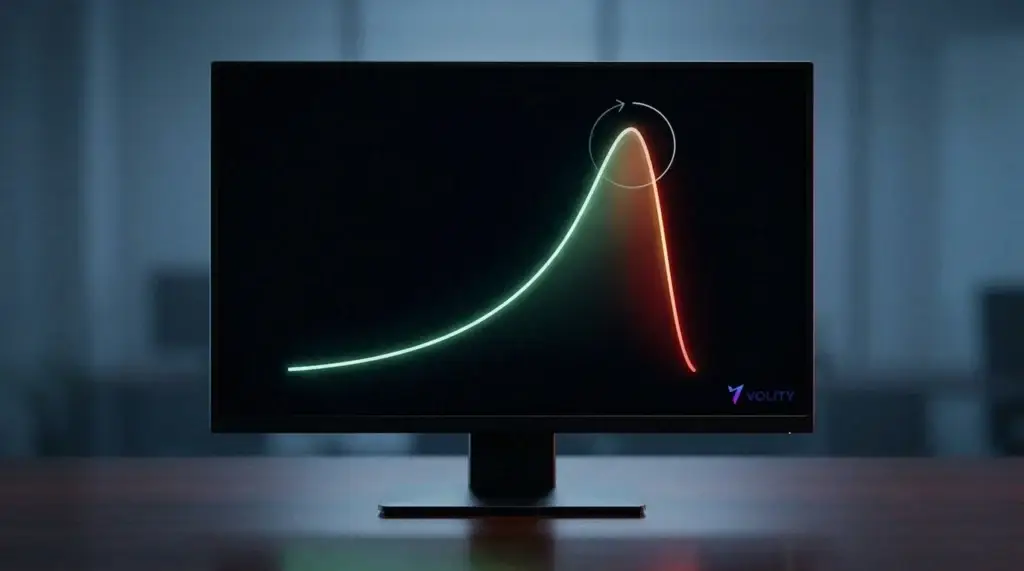
His most famous idea is the theory of reflexivity, which he developed from Popper’s philosophy. The classic view holds that prices simply reflect the facts. Soros argued the opposite can happen too: what investors believe changes what they do, and what they do changes the facts those beliefs were based on. A rising market can pull in more buyers, whose buying keeps it rising, until the gap between price and reality snaps back. He wrote about this at length in his own essays on reflexivity, and it is the lens behind his focus on the boom and bust cycle.
One line of his sums up the risk side of the method. He often said that being right or wrong matters less than how much money you make when you are right and how much you lose when you are wrong. In practice that meant a strict approach to position sizing and risk. He kept positions small when he was unsure and only sized up when the evidence and the price action agreed, then cut fast once a thesis broke.
What is George Soros’s net worth?
Forbes estimated George Soros’s net worth at around 7.2 billion dollars in 2025. That figure is lower than his lifetime earnings suggest, because he gave away most of his fortune. Over the years he transferred more than 32 billion dollars to his Open Society Foundations, which is why estimates of his personal wealth sit well below the roughly 40 billion dollars his funds are thought to have generated. Any net worth figure for a private investor is an outside estimate, so treat it as a guide.
What can traders learn from George Soros?
The practical lessons from Soros travel well beyond hedge funds. He waited for setups where a policy or a price was clearly stretched, and he sized his risk to the strength of the evidence rather than to hope. Most retail traders lose money by doing the reverse, trading small edges with big size and holding losers too long. Studying how successful traders managed risk is often more useful than copying any single trade. Soros sits at the centre of the macro school, sharing its top-down style with Ray Dalio and, a century earlier, the trend-riding speculator Jesse Livermore.
The macro thinking behind his trades is open to anyone, even without an institutional balance sheet. On Volity you can take CFD price exposure to global markets such as major currency pairs, indices and commodities, with leverage of up to 1:500 depending on the product. Traders open an account for nothing, can invest from as little as 1 dollar, and start trading from 50 dollars, with a free demo to test ideas first. Volity operates under CySEC licence 186/12 through UBK Markets.
A word of caution matters here. Leveraged CFDs are high-risk products and most retail accounts lose money, so the macro-trading style that made Soros famous is also how many traders blow up. This article is general education about a public figure, not personal advice, and it is not a suggestion to copy his positions. If you are weighing any leveraged product, the UK regulator’s guide to high-risk investments is worth reading first.
Frequently asked questions about George Soros
Is George Soros still trading?
Soros stepped back from active day-to-day trading long ago and turned his firm into a family office, Soros Fund Management. He is no longer the hands-on macro trader of the Quantum Fund years, and his son Alexander Soros now chairs the wider family enterprise, according to public records.
How did George Soros break the Bank of England?
He built a very large short position against the pound while the UK was defending an overvalued exchange rate inside the ERM. When the government could no longer hold the peg on 16 September 1992, the pound fell and his fund profited heavily. The pound was already under strain when he acted, and the size and timing of his bet made him the face of the sterling crisis.
What is reflexivity in simple terms?
Reflexivity is the idea that markets and the people in them influence each other. Investors act on their beliefs about the future, those actions change the actual conditions, and the new conditions change the beliefs again. It helps explain why prices can run far from fair value during a bubble before correcting sharply.
Can I invest like George Soros on Volity?
You can study his macro approach and apply the risk discipline behind it, and you can take CFD exposure to currencies, indices and commodities on Volity. Leveraged CFDs carry a high risk of loss, so a free demo account is the sensible place to practise before risking real money.