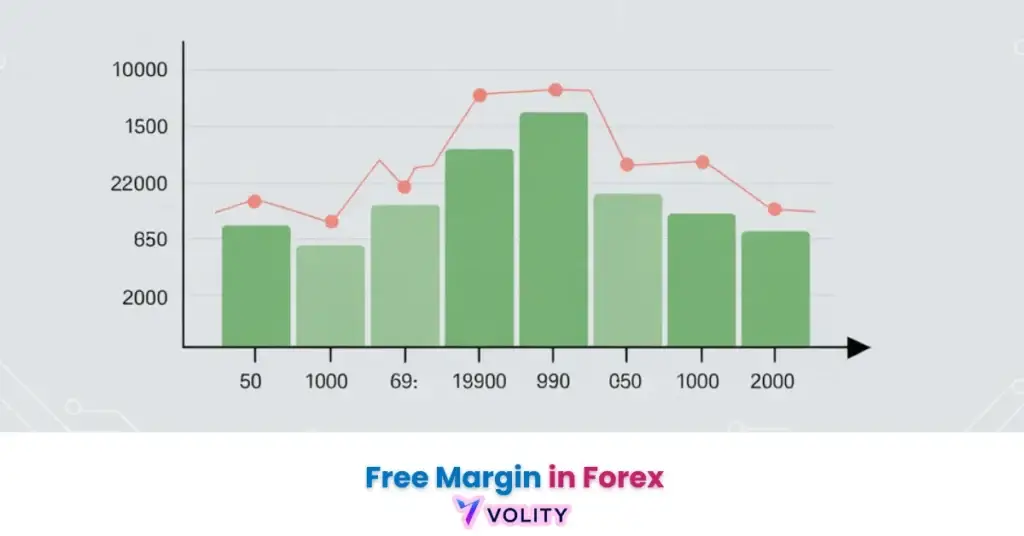
Die freie Margin stellt das verfügbare Kapital auf einem Handelskonto dar, das nicht als Sicherheit für aktive Positionen gebunden ist, und ihr Aufzehren erzeugt ein unmittelbares Liquidationsrisiko. Wenn die freie Margin null erreicht, führen Broker automatische Stop-Outs aus, die Ihre größten Verlustpositionen ohne Vorwarnung liquidieren. In volatilen Märkten des Jahres 2026, in denen Spreads bei Nachrichtenveröffentlichungen sprunghaft ansteigen, kann eine plötzliche Bewegung von 100 Pips die freie Margin schneller aufzehren, als ein manuelles Eingreifen möglich ist. Bei jedem gehebelten Handel ist Kapital gefährdet.
Die freie Margin stellt das nutzbare Kapital auf einem Handelskonto dar, das derzeit nicht als Sicherheit für offene Positionen gebunden ist. Sie ist der entscheidende Puffer, der bestimmt, ob ein Trader neue Trades eröffnen oder ungünstige Marktbewegungen abfedern kann. Im Jahr 2026 ist die Aufrechterhaltung einer robusten freien Margin unerlässlich, um die erhöhte Intraday-Volatilität zu bewältigen und die automatischen Stop-Out-Protokolle zu vermeiden, die ausgelöst werden, wenn das Margin-Level eines Kontos unter die vom Broker definierten Schwellenwerte fällt.
Die freie Margin fungiert als operativer Treibstoff für jedes gehebelte Portfolio und unterteilt das Kontokapital in „genutzte“ und „verfügbare“ Segmente. Dieser dynamische Wert passt sich mit jedem Tick des Marktes an und spiegelt die Echtzeit-Gesundheit Ihres Eigenkapitals im Verhältnis zu Ihrem Gesamtrisiko wider. Sie dient als primärer Schutz gegen den gefürchteten Margin Call in volatilen Währungsumgebungen.
Das Handelsumfeld des Jahres 2026 erfordert einen disziplinierten Ansatz beim Margin-Management, da Broker die Liquidationsschwellen verschärfen, um globalen regulatorischen Veränderungen zu entsprechen. Trader nutzen Daten zur freien Margin, um ihre Positionsgrößen präzise zu bestimmen und sicherzustellen, dass sie über genügend Durchhaltevermögen während längerer Drawdown-Phasen verfügen.
Das Verständnis von Forex ist wichtig, doch echtes Wachstum entsteht erst durch die Anwendung dieses Wissens. Kostenloses Forex-Handelskonto erstellen, um mit einem kostenlosen Demokonto zu üben und Ihre Strategie zu testen.
Was ist freie Margin im Forex-Handel und warum ist sie so wichtig?
Die freie Margin ist der spezifische Teil des Kontoeigenkapitals, der nicht als Sicherheit für aktive Positionen gebunden ist und für die sofortige Ausführung von Trades zur Verfügung steht.
Moderne Handelsplattformen im Jahr 2026 aktualisieren die Berechnungen der freien Margin alle 50 Millisekunden, um den hochfrequenten Preisverschiebungen auf dem Interbankenmarkt Rechnung zu tragen (TradeTech Review, 2026). Diese Echtzeit-Berechnung zeigt, ob Sie neue Trades eröffnen können oder ob Ihr Konto sein maximales Risikoniveau erreicht hat.
Die Unterscheidung zwischen Kontostand (Balance), Eigenkapital (Equity) und freier Margin bestimmt Ihre tatsächliche Handelskapazität:
- Kontostand (Balance) stellt Ihr Startkapital zuzüglich der kumulierten Gewinne und Verluste aus geschlossenen Trades dar
- Eigenkapital (Equity) umfasst den Kontostand zuzüglich der schwebenden Gewinne und Verluste aus allen aktuell offenen Positionen
- Freie Margin ist das, was nach Abzug der für die Aufrechterhaltung aktiver Trades erforderlichen Sicherheiten verbleibt
Die freie Margin fungiert als „Volatilitätspuffer“ für bestehende Trades. Wenn sich Marktpreise gegen Ihre Position bewegen, reduzieren schwebende Verluste sofort Ihr Eigenkapital, was wiederum Ihre freie Margin aufzehrt. Sobald die freie Margin null erreicht, leiten Broker Margin-Call-Verfahren ein, die eine erzwungene Schließung von Positionen erzwingen können. Deshalb achten Trader den ganzen Handelstag über akribisch auf die Höhe der freien Margin, da sie Ihre maximale „Kaufkraft“ in jedem gegebenen Moment bestimmt.
Das Verhältnis zwischen Eigenkapital und Margin
Das Eigenkapital repräsentiert den gesamten liquiden Wert eines Handelskontos, während die freie Margin der Restbetrag nach Abzug der für offene Trades erforderlichen Sicherheiten ist.
Wie schwebende Verluste die freie Margin aufzehren, verdeutlicht, warum Disziplin bei der Positionsgröße entscheidend ist. Ein Trader mit 10.000 USD Eigenkapital, der eine 1-Lot EUR/USD-Position hält, verwendet 3.300 USD als Margin (bei 1:30 Hebel). Die freie Margin beträgt 6.700 USD. Wenn sich die Position um 200 Pips gegen den Trader bewegt, reduziert der schwebende Verlust von -2.000 USD das Eigenkapital auf 8.000 USD, wodurch nur noch 4.700 USD freie Margin verbleiben. Die Auswirkung von Gewinn-Trades auf Ihre verfügbare Handelskapazität funktioniert umgekehrt: Schwebende Gewinne erhöhen Ihr Eigenkapital und Ihre freie Margin gleichzeitig, was es Ihnen ermöglicht, in zusätzliche Positionen zu skalieren, ohne frisches Kapital einzuzahlen.
Bereit, Ihr Trading auf das nächste Level zu bringen?
Sie haben das Wissen. Jetzt fehlt die Plattform. Schließen Sie sich Tausenden erfolgreichen Tradern an, die Volity für leistungsstarke Tools, schnelle Ausführung und engagierten Support nutzen.
Erstellen Sie Ihr Konto in unter 3 MinutenWie berechnet man die freie Margin korrekt?
Die Berechnung der freien Margin identifiziert das verbleibende nutzbare Kapital durch Subtraktion der gesamten genutzten Margin vom aktuellen Kontoeigenkapital.
Die Standardformel ist unkompliziert:
Freie Margin = Kontoeigenkapital – Genutzte Margin
Das Kontoeigenkapital ändert sich jede Sekunde, wenn sich die Preise bewegen. Die genutzte Margin hängt von Ihrer Positionsgröße und dem Hebelverhältnis jedes Paares ab. Eine 1-Lot EUR/USD-Position bei 1:30 Hebel erfordert 3.333 USD an Margin. Ein 1-Lot GBP/USD beim gleichen Hebel erfordert 3.700 USD. Der Schlüssel zur genauen Berechnung liegt im Verständnis, dass die erforderliche Margin je nach Währungspaar variiert, da jedes Paar unterschiedliche Margin-Anforderungen basierend auf Volatilität und regulatorischen Vorgaben hat.
Die durchschnittlichen Margin-Anforderungen für G7-Währungspaare haben sich bei 3,33 % (1:30 Hebel) bei ESMA- und ASIC-regulierten Brokern im Jahr 2026 stabilisiert (Regulatory Compliance Monitor, 2026). Exotische Paare wie USD/ZAR haben jedoch oft einen 1:20 Hebel, was 5 % Margin erfordert. Diese Unterscheidung erklärt, warum sich professionelle Trader auf die Majors konzentrieren: engere Spreads und niedrigere Margin-Anforderungen bedeuten, dass mehr freie Margin als Puffer für das Risikomanagement verfügbar bleibt.
Der Unterschied zwischen Margin-Berechnungen für Majors und Exoten wirkt sich direkt auf Ihr freies Margin-Polster aus. Ein Trader mit 5.000 USD Eigenkapital, der nur EUR/USD (3,33 % Margin-Anforderung) handelt, kann 1,5 Lots eröffnen (unter Verwendung von 5.000 USD Margin) und behält null freie Margin. Derselbe Trader, der USD/ZAR bei 5 % Margin eröffnet, kann nur 1 Lot eröffnen (unter Verwendung von 5.000 USD Margin). Das Verständnis dieser Hebel-Unterschiede verhindert den häufigen Anfängerfehler, anzunehmen, dass alle Paare identische Margin verbrauchen.
Was ist ein „sicheres“ Margin-Level für die Volatilität im Jahr 2026?
Ein sicheres Margin-Level identifiziert den Prozentsatz des Eigenkapitals zur genutzten Margin, der einen ausreichenden Puffer gegen plötzliche Marktumkehrungen bietet.
Das Margin-Level wird berechnet als: Margin-Level = (Eigenkapital ÷ Genutzte Margin) × 100 %
Die 100 %-Schwelle repräsentiert die „Warnzone“, in der die freie Margin vollständig verschwindet. Bei genau 100 % Margin-Level entspricht Ihr Eigenkapital Ihrer genutzten Margin, ein einziger ungünstiger Tick liquidiert Ihr Konto. Die meisten Broker lösen Margin Calls bei 100 % aus und senden Warnungen vor einer erzwungenen Liquidation. Professionelle Trader operieren niemals in der Nähe dieser Schwelle, da Nachrichtenveröffentlichungen die Volatilität sofort in die Höhe treiben können.
Warum professionelle Trader während Nachrichtenereignissen wie den NFP ein Margin-Level von 500 % oder mehr anstreben, zeigt die extremen Schwankungen, die in den Märkten von 2026 möglich sind. Die Korrelation zum „Risiko des Ruins“ zeigt, dass eine niedrige freie Margin emotionale Handelsentscheidungen beschleunigt, verzweifelte Trader handeln übermäßig, um Verluste auszugleichen, was Drawdowns verschlimmert. Ein Trader, der ein Margin-Level von 500 % aufrechterhält, besitzt ein Fünf-zu-Eins-Sicherheitspolster, was bedeutet, dass das Eigenkapital um 80 % vom aktuellen Niveau fallen müsste, bevor eine Liquidation ausgelöst wird.
Echtes Handelsbeispiel: Ein Trader eröffnet 2 Lots USD/JPY mit 5.000 USD Eigenkapital und verwendet 3.000 USD als Margin. Die freie Margin beträgt 2.000 USD. Das Margin-Level beträgt (5.000 USD ÷ 3.000 USD) × 100 % = 167 %. Eine plötzliche Bewegung von 100 Pips gegen den Trader entzieht dem Eigenkapital 1.400 USD (jeder Pip bei 2 Lots = 20 USD), was 3.600 USD Eigenkapital hinterlässt. Die neue freie Margin beträgt 600 USD und das Margin-Level fällt auf 120 %. Eine zusätzliche Bewegung von 50 Pips entzieht weitere 700 USD Eigenkapital, was einen Margin-Alarm bei 85 % Margin-Level auslöst. Das Konto befindet sich nun in einem kritischen Bereich, in dem ein einziger ungünstiger Ausschlag die Liquidation erzwingen könnte. Die Wertentwicklung in der Vergangenheit ist kein Indikator für zukünftige Ergebnisse.
Die psychologische Auswirkung der Erschöpfung der freien Margin kann nicht genug betont werden. Die Nähe zur Liquidation führt zu Panikentscheidungen, die Verluste beschleunigen, was Disziplin bei der Positionsgröße unerlässlich macht.
Was passiert, wenn die freie Margin negativ wird?
Eine negative freie Margin identifiziert einen Zustand der Kontozahlungsunfähigkeit, in dem das aktuelle Eigenkapital nicht ausreicht, um die erforderlichen Sicherheiten für offene Positionen zu decken.
| Broker-Typ | Margin-Call-Level | Stop-Out-Level | Ergriffene Maßnahme |
| EU-reguliert (ESMA) | 100 % | 50 % | Automatisches Schließen des größten Verlierers |
| AU-reguliert (ASIC) | 100 % | 50 % | Sequenzielle Liquidation |
| US-reguliert (NFA) | 100 % | 100 % | FIFO-Liquidation |
| Hochhebel (Offshore) | 80 % | 20 % | Totale Konto-Auslöschung |
| Institutionell (Prime) | 120 % | 100 % | Sofortiger Margin Call |
Quelle: 2026 Global Broker Liquidation Standards (GBLS)
Wenn die freie Margin genau null erreicht, können Sie keine neuen Positionen mehr eröffnen. Ihr Broker zeigt Margin-Warnungen an. An diesem Punkt löst jede ungünstige Preisbewegung Stop-Out-Verfahren aus. Die ESMA-Richtlinien zum Schutz von Kleinanlegern bei Margin-Geschäften schreiben vor, dass EU-Broker die größte Verlustposition zuerst schließen, wenn das Margin-Level unter 50 % fällt, um Trader vor einer totalen Konto-Auslöschung zu schützen. ASIC folgt ähnlichen Protokollen, obwohl australische Broker eine sequenzielle Liquidation der Positionen von der ältesten zur neuesten durchführen.
US-regulierte Broker unter NFA-Regeln verwenden die FIFO-Liquidation (First In, First Out), der älteste offene Trade wird zuerst geschlossen, unabhängig von der Rentabilität. Hochhebel-Offshore-Broker erlauben oft eine negative freie Margin, was bedeutet, dass Trader mehr als ihre Einlage verlieren können. Deshalb unterscheidet sich das „Stop-Out“-Level vom „Margin-Call-Level“, der Call warnt Sie bei 100 %, aber der Stop-Out wird je nach Zuständigkeit automatisch bei 50 % oder niedriger ausgeführt.
Können Sie freie Margin von Ihrem Konto abheben?
Die Auszahlungsberechtigung identifiziert den Teil Ihres Kontostands, der übertragen werden kann, ohne die Sicherheit aktiver Trades zu gefährden.
Dass Broker Auszahlungen nur von der „auszahlbaren freien Margin“ zulassen, verhindert, dass Trader durch schlecht getimte Auszahlungen versehentlich Stop-Outs auslösen. Ihr Broker berechnet die auszahlbare freie Margin konservativ, einige Plattformen sperren bis zu 50 % der freien Margin als zusätzlichen Puffer, selbst nach der Berechnung des Standardbetrags der freien Margin.
Das Risiko der „Über-Auszahlung“ zeigt, warum diese Vorsicht wichtig ist. Ein Trader mit 5.000 USD Eigenkapital, 3.000 USD genutzter Margin und 2.000 USD freier Margin könnte 1.500 USD abheben, was 500 USD freie Margin hinterlässt. Wenn sich der Markt um 1 % gegen die Positionen bewegt, reduziert der schwebende Verlust von 300 USD die freie Margin auf 200 USD, unangenehm nahe an der Liquidation. Eine nachfolgende Bewegung von 0,5 % liquidiert das Konto sofort.
Wie schwebende Gewinne für „Kredit-Auszahlungen“ in einigen VIP-Konten des Jahres 2026 verwendet werden können, offenbart eine fortgeschrittene Strategie: Das Ansammeln profitabler Positionen und das Abheben nur der schwebenden Gewinne (nicht des Kontostands) bewahrt Ihr Kapitalpolster für aktive Trades. Einige Premium-Broker bieten „Margin-gebundene Ersparnisse“ an, bei denen Ihre freie Margin einen passiven Zinssatz verdient, während sie als Puffer für Ihre Trades dient, eine Funktion, die ungenutztes Kapital in Einkommen verwandelt.
Die Unterscheidung zwischen Margin Calls (Warnungen) und Stop-Outs (automatische Liquidationen) bestimmt, wann Sie handeln müssen. Ein Margin Call bei 100 % Level ist eine Warnung, die eine manuelle Schließung der Position erfordert. Ein Stop-Out bei 50 % Level ist eine automatische Liquidation, Sie verlieren die Möglichkeit, Positionen selbst zu schließen.
Wissen in Gewinn verwandeln
Sie haben gelesen, jetzt ist es Zeit zu handeln. Der beste Weg zu lernen ist durch Praxis. Eröffnen Sie ein kostenloses, risikofreies Demokonto und üben Sie Ihre Strategie noch heute mit virtuellem Guthaben.
Kostenloses Demokonto eröffnenVerwaltung der freien Margin über mehrere Anlageklassen hinweg
Multi-Asset-Margin-Management identifiziert die Komplexität der gemeinsamen Nutzung eines einzigen Pools für freie Margin zwischen Forex-, Aktien- und Krypto-Positionen.
Cross-Margining zeigt, wie ein gewinnbringender Gold-Trade einen verlustbringenden EUR/USD-Trade „retten“ kann, indem das gesamte Kontoeigenkapital erhöht wird, was die freie Margin über alle Positionen hinweg gleichzeitig erhöht. Ein Trader, der 1-Lot EURUSD (minus 1.000 USD) und 1-Lot Gold (plus 1.500 USD) hält, hat einen schwebenden Nettogewinn von 500 USD, der das Konto trotz des verlustbringenden Forex-Trades vor der Liquidation schützt.
Die Gefahr von „korrelierten Drawdowns“ tritt auf, wenn alle Ihre Vermögenswerte gleichzeitig fallen, was die freie Margin exponentiell aufzehrt. Während eines Risk-off-Ereignisses im Jahr 2024 stürzten Aktien, Forex und Krypto gleichzeitig ab, Diversifizierung bot keinen Schutz, da der Pool für freie Margin über alle Anlageklassen hinweg schrumpfte. Trader, die bedeutende Positionen in allen drei Märkten hielten, erlebten Margin Calls, obwohl sie glaubten, ihr Portfolio sei abgesichert.
Multi-Asset-Trader müssen Forex-spezifische Berechnungen auf Aktien und Krypto ausweiten. Disziplin bei der Positionsgröße wird unverhandelbar, wenn die freie Margin über ein diversifiziertes Portfolio hinweg verwaltet wird.
Die Zukunft des Margin-Managements im Jahr 2026 beinhaltet eine KI-gesteuerte Positionsüberwachung, die Ihre Allokation der freien Margin automatisch basierend auf einer Korrelationsanalyse in Echtzeit zwischen den Anlageklassen neu ausbalanciert. Professionelle Trader behandeln die freie Margin nicht mehr als eine einzelne statische Kennzahl, sie prognostizieren Szenarien für den Drawdown der freien Margin über mehrere Anlagekombinationen hinweg, um ausreichende Sicherheitspuffer zu gewährleisten.
Wichtige Erkenntnisse
- Die freie Margin ist das nutzbare Kapital auf Ihrem Konto, das nach Abzug der für alle offenen Positionen erforderlichen Margin verbleibt.
- Das Margin-Level ist das prozentuale Verhältnis von Eigenkapital zu genutzter Margin und dient im Jahr 2026 als primärer Indikator für die Kontogesundheit.
- Stop-Out-Protokolle werden von Brokern automatisch ausgelöst, wenn die freie Margin verschwindet und das Margin-Level unter einen festgelegten Schwellenwert fällt.
- Schwebende Gewinne erhöhen direkt Ihre freie Margin, was eine strategische Erweiterung Ihres Handelsportfolios ohne neue Einzahlungen ermöglicht.
- Auszahlungslimits sind strikt an Ihre Margin-Level gebunden, um sicherzustellen, dass die Entnahme von Kapital keine aktiven Trades liquidiert.
- Hebel-Einstellungen im Jahr 2026 bestimmen, wie viel genutzte Margin pro Trade erforderlich ist, was wiederum den verbleibenden Puffer der freien Margin bestimmt.
Häufig gestellte Fragen
Dieser Artikel enthält Verweise auf die freie Margin im Forex-Handel und Volity, eine regulierte CFD-Handelsplattform. Dieser Inhalt wurde nur zu Bildungszwecken erstellt und stellt keine Finanzberatung oder Empfehlung zur Ausführung einer bestimmten Handelsstrategie dar. Berechnungen der freien Margin variieren je nach Broker-Implementierung, Hebel-Einstellungen und regulatorischer Zuständigkeit; überprüfen Sie immer die spezifischen Margin- und Stop-Out-Richtlinien Ihres Brokers, bevor Sie handeln. Einige Links in diesem Artikel können Affiliate-Links sein.