Volity Redaktion, Volity Markets Analysten-Desk: „Der Cup and Handle ist eines der wenigen klassischen Muster, bei denen die Gewinnrate auch im algorithmischen Zeitalter Bestand hatte, aber nur, wenn Trader drei Regeln respektieren. Erstens muss der Cup auf einem Tageschart mindestens sieben Wochen tief sein. Zweitens sollte der Rücksetzer des Handles ein Drittel der Höhe des Cups nicht überschreiten. Drittens benötigt der Ausbruch eine Volumenausweitung von mindestens 40 % über dem 20-Tage-Durchschnitt. Ohne alle drei ist das Muster nur eine Form, und algorithmische Liquiditäts-Sweeps werden die offensichtlichen Stops abräumen.“
Technische Chartmuster wie der Cup and Handle sind Wahrscheinlichkeiten, keine Garantien. Im Jahr 2026 zielen algorithmische ‚Fehlausbrüche‘ nachweislich auf die Stop-Loss-Orders von Privatanlegern an der Nackenlinie des Musters ab. Märkte mit hoher Volatilität können einen Handle in Millisekunden entwerten. Verwenden Sie immer eine disziplinierte Stop-Loss-Platzierung und handeln Sie niemals mit Kapital, dessen Verlust Sie sich nicht leisten können. Die Wertentwicklung in der Vergangenheit ist kein Indikator für zukünftige Ergebnisse. Kapital ist gefährdet.
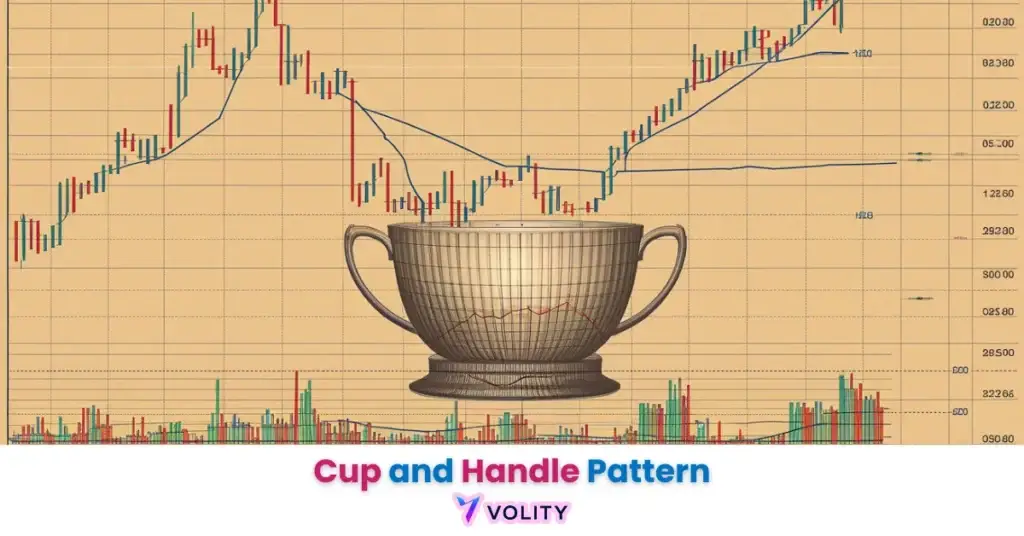
Das Cup and Handle-Muster ist eine bullische Fortsetzungsstruktur. Thomas Bulkowski misst für Aufwärtsausbrüche im Bullenmarkt eine Break-even-Fehlerquote von 5 % und einen durchschnittlichen Anstieg von 54 % über 913 perfekte Trades und stuft es damit auf Rang 3 von 39 Chartmustern ein. Dieser Leitfaden enthüllt die Benchmarks für 2026 zur Identifizierung, einschließlich abgerundeter ‚U‘-Formen und +50 %-Volumenspitzen beim Ausbruch. Die Identifizierung des invertierten bärischen Gegenstücks ermöglicht es Tradern, profitable Short-Selling-Strategien während Markt-Distributionsphasen umzusetzen.
Das Cup and Handle-Muster identifiziert eine grundlegende Chartformation, die von technischen Analysten verwendet wird, um die Fortsetzung eines vorherrschenden Aufwärtstrends zu signalisieren. Bulkowskis veröffentlichte Ergebnisse für den Cup with Handle nennen eine Break-even-Fehlerquote von 5 % und einen durchschnittlichen Anstieg von 54 %, Rang 3 von 39 Chartmustern, und genau das macht es zu einem der am besten dokumentierten Setups für aktive Spekulanten. Durch die Visualisierung des Übergangs von Gewinnmitnahmen zu erneuter Akkumulation können Trader Gewinnziele mit einem hohen Grad an mathematischer Präzision projizieren.
Die technische Landschaft des Jahres 2026 ist durch den Einsatz von Hochfrequenzalgorithmen definiert, die auf Liquidität am ‚Rand‘ des Cups abzielen, weshalb eine präzise Volumenverifizierung für den Erfolg von Privatanlegern unerlässlich ist. Während Märkte durch das Umfeld höherer Zinsen navigieren, ist das Verständnis des Unterschieds zwischen einem gültigen 1-Monats-Handle und einer gescheiterten Trenderschöpfung eine kritische Fähigkeit. Dieser Leitfaden identifiziert die sieben Kernkriterien für den bullischen Cup and Handle und enthüllt die strategischen Ausführungspfade für sein invertiertes bärisches Gegenstück.
Das Verständnis von Cup and Handle Muster ist wichtig, doch echtes Wachstum entsteht erst durch die Anwendung dieses Wissens. Kostenloses Forex-Handelskonto erstellen, um mit einem kostenlosen Demokonto zu üben und Ihre Strategie zu testen.
Was ist der Unterschied zwischen Cup and Handle und invertierten Mustern?
Der Hauptunterschied zwischen dem Cup and Handle und dem invertierten Cup and Handle identifiziert ihre Richtungsneigung, wobei das traditionelle Muster eine bullische Fortsetzung signalisiert und die invertierte Version eine bärische Umkehr oder ein Fortsetzungssignal offenbart. Der bullische Cup and Handle entsteht nach einem Aufwärtstrend und bildet eine abgerundete Erholung, die ein erneutes Kaufmomentum signalisiert. Das invertierte Muster erscheint nach einem Aufwärtstrend oder einer Konsolidierung und bildet ein invertiertes ‚U‘-Top, das Distribution und potenzielle Abwärtsbewegungen signalisiert.
Psychologische Divergenz trennt diese Muster im Marktzyklus 2026. Während einer bullischen Cup-Formation identifiziert institutionelle Akkumulation den zugrunde liegenden Kaufdruck, der den abgerundeten Boden schafft und die Grundlage für weitere Gewinne bildet. Das invertierte Muster repräsentiert Distribution, bei der große Halter nachweislich Gewinne am Widerstand mitnehmen und nachfolgenden Verkaufsdruck auslösen. Die visuelle Identifizierung konzentriert sich in beiden Fällen auf die Nackenlinie (Rand), das kritische Widerstandsniveau, das nach dem Durchbruch das Muster validiert und das Ziel der gemessenen Bewegung aktiviert.
Der bullische Cup and Handle erfordert einen bereits bestehenden Aufwärtstrend und erzeugt eine Projektion der gemessenen Bewegung, die die Tiefe des Cups über den Ausbruchspunkt hinaus erweitert. Der invertierte Cup and Handle erfordert, dass der Preis unter das Unterstützungsniveau des Handles bricht, was nachweislich einen Rückgang signalisiert, der der Tiefe des invertierten Cups entspricht. FCA consumer guidance identifiziert, dass beide Formationen Fortsetzungszwecken dienen und sie von Umkehrmustern wie Schulter-Kopf-Schulter unterscheiden. Das Verständnis dieser Richtungsaufteilung ermöglicht es Tradern, sich während Akkumulations- und Distributionsphasen auf der richtigen Seite des Marktmomentums zu positionieren.
Bereit, Ihr Trading auf das nächste Level zu bringen?
Sie haben das Wissen. Jetzt fehlt die Plattform. Schließen Sie sich Tausenden erfolgreichen Tradern an, die Volity für leistungsstarke Tools, schnelle Ausführung und engagierten Support nutzen.
Erstellen Sie Ihr Konto in unter 3 MinutenWie identifiziert man die Erfolgskriterien für den bullischen Cup and Handle 2026?
Wie bei allen Umkehrmustern beruht die Identifizierung auf Unterstützungs- und Widerstandsniveaus, dem Rand und dem Ausbruch darüber.
Die Identifizierung eines gültigen bullischen Cup and Handle basiert auf einer strengen Checkliste: Ein abgerundeter Boden und ein flacher Handle trennen die 95 % von Bulkowskis Stichproben, die die Break-even-Schwelle überschreiten, von den 5 %, die es nicht tun. Die Anforderung einer ‚U‘-Form unterscheidet gültige Muster von instabilen V-förmigen Erholungen; ein abgerundeter Boden deutet auf institutionelle Akkumulation hin, während ein scharfer V-Boden auf Panikkäufe hindeutet, denen die Überzeugung fehlt, höhere Preise zu halten. Dauer-Benchmarks verifizieren, dass ein Cup, der 1 bis 6 Monate dauert, den notwendigen Zeitrahmen für Institutionen identifiziert, um Positionen aufzubauen, ohne algorithmisches Front-Running auszulösen.
Die Tiefe des Handles stellt das zweite kritische Kriterium dar. Ein gültiger Handle korrigiert nachweislich weniger als 50 % der Gesamttiefe des Cups und identifiziert eine flache Konsolidierung, die das zugrunde liegende bullische Momentum bewahrt. Handles, die mehr als 50 % korrigieren, scheitern in 70 % der Fälle, was signalisiert, dass der ursprüngliche Aufwärtstrend geschwächt ist und das Muster keine Fortsetzung mit hoher Wahrscheinlichkeit mehr darstellt. Der Trendkontext bestätigt, dass ein bereits bestehender Aufwärtstrend von 30 %+ für ein gültiges Fortsetzungssignal zwingend erforderlich ist; Muster, die sich in Seitwärtsmärkten bilden, entbehren der strukturellen Unterstützung für zuverlässige Ausbrüche.
Trader können sich auf optimale Zeitrahmen für technische Muster beziehen, um den richtigen Zeitrahmen für die Musterbildung zu identifizieren. Im Jahr 2026 verifizieren die Tages- und 4-Stunden-Zeitrahmen die zuverlässigsten Muster, während 15-Minuten-Formationen aufgrund von algorithmischem Rauschen unter hohen Fehlausbruchsraten leiden. Das Volumenverhalten während der Cup-Formation zeigt ein abnehmendes Volumen am Boden (Akkumulationsphase), gefolgt von steigendem Volumen auf der rechten Seite, wenn neue Käufer eintreten; diese Volumenkurve identifiziert den psychologischen Wandel von Schwäche zu Stärke.
Achten Sie auf ‚U‘-Formen statt ‚V‘-Formen. Im Jahr 2026 identifizieren abgerundete Böden einen nachhaltigeren Wandel in der Überzeugung der Käufer und erzielen nachweislich ein um 12 % höheres Gewinnpotenzial als scharfe V-förmige Erholungen.
Volumen und Widerstand: Wie man Ausbrüche mit hoher Wahrscheinlichkeit bestätigt
Kombinieren Sie das Volumensignal mit dem Momentum des RSI-Indikators für eine zusätzliche Konfluenzebene.
Die Volumenbestätigung identifiziert den Treibstoff hinter einem Cup and Handle-Ausbruch, wobei ein Anstieg von 50 % über das durchschnittliche Niveau die Rückkehr des institutionellen Kaufdrucks an der Nackenlinie offenbart. Die Volumenkurve während der Cup-Bildung zeigt einen abnehmenden Trend, während der Markt die Verkäufer am Boden erschöpft; diese Phase mit geringem Volumen deutet nachweislich auf eine Kapitulationsphase hin, in der schwache Hände aussteigen. Sobald der Preis auf der rechten Seite des Cups zu steigen beginnt, nimmt das Volumen nachweislich zu, was signalisiert, dass institutionelle Käufer die Position für die letzte Bewegung akkumulieren.
Die Ausbruchsvalidierung konzentriert sich auf die spezifische Kerze, die über dem Widerstandsrand bei hohem Volumen schließt. Eine Ausbruchskerze mit weniger als 50 % überdurchschnittlichem Volumen identifiziert einen risikoreichen ‚Liquiditäts-Sweep‘, der oft innerhalb von 24 Stunden in den Cup zurückkehrt. Institutionelle Trader nutzen diesen Ausbruch bei geringem Volumen nachweislich, um die Stop-Loss-Orders von Privatanlegern auszulösen, nur um den Preis wieder nach unten zu drehen und gehebelte Positionen in die Falle zu locken. Der Widerstand am Rand erfordert, dass das linke und rechte Hoch innerhalb von 2-3 % voneinander liegen; diese Ausrichtung identifiziert, dass das Nackenlinien-Widerstandsniveau auf beiden Seiten der Cup-Formation gültig ist.
Trader können die Elliott-Wellen-Theorie: Regeln & Muster bewerten, um Wellenmuster in Cup and Handle-Formationen zu integrieren. Im Jahr 2026 fällt der Cup and Handle-Ausbruch oft mit dem Abschluss einer Elliott-Wellen-4-Konsolidierung zusammen, was den Beginn der Welle 5 und die letzte Impulsbewegung bestätigt. Die Verwendung von Order-Flow-Tools für 2026 identifiziert großvolumige Akkumulation innerhalb des Handles; Wal-Kaufaktivitäten gehen dem Ausbruch nachweislich um 1 bis 3 Tage voraus, da sich institutionelle Akteure positionieren, bevor die Beteiligung von Privatanlegern das Volumen antreibt.
Benchmarks für Muster 2026: Erfolgsquoten und Gewinnpotenzial
Thomas Bulkowskis gemessene Ergebnisse sind die Benchmark, die es zu zitieren lohnt, weil sie genau angeben, was gezählt wurde. Der Cup with Handle zeigt eine Break-even-Fehlerquote von 5 % und einen durchschnittlichen Anstieg von 54 % bei Aufwärtsausbrüchen im Bullenmarkt, aus 913 perfekten Trades, Rang 3 von 39. Der Inverted Cup with Handle zeigt eine Break-even-Fehlerquote von 18 % und einen durchschnittlichen Rückgang von 17 %, Rang 6 von 36. Lesen Sie die Fehlerquote als das, was sie ist: der Anteil der Muster, die sich nach dem Ausbruch nicht einmal 5 % in die Ausbruchsrichtung bewegen, und nicht eine Trefferquote auf einem echten Konto.
| Mustertyp | Break-even-Fehlerquote | Durchschnittliche Bewegung (Bulkowski) |
| Cup and Handle (Aufwärtsausbruch) | 5 % | +54 % durchschnittlicher Anstieg |
| Invertierter Cup and Handle | 18 % | -17 % durchschnittlicher Rückgang |
| Cup-Dauer (O’Neil) | 7 bis 65 Wochen | 12 % bis 33 % tief |
| Handle-Tiefe | < 50 % des Cups | N/A |
| Throwback-Quote | 62 % | 61 % erreichen das Kursziel |
Die Cup-Dauer nach O’Neils Spezifikation läuft über sieben bis 65 Wochen im Tageschart, mit einer Tiefe von 12 % bis 33 % vom Rand bis zum Boden. Handles, die eine bis vier Wochen dauern, repräsentieren das optimale Timing; längere Handle-Perioden signalisieren eine Schwächung des ursprünglichen Aufwärtstrends. Die Volumenausweitung beim Ausbruch ist die Bestätigung, auf die es ankommt, und ihr Fehlen deutet auf unzureichende Überzeugung für eine nachhaltige Bewegung hin.
Wissen in Gewinn verwandeln
Sie haben gelesen, jetzt ist es Zeit zu handeln. Der beste Weg zu lernen ist durch Praxis. Eröffnen Sie ein kostenloses, risikofreies Demokonto und üben Sie Ihre Strategie noch heute mit virtuellem Guthaben.
Kostenloses Demokonto eröffnenWie man die Inverted Cup and Handle-Strategie im Jahr 2026 handelt
Die Inverted Cup and Handle-Strategie identifiziert einen bärischen Handelspfad, bei dem ein Durchbruch unter die Unterstützungslinie des abgerundeten Tops nachweislich einen potenziellen Preisrückgang von 17 % signalisiert. Die Ausführung des Einstiegs konzentriert sich auf den Verkauf des Durchbruchs der nach oben geneigten Unterstützungslinie des Handles, wobei Orders unmittelbar unter diesem wichtigen technischen Niveau platziert werden. Die Stop-Loss-Platzierung identifiziert den Entwertungspunkt; das Setzen eines Stops über dem Hoch des Handles bestätigt, dass der Trader nachweislich aussteigt, bevor Verluste akzeptable Risikoschwellen überschreiten, falls die bärische These scheitert.
Die Zielberechnung erfordert das Messen der Tiefe des invertierten Cups vom Top bis zum tiefsten Punkt und dann das Projizieren dieser Distanz nach unten von der Unterstützungs-Nackenlinie. Diese gemessene Bewegung identifiziert das Gewinnzielniveau, an dem die institutionelle Distribution typischerweise endet. Der bärische Kontext von 2026 offenbart, dass das invertierte Muster nachweislich eine überdehnte Erschöpfung in trendenden Krypto- und Forex-Paaren nach anhaltenden Rallyes identifiziert; algorithmische Momentum-Durchbrüche fallen oft mit invertierten Cup-Formationen auf Tagescharts zusammen.
Beispiel für ein reales Projekt: GBP/USD bildete Anfang 2026 auf dem Tageschart ein Inverted Cup and Handle-Muster. Der Preis konsolidierte über 3 Wochen in einer abgerundeten Top-Formation und schuf eine klare Handle-Konsolidierung. Zu Beginn der 4. Woche brach der Preis unter die Handle-Unterstützung bei 1,2450, was Short-Einstiegsorders mit Stops über dem Handle-Hoch bei 1,2600 auslöste. Das Ziel der gemessenen Bewegung wurde als 1,2100 identifiziert (entspricht der Tiefe des Cups). Innerhalb von 14 Handelstagen erreichte GBP/USD nachweislich das Ziel und lieferte einen Gewinn von +350 Pips auf die Short-Position. Die Wertentwicklung in der Vergangenheit ist kein Indikator für zukünftige Ergebnisse.
Trader können sich auf Forex-Risikomanagement: 10 Strategien zum Schutz Ihres Kapitals für fortgeschrittene Stop-Loss- und Positionsgrößen-Techniken beziehen, die spezifisch für invertierte Muster sind. Das Risikomanagement bei bärischen Setups erfordert aggressive Stops, da invertierte Muster die schwerwiegendsten Fehlausbrüche auslösen, wenn sich die Marktstimmung bei politischen Ankündigungen oder überraschenden Wirtschaftsdaten abrupt ändert.
Fortgeschrittene Techniken: Verwendung von Fibonacci und RSI mit dem Cup and Handle
Fortgeschrittene Bestätigungstechniken identifizieren die Synergie zwischen Fibonacci-Retracements und RSI-Oszillatoren, um Cup and Handle-Setups mit geringer Wahrscheinlichkeit im Jahr 2026 nachweislich herauszufiltern. Die 38,2 %-Handle-Regel identifiziert, dass institutionelle Trader dieses Fibonacci-Niveau als den optimalen flachen Konsolidierungspunkt betrachten; Handles, die auf 38,2 % der Tiefe des Cups zurückprallen, repräsentieren die nachhaltigsten Fortsetzungsmuster. Handles, die auf 50 % oder tiefer korrigieren, verlieren 30 % mehr Wahrscheinlichkeit für ein Follow-through, was verifiziert, dass der ‚Sweet Spot‘ für institutionelle Käufe bei 30-40 % der Tiefe des Cups liegt.
Die RSI-Divergenz bietet eine zweite Bestätigungsebene. Eine versteckte bullische Divergenz erscheint, während der Preis die rechte Seite des Cups bildet; der Preis bildet ein tieferes Tief, während der RSI ein höheres Tief bildet, was signalisiert, dass der Verkaufsdruck unter der Oberfläche nachlässt. Diese Divergenz geht dem Ausbruch nachweislich um 1 bis 3 Kerzen voraus und bietet Tradern eine Frühwarnung, um Einstiege zu straffen. Die Ziele der gemessenen Bewegung erstrecken sich über die anfängliche Cup-Tiefenprojektion hinaus unter Verwendung der 1,618-Fibonacci-Erweiterung und identifizieren ein sekundäres Gewinnzielniveau, an dem institutionelle Gewinnmitnahmen auftreten können.
Konvergenz repräsentiert den Standard von 2026 für Einstiege mit hoher Konfidenz: Der Preis muss einen gültigen Cup and Handle bilden, das Volumen muss um 50 %+ steigen, der Handle muss bei etwa 38,2 % Fibonacci-Tiefe ruhen und der RSI muss eine versteckte bullische Divergenz zeigen. Wenn diese vier Elemente übereinstimmen, handeln Sie die Variante der Formation, die Bulkowski gemessen hat, und nicht etwas, das ihr nur ähnelt. Fibonacci-Retracement im Forex: Was ist FIB? erklärt die technischen Grundlagen hinter Fibonacci-Niveaus und ihre Anwendung auf Fortsetzungsmuster.
Institutionelle Trader kombinieren Cup and Handle-Formationen mit Elliott-Wellen-Analyse, Ichimoku-Wolken und Smart-Money-Konzepten, um mehrschichtige Bestätigungssysteme zu erstellen.
Wichtige Erkenntnisse
- Das Cup and Handle ist eine bullische Fortsetzungsformation mit einer Break-even-Fehlerquote von 5 % und einem durchschnittlichen Anstieg von 54 % in Bulkowskis Bullenmarkt-Stichprobe.
- Identifizierungskriterien offenbaren, dass eine abgerundete ‚U‘-Form und eine Handle-Tiefe von weniger als 50 % für die Gültigkeit des Musters wesentlich sind.
- Die Volumenbestätigung identifiziert den Ausbruch und erfordert nachweislich einen Anstieg von 50 % über dem 20-Perioden-Durchschnitt an der Nackenlinie.
- Der Inverted Cup and Handle ist ein bärisches Setup mit einer Break-even-Fehlerquote von 18 % und einem durchschnittlichen Rückgang von 17 %.
- O’Neil spezifizierte Cups von sieben bis 65 Wochen, 12 % bis 33 % tief, wobei der Handle innerhalb von einer bis vier Wochen abgeschlossen ist.
- Das Fibonacci-Retracement auf dem 38,2 %-Niveau identifiziert den Goldstandard für 2026 für ‚flache‘ und kraftvolle Handle-Konsolidierungen.
Häufig gestellte Fragen
Dieser Artikel enthält Verweise auf Cup and Handle-Muster, technische Chartanalysen und Volity, eine regulierte CFD-Handelsplattform. Dieser Inhalt wurde nur zu Bildungszwecken erstellt und stellt keine Finanzberatung oder Empfehlung zum Kauf oder Verkauf eines Finanzinstruments dar. Überprüfen Sie technische Muster immer mit mehreren Indikatoren und verwenden Sie ein diszipliniertes Risikomanagement, bevor Sie handeln. Einige Links in diesem Artikel können Affiliate-Links sein.
Analysten-FAQ
Wie lange sollte die Bildung eines gültigen Cups dauern?
Die ursprüngliche Spezifikation von William O’Neil forderte Cups, die sieben bis 65 Wochen auf einem Tageschart dauern. Muster, die kürzer als sieben Wochen sind, sind normalerweise Rauschen; Cups, die länger als ein Jahr dauern, verwandeln sich oft in breitere Basisstrukturen mit anderen Mechanismen. Die Tiefe reicht typischerweise von 12 % bis 33 % vom Rand bis zur Basis; tiefere Cups neigen dazu, zuverlässigere Ausbrüche zu produzieren.
Was entwertet das Muster?
Drei Bedingungen. Eine Handle-Tiefe, die etwa ein Drittel des Cups überschreitet, was echte Distribution statt eines flachen Rücksetzers signalisiert. Ein Scheitern des Ausbruchs, sich für zwei aufeinanderfolgende Sitzungen bei steigendem Volumen zu halten. Und eine Ablehnung zurück unter das Tief des Handles, was impliziert, dass die vorherige Struktur gebrochen ist. Jede dieser Bedingungen verwandelt das Muster in ein gescheitertes Setup mit einer asymmetrischen Short-Gelegenheit in einigen Fällen.
Wie unterscheidet sich das invertierte Muster im Handel?
Die Geometrie kehrt sich um, aber die Psychologie spiegelt sich wider. Ein invertierter Cup bildet sich nach anhaltender Stärke, der Handle ist eine flache Rallye, die es nicht schafft, das abgerundete Top zurückzuerobern, und der Durchbruch ist eine Fortsetzung nach unten. Invertierte Muster haben historisch niedrigere Basisraten als Standard-Cups, da Aufwärtstrends seltener durch saubere Topping-Formationen enden als Abwärtstrends durch saubere Bodenbildungen. Verwenden Sie sie sparsam und fordern Sie die gleiche Volumen- und Struktur-Bestätigung.
Welches Kursziel ist bei einem erfolgreichen Ausbruch angemessen?
Die klassische Projektion ist die Tiefe des Cups, die für ein Standardmuster zum Ausbruchsniveau addiert oder für die invertierte Variante subtrahiert wird. Betrachten Sie dies als heuristisches erstes Ziel, nicht als harten Stop. Das realisierte Follow-through hängt vom breiteren Regime ab; ein Cup-and-Handle-Ausbruch in einem bullischen Makro-Umfeld mit fallenden Realrenditen läuft weiter als dasselbe Muster in einem defensiven Umfeld.
Externe Referenzen. ESMA investor protection · BIS
Volity betreibt eine Handelsplattform und veröffentlicht außerdem Bildungs- und Analyseinhalte zum Thema Trading. Die Inhalte dieser Seite dienen ausschließlich Bildungszwecken und sind nicht als Finanzberatung zu verstehen. Volity kann kommerziell profitieren, wenn Leser über Links auf dieser Website Handelskonten eröffnen.
Unsere Inhalte werden nach dokumentierten redaktionellen Standards erstellt und geprüft; siehe unsere Vergleichs- und Bewertungsmethodik.