Le trading sur le forex avec des ordres stop loss comporte toujours un risque substantiel, y compris la perte potentielle de la totalité du solde de votre compte. Les ordres stop loss ne garantissent pas une exécution au prix spécifié en cas de gaps ou de volatilité extrême du marché. L’effet de levier amplifie à la fois les gains et les pertes. Les performances passées ne sont pas indicatives des résultats futurs. Capital à risque.
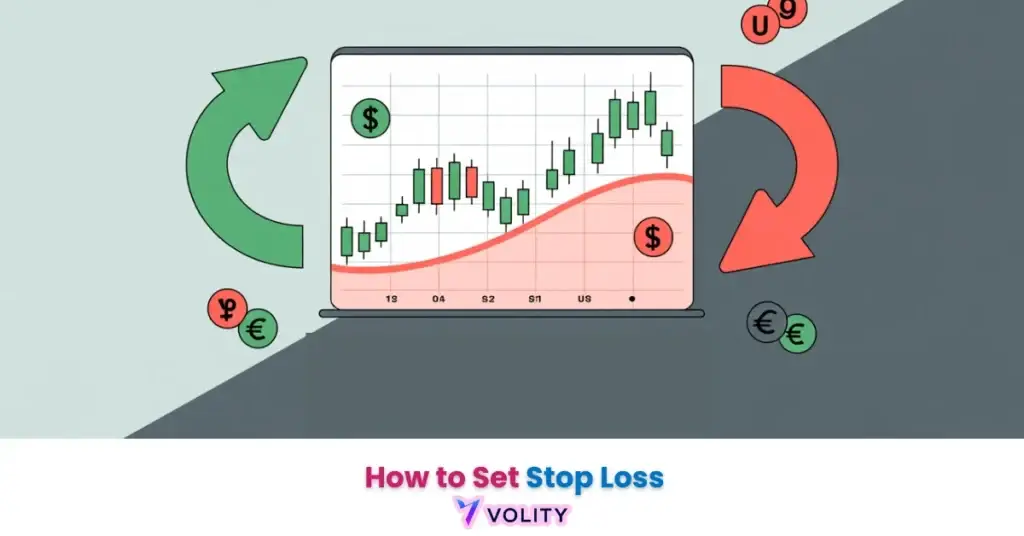
Les ordres stop loss sont l’outil défensif le plus critique dans l’arsenal d’un trader, conçus pour limiter le risque de baisse sur une position spéculative. Ces ordres déclenchent automatiquement une sortie du marché une fois qu’un seuil de prix spécifique est atteint, protégeant ainsi l’utilisateur contre les décisions émotionnelles. En 2026, l’utilisation cohérente du stop loss est corrélée à un taux de survie supérieur de 45 % pour les comptes de trading de détail sur une période de 12 mois.
La mise en place d’un stop loss commence par l’identification du point de prix exact où votre thèse de trading initiale est invalidée. Ce niveau sert de frontière psychologique et financière qui empêche une correction mineure du marché de devenir une perte totale pour le compte. Cela permet aux traders d’opérer avec un « Risque par trade » prédéfini qui assure la durabilité à long terme.
Le marché du forex en 2026 est caractérisé par des pics de volatilité rapides entraînés par des algorithmes institutionnels à haute fréquence. Maîtriser le placement des stop loss permet aux participants de naviguer à travers ces fluctuations sans sacrifier toute leur marge lors de mouvements de prix temporaires.
Comprendre Forex est important, mais la vraie progression commence en appliquant ces connaissances. Créez votre compte de trading forex gratuit pour vous entraîner sur un compte démo gratuit et mettre votre stratégie à l’épreuve.
Qu’est-ce qu’un stop loss et pourquoi est-il non négociable ?
Un stop loss est un ordre conditionnel qui donne instruction à un courtier de fermer une position une fois qu’un actif atteint un niveau de prix prédéterminé afin de limiter l’exposition financière. Cet outil automatisé élimine l’émotion de la décision de sortie et garantit qu’aucun trade individuel ne puisse détruire des mois de profits accumulés.
Les trois rôles critiques des stop loss guident toutes les décisions de gestion des risques. La préservation du capital représente l’objectif principal pour survivre et trader un autre jour ; sans stops, une seule perte catastrophique élimine toute votre carrière de trader. La réduction des risques émotionnels supprime le facteur « espoir » lorsqu’un trade va à votre encontre, évitant le piège psychologique de conserver des positions perdantes. La gestion de l’effet de levier devient essentielle lors du trading sur marge en 2026 ; la combinaison de la taille de la position et de la distance du stop détermine si un appel de marge liquidera votre compte.
Les statistiques des audits de courtiers de 2026 révèlent que 80 % des pertes majeures surviennent sur des trades où aucun ordre stop loss n’était présent.
Ordres au marché vs Ordres stop
Un ordre stop loss fonctionne comme un déclencheur qui se transforme en ordre au marché une fois que le prix stop spécifié est touché par la plateforme. La distinction est importante lors des sessions volatiles ; un stop loss standard devient un ordre au marché au prix stop, mais le prix d’exécution réel peut différer substantiellement en raison du slippage.
Comprendre le slippage lors d’événements à forte volatilité permet d’identifier pourquoi le « gapping » se produit. Un prix peut sauter au-delà de votre niveau de stop en quelques millisecondes, provoquant une exécution bien en dessous du prix prévu lors d’annonces économiques majeures. La différence entre une sortie « Stop » et « Limit » devient ici critique ; un ordre Stop-Limit refuse l’exécution à des prix défavorables, mais risque de ne pas être exécuté du tout.
Prêt à faire passer votre trading au niveau supérieur ?
Vous avez les connaissances. Il vous manque la plateforme. Rejoignez des milliers de traders qui choisissent Volity pour ses outils puissants, son exécution rapide et son support dédié.
Créez votre compte en moins de 3 minutesQuel est le meilleur endroit pour placer un stop loss ?
Le placement optimal du stop loss identifie le niveau spécifique de la structure du marché où un retournement de prix prouverait que votre signal d’entrée est incorrect. Cette distinction sépare la gestion professionnelle des risques des comptes de pips arbitraires qui exposent les traders à la chasse aux stops systématique.
- Sommets et creux (Swing Highs and Lows) : Placer des stops juste au-delà du point de rejet le plus récent garantit que le prix doit totalement inverser votre thèse avant de fermer le trade. Un sommet (swing high) représente une tentative échouée d’aller plus haut ; placer votre stop un pip au-dessus garantit l’invalidation.
- Niveaux de support et de résistance : Utiliser des « planchers » et des « plafonds » horizontaux comme barrières protectrices ancre vos stops au flux d’ordres institutionnel. Ces niveaux psychologiques génèrent souvent une mèche ou un test avant de poursuivre, confirmant la structure.
- Zones de confluence technique : Les stops placés derrière des moyennes mobiles ou des lignes de tendance offrent une fiabilité plus élevée car plusieurs signaux d’action des prix s’alignent. Lorsque le support converge avec une moyenne mobile à 200 périodes et une ligne de tendance, le stop a un poids institutionnel.
Placer des stops sur des « nombres ronds » (par exemple 1,1000) augmente la probabilité d’être « chassé » par les algorithmes institutionnels de 30 % en 2026. Les traders professionnels évitent les niveaux évidents autour desquels les traders de détail se regroupent.
Trading sur support et résistance fournit les connaissances fondamentales pour identifier ces niveaux structurels avec précision.
Comment calculer le stop loss en pips en utilisant l’ATR
Le placement du stop ajusté à la volatilité identifie la « marge de manœuvre » nécessaire pour un trade en calculant l’Average True Range (ATR) de l’action récente des prix. La formule ATR utilise une moyenne sur 14 périodes pour mesurer le bruit du marché et fournir une distance objective entre votre entrée et votre plancher protecteur.
La règle de 1,5x ATR représente la référence de 2026 pour un placement de stop à vitesse de libération. Si l’ATR sur 14 périodes sur EUR/USD est de 18 pips, votre distance de stop devrait être d’environ 27 pips en dessous de votre entrée. Cela garantit que le trade survit à la volatilité normale tout en protégeant contre les fausses cassures. Ajuster la distance du stop pour différentes paires de devises est essentiel ; les paires JPY présentent des plages plus serrées (ATR plus petit) tandis que les paires influencées par les matières premières montrent des swings extrêmes nécessitant des stops plus profonds.
Exemple de trading réel : Une cassure s’est produite sur le graphique 1 heure où l’ATR était de 20 pips. Stop fixé à 30 pips (1,5 x 20) en dessous du bas de la bougie de cassure. Le trade a survécu à un retest de 15 pips du niveau de cassure avant de poursuivre pour un gain de 60 pips. Les performances passées ne sont pas indicatives des résultats futurs.
Utiliser les stratégies de Comment définir un point d’entrée avec des stops basés sur l’ATR crée un cadre de risque complet. Le Tutoriel sur l’indicateur ATR de TradingView démontre comment calculer et appliquer les valeurs ATR sur votre plateforme graphique.
Quels sont les différents types d’ordres stop loss ?
La classification des stop loss identifie les différentes méthodes d’exécution utilisées pour protéger les profits et limiter le risque de baisse dans différents régimes de marché. Chaque type d’ordre sert un contexte de trading spécifique et comporte des avantages et des inconvénients distincts.
| Type d’ordre | Fonction | Meilleur cas d’utilisation | Avantage principal | Facteur de risque 2026 |
| Stop fixe | Niveau de prix statique | Scalping/Day Trading | Certitude totale | Slippage |
| Stop suiveur (Trailing) | Mouvement dynamique | Suivi de tendance | Verrouillage des profits | Sortie précoce |
| Stop garanti | Sortie sans slippage | Nouvelles à fort impact | Risque de gap zéro | Coût premium |
| Stop mental | Sortie non systématique | Professionnels uniquement | Flexibilité maximale | Biais émotionnel |
| Stop temporel | Sortie après durée | Faible volatilité | Efficacité du capital | Mouvements manqués |
Sources : FCA Consumer Protection on Stop-Losses et normes réglementaires FINRA 2026.
Les stops fixes restent la méthode la plus transparente ; le prix atteint votre niveau ou non. Les stops suiveurs offrent une protection dynamique en suivant le prix à mesure qu’il avance, verrouillant automatiquement les profits. Les stops garantis éliminent le risque de slippage mais nécessitent le paiement d’un coût de spread premium. Les stops mentaux ne conviennent qu’aux traders expérimentés ayant une discipline absolue ; la plupart des comptes explosent en utilisant cette méthode.
La règle des 2 % : Calculer la taille de la position à partir de votre stop
Le dimensionnement stratégique de la position identifie le nombre exact de lots à trader en fonction du risque monétaire fixe déterminé par la distance de votre stop loss. Cette approche d’ingénierie inverse garantit que vos stops dictent la taille de la position, et non l’inverse.
La règle de risque des 2 % stipule qu’un trader ne devrait jamais risquer plus de deux pour cent du solde total de son compte sur un seul trade. Le calcul suit cette formule : (Solde du compte × 0,02) ÷ (Stop Loss en pips × Valeur du pip) = Taille maximale du lot. Un trader avec un compte de 10 000 $ ne peut risquer que 200 $ par trade. Si la distance du stop loss est de 40 pips, et que chaque pip sur un lot standard d’EUR/USD équivaut à 10 $, alors la position maximale est de (200 $ ÷ (40 × 10 $)) = 0,5 lots.
Pourquoi le stop loss devrait dicter la taille, et non l’inverse, devient évident lorsque la survie du compte est l’objectif. Si vous commencez par décider « Je veux trader 2 lots », vous pourriez alors placer le stop trop loin pour respecter la règle des 2 %, violant ainsi vos paramètres de risque. Cette méthode garantit que chaque trade opère dans des limites de sécurité prédéterminées.
Gestion des risques fournit des conseils complets sur les cadres de dimensionnement des positions. Les journaux de trading modernes de 2026 s’intègrent désormais directement aux courtiers pour calculer automatiquement votre taille de lot maximale en fonction de votre placement de stop.
Transformez vos connaissances en profit
Vous avez lu, il est temps d’agir. La meilleure façon d’apprendre, c’est en pratiquant. Ouvrez un compte démo gratuit et sans risque et entraînez votre stratégie avec des fonds virtuels dès aujourd’hui.
Ouvrir un compte démo gratuitErreurs courantes de stop loss et « chasse aux stops »
L’identification de la chasse aux stops identifie la pratique institutionnelle consistant à diriger le prix vers des clusters de stops de détail visibles pour générer de la liquidité. En 2026, les bureaux institutionnels utilisent des algorithmes spécifiquement conçus pour cibler les zones où s’accumulent les grandes positions de détail.
Pourquoi les stops « serrés » échouent en 2026 implique d’accepter la réalité de la structure du marché ; un stop de 10 pips sur GBP/USD vous expose à être secoué par un mouvement de prix normal. La plupart des retournements comportent des « mèches » ou des tests qui sondent le support et la résistance avant de confirmer. Les clusters de nombres ronds déclenchent la chasse aux stops car les traders de détail placent naturellement des stops à des niveaux évidents comme 1,0500 ou 1,1000. Les bureaux institutionnels ciblent spécifiquement ces niveaux pour générer le volume de liquidité nécessaire à l’exécution de leurs grands trades en bloc.
Le placement professionnel déplace les stops vers des niveaux structurels juste au-delà des sommets ou creux récents, les rendant invisibles aux algorithmes de chasse automatisés. Appel de marge vs Stop Out explique les conséquences d’une mauvaise gestion des stops lorsque l’effet de levier sur marge est impliqué.
Points clés
- Les ordres stop loss sont des outils de gestion des risques non négociables qui protègent votre compte contre une perte financière catastrophique.
- Le placement structurel du stop au-delà des sommets et creux est supérieur à l’utilisation de comptes de pips arbitraires ou fixes.
- L’indicateur ATR fournit un cadre ajusté à la volatilité pour définir des stops qui survivent au bruit normal du marché.
- Le dimensionnement de la position doit être calculé en fonction de la distance de votre stop loss pour garantir que vous ne risquez que 1 à 2 % de vos capitaux propres.
- Les stop loss garantis offrent une protection contre les gaps de prix et le slippage lors d’événements économiques majeurs de 2026.
- Les stops suiveurs permettent aux traders de verrouiller automatiquement les profits à mesure qu’une tendance progresse en leur faveur.
Foire aux questions
Cet article contient des références aux stratégies de trading sur le forex, à la gestion des stop loss et à Volity, une plateforme de trading de CFD réglementée. Ce contenu est produit à des fins éducatives uniquement et ne constitue pas un conseil financier ou une recommandation d’achat ou de vente d’un instrument financier. Vérifiez toujours les pratiques d’exécution des ordres de votre courtier et vérifiez la conformité réglementaire avant d’ouvrir un compte de trading réel. Certains liens dans cet article peuvent être des liens d’affiliation.