L’ouverture d’un compte de trading forex donne accès au trading de devises avec effet de levier, ce qui comporte des risques substantiels, y compris la perte potentielle de la totalité du solde de votre compte. L’effet de levier amplifie à la fois les profits et les pertes. L’intégration numérique ne garantit pas la protection du capital, et des défaillances techniques peuvent retarder l’accès aux fonds. Vérifiez toujours le statut réglementaire de votre courtier et la protection des fonds ségrégués avant de déposer du capital. Les performances passées ne préjugent pas des résultats futurs. Capital à risque.
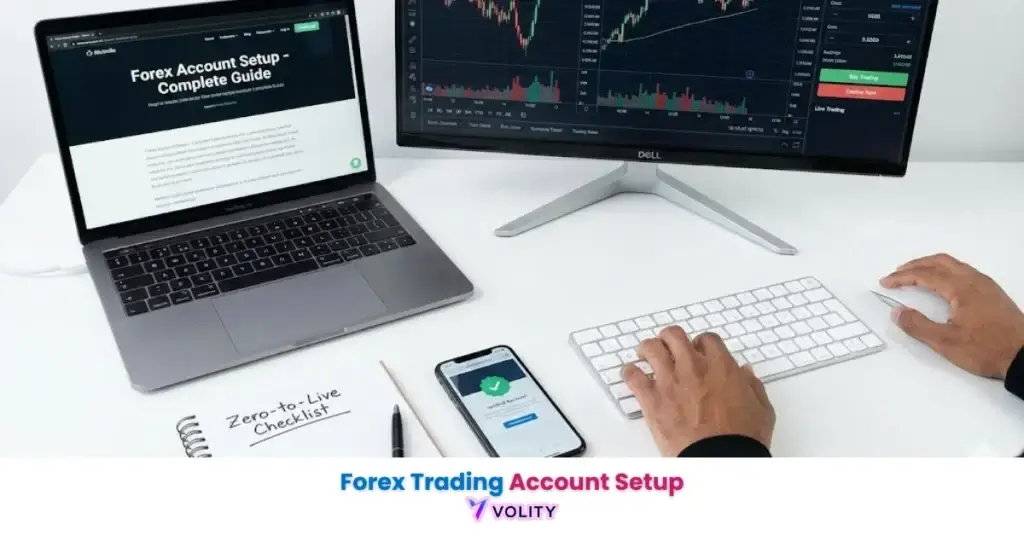
Un compte de trading forex est votre porte d’entrée vers le plus grand marché financier au monde, facilitant l’échange de devises mondiales. Ce compte donne accès à l’effet de levier, aux fournisseurs de liquidité et à des logiciels de graphiques en temps réel. En 2026, le marché mondial du forex de détail a atteint 1,2 billion de dollars de volume quotidien, avec plus de 15 millions de comptes individuels actifs dans le monde.
La configuration d’un compte de trading forex implique un processus de vérification en plusieurs étapes conçu pour assurer la conformité réglementaire et la sécurité du capital. Ce cadre protège à la fois le trader et le système financier en adhérant à des protocoles stricts de lutte contre le blanchiment d’argent (AML) et de connaissance du client (KYC). Il fournit la base légale pour participer à la spéculation internationale sur les devises.
L’expérience d’intégration de 2026 est plus rapide que jamais grâce à l’adoption généralisée des registres d’identité numériques. Les nouveaux traders peuvent désormais passer de l’inscription initiale à l’exécution sur le marché en direct en une fraction du temps requis il y a seulement quelques années.
Comprendre Forex est important, mais la vraie progression commence en appliquant ces connaissances. Créez votre compte de trading forex gratuit pour vous entraîner sur un compte démo gratuit et mettre votre stratégie à l’épreuve.
Qu’est-ce qu’un compte de trading forex et comment fonctionne-t-il ?
Un compte de trading forex est un compte de courtage spécialisé qui permet aux particuliers de spéculer sur le taux de change entre des paires de devises mondiales en utilisant l’effet de levier. Ce compte sert de passerelle de trading entre vous et le marché des devises quotidien de 9,6 billions de dollars, géré via les systèmes d’exécution de votre courtier.
La fonctionnalité du compte repose sur trois mécanismes fondamentaux. L’exécution d’ordres d’achat/vente sur le marché interbancaire massif permet aux participants de profiter des mouvements de prix sur des milliers de paires de devises simultanément. Le rôle du courtier en tant qu’intermédiaire entre vous et le marché interbancaire assure un routage et une exécution appropriés des ordres à des taux compétitifs. La marge et l’effet de levier permettent à votre compte de faciliter le trading de volumes plus importants que votre dépôt initial ; un dépôt de 1 000 $ avec un effet de levier de 50:1 accorde un pouvoir d’achat de 50 000 $.
En 2026, 98 % des comptes de détail sont « non dépositaires », ce qui signifie que le courtier gère l’exécution tandis que vous gérez la prise de décision via une plateforme numérique.
Plateformes de trading : Votre fenêtre sur le marché
La plateforme de trading est l’interface logicielle qui connecte votre compte au flux de prix en direct et au moteur d’exécution. Ce logiciel fournit des cotations de prix en temps réel, exécute vos ordres et affiche simultanément les capitaux propres et le statut de la marge de votre compte.
L’aperçu de MT4, MT5 et cTrader représente les trois plateformes majeures dominant le trading de détail en 2026. MetaTrader 4 (MT4) reste la norme héritée offrant une conception d’interface simple et un support massif d’indicateurs. MetaTrader 5 (MT5) améliore MT4 avec un support multi-actifs natif et une architecture d’exécution des ordres plus rapide. cTrader se concentre sur la transparence, offrant une interface utilisateur conçue spécifiquement pour le trading de style ECN avec des carnets d’ordres visibles. La compatibilité avec les appareils mobiles et de bureau garantit que vous pouvez surveiller et gérer les transactions depuis n’importe quel endroit, une fonctionnalité essentielle sur les marchés forex 24/5.
Prêt à faire passer votre trading au niveau supérieur ?
Vous avez les connaissances. Il vous manque la plateforme. Rejoignez des milliers de traders qui choisissent Volity pour ses outils puissants, son exécution rapide et son support dédié.
Créez votre compte en moins de 3 minutesQuel type de compte forex vous convient en 2026 ?
La classification des comptes identifie les conditions de trading spécifiques, y compris les tailles de lots et les modèles d’exécution, disponibles pour le trader. Le type de compte que vous sélectionnez détermine vos coûts de transaction, vos limites d’effet de levier et vos exigences minimales en capital pour la suite.
- Comptes Standard : Idéaux pour les traders disposant d’un capital de 5 000 $ et plus utilisant des tailles de lots complètes (100 000 unités). Ces comptes offrent des spreads fixes et une exécution immédiate via des courtiers Market Maker, ce qui les rend parfaits pour les débutants apprenant les mécanismes de saisie des ordres.
- Comptes Micro/Cent : Idéaux pour les débutants commençant avec 100 $ – 500 $. Chaque micro-lot représente 10 000 unités au lieu de 100 000, permettant une taille de position précise alignée sur la règle de risque de 2 %. Parfait pour développer la discipline sans risquer la destruction du compte.
- Comptes ECN : Fournissant un accès direct au marché et des spreads bruts pour les traders à haute fréquence. Ces comptes éliminent le bureau de négociation du courtier, vous donnant un accès direct aux pools de liquidité interbancaires. Des commissions s’appliquent au lieu des spreads, créant une transparence sur les coûts réels de trading.
- Comptes Islamiques (sans swap) : Conformes à la loi Charia pour un trading sans intérêt. Ces comptes éliminent les frais d’intérêt au jour le jour, réduisant le coût total de transaction pour les détenteurs de positions à long terme dans les juridictions conformes.
L’adoption des comptes ECN parmi les traders de détail a augmenté de 25 % en 2025, les utilisateurs cherchant à réduire leurs coûts de transaction globaux. Types de Traders explique comment votre style de trading devrait influencer votre sélection de compte.
Comment ouvrir un compte de trading forex étape par étape ?
L’enregistrement systématique du compte identifie les divulgations personnelles et financières requises pour activer un profil de trading en direct. Le processus de 2026 est rationalisé par rapport aux systèmes hérités, mais les exigences réglementaires restent constantes dans toutes les juridictions.
Étape 1 : Choisir un courtier réglementé de premier plan (FCA, ASIC, CySEC) constitue la base de la sécurité du compte. Vérifiez le numéro de licence du courtier directement sur le registre officiel du régulateur avant de procéder à toute inscription. Étape 2 : Remplir le formulaire de demande en ligne avec des détails personnels et financiers prend environ 5 minutes ; vous fournirez votre nom complet, date de naissance, adresse et statut professionnel. Étape 3 : La soumission des documents de vérification d’identité (KYC) suit immédiatement ; la plupart des courtiers acceptent désormais les téléchargements de documents numériques avec lecture de puce NFC pour un traitement instantané. Étape 4 : Le financement du compte via SEPA, carte de crédit ou portefeuille électronique complète la configuration ; la plupart des courtiers fournissent désormais des crédits de dépôt instantanés en quelques minutes.
Exemple de trading réel : Un trader basé au Royaume-Uni a utilisé une application « e-ID » pour vérifier son identité instantanément auprès d’un courtier réglementé par la FCA. Le compte a été approuvé et financé par virement bancaire instantané en 45 minutes. Les performances passées ne préjugent pas des résultats futurs.
Guide de la FCA pour choisir un courtier Forex fournit des conseils axés sur le consommateur concernant les normes réglementaires. Comment définir un Stop Loss explique l’étape critique de la définition des paramètres de risque avant votre première transaction.
Quels documents sont nécessaires pour la vérification du compte forex (KYC) ?
La vérification d’identité identifie la documentation réglementaire requise pour prévenir la fraude et assurer l’intégrité du marché. Ces exigences ne sont pas négociables auprès de tous les courtiers réglementés de premier plan et servent à protéger à la fois votre compte et le système financier.
| Type de document | Exemples acceptés | Objectif | Exigence numérique 2026 |
| Preuve d’identité | Passeport, permis de conduire | Conformité AML | Scan de puce NFC / Biométrique |
| Preuve de domicile | Facture de services publics, relevé bancaire | Vérification de juridiction | PDF original (pas de photo) |
| Source des fonds | Fiche de paie, déclaration d’impôts | Vérification de patrimoine | Téléchargement chiffré |
| Profil financier | Formulaire d’expérience de trading | Test d’adéquation | Auto-déclaration |
| ID fiscal | SSN, numéro d’assurance nationale | Rapports réglementaires | Vérifié via API |
Sources : Conseils du GAFI sur l’identité numérique et recommandations mondiales du GAFI 2026.
Le processus KYC vous protège contre la fraude, garantit que vos fonds proviennent de sources légitimes et confirme que vous répondez aux normes d’adéquation pour le type de compte que vous avez demandé. Le traitement numérique en 2026 a éliminé les exigences de documents papier ; toutes les soumissions transitent par des portails chiffrés directement vers les équipes de conformité.
Financement et retraits : Gérer votre capital
La liquidité du capital identifie l’efficacité du transfert de fonds entre votre banque personnelle et votre marge de trading. L’écosystème de 2026 prend désormais en charge les virements instantanés qui éliminent les délais de 3 à 5 jours qui frustraient les traders il y a seulement quelques années.
Le financement instantané via Visa/Mastercard et Apple/Google Pay représente désormais la méthode de financement la plus rapide pour les comptes de moins de 10 000 $. La plupart des courtiers créditent les dépôts en quelques minutes, vous permettant de commencer à trader immédiatement. La symétrie des retraits, le principe selon lequel les courtiers doivent renvoyer les fonds vers la source d’origine, vous protège contre les systèmes de frais cachés ; l’argent arrive sur la même carte ou le même compte bancaire utilisé pour les dépôts. Les coûts cachés se révèlent dans les frais de conversion de devises lors du financement dans des devises non natives et les surcharges de retrait imposées par les courtiers offshore ; calculez toujours le coût net avant d’engager du capital.
La plupart des courtiers de qualité professionnelle en 2026 offrent désormais des retraits sans frais pour les comptes dépassant un seuil de capitaux propres spécifique. Appel de marge vs Stop Out explique comment les règles de marge déterminent votre solde de retrait disponible à tout moment.
Transformez vos connaissances en profit
Vous avez lu, il est temps d’agir. La meilleure façon d’apprendre, c’est en pratiquant. Ouvrez un compte démo gratuit et sans risque et entraînez votre stratégie avec des fonds virtuels dès aujourd’hui.
Ouvrir un compte démo gratuitPasser du trading démo au trading en direct
La transition vers le direct identifie le changement psychologique requis lors du passage de la pratique virtuelle à l’exécution avec de l’argent réel. Les comptes démo montrent des compétences techniques mais masquent l’élément émotionnel qui sépare les traders rentables des amateurs qui vident leur compte.
Gérer l’anxiété liée à l' »argent réel » et le biais émotionnel nécessite une stratégie délibérée. De nombreux traders obtiennent des résultats impeccables sur des comptes démo, puis prennent des décisions catastrophiques avec du capital réel en raison de la peur de la perte. Commencer avec des « Micro-Lots » pour combler le fossé entre la démo et la taille professionnelle offre une protection psychologique ; trader 0,1 lots (10 000 unités) avec de l’argent réel introduit un risque réel tout en gardant les pertes individuelles gérables. Cette approche renforce la confiance progressivement plutôt que de forcer une transition écrasante.
Gestion des risques fournit le cadre pour maintenir la discipline pendant la transition vers le direct.
Points clés
- Les comptes de trading forex sont des portails financiers réglementés qui donnent accès à l’action des prix des devises mondiales et à la liquidité.
- La réglementation du courtier est le facteur le plus important dans la configuration du compte, assurant la sécurité de vos fonds grâce à une surveillance de premier plan.
- La vérification KYC nécessite une pièce d’identité valide délivrée par le gouvernement et une preuve de domicile récente pour se conformer aux lois internationales AML.
- Les comptes micro permettent aux débutants de commencer à trader avec de petits dépôts tout en pratiquant une gestion des risques de niveau professionnel.
- Les méthodes de financement en 2026 incluent les virements bancaires instantanés et les portefeuilles numériques, offrant un accès rapide au capital de trading.
- Les comptes démo doivent être utilisés pour maîtriser la plateforme de trading avant d’engager de l’argent réel sur un compte en direct.
Questions fréquemment posées
Cet article contient des références à des comptes de trading forex, des organismes de réglementation et Volity, une plateforme de trading CFD réglementée. Ce contenu est produit à des fins éducatives uniquement et ne constitue pas un conseil financier ou une recommandation d’achat ou de vente d’un instrument financier. Vérifiez toujours le statut réglementaire de votre courtier et la protection des fonds ségrégués avant d’ouvrir un compte en direct. Certains liens dans cet article peuvent être des liens d’affiliation.