
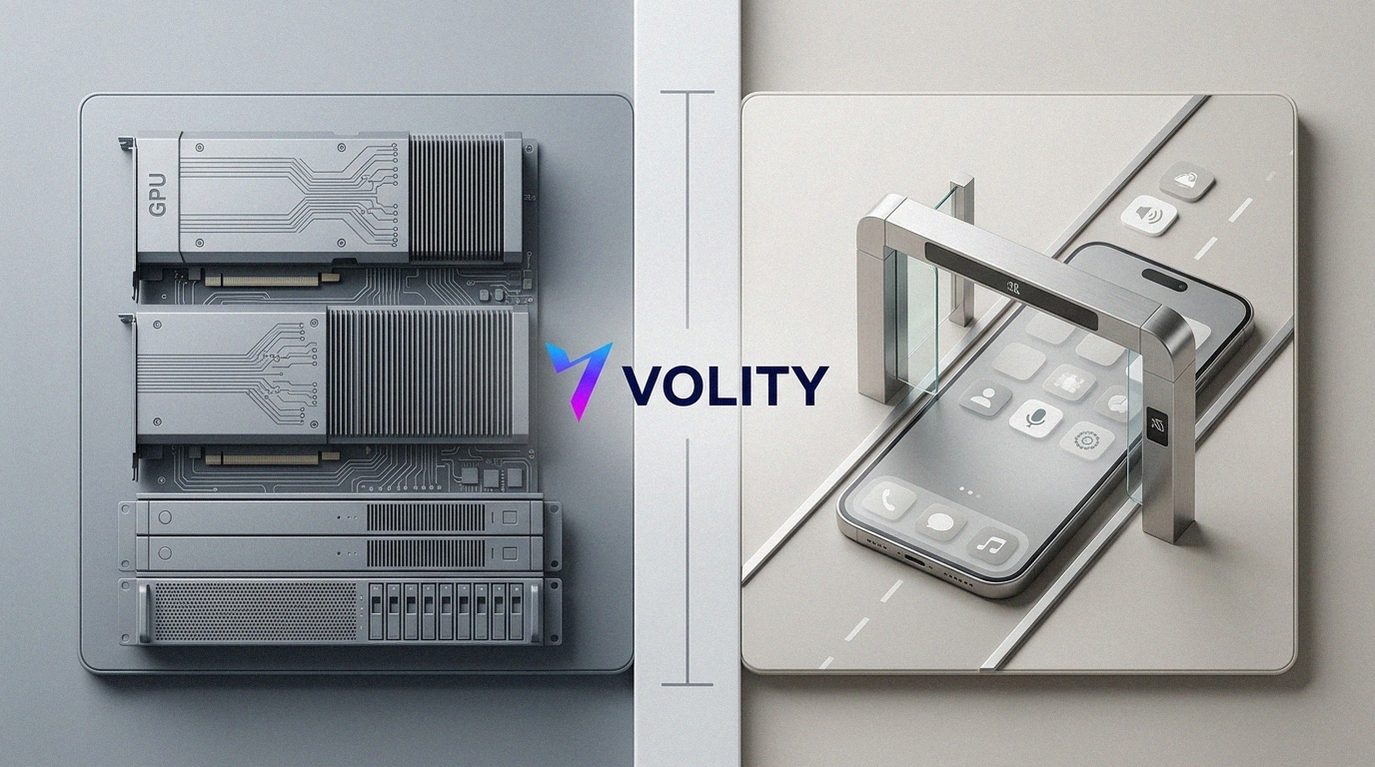
Wall Street keeps treating artificial intelligence as a single race. It is not. It is two different businesses running on the same electricity. Nvidia sells the engines. Apple owns the roads.
On one side sits Nvidia (NVDA), the market’s favourite industrialist, still priced like shortages never end. On the other sits Apple (AAPL), increasingly cast as a reluctant participant. However, that reluctance now looks like design.
Nvidia’s story barely needs embellishment. Demand for its data-centre GPUs turned a specialist chipmaker into the infrastructure default. Meanwhile, the shares have risen about 1,300% over five years, and traders have learned to treat every earnings call like a macro event. Recently, the company even flirted with a $5.03 trillion valuation in the heat of the AI bid, helped by headlines about shifting parts of semiconductor production to Arizona.
That dominance, though, lives in the infrastructure layer. Therefore Nvidia’s fortunes hinge on other people’s capital budgets. Big cloud buyers must keep ordering more racks, more networking and more accelerators. If they pause, Nvidia does not simply slow. Multiples compress first, then orders follow. The market understands this in theory. Yet it keeps betting the spend never cools.
Apple has chosen the opposite posture. It has not tried to out-train the hyperscalers. It has not tried to win the model arms race by brute force. Instead, it is aiming at distribution. It controls the hardware, the operating system, the default settings and the daily habits. That is where consumer profit tends to sit.
Investors have started to reframe Apple’s moves as quiet leverage. The company is reportedly moving away from an exclusive ChatGPT arrangement and planning to open Siri to rival assistants in iOS 27. At first glance, that looks like indecision. However, it is closer to toll collection. If multiple assistants compete for placement on the world’s most valuable handset platform, Apple sets the rules and collects the economics.
Its spending choices reinforce the point. Apple’s fiscal 2025 AI and machine-learning outlay was about $12.7 billion, down 19% year on year, with roughly $14 billion projected this year. Meanwhile, rivals burn through far larger sums to train and serve frontier models. Apple’s bet is that it can monetise AI without owning the biggest model. It would rather own the interface.
That interface is not a small thing. Apple’s installed base is more than two billion devices. Therefore “Apple Intelligence” does not need to win a benchmark war to matter. It needs to be good enough, safe enough and bundled tightly enough that it nudges upgrades and expands services revenue. In that world, AI arrives as a feature, not a product, and margin matters more than spectacle.
Valuation is the awkward part. Apple has been flirting with a $4 trillion market capitalisation since late March 2026. Bulls point to “Apple Intelligence”, and to its work in post-quantum cryptography, as reasons the services multiple can hold. Skeptics argue the shares already price in a clean execution story. Both can be right for a while, which is usually when trading gets messy.
Nvidia’s risk is different. Competition is no longer theoretical. Memory and packaging constraints are easing, suppliers are investing, and alternative accelerators keep improving. However, Nvidia does not need to lose leadership for the stock to wobble. It only needs customers to stop behaving like they are in a land grab. The infrastructure layer is lucrative, but it is also cyclical almost by definition.
So the split is becoming clearer. Nvidia wins if the AI buildout stays in hypergrowth and training demands keep exploding. Apple wins if AI becomes a default consumer utility, delivered through devices people already own. One is a lever on capex. The other is a lever on distribution.
By the numbers
- NVDA: roughly +1,300% over five years.
- Nvidia: recent peak valuation around $5.03 trillion.
- AAPL: recent market value flirting with $4 trillion.
- Apple AI spend: about $12.7bn in fiscal 2025, roughly $14bn projected this year.
- Apple installed base: over 2bn devices.
Key takeaways
- If you are trading momentum, NVDA remains the cleaner catalyst, because capex headlines move it fast.
- However, watch for signs of cloud spending fatigue, because valuation will react before revenue does.
- AAPL is less about model bragging rights and more about default placement, bundling and upgrade pressure.
- Therefore, Siri’s multi-assistant direction matters as much as any single “Apple Intelligence” demo.
- In portfolios, these are not substitutes. They are exposure to different AI profit pools.
The market loves a single champion. Yet AI may end up paying two kinds of tolls. One goes to the company that supplies the compute. The other goes to the company that decides what appears on the screen.

