Crypto markets brace for turbulence amid Iran tensions and regulatory shifts
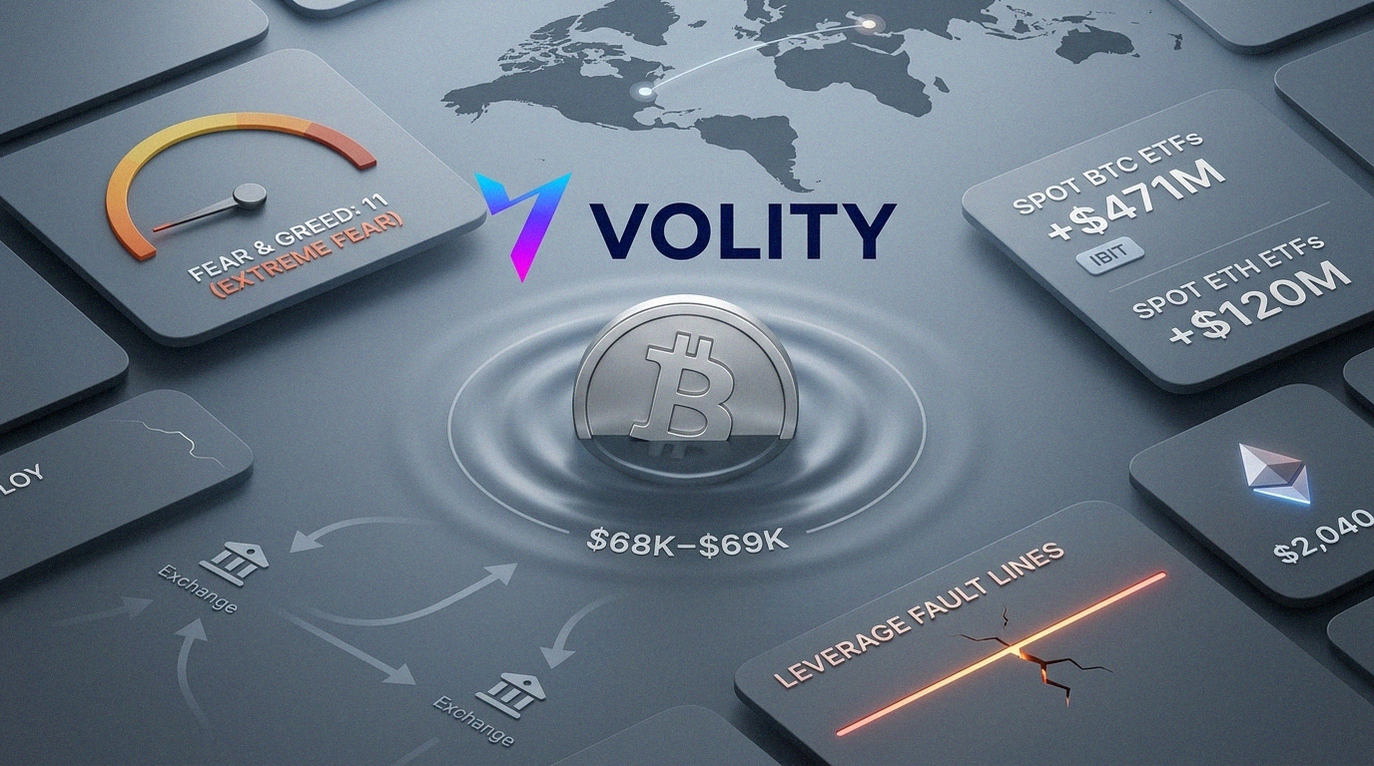
Bitcoin spent the session pacing between $68,000 and $69,000, as if it could hear the headlines coming. Sentiment sat at 11 on the Fear and Greed index, deep in “extreme fear”. Meanwhile, large holders moved size to exchanges, a familiar prelude to volatility.
However, the tape did not look like capitulation. Spot Bitcoin ETFs took in about $471 million, their strongest showing in roughly six weeks. Ether ETFs added about $120 million with no outflows reported. Therefore, the market is stuck in an awkward place: nervous retail mood, steady institutional bid.
Geopolitics puts a fuse under risk
Traders kept one eye on Washington and Tehran. Donald Trump called Iran’s proposal “not enough” to avert strikes, and the comment seeped into risk pricing. Bitcoin briefly popped above $70,000 on ceasefire hopes, then faded, a move that still managed to liquidate about $273 million in bearish positions.
Meanwhile, chart-watchers pointed to fragile setups. Ethereum has been trading with a widely watched double-top risk. Solana, after a sharp run earlier in the year, faces talk of a head-and-shoulders breakdown that targets the low $60s. A single whale transfer of roughly $20 million in Bitcoin to Binance only sharpened the mood.
ETF flows stay firm as brokers inch closer
Flows told a calmer story than the charts. BlackRock’s iShares Bitcoin Trust (IBIT) drew about $182 million, and Fidelity also featured among the day’s leaders. Moreover, Charles Schwab’s plan to roll out Bitcoin and Ether trading to its 38.9 million clients, if executed cleanly, would mark another step in crypto’s long march into mainstream brokerage menus.
That matters because liquidity changes behaviour. When allocation shifts from weekend punters to weekday portfolio flows, dips can get bought for reasons unrelated to vibes. However, the same plumbing can also accelerate selloffs when correlations spike across risk assets.
Regulation and security move from slogans to frameworks
In Washington, a proposed SEC crypto “safe harbour” framework landed at the White House. The idea is to give early-stage projects more room to build, while clarifying when a token stops looking like an investment contract. Therefore, traders are now trying to price a world where compliance risk becomes more measurable, even if it remains political.
Meanwhile, the legislative calendar stays a catalyst. XRP traders are watching the Senate’s “Clarity Act” timeline as a possible swing factor. In parallel, the Solana Foundation launched STRIDE, a DeFi security framework with eight pillars, plus a response network called SIRN. The push follows a grim Q1 tally of roughly $168 million in DeFi thefts.
Elsewhere, Indonesia’s use of on-chain forensic evidence in terrorism financing convictions underlined a simple truth. Blockchains can be anonymous enough for the uninformed, yet traceable enough for courts.
Altcoins swing between quantum dreams and liquidation maths
Altcoin land stayed jumpy. Algorand rallied about 50% after Google’s Quantum AI team highlighted it as a security model. Circle also talked up quantum-resistant design work, feeding a theme that keeps resurfacing whenever tech giants mention quantum in public.
However, the risk sits in leverage, not physics. Ethereum derivatives traders face a thick pocket of liquidation risk if price breaks below $2,040, with about $1.4 billion of long exposure flagged around that zone. Meanwhile, open interest in Bitcoin futures rose about 8%, a sign that traders added risk even as mood soured.
Prediction markets and stablecoins edge closer to the centre
Prediction markets kept gaining cultural real estate. Polymarket is rebuilding parts of its engine around a native USD stablecoin, while Kalshi’s courtroom progress against state limits nudged the sector forward. Therefore, the line between “crypto app” and “financial product” keeps blurring, which is exactly what regulators will have to define.
By the numbers
- Bitcoin: $68,000 to $69,000 range, brief push above $70,000.
- Spot ETF flows: BTC +$471m, ETH +$120m; IBIT about +$182m.
- Sentiment: Fear and Greed index at 11 (“extreme fear”).
- Liquidations: about $273m in bearish bets wiped during the spike.
- DeFi thefts: about $168m in Q1, prompting new Solana security tooling.
Key takeaways
- Watch Iran headlines as a volatility trigger, especially during thin liquidity hours.
- ETF inflows are the cleanest “real money” signal, and they remain supportive.
- Ethereum’s $2,040 area is a leverage fault line; breaks can cascade fast.
- Rising BTC futures open interest raises squeeze odds both ways, not just higher.
- Regulatory “safe harbour” talk may reduce tail risk later, yet it adds event risk now.
For traders, the setup is simple and unpleasant. Geopolitics can gap the market, while ETFs can dampen dips, and leverage can turn small moves into ugly ones. Therefore, position sizing matters more than conviction until the next headline picks a direction.