Investing in financial products involves risk. Losses may exceed the value of your original investment.
Bitcoin rebound xrp is a core topic for traders in 2026. The complete guide follows.
Markets Surge: Bitcoin Above $92K as Institutional Crypto Landscape Shifts
Markets are buzzing today. Specifically, as Bitcoin bounces back above $92,000. Meanwhile, Ethereum is not far behind. Notably, edging past $3,300. This resurgence hints at something important. Namely, a renewed appetite for risk across various crypto sectors. This extends from AI tokens to more speculative meme coins.
Additionally, XRP Exchange-Traded Funds (ETFs) are nearing $1 billion. Consequently, marking a considerable milestone. At the same time, U.S. regulators quietly shift the institutional crypto landscape. Here’s a breakdown.
Bitcoin Breaks Range, ETH Rallies as Sentiment Improves
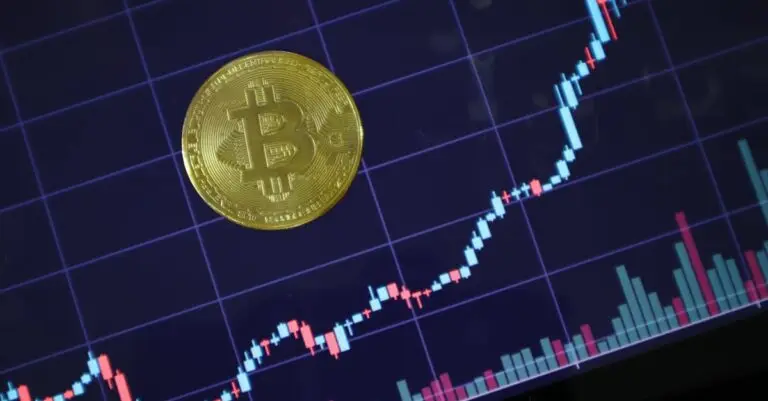
Bitcoin has climbed 2.49%. As a result, surpassing $92,000 after remaining in a tight range for a week. The rise is fueled by increased expectations. Specifically, for a Fed rate cut. Consequently, triggering a short squeeze.
Meanwhile, Ethereum staged an impressive performance. In particular, a 6.21% increase. Briefly, it traded above $3,300. Notably, as more than $120 million in ETH short positions were liquidated recently.
Key Market Indicators
The Fear & Greed Index ticked up to 26. Consequently, moving out of “extreme fear” territory.
AI-related tokens surged significantly. For instance, FET up 9.6%. Similarly, Worldcoin gained 6.5%. Additionally, Virtuals Protocol rose 5.5%.
Layer 2s, DeFi, and Layer 1s all registered solid gains. Therefore, signaling a broader risk-on environment.
Bernstein has reiterated its long-term bullish perspective. Specifically, arguing traditional Bitcoin cycles appear broken. Indeed, with institutions leading a lengthened bull market. Consequently, the firm now sets its 2026 Bitcoin price target at an ambitious $150,000.
XRP ETFs Near $1B in Inflows, Institutional Demand Accelerates
XRP ETFs in the U.S. are on the cusp of hitting something significant. Namely, $1 billion in net inflows. Remarkably, marking a 15-16 day streak of consecutive inflows. This surge is primarily driven by institutional investors. Rather than retail speculation.
XRP ETF Performance Metrics
XRPI (NASDAQ: XRPI) closed at $12.34. Notably, up 1.48%. Furthermore, nearing its yearly resistance at $12.80.
XRPR (BATS: XRPR) finished at $17.31. Similarly, up 0.58%. Importantly, comfortably above its 50-day moving average.
On December 8, XRP ETFs attracted $38.04 million. In contrast, Bitcoin ETFs saw outflows of $60.4 million.
Currently, XRP is priced around $2.08. It’s finding support at the Fibonacci level of $2.04. Meanwhile, analysts have identified $2.41 as the next resistance level. Additionally, eyeing $2.65 for a breakout confirmation.
As ETFs secure hundreds of millions of XRP, tightening liquidity could act as something powerful. Specifically, a significant catalyst heading into early 2026.
U.S. Banks Cleared to Intermediate Crypto Transactions
In a notable yet understated development, something important occurred. The Office of the Comptroller of the Currency (OCC) has authorized U.S. national banks. Specifically, to intermediate cryptocurrency transactions starting. Consequently, this allows banks to act as agents in crypto trades. Importantly, without incurring principal risk.
What This Means
First: Banks can now facilitate client trades in crypto. Additionally, manage assets. Furthermore, provide ancillary services.
Second: This change is set to boost institutional adoption. Moreover, enhance on-ramps for larger investors.
Third: It aligns with the evolving landscape of regulated crypto products. Specifically, expanding from ETFs to bank-issued stablecoins.
Spotlight: XRP ETFs Outperforming BTC and ETH Products
While Bitcoin and Ethereum ETFs dominate in total assets under management (AUM), XRP ETFs are emerging as something notable. Specifically, the fastest-growing altcoin-linked offerings in the U.S. Recent findings reveal:
On December 8: XRP ETFs attracted $38.04 million. Significantly, eclipsing Ethereum’s $35.5 million. Meanwhile, Bitcoin ETFs experienced $60.4 million in outflows.
Solana ETFs lag significantly. In fact, recording only $1.18 million in inflows on the same day.
ETF-locked XRP is approaching 478 million tokens. Furthermore, with projections suggesting something impressive. It could exceed 2 billion by late Q1 2026.
Remarkably, over 70% of XRP ETF participants are institutional entities. These include hedge funds and corporate treasuries. If this inflow trend persists, XRP ETFs could reach something substantial. Namely, $5 billion in AUM by 2026. Potentially, transforming the token’s supply dynamics.
Other Key Moves and Developments
Ethereum Whales Accumulate, Small Holders Sell
In recent weeks, ETH whales have accumulated around 934,000 tokens. Meanwhile, smaller holders have steadily reduced their stakes. This phenomenon often signals something important. Specifically, impending price movements.
Solana Eyes $140 as Key Metric Suggests Deep-Cycle Reset
Solana is currently testing $140 resistance. Additionally, with on-chain indicators hinting at something specific. A potential deep-cycle reset. A successful break could lead to targets of $160-170. However, a failure may see a retest of $131 support. Notably, where accumulation signs are observable.
NEAR and Pi Network: Bulls Under Pressure
NEAR bulls are striving to reclaim the 20-day moving average. Currently, consolidating near support as activity surges.
Pi Network contends with challenges from several factors. First, an AI KYC overhaul. Second, substantial token unlocks. Third, a risk of a $10 million lawsuit. Consequently, raising short-term concerns.
Privacy and Stablecoins: USDCx on Aleo, Tether in Abu Dhabi
USDCx has launched on Aleo. Specifically, facilitating privacy-preserving stablecoin transactions via xReserve.
Tether’s USDT gained multi-chain AFRT status. Notably, within Abu Dhabi’s ADGM. As a result, broadening its regulated presence in the Middle East.
What to Watch Next
Fed rate decision: Crypto markets are factoring in heightened prospects. Specifically, of rate cuts. Likely, supporting risk assets in the near future.
XRP ETF inflows: Can the inflow streak stretch beyond 17 days? Consequently, pushing net inflows past $1 billion?
Bitcoin above $92K: Sustaining this level could pave the way. Specifically, toward $95K–$100K targets.
U.S. bank crypto activity: Keep an eye on early signals. Particularly, of enhanced institutional flows via bank-mediated trades.
Market Summary
In summary, the market seems to be shifting. Specifically, from fear to cautious optimism. Notably, with institutions stepping up in XRP. Additionally, in various regulated products.
For traders, the key focus is on validating this momentum. This includes higher highs in Bitcoin. Furthermore, sustained inflows in altcoin ETFs. Moreover, clear regulatory developments.
Volity: Driving Your Global Financial Excellence Forward
In today’s rapidly evolving financial landscape, cutting-edge infrastructure creates decisive advantages. Consequently, Volity delivers one unified account for comprehensive international capabilities. Specifically, you can invest, hold, and pay across borders with professional confidence. In essence, it’s an innovative financial platform engineered for exceptional global performance.
Notably, Volity combines regulatory mastery with technological innovation. Therefore, these pillars enable strategic execution in international markets. Moreover, Volity transforms complex cross-border operations into seamless experiences. As a result, the platform provides complete financial control with sophistication and security. Ultimately, with Volity, borderless finance becomes powerful, efficient, and accessible for ambitious professionals worldwide.
For more on this topic see our deep-dives on Spot Bitcoin ETFs: How Inflows Move the BTC Price, Bitcoin, Solana and AI Tokens: How Crypto Narratives Shift the Tape, and Bitcoin Bounce vs Risk: ETF Inflows, XRP Breakouts and What to Watch.
What our analysts watch: Three measurements convert recovery-day price action into a multi-week probability read. Cross-sector breadth confirmation (a recovery led by Bitcoin alone is fragile; a recovery led by Bitcoin, Ethereum, AI tokens, layer-one alternatives, and DeFi simultaneously is the structural breadth that historically converts into a sustained leg). Bernstein-style institutional research tone shift (when sell-side commentary moves from cycle-break warnings to extended bull-market thesis articulation, the structural buyer base has typically already accumulated the position; the research follows the flow, not the other way around). Forward expectations alignment (the 2026 Bitcoin price target of 150,000 dollars is consistent with the structural ETF flow thesis if and only if the spot ETF complex sustains weekly net inflows above 750 million dollars on a rolling four-week basis). When the three align, the recovery signal hardens into a thesis. When they diverge, sizing remains tactical.
Frequently asked questions
Why did the Fear and Greed Index move out of extreme fear matter for the recovery signal?
Because the index reflects the aggregate of seven sentiment and positioning inputs (volatility, momentum, social media activity, dominance, trends, surveys, market structure), and the threshold move from extreme fear into the lower fear band historically marks the transition from capitulation flow to accumulation flow. The signal is probabilistic rather than deterministic, with a roughly 65 percent historical hit rate for marking durable bottoms when accompanied by positive cross-asset breadth confirmation. The threshold move alone is not sufficient; combined with the breadth signal it becomes a meaningful structural read. The Investopedia reference on market recovery patterns covers the framework in detail.
How does the XRP ETF inflow context relate to the broader recovery?
The XRP ETF approach to 1 billion dollars in cumulative inflows establishes that the regulated wealth channel can absorb a third spot-crypto exposure beyond Bitcoin and Ethereum at scale, which structurally widens the institutional positioning surface available during recovery legs. The 71 to 100 million dollar weekly inflow pace places the category alongside the early Ethereum ETF complex, which historically converted into multi-quarter durable AUM rather than tactical positioning. The structural read is that the recovery thesis carries a deeper buyer base than the prior cycle, which compresses drawdown risk and extends the multi-week trajectory. The SEC digital-asset framework pages document the regulatory backdrop that enabled the category expansion.
What does the ETH short liquidation cascade reveal about the recovery quality?
The 120 million dollars in ETH short liquidations during the rebound reveals two things at once. First, the leverage profile leading into the recovery was net short, which is historically the more constructive starting position for a multi-week leg because the marginal forced buyer is short covering rather than late-cycle leveraged longs. Second, the speed of the liquidation cascade indicates thin order-book liquidity at the resistance levels, which is a feature of recovery legs that mature into trend rather than fade into reversal. The pattern is informative but not deterministic; recovery legs that begin on short liquidations sometimes exhaust within 24 to 48 hours when the spot follow-through fails. The CoinDesk derivatives coverage tracks the open-interest cycle that frames the read.
Are AI token gains a leading indicator or a noise signal?
AI tokens are best read as a high-beta sentiment indicator rather than a fundamental signal. They historically lead recoveries by 24 to 72 hours because the speculative dollar exits the highest-volatility tier last during sell-offs and re-enters first during recoveries. The leading-indicator quality holds when the AI token rally accompanies layer-one and DeFi recovery; the noise-signal quality dominates when AI tokens rally in isolation while Bitcoin and Ethereum trade flat. The current cycle produces the constructive variant of the signal, which adds modest weight to the recovery thesis without being primary evidence for it.
Related guides
- Bitcoin explained
- Ethereum explained
- Cryptocurrency trading
- Best crypto investments
- Crypto trading platforms
Volity operates a trading platform and also publishes educational and analytical content about trading. The content on this page is for educational purposes only and should not be considered financial advice. Volity may benefit commercially when readers open trading accounts through links on this site.
Our content is produced and reviewed under documented editorial standards; see our comparison and review methodology.