Investing in financial products involves risk. Losses may exceed the value of your original investment.
Quick answer
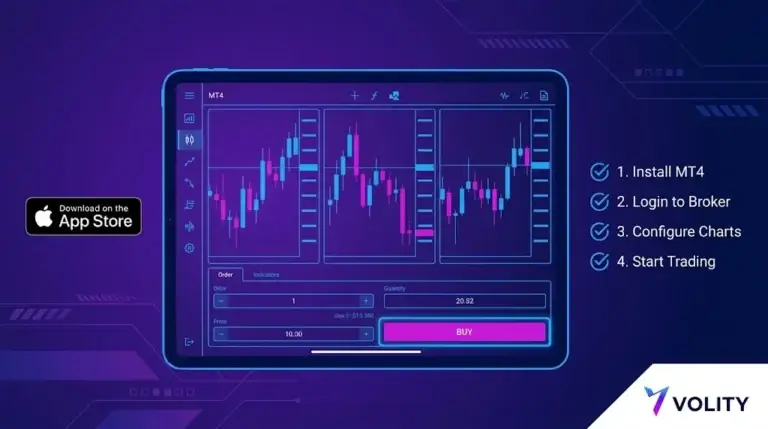
An MT4 broker is any regulated investment firm that offers MetaTrader 4 to retail clients with live market connectivity. The selection framework: verify regulator-issued license, confirm A-Book or ECN execution, demand transparent spread reports, check segregation of client funds, test withdrawal speed, and review the broker’s Expert Advisor policy before deploying capital.
An MT4 broker is a regulated firm that offers MetaTrader 4 as its primary trading terminal. The platform was released in 2005 by MetaQuotes Software Corp, has not been formally end-of-lifed despite the existence of MT5 since 2010, and remains the dominant retail platform in several regions because of its enormous expert advisor library and its lighter resource footprint. Choosing an MT4 broker in 2026 is not about platform availability (most brokers still offer it). It is about getting the version of the broker that gives you a desk-grade execution stack on top of a maturing platform.
Why traders still pick MT4 in 2026
Three persistent reasons:
- Legacy expert advisor library. Twenty years of community-built EAs and indicators in MQL4. Many never got ported to MT5. If your strategy depends on a specific EA, MT4 is non-negotiable.
- Lower hardware demand. MT4 runs cleanly on a 4GB Windows VPS. MT5 prefers 8GB. For copy traders and EA operators running 5-10 concurrent terminals, the cost difference is real.
- Familiarity. A trader with five years of muscle memory on MT4 templates and shortcuts loses two months of productivity switching to MT5 mid-career.
The selection framework
Eight points, in priority order:
1. Regulator and verifiable licence
Tier-1 European licence (CySEC, BaFin, FCA, AMF, etc.) is the floor for an EU retail trader. Open the regulator’s register and confirm the entity name and licence number match. CySEC’s register at cysec.gov.cy. Licence numbers are unique and the register lists permitted services.
2. Execution model
STP, ECN, or market maker. The broker should disclose the model in its order-execution policy under MiFID II. STP and ECN brokers route to external liquidity; market makers internalise flow. None of the three is automatically better; what matters is that the model is disclosed and matches your strategy.
3. EA hosting and concurrent EA limits
If you run EAs, two specifics:
- Does the broker offer or partner with a VPS service? MetaQuotes’ VPS runs $10-20 per month and is configurable from the MT4 terminal.
- Does the broker cap concurrent EAs per account? Some brokers throttle or block specific EA categories (martingale, news scalpers).
4. Spreads at the moment that matters
Marketing spreads are mid-of-day, low-volatility numbers. The spreads that matter are at session open, news release, and overnight rollover. Demo for a week and watch EUR/USD at 09:00 London, 14:30 London, and 22:00 server time. Tier-1 desks should hold 0.6-1.2 pips during liquid hours.
5. Commission structure
Standard accounts: zero commission, spread-only. Raw or ECN accounts: tight spreads plus $3-7 round-turn per lot commission. Compute the all-in cost on your typical trade and compare.
6. Swap rates aligned to your hold horizon
If you carry overnight, swap is a real cost. Brokers publish per-symbol swap rates. Triple-swap on Wednesday for FX is standard. Build a 30-symbol comparison spreadsheet across your top three brokers; the cheapest broker on EUR/USD long is rarely the cheapest on USD/JPY short.
7. Withdrawal speed with a published target
Time from request to bank credit, on the rail you actually use. SEPA in EUR should clear in 4-24 hours after broker approval. Card refunds in 1-5 business days. Brokers that quote 5-10 business days as standard are an unnecessary working-capital problem.
8. Negative balance protection
Mandatory for EU retail under ESMA. The clause should appear explicitly in the client agreement, capping loss at cash funded.
What MT4-specific features the broker has to enable
- One-click trading. Available on MT4 by default; some brokers gate it behind KYC tier.
- Hedging. MT4 only supports hedging accounts (not netting), but the broker still has to enable simultaneous opposite positions on the same symbol.
- Custom symbols and indicators. The broker controls which symbols are available and whether custom indicators load. Test your favourites in the demo.
- Mobile build. MT4 mobile (iOS/Android) is identical across brokers from a code perspective, but server connection and push notifications depend on the broker’s MT4 server config.
The end-of-life question
MetaQuotes stopped issuing new MT4 licences to brokers in 2018, but existing licences continue and the platform receives security updates. Many brokers still offer MT4 in 2026 alongside MT5; the platform is not deprecated for end users. The trajectory is gradual migration, not a cliff. A broker that still actively supports MT4 in 2026 is making a deliberate commitment to the legacy user base, which is information about how that broker treats its existing clients.
The shortlist test
Three to four candidate brokers, demo for two weeks, then live trial with the smallest viable funding for two more weeks. Measure four things: average fill speed, slippage skew, spread widening at session change, and time from withdrawal request to bank credit. The broker that wins on all four is your broker.
Common traps in 2026
- “MT4 with 1:500 leverage” offered to EU retail. Almost certainly routed through an offshore entity. EU regulatory protection does not apply to those funds.
- Bonus offers with EA restrictions in the small print. A broker that bans EAs from bonus accounts is telling you the bonus is not designed for serious traders.
- “Floating spreads from 0.0” with hidden minimums. Fixed minimum spread plus markup is a common pattern. Read the spec sheet, not the headline.
MT4 at Volity
Volity provides MetaTrader 4 on desktop, web, and mobile (iOS and Android), with the same multi-asset coverage as MT5 on a single login. Trading is executed by UBK Markets Ltd, a Cyprus Investment Firm authorised by CySEC under licence 186/12. ESMA retail leverage caps apply. Negative balance protection is contractual. Eligible retail clients are covered by the Cyprus Investor Compensation Fund up to EUR 20,000 per client per firm.
Volity operates a trading platform and also publishes educational and analytical content about trading. The content on this page is for educational purposes only and should not be considered financial advice. Volity may benefit commercially when readers open trading accounts through links on this site.
Our content is produced and reviewed under documented editorial standards; see our comparison and review methodology.
Frequently asked questions
Is MT4 still worth using in 2026?
For many traders, yes. MT4 remains widely supported, and its ecosystem of indicators and Expert Advisors is larger than MT5's. MT5 is the more capable platform technically, but platform choice matters less than broker quality and your own process.
What separates a good MT4 broker from a poor one?
Execution and cost transparency. A good broker publishes its pricing model, shows realistic average spreads rather than best-case ones, and does not widen quotes unpredictably around news. Regulation determines what recourse you have if any of that fails.
Can I use the same strategy on MT4 and MT5?
The logic transfers, the code does not. MT4 uses MQL4 and MT5 uses MQL5, so Expert Advisors and custom indicators must be rewritten or recompiled rather than copied across.