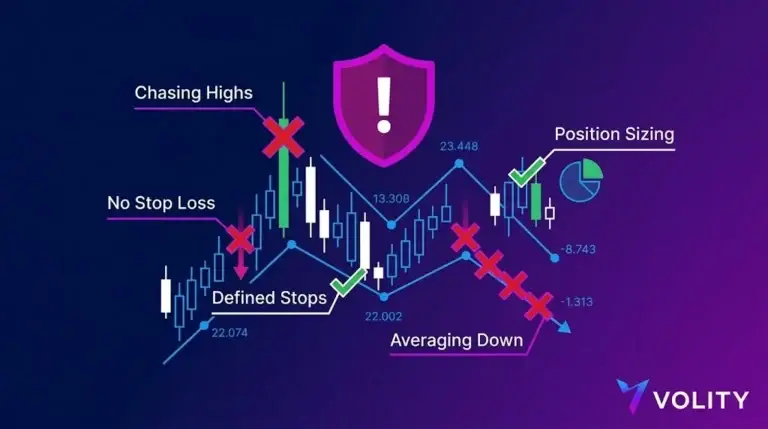
Stock selection involves the inherent risk of capital loss due to market volatility, poor business execution, or macroeconomic downturns. Choosing individual equities concentrates risk compared to diversified index funds, creating the potential for significant losses if position sizing or diversification is inadequate. Emotional bias and overconfidence in stock-picking ability often lead retail investors to underperform broad market benchmarks. Past performance is not indicative of future results. Capital at risk.
Choosing stocks in 2026 involves a shift from speculative hype toward “Growth at a Reasonable Price” (GARP) and fundamental resilience. Successful selection requires filtering thousands of options based on high free cash flow, sustainable dividend growth, and measurable AI-driven productivity gains. By utilizing modern stock screeners and fractional shares, investors can build diversified portfolios that balance high-growth tech with defensive sector stability.
While understanding Stock Selection Strategy is important, applying that knowledge is where the real growth happens. Create Your Free Forex Trading Account to practice with a free demo account and put your strategy to the test.
Stock selection functions as the foundational skill for building long-term generational wealth. For a single-stock walkthrough on a FTSE 100 energy major, see how to buy BP shares. This methodology identifies companies that possess durable revenue growth, defensible profit margins, and a proven track record of efficient capital allocation. It serves as a primary filter for avoiding speculative value traps and overvalued market cycles in 2026.
The 2026 investment environment necessitates a shift toward “Quality Growth” as interest rates stabilize around 3.5%. Investors utilize modern AI-driven screeners to identify under-the-radar leaders in sectors like energy infrastructure and applied robotics. This approach represents a fundamental departure from the zero-rate-era speculation that characterized 2020-2021, demanding greater rigor in company evaluation.
Defining Your Investment Goals and Style
Investment goals are the specific financial targets that determine whether an investor should prioritize high-growth equities, stable dividend payers, or defensive value stocks. This foundational step reveals your time horizon, risk capacity, and desired portfolio outcome, factors that directly drive which stocks belong in your holdings and which should be excluded entirely.
Three primary investment styles shape stock selection. Growth investing targets companies like Tesla or Amazon that reinvest profits into expansion, delivering capital appreciation over 5-10 year horizons. Income investing selects “Dividend Aristocrats”, companies with 25+ consecutive years of rising dividends such as McDonald’s, providing consistent passive cash flow regardless of market conditions. Value investing identifies market leaders trading below their intrinsic value, capturing profits when the broader market recognizes the discount. The data confirms this diversity: over 65% of 2026 retail investors are adopting a “Core and Satellite” model, using index ETFs for 80% of their holdings and individual picks for the remaining 20% (Vanguard Investor Trends, 2026).
Understanding your investment style helps you filter the thousands of equities available through growth stocks to dividend payers to deeply undervalued industrials. Your age, risk tolerance, and income needs determine which approach optimally aligns with your long-term wealth objectives.
The GARP Strategy (Growth at a Reasonable Price)
The GARP strategy identifies stocks that exhibit consistent earnings growth without the excessive valuations typically found in pure growth plays. This hybrid approach splits the difference between value investors seeking discounts and growth investors seeking expansion, targeting companies with strong forward earnings momentum at reasonable price-to-earnings multiples.
GARP candidates reveal a specific financial profile: earnings growing at 12-15% annually while trading at 18-25x forward earnings, significantly cheaper than high-growth firms at 30-50x multiples but more expensive than value plays at 10-15x. This positioning creates the “sweet spot” where you capture expansion in both earnings and valuation, as the market recognizes the quality of the franchise. Morningstar: Finding Growth at a Reasonable Price demonstrates that GARP strategies have outperformed pure growth and pure value approaches over complete market cycles spanning 2010-2026.
Ready to Elevate Your Trading?
You have the information. Now, get the platform. Join thousands of successful traders who use Volity for its powerful tools, fast execution, and dedicated support.
Create Your Account in Under 3 MinutesFundamental Filters: How to Screen the Market
Fundamental filters are the quantitative benchmarks used to narrow the stock universe to companies with institutional-grade financial health. These metrics reveal which firms can sustain growth without catastrophic debt burdens, which possess durable competitive advantages, and which are being valued reasonably by the broader market.
Three core filters define rigorous stock selection. Earnings growth targets year-over-year expansion of at least 12-15% for 2026 leaders, ensuring that companies are expanding profits faster than the overall economy and thus capable of rewarding shareholders over time. Free cash flow (FCF) prioritizes firms that can fund their own expansion, acquisitions, and dividends without relying on capital markets, a critical safety measure in a “higher-for-longer” rate environment where borrowing costs remain elevated. Debt-to-equity ratios identify overleveraged firms that face refinancing risk or dividend cut risk if interest rates remain sticky. The fundamental analysis of earnings quality, balance sheet strength, and cash generation reveals which companies possess sustainable competitive advantages versus those riding temporary tailwinds.
S&P 500 earnings are projected to expand by 21% in 2026, making earnings quality the primary differentiator for stock performance (Goldman Sachs Research, 2026). This projection means that stock selection in 2026 demands discriminating between genuine business model improvements and accounting engineering or cyclical tailwinds that will eventually reverse.
Sector Rotation: Where the Money is Flowing in 2026
Sector rotation identifies the cyclical shifts in institutional capital that favor specific industries during different economic phases. Understanding these flows reveals which industries are attracting new capital and which are experiencing fund outflows, a critical signal for stock selection.
Three sectors dominate 2026 institutional inflows. The Energy Supercycle captures capital flowing into nuclear power, natural gas, and copper mining, driven by the massive electricity demand required to power AI data centers and global electrification. Industrials 4.0 targets robotics and automation companies solving labor shortages in manufacturing, logistics, and construction. Data Center Infrastructure identifies the “picks and shovels” suppliers, networking equipment, power management, and physical infrastructure firms, benefiting from the $700 billion combined AI CapEx announced by tech giants in 2026.
Real trading example:
An investor utilized a 2026 screener to identify NextEra Energy (NEE), a low-Beta utility in the “Nuclear Renaissance” sector that maintained a dividend yield above 2.5%. Entry occurred at $78 per share in March 2026, based on the secular thesis that utility sector assets would undergo massive revaluation as data center demand increased electricity consumption by 40-50% over the next five years. The outcome delivered both capital appreciation and income: NEE provided a stable 3% yield and appreciated 15% as AI data center demand triggered a massive revaluation of the utility sector. Past performance is not indicative of future results.
The Role of AI and Modern Tools in Stock Selection
AI stock screeners represent the modern technological shift in selection methodology, allowing retail investors to process vast amounts of alternative data. These tools filter the universe of 4,000+ publicly traded US companies against user-defined criteria, reducing the universe from thousands to dozens of candidates in seconds.
| Tool Type | Primary Filter | 2026 Benefit | Ideal For |
| AI Screeners | Sentiment & NLP | Detects early trend shifts | Active Traders |
| Fundamental | FCF & Debt Ratios | Filters for financial safety | Value Investors |
| Technical | Momentum & RSI | Identifies optimal entry | Swing Traders |
| Thematic | Industry Exposure | Targets specific trends | Trend Followers |
| Fractional | Share Price Neutral | Access to high-value stocks | Small Portfolios |
Sources: Data compiled from Morningstar Tool Analysis and StocksAnalyzer.app (2026).
Stock screeners democratize stock selection by allowing any retail investor to access the same filtering criteria that institutional research departments deploy internally. Modern tools process earnings data, balance sheet metrics, and alternative data streams, satellite imagery of parking lots, credit card transaction flows, NLP analysis of earnings call transcripts, to identify opportunities before consensus recognition.
Common Mistakes in Stock Selection
Psychological pitfalls indicate that retail investors often underperform the market due to emotional bias and poor diversification. Understanding these mistakes reveals patterns to avoid and disciplines to implement when building positions.
Chasing hype represents the most destructive mistake, buying high-flying stocks at the peak of social media attention, after 100%+ gains have already occurred. If you are still learning the mechanics, start with our guide to buying shares in the UK. Lack of patience causes investors to sell high-quality positions during minor corrections, crystallizing losses after temporary volatility. Ignored valuations reveal the mistake of overpaying for “perfect” companies that cannot meet 40% annual growth expectations indefinitely.
How to analyze shares with discipline involves comparing your forward growth assumptions against current valuations to determine whether the stock offers adequate margin of safety. This analytical rigor separates conviction from speculation.
Turn Knowledge into Profit
You have done the reading, now it is time to act. The best way to learn is by doing. Open a free, no-risk demo account and practice your strategy with virtual funds today.
Open a Free Demo AccountBuilding and Rebalancing Your Stock Portfolio
Portfolio rebalancing represents the process of adjusting asset weights to maintain an investor’s original risk-reward alignment. This discipline ensures that your portfolio stays true to your investment goals even as different stocks and sectors produce different returns.
The 15-30 stock rule identifies the optimal portfolio size for most retail investors. Holding 15-30 stocks captures 90%+ of diversification benefits while maintaining trackable performance on each position. Conversely, owning 100+ stocks creates “di-worse-ification”, a diversified holding so large that tracking becomes impossible and outperformance becomes statistically improbable. Quarterly reviews identify when to trim winners that have appreciated beyond target weight and add to high-conviction positions that have declined.
Portfolio rebalancing on a quarterly schedule ensures your holdings remain aligned with your risk tolerance and time horizon. Comparing your selection performance against the broad market benchmark on this same schedule provides a critical reality check on your selection methodology.
Key Takeaways
- [Stock selection] is the process of filtering the market to find companies with durable growth, low debt, and a competitive advantage.
- [Investment goals] must be defined first to determine whether you should prioritize high-growth tech or stable dividend income.
- [The GARP strategy] provides a balanced approach by targeting companies with strong growth potential at a reasonable price valuation.
- [Sector rotation] in 2026 highlights a massive shift into energy infrastructure, industrials, and applied robotics leaders.
- [Fractional shares] allow investors with any budget to own high-quality companies that would otherwise have prohibitive share prices.
- [Regular rebalancing] ensures that your portfolio stays aligned with your risk tolerance as different stocks and sectors fluctuate over time.
Frequently Asked Questions
This article contains references to stock selection, investment strategy, and Volity, a regulated CFD trading platform. This content is produced for educational purposes only and does not constitute financial advice or a recommendation to buy or sell any financial instrument. Always verify current regulatory status and platform details before using any trading service. Some links in this article may be affiliate links.