Markets Slip Into Defence Mode as Traders Choose Yield Over Growth
Wall Street spent Friday looking for a safer chair, and it found one in familiar corners.
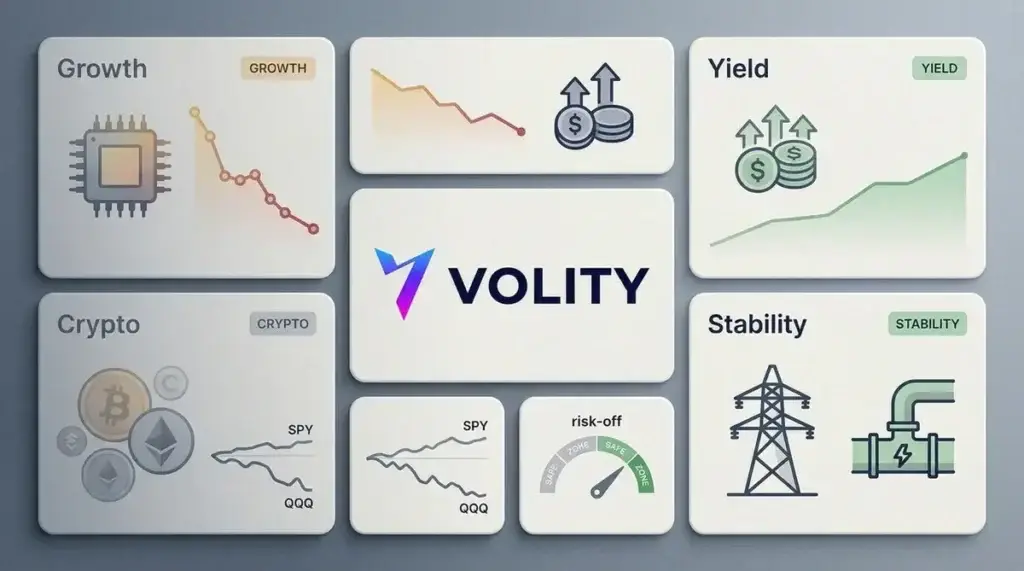
Energy, utilities and other steady earners drew fresh money as growth stocks lost their shine. Meanwhile, the broad market stayed heavy, with technology carrying much of the downside pressure.
The mood was not panic. However, it was plainly more careful. Traders stopped asking what could double and started asking what could survive a rough patch.
For holders of SPY, QQQ and DIA, that distinction matters. A weak session can be routine. Yet a change in market character can last longer.
The question now is simple enough. Do buyers appear on weakness, or do bounces keep failing? In a tired tape, the first warning rarely sounds dramatic. It often arrives as hesitation.
Technology Loses the Easy Vote
Technology’s softness kept semiconductors under close watch. NVDA remains the market’s cleanest shorthand for artificial intelligence leadership. AMAT, meanwhile, sits in the same trade after a strong quarter and upbeat analyst commentary.
Still, strong stories do not always protect strong stocks. When the broader tape turns cold, even leaders get judged by price first.
That is especially true after large moves. A gap higher can look powerful at 9.40am. However, it can become a trap by lunch if late buyers meet thin demand.
For chip traders, the test is not the narrative. It is whether semis can hold gains while the index complex leans defensive.
If QQQ keeps lagging SPY, the message is clear. Investors are paying less for future growth and more for present cash flow.
Speculative Names Face a Colder Room
Outside semiconductors, the session created a familiar split. Speculative names looked more exposed, especially where patience already ran thin.
NIO fits that group. The EV maker can still attract fast money, particularly during bursts of China optimism. However, weak sentiment changes the rules quickly.
In soft markets, stocks like NIO often behave like weather vanes. The business may not change overnight. Risk appetite does.
SOFI was another watchlist name, though for a different reason. The stock is now in post-earnings digestion mode.
That phrase sounds dull, but the action matters. The company has reported. Now the market decides whether the numbers deserve support.
If dip buyers defend the recent move, SoFi can rebuild momentum. If sellers control each bounce, the earnings glow fades fast.
Volatility Remains a Trading Product
On the event-driven side, NRXP stood out as a classic pre-earnings volatility name.
These setups attract traders because they are not calm. Range expansion, options interest and position sizing become more important than tidy valuation debates.
The appeal is obvious. A large move can arrive quickly. However, the danger is just as plain. It can arrive in the wrong direction before regular trading warms up.
That makes discipline the trade, not decoration. In small-cap biotechnology, the tape can punish oversized conviction faster than bad analysis.
Income Gets Its Moment
Meanwhile, the rotation into yield was hard to miss. High-dividend and energy-linked names such as ET, NOG and PAGP received more attention.
The logic is not complicated. If growth wobbles, investors look for places that may pay them to wait.
Energy also has help from the wider macro backdrop. Supply concerns and geopolitical noise can give commodity-linked assets more breathing room.
Still, energy is not a hiding place without risk. Crude can reverse quickly, and crowded income trades can unwind when rates move.
For now, though, the market is rewarding sturdier cash flow. That matters after a long stretch when future growth received the richer multiple.
Utilities Are Quiet, but Not Invisible
Utilities had their own quiet bid. CIG, CWCO and FE joined the defensive watchlist as investors sought steadier exposure.
When traders rotate into utilities, they usually say two things at once. They want stability, and they dislike the alternatives.
That signal carries weight when yields, rates and volatility tell different stories. Therefore, the utility bid deserves attention, even if it lacks theatre.
However, defensive trades can become crowded. That risk applies to names like COCO and PM, where safety can become expensive.
A shelter works until everyone rushes inside. If the market’s mood improves, crowded havens can lose altitude faster than expected.
Related coverage on Volity: Bitcoin Eyes $100k as CLARITY Act, How to Navigate Crypto & Investment, Bitcoin Near $80k as Tokenised Treasuries and UK Small Cap Stocks Outpace Big.
The thread continued the next day with Bitcoin holding $78,000 as the CLARITY Act tightened crypto rules and Bitcoin dropping below $79,000 as Treasury yields rose and ETF flows stalled.
By the Numbers
- 3 major ETFs: SPY, QQQ and DIA remain the cleanest gauges of index behaviour.
- 2 chip bellwethers: NVDA and AMAT sit at the centre of the AI and semiconductor trade.
- 3 yield plays: ET, NOG and PAGP drew attention as income returned to favour.
- 3 utility names: CIG, CWCO and FE reflected the defensive shift.
- 15 May 2026: Friday’s trading showed caution spreading beyond isolated pockets.
What Traders Should Watch Next
- Relative strength: If QQQ keeps trailing SPY, growth remains under pressure.
- Failed bounces: Repeated intraday reversals would suggest sellers still control the tape.
- Semiconductor breadth: NVDA alone cannot carry the whole group forever.
- Energy follow-through: Yield trades need confirmation, not just one defensive session.
- Post-earnings reactions: SOFI’s next few sessions will show whether buyers still believe.
The larger message is that leadership is changing by the hour, not by the quarter.
Growth no longer receives the automatic benefit of the doubt. Yield does. Defensive cash flow does. Meanwhile, speculative patience has shortened sharply.
That does not mean risk has left the market. It means risk now needs better evidence.
For traders, the useful questions are practical. Who is holding support? Who is losing momentum? Where is money actually moving?
In this market, those answers matter more than any single headline.