When the watchlist becomes the trade
The stock market loves a tidy story. Lately, one of its favourite formats is the daily idea dump: tickers, catalysts, targets, then a disclaimer at the bottom.
It travels well on social feeds. It fits neatly into chat rooms. It gives traders the comforting sense that the day has been sorted before the opening bell.
However, a good-looking list can still be a poor trading tool. The real question is not whether the tickers are interesting. It is whether the logic survives contact with price, volume and risk.
A recent trader-style watchlist offers a useful test case. It runs through Nvidia, AMD, Corning, Hims & Hers, Ondas, Alphabet and several earnings names. More importantly, it shows what separates a trading setup from a loose market anecdote.
Crowded chips need different risk math
The note starts where many conversations now start: semiconductors. Nvidia (NVDA) and Advanced Micro Devices (AMD) remain magnets for capital, attention and fear of missing out.
Bank of America’s recent warning about crowded equity and chip positioning gives the setup its edge. Still, crowded does not mean doomed. It means fragile.
That distinction matters. In a stock like Nvidia, the useful question is not “when does it crash?” Instead, traders should ask what happens when fresh buyers thin out.
Therefore, the better trade frame is profit-taking risk, momentum fatigue or a failed breakout. It is not a heroic top call.
That makes the chip section sound rather plain. Yet plain can be valuable. Markets punish traders who confuse popularity with safety.
Old levels still matter
Corning (GLW) gets a classic technical treatment. The stock has pulled back toward an area where it previously struggled on the way up.
In chart language, former resistance may become support. However, that phrase can become lazy very quickly.
The stronger version gives three paths. Corning can bounce, break briefly and recover, or confirm a deeper move lower. That is how a level should be used.
Meanwhile, execution matters more than poetry. A trader needs a trigger, a stop and a position size. The chart supplies the battleground, not the verdict.
Hims faces the convertible trade-off
Hims & Hers Health (HIMS) brings a different kind of catalyst. The company upsized a convertible note offering to $350 million.
Convertible debt almost always arrives with two competing stories. On one side, the company gains capital and flexibility. On the other, shareholders face possible dilution later.
The useful watchlist does not pretend to settle that debate overnight. Instead, it asks how the market prices the trade-off.
That is the right question. Financing news can look bearish at 8 a.m. and useful by noon, especially in growth stocks.
So, HIMS becomes a test of market tolerance. If buyers absorb the dilution risk, the tape is saying something. If not, the deal becomes an overhang.
Targets are colour, not commandments
Ondas Holdings (ONDS) appears because Needham maintained a Buy rating and a $23 price target. The bull case includes its Omnisys defence-related deal.
Analyst targets often get abused on fast-moving feeds. Traders treat them like a map, when they are often closer to a weather report.
Here, the cleaner reading is simple. The target shows how one institution models the story. It is not a floor. It is not a ceiling.
Also, the wording matters. A maintained rating is not the same as fresh coverage. For active traders, that small distinction can change the urgency.
Earnings moves are rarely binary
The earnings section is where many daily lists lose discipline. Misses become automatic shorts. Beats become automatic buys. Then the market does something rude.
This list handles the problem better. XP Inc. (XP) is flagged after missing earnings and revenue expectations. The setup allows for continuation selling or a mean-reversion bounce.
Agilysys (AGYS), meanwhile, is framed around a Q4 beat and stronger long-term guidance. Momentum traders may look for follow-through, but the move still needs confirmation.
Then comes the more interesting basket: DRVN, CAN, BEKE, EXP, BILI, HSAI, RERE and ECX. These are transcript and reaction names.
That category deserves attention. A stock’s first move after results is often just the first draft. The second draft comes after the call.
Guidance tone, Q&A detail and analyst follow-ups can move prices days later. Therefore, transcript traders often pay for patience, not speed.
Themes are not tips
Alphabet (GOOG, GOOGL) enters through the bigger artificial intelligence argument. The pieces are clear: TPUs, cloud, Gemini and search distribution.
The debate is not whether Alphabet can monetise AI. It is how quickly, and at what margin.
Still, the watchlist does the right thing by treating this as a theme, not a near-term trigger. A broad thesis needs different risk management than an earnings gap.
Further out, a possible SpaceX public listing is mentioned as a sentiment template. Tesla (TSLA) and space-linked names could become proxies for the broader Musk trade.
However, timing matters. A possible IPO is not an imminent catalyst unless the calendar says so. Until then, it is a volatility story.
Related coverage on Volity
- Bitcoin Below $80k as ETF Flows, Tokenised Treasuries Grow
- Bitcoin Dips Below $77k as ETFs Shed $1bn
- Bitcoin Holds $78,000 as CLARITY Act Tightens Crypto Rules
- How to Navigate Crypto and Investment Hype for Smart Returns
- UK Investors Flock to Safer Yields Amid Crypto Market Wobble
By the numbers
- $350 million: Hims & Hers’ upsized convertible note offering.
- $23: Needham’s price target on Ondas Holdings.
- 2 tickers: Nvidia and AMD sit at the centre of the crowded chip debate.
- 8 names: DRVN, CAN, BEKE, EXP, BILI, HSAI, RERE and ECX make the transcript basket.
- 3 paths: Corning’s key level can bounce, fail briefly, or break cleanly.
The watchlist under the watchlist
The final group includes OKLO, XE, MIRM, TILE and TYRA. These sit under an analyst initiation or rating-change watch.
That sounds modest. Yet for smaller or less-followed stocks, new coverage can change the tape quickly.
A stock that usually trades thinly can suddenly find real volume after a fresh Buy rating. In those cases, liquidity is the catalyst.
Therefore, the smartest move is not to worship the 12-month target. Watch volume, spreads and whether buyers return after the first spike.
What traders should take from it
- Crowding is a risk signal: It warns about positioning, not guaranteed collapse.
- Financing events need balance: Dilution risk and balance-sheet flexibility both matter.
- Earnings reactions evolve: Transcripts and analyst notes can create second-day moves.
- Price targets need context: Treat them as inputs, not trading instructions.
- Themes need patience: Alphabet’s AI story and SpaceX sentiment are not one-day trades.
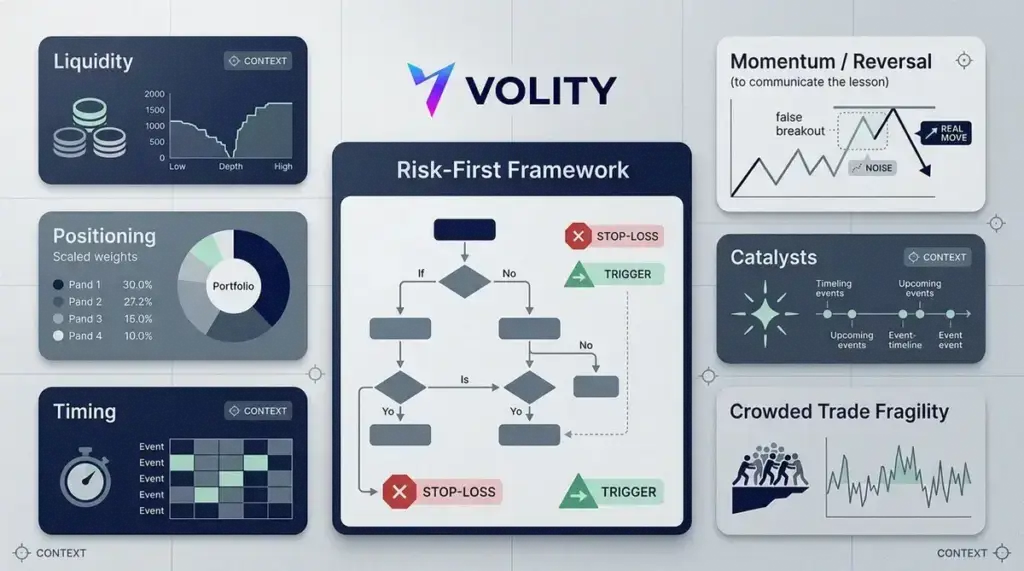
The broader lesson is simple. A watchlist should not only list names. It should label the kind of idea attached to each name.
Is it a hard catalyst, like earnings or financing? Is it a technical level? Is it an analyst-driven liquidity event? Or is it a broad theme dressed up as a trade?
Once those boxes are clear, the list becomes more useful. It also becomes harder to misuse.
That is the discipline many fast feeds lack. They offer movement, but not meaning. They offer tickers, but not the if-then structure traders need.
So, do not just trade the story. Take it apart first. The market already has enough people chasing neat lists badly.