Crypto resets as fear fades and infrastructure takes the wheel
Crypto enters the final stretch of May in a rarer mood than usual. Fear gauges have left the red zone, Bitcoin is hovering below $80,000, and the loudest stories are no longer about meme coins. Instead, traders are watching Wall Street plumbing, Washington politics and a new kind of technology risk.
That shift matters. However, it also makes the market harder to trade. Price still moves on liquidity, leverage and retail appetite. Yet the deeper bid now comes from custody rules, tokenised Treasuries, corporate balance sheets and payment rails.
For investors, three questions dominate this tape. First, are ETF flows still strong enough to absorb supply? Second, can regulation turn from threat into infrastructure? Third, will networks cope with artificial intelligence and quantum-era security demands?
Bitcoin tests the air below $80,000
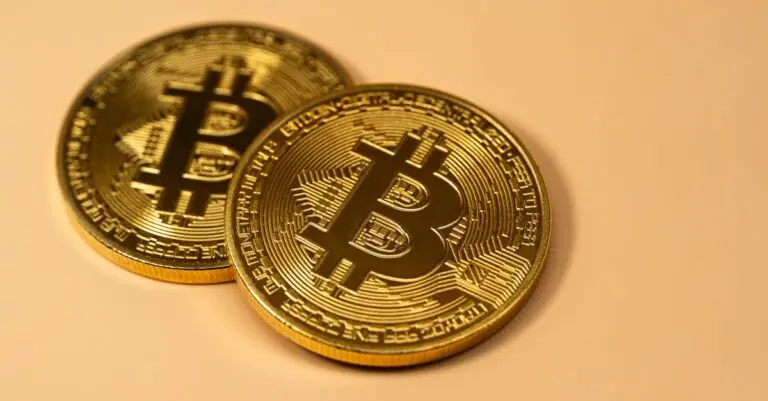
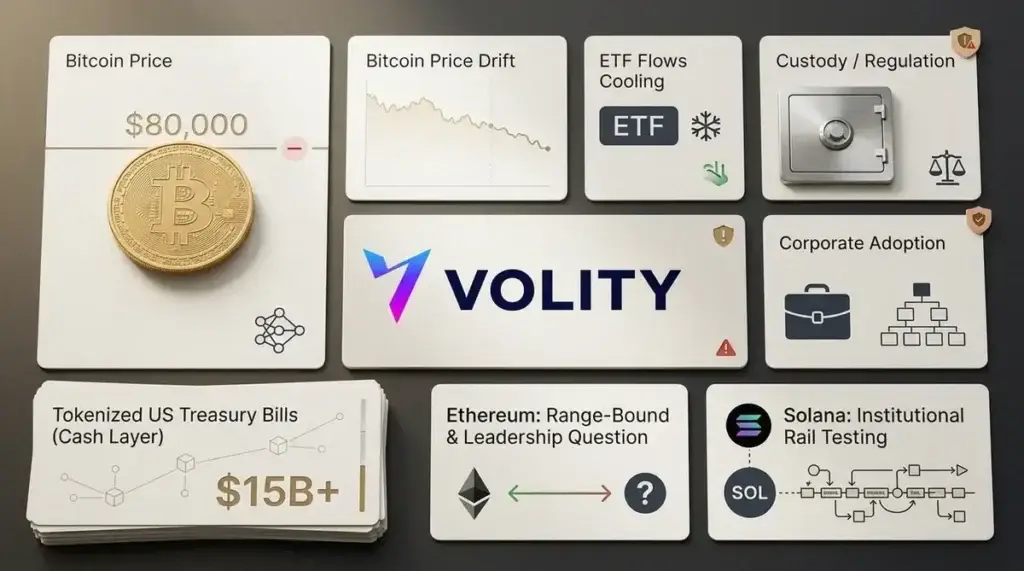
Bitcoin remains the market’s weather system. BTC recently traded just below $80,000, after reaching $79,449 in late April. That level now works less like a number and more like a mood ring.
Earlier in April, US spot Bitcoin ETFs posted a nine-day inflow run above $2 billion. At that pace, funds absorbed coins almost nine times faster than miners produced them. Meanwhile, Strategy kept tightening the free float. Michael Saylor’s treasury vehicle now holds 815,061 BTC, close to 3.9% of the full supply.
However, the latest flows have cooled the room. Bitcoin ETFs recently recorded combined outflows near $648 million. That does not break the bull case. Still, it warns that buyers are becoming more price-sensitive near the top of the range.
Technicals now look less forgiving. Some short-term averages have turned lower, while momentum indicators have faded. A slide toward $75,000 would not shock desks that chased the April breakout.
Politics adds a second engine. Washington is shaping the idea of a Strategic Bitcoin Reserve, which would place BTC nearer to gold in macro language. Meanwhile, corporate holders keep adding legitimacy. SpaceX reportedly holds Bitcoin worth roughly $637 million.
Yet the long-term risk list keeps growing. Citi has warned that Bitcoin faces quantum vulnerability over time. Elsewhere, a BNB Chain post-quantum test showed transaction throughput falling almost 40%. Security may improve, but performance can suffer.
Related coverage on Volity
- Bitcoin Dips Below $77k as ETFs Shed $1bn
- Bitcoin Holds $78,000 as CLARITY Act Tightens Crypto Rules
- Bitcoin Drops Below $79k as Yields Rise, ETFs Stall
- Bitcoin Near $80k as Tokenised Treasuries Hit $15bn
- Bitcoin Eyes $100k as CLARITY Act Drives Crypto Markets
By the numbers
- $79,449 – Bitcoin’s late-April high.
- $648 million – recent combined outflows from Bitcoin ETFs.
- 815,061 BTC – Strategy’s reported Bitcoin treasury.
- 40% – approximate TPS drop in one post-quantum blockchain test.
- $15 billion – tokenised US Treasury market size recently crossed.
Ethereum looks quiet, while Solana sells activity
Ethereum remains oddly subdued. ETH has traded mostly between $2,100 and $2,400, with $2,300 acting as a psychological anchor. However, bulls still need a clean break above $2,400 to $2,420.
Institutional interest has not disappeared. BitMine Immersion recently added more than 71,000 ETH, lifting its treasury to 5.28 million coins. That is not casual dip-buying. It is a balance-sheet wager on settlement infrastructure.
Still, Ethereum faces a softer but important problem. Two researchers have left the Ethereum Foundation after internal arguments over development priorities. Markets are not treating that as a crisis. Yet it sharpens a familiar question: can Ethereum keep moving quickly while defending its settlement-layer crown?
Layer-2 networks keep pulling activity away from the base chain. Meanwhile, rival Layer-1s keep pushing speed, lower fees and better user experience. Ethereum has the deepest developer bench, but depth is not the same as urgency.
Solana offers the sharper growth story. The network’s so-called chain GDP has reached about $342 million. Tokenised real-world assets on Solana have also passed $2 billion. That gives SOL a narrative beyond speed.
Wall Street has noticed. Charles Schwab and Goldman Sachs have been testing Solana-based infrastructure. Meanwhile, traders now frame SOL less as a casino token and more as a candidate for institutional payment and asset rails.
The chart still needs proof. SOL has struggled around $88 to $89. A clean break could open a move toward $100, then the 200-day exponential moving average near $113. Until then, the market is admiring the fundamentals while demanding confirmation.
The infrastructure story is moving faster than most price charts. Bitget Wallet has added 130 tokenised shares under the xStocks brand. That puts equity-like instruments inside crypto wallets, where users already hold stablecoins and tokens.
Meanwhile, US regulators are weighing a more formal route for public tokenised shares. If that door opens, the boundary between brokerages and crypto platforms will blur. Retail access could expand, but so could supervision.
Banks are also entering the custody fight. From 1 August, banks in Minnesota can directly hold digital assets for clients. This is not a federal overhaul. However, it signals that traditional finance wants the keys, not just the fees.
That threatens crypto exchanges in one area where they used to dominate. Trust. Many retail investors still prefer a bank logo when volatility rises. If banks offer custody, exchanges will need better pricing, better products or both.
CBDCs remain politically toxic in parts of Washington. House Republicans are pushing a permanent block on a digital dollar. For stablecoin issuers, that reduces one possible state-backed competitor. However, it may also push US digital-money innovation into private hands.
The SEC climate also looks less punitive than in previous cycles. Former commissioner Paul Atkins has argued against gag-style settlement terms. If adopted more broadly, crypto firms could speak more freely after enforcement cases. Traders would gain more open information, not just sealed scars.
Treasuries become crypto’s new cash layer
The quietest revolution may sit in tokenised US government debt. Tokenised Treasury products have recently exceeded $15 billion. Institutions are using blockchain here not as a thrill ride, but as settlement piping.
That changes the yield map inside crypto. Stablecoins once acted like digital dollars with little visible return for holders. Now tokenised Treasuries create a cleaner cash layer, with government-bill income tied to on-chain ownership.
As a result, DeFi can mature beyond wild farming schemes. Conservative strategies can use tokenised bills, repo-like structures and composable collateral. The returns will look less spectacular. However, they may survive more than one cycle.
Money-market funds should watch this closely. So should banks. A wallet holding tokenised cash, Treasury exposure and tradeable equities can start to resemble a brokerage account. The wrapper changes, but the competition is very old.
Artificial intelligence meets wallets and risks
Artificial intelligence is no longer just a theme for listed tech stocks. Coinbase’s chief executive has argued that AI agents could eventually spend more than humans. That idea sounds strange until one imagines software buying data, compute, tickets, inventory and services without waiting for a person.
For crypto networks, AI agents could become transaction-heavy customers. They need wallets, permissions, identity checks and cheap settlement. Payments infrastructure may matter more than speculative yield in the next wave.
Builders are already chasing that market. AEON has raised capital to connect AI agents with tens of millions of physical merchants. Meanwhile, Vitalik Buterin is pushing AI-supported formal verification for software and smart contracts.
If that works at scale, DeFi could see fewer catastrophic bugs. However, security failures are still arriving in the old-fashioned way. Echo Protocol paused a bridge after an attacker minted about $76 million of eBTC.
Physical security has also become a trading risk. Coinbase has lifted security spending to $8.7 million as wrench attacks increase. In plain terms, criminals are targeting people, not code. Cold storage, travel habits and privacy now sit inside portfolio management.
What traders should watch next
- Bitcoin flows: ETF outflows near highs make $75,000 the level to watch on stress.
- Solana confirmation: SOL needs $89 first, then $100, before momentum traders regain control.
- Ethereum leadership: researcher exits matter if they slow upgrades or weaken developer confidence.
- Tokenised Treasuries: growth above $15 billion supports a more durable DeFi cash layer.
- Custody rules: bank entry may pull conservative money away from exchange-native accounts.
The crypto market is becoming less theatrical and more consequential. That does not mean it becomes safe. It means the risks are changing shape.
In previous cycles, traders asked which token could run hardest. Now they must ask which networks can carry money, meet rules and survive attacks. The answer will decide where capital goes when the next storm arrives.