From AI Titans to Storage REITs: 26 Watchlists Shaping Traders’ Daily Radar
The market is no longer moving on one story. It is moving on five at once.
AI infrastructure still sets the temperature. However, retail strength, defensive healthcare, credit stress, energy demand and speculative nuclear power all now matter. Traders are doing less headline chasing and more basket watching.
The useful question each morning is simple: what is moving, why does it matter, and where is the risk hidden?
That is where watchlists help. They turn noisy single-stock stories into themes with visible triggers. Price, volume, options flow, yields, policy headlines and earnings dates then decide whether the idea deserves attention.
AI Sits at the Centre
Taiwan Semiconductor Manufacturing, TSM, remains the cleanest expression of AI infrastructure for many investors. If AI demand keeps rising, someone must manufacture the chips. TSM sits near that chokepoint.
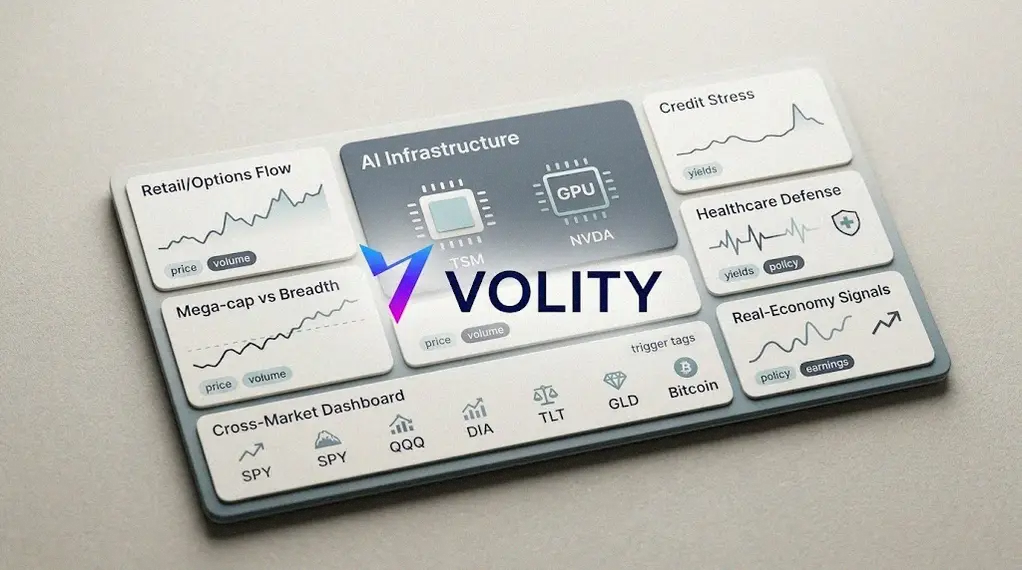
Meanwhile, NVDA still carries the market’s AI pulse. Its moves ripple through AMD, ARM, TSM, ADI and leveraged semiconductor funds such as SOXL. When the group rises together, traders read it as confirmation. When only one name runs, they get more careful.
However, not every AI-adjacent ticker deserves the same treatment. SMCI trades around server demand and margin scrutiny. NNE, the nuclear mini-reactor name, trades more like a concept linked to future data-centre power needs.
That distinction matters. TSM and NVDA sell into visible demand today. NNE still needs policy support, financing, licensing progress and real customers. It belongs in the high-risk infrastructure bucket, not the proven cash-flow bucket.
Retail Buzz Still Moves Fast
Short-term traders continue to watch the loudest names on X, Reddit and options screens. The list often includes NVDA, ARM, AMC, RKLB and NBIS.
These stocks do not need a perfect fundamental story to move. Instead, they need social volume, unusual options activity and enough intraday liquidity. When those line up, the tape can move sharply before the investment case catches up.
Attention still cuts both ways. A crowded name can jump at the open and fade by lunch. Traders tend to watch volume against the 20-day average, not chatter alone.
Macro Risk Starts with the Index Giants
The biggest market tension remains familiar: strong mega-caps, weak breadth. The so-called Magnificent 7 – AAPL, MSFT, NVDA, GOOGL, META, AMZN and TSLA – still dominate index performance.
However, many smaller stocks lag. That creates a fragile-looking rally, even when SPY and QQQ sit near highs. Traders therefore keep a daily macro risk dashboard.
- SPY – broad US equity risk.
- QQQ – large-cap growth and AI enthusiasm.
- DIA – old-economy and dividend-heavy exposure.
- TLT – long-duration bond stress.
- GLD and BTC – hedges, liquidity and speculative appetite.
When stocks, bonds, gold and Bitcoin all send different messages, conviction should fall. When they confirm each other, animal spirits usually return faster.
Meanwhile, the old assumption of an automatic central-bank rescue looks weaker. Inflation has made policymakers less predictable. As a result, traders increasingly monitor risk clusters together, rather than trusting one comforting narrative.
Software, Services and Quality Checks
Beyond chips, software has become a quieter battleground. ADBE sits at the centre of the AI monetisation debate. Investors want proof that generative tools can raise revenue, not just marketing intensity.
Meanwhile, ADP offers a different test. It is less glamorous, but it has recurring revenue, strong margins and a long record of execution. It works as a quality benchmark for professional-services and outsourcing names.
That contrast is useful. Adobe tests whether AI can revive software growth. ADP tests whether stable cash flows still deserve premium valuations when rates stay higher for longer.
Hardware and the Hidden Build-out
AAPL remains more than an iPhone stock. It is also a hardware, services, storage and device-margin benchmark. Traders watch iPhone demand, China exposure and any sign that AI-enabled devices can restart an upgrade cycle.
However, the more obscure hardware signal may be KEYS. Keysight sells test and measurement equipment tied to 5G, telecom networks and data-centre build-outs. When enterprise capex tightens, names like KEYS often feel it early.
This watchlist is not just about gadgets. It tracks whether the physical AI build-out still has budget behind it.
Healthcare Offers Defence with a Twist
Healthcare is no single trade. It now splits into growth diagnostics, medical devices and defensive managed care.
NTRA represents the diagnostics growth story. Revenue expansion and adoption matter, but profitability still requires patience. Meanwhile, DXCM tracks diabetes-care demand, continuous glucose monitor competition and health-tech sentiment.
CI, by contrast, belongs in the defensive healthcare basket. Its appeal rises when investors want earnings stability. However, policy risk and medical-cost trends can quickly spoil the shelter.
Yield Hunters Watch Credit and Banks
Income seekers have not disappeared. They have simply become more selective.
ARES sits at the centre of the private-credit and business development company conversation. Investors watch credit quality, dividend durability and valuation discounts. The question is whether yield compensates for slower growth and possible defaults.
Meanwhile, HSBC gives traders a simpler global-bank lens. Its dividend, capital strength and interest-rate sensitivity draw attention. However, China and Europe exposure keep macro risk close to the surface.
The Real Economy Has Its Own Tape
Not every useful signal comes from Silicon Valley. Consumer behaviour, travel demand and property income still tell traders plenty.
ABNB tracks travel appetite and household resilience. Strong bookings suggest consumers still have room to spend. Yet regulation, fees and hotel competition remain persistent risks.
Meanwhile, ROST has drawn attention near 52-week highs. Off-price retail often performs when shoppers become more value-conscious. Ross Stores can signal stress and strength at the same time.
Energy traders keep EQT on the screen for a cleaner natural-gas view. Futures prices, LNG demand, drilling discipline and weather can all move sentiment fast.
In property, CUBE offers a read on self-storage. Occupancy, rents and interest-rate sensitivity drive the story. It is plain, useful and less fashionable than AI, which can be a virtue.
Then there is RACE. Ferrari trades less like a carmaker and more like a scarce luxury asset. Its pricing power and margins separate it from mass-market autos when growth slows.
Speculation Still Has a Place, but Size Matters
High-attention watchlists remain useful when handled honestly. “Stock whisper” screens, volume spikes and unusual options flow can flag possible near-term moves. However, they should not masquerade as investment research.
TSLA and SpaceX-adjacent chatter still attract private-market and IPO nostalgia. Tesla’s 2010 listing remains a popular comparison. Yet nostalgia is not a forecast, and traders should treat it as narrative fuel.
Crypto infrastructure has also entered the daily radar again. Stablecoins and AI agents now appear in the same discussions. The idea is that autonomous software could eventually need instant machine-to-machine payments.
For now, that remains an infrastructure narrative. It is worth tracking, but not yet worth treating as settled demand.
By the Numbers
- 7 mega-cap stocks still dominate the large-cap growth trade.
- 26 watchlist themes span AI, credit, healthcare, retail, energy and crypto infrastructure.
- 52-week highs in names such as ROST can signal relative strength, not just optimism.
- 20-day volume comparisons help separate real participation from passing noise.
- 6 assets – SPY, QQQ, DIA, TLT, GLD and BTC – give a quick cross-market risk check.
Related coverage on Volity
- Bitcoin Price Jitters as ETF Outflows Hit Crypto
- Zoom (ZM) Earnings Gap in Focus
- Bitcoin Today: Germany Crypto Tax Break, Oil Trading
- Stock Watchlist: Nvidia (NVDA) AI vs Weak Cyclicals
- Crypto Daily: Ripple vs XRP, Fed Banking, FBI Sting
Key Takeaways
- Use watchlists to frame risk before reacting to headlines.
- Separate proven AI cash flows from early-stage infrastructure stories.
- Watch breadth, yields and volume before trusting index strength.
- Treat social buzz as a trigger, not a thesis.
- Keep defensive healthcare, credit and real-economy names on the same radar as semiconductors.