Crypto Daily: Ripple’s Split Screen, the Fed’s Narrow Door, and an FBI Sting
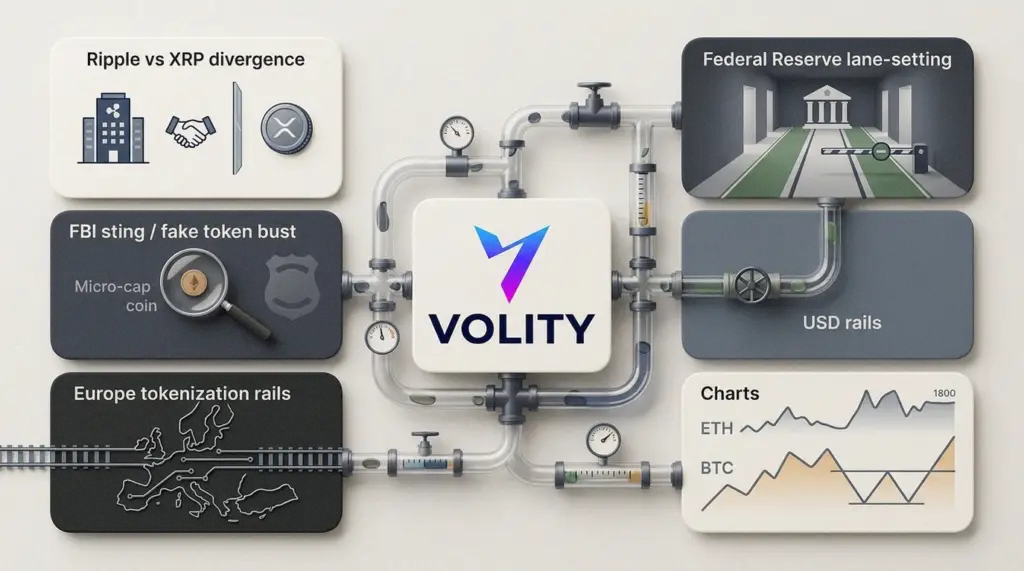
The crypto market has a familiar look today: busy, jumpy, and slightly unreal. Ripple’s business story is improving, while XRP barely joins the party. Meanwhile, the Federal Reserve is sketching a tighter path for crypto-linked banks. The FBI, not usually a liquidity provider, has even created a fake token to catch wash traders.
For traders, the message is not that crypto has gone quiet. It is that the market is becoming harder to bluff. Regulation is moving closer to the plumbing, not just the headlines. Volume, banking access and token utility matter more than ever.
Ripple Grows, but XRP Does Not Follow
Ripple remains one of the strangest stories in digital assets. The company has spent years fighting the SEC, yet its payments business keeps pushing forward. It is building bank-facing infrastructure, cross-border payment tools and institutional relationships. However, XRP still trades more like a legal overhang than a clean growth asset.
The split matters because many investors still treat Ripple and XRP as one trade. They are not. Ripple can increase revenue without forcing clients to hold XRP. In several cases, customers use Ripple’s technology stack without making the token central to settlement.
That weakens the easy bull case. If company adoption does not create steady token demand, XRP becomes a sentiment trade. It may still move sharply on court news, exchange flows or ETF chatter. But meanwhile, its link to Ripple’s corporate progress remains uneven.
- Business strength is not token demand. Ripple can sign clients without creating direct buying pressure in XRP.
- Legal memory lingers. Partial court wins helped, but institutions still price in regulatory uncertainty.
- Stablecoins are fierce rivals. USDC, USDT and bank-grade dollar tokens compete directly in cross-border payments.
XRP needs more than a better company story. It needs clearer utility, cleaner legal treatment and visible settlement demand. Until then, rallies may remain tradeable but fragile.
Fed Opens a Narrow Door for Crypto Banks
The Federal Reserve’s latest signal on crypto-linked banks looks generous only from a distance. It suggests a limited route into payment infrastructure, including constrained access to correspondent accounts and clearing functions. However, this is not equal footing with traditional banks.
The Fed’s message is plain enough: crypto can touch the dollar system, but not freely. That matters for stablecoin issuers, custodians, market-makers and lenders. Their business models depend on fast, reliable access to dollars.
If access becomes narrower, liquidity becomes more expensive. That favours large firms with strong compliance teams and banking relationships. Meanwhile, smaller crypto banks and weaker stablecoin projects face higher friction. Some may pay more for basic settlement. Others may lose counterparties entirely.
This is not a ban. In fact, it may be more important than a ban. The Fed is shaping the lanes where crypto can operate. Traders should watch banking policy as closely as token unlocks or ETF flows.
FBI Exposes the Dirty End of Volume
The FBI’s sting against wash trading adds a sharp edge to today’s tape. Investigators created a fake crypto token to catch market-makers and trading firms accused of inflating activity. It was an unusually theatrical method, but the target was familiar.
Wash trading has haunted crypto for years. A token appears liquid, volume spikes, spreads look active, then buyers discover the order book was mostly theatre. However, this case matters because it reaches beyond anonymous Telegram groups and into more polished market operations.
For exchanges, the risk is obvious. If a platform ignores fake volume, regulators can argue that it enabled manipulation. For traders, the lesson is simpler. Volume alone is not proof of liquidity.
- Check order-book depth. Thin bids below the market can vanish quickly.
- Watch spreads. Real liquidity usually tightens spreads across venues.
- Compare exchanges. Single-venue volume spikes deserve suspicion.
- Track fills. A market that looks deep but slips badly is not deep.
Meanwhile, the sting changes the mood around smaller tokens. Sudden volume bursts now carry legal risk as well as trading risk. The market can still pump, but the room has more cameras.
Europe Builds the Quiet Tokenisation Stack
Boerse Stuttgart’s work with SocGen points to a different side of crypto. It is not memecoins, yield farms or weekend leverage. It is regulated settlement infrastructure for tokenised assets in Europe.
That makes it less exciting, but probably more durable. Tokenised bonds, shares and structured products will not produce nightly 10-fold moves. However, they can attract banks, asset managers and pension money. Those investors care about settlement speed, custody and legal certainty.
Europe has already framed the market through MiCA. Now its financial institutions are building rails around that framework. The long-term RWA trade should lean towards infrastructure, custody and regulated issuance, not every token with “real-world assets” in its pitch deck.
Retail traders should not confuse institutional tokenisation with automatic upside for listed crypto tokens. Banks can use blockchains without sharing the economics with public coins. That distinction will become increasingly important.
Ethereum Tests a Nervous Market
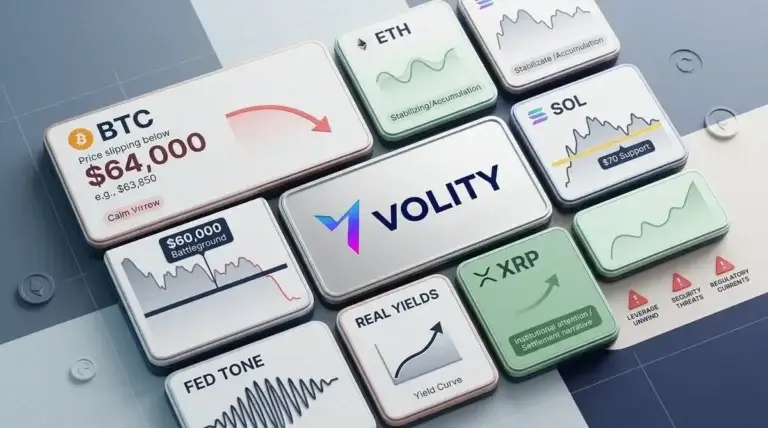
Ethereum’s chart looks uncomfortable. The token has struggled to hold momentum after breaking from an ascending channel. If sellers press the move, the $1,800 area becomes a visible downside magnet.
Technicians will focus on the retest. A failed reclaim of the broken channel would strengthen the bear case. Meanwhile, derivatives positioning could make the move sharper. Stops often sit below recent local lows, and forced liquidations rarely wait politely.
Macro pressure also matters. When dollar liquidity feels tighter, traders often retreat into Bitcoin or cash. Ethereum then suffers from being both a core asset and a high-beta technology bet. That is useful in rallies. However, it cuts both ways during stress.
- Key area: $1,800 stands out as the next major downside zone.
- Trigger: failure to reclaim the broken channel may invite fresh shorts.
- Risk: crowded leverage can turn orderly selling into a liquidation run.
For short-term traders, this is a levels market. Define the stop before the entry. For longer-term investors, weakness may offer a staged buying zone, but only with room for volatility.
Bitcoin Watches Geopolitics and the Neckline
Bitcoin is trying to build a local double bottom. At the same time, traders are watching signals around possible progress in talks involving Iran. Geopolitics is always noisy, but oil, rates and risk appetite still react to it.
A calmer Middle East backdrop could reduce pressure in energy markets. That may help broader risk sentiment. However, Bitcoin’s role remains awkward. It is not a classic haven, but it is no longer just a speculative software trade either.
The chart gives traders something cleaner to watch. If Bitcoin holds support and breaks the neckline of the pattern, momentum accounts may chase the move. If it fails, the double bottom becomes another abandoned drawing on a crowded chart.
Other Moves Worth Watching
- Cardano: a TD buy signal has appeared, while Charles Hoskinson’s warning about academic talent highlights a long-running issue: strong research, slower commercial pull.
- US sanctions: wallets tied to a Sinaloa fentanyl network face Treasury action, reinforcing blockchain surveillance as a permanent market factor.
- Crypto taxes: proposals to ease reporting for small crypto payments could make everyday transactions less painful.
- Layer 2: pressure on mid-sized networks keeps rising. Scale, distribution and specialised use cases now matter more than branding.
Trading Takeaways
- Do not buy XRP solely because Ripple’s corporate news improves.
- Treat banking access as a liquidity signal for stablecoins and market-makers.
- Question volume spikes, especially when they appear on one exchange.
- Watch Ethereum’s $1,800 zone and Bitcoin’s double-bottom neckline.
- Separate institutional tokenisation from retail RWA hype.
Crypto is not becoming safer simply because it is becoming more institutional. It is becoming more measurable. The winners will read the plumbing, not just the price.