How to read a watchlist like a pro
The market gives traders two things before breakfast: noise and a few usable clues. A good daily watchlist belongs in the second pile, but only if readers treat it properly.
Volity’s daily sheet works best as a map of themes, liquidity and catalysts. It does not work as a promise. The serious reader should ask a simple question first: what kind of trade is this trying to describe?
That distinction matters today because markets remain crowded around a handful of stories. Artificial intelligence, mega-cap technology, yield trades and post-earnings drifts all move on different clocks. However, they often appear on the same morning sheet, side by side.
Ai Infrastructure is Now a Spending Cycle
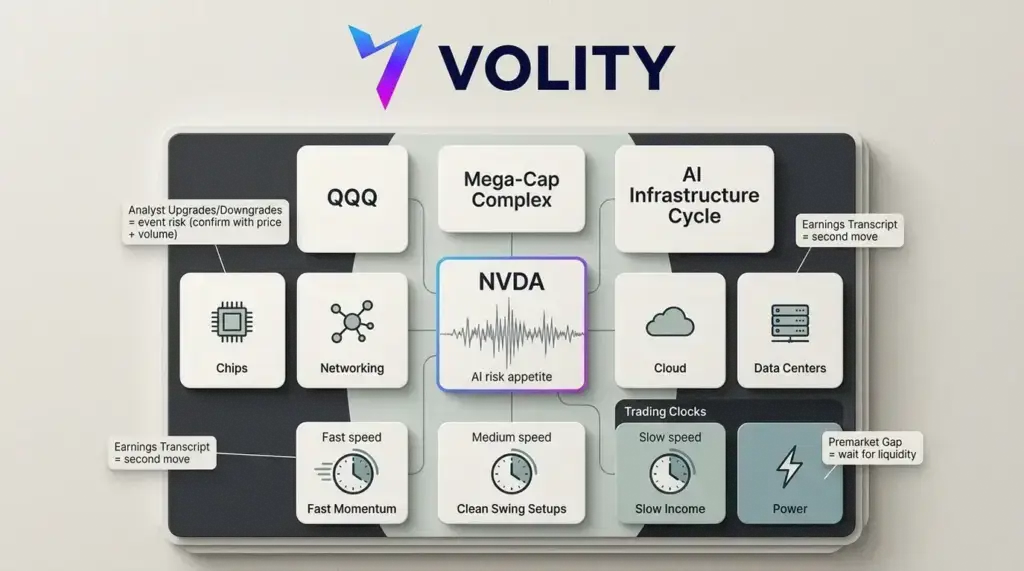
The AI block, led by NVDA, AMD, MSFT, GOOGL, META and AMZN, no longer trades only as a buzzword basket. Instead, Wall Street now treats it as a capital spending cycle.
That cycle stretches across chips, networking, cloud servers, data centres, power and software. So, the better question is not whether “AI is hot”. The question is who captures durable revenue, and who merely funds the build-out.
For short-term traders, the split is practical. NVDA, AMD and META often suit momentum tactics because liquidity attracts fast money. Meanwhile, MSFT, GOOGL and AMZN often give cleaner entries on pullbacks, especially near obvious support.
For investors, the frame is slower and tougher. Are AI orders still visible? Can cloud margins absorb spending? Will depreciation eat the story before revenue arrives? Those questions matter more than a 2% premarket move.
Nvidia Remains the Tape’s Seismograph
Putting Nvidia on its own line is not theatre. NVDA has become the market’s cleanest AI equity benchmark and a daily relative-strength gauge against QQQ.
When NVDA leads on volume, speculative tech usually breathes easier. However, when the stock stalls while QQQ rises, traders should notice the divergence. It can signal fatigue inside the favourite trade.
Day traders watch NVDA for liquidity, intraday momentum and pullbacks into recent support. Swing traders need a harsher filter. Earnings, guidance and data-centre growth decide whether the longer trade still deserves capital.
Because NVDA now sits at the centre of the AI complex, its tape often sets the tone. It tells traders whether the market wants risk, or merely wants to take profits gracefully.
Mega-caps Are the Market Compass
The mega-cap basket – SPY, QQQ, AAPL, MSFT, NVDA, GOOGL, META and TSLA – is not there for decoration. These names are index direction.
If they rise together on firm volume, smaller growth stocks gain oxygen. Meanwhile, if leadership narrows to one or two names, the rally becomes more fragile.
Many traders can express a macro view more cleanly through SPY, QQQ or a mega-cap than through a thin single-name story. Liquidity matters when the opening bell turns ugly.
The first job each morning is not finding the most dramatic ticker. It is deciding whether the tide supports risk at all.
Momentum Names Need Smaller Size
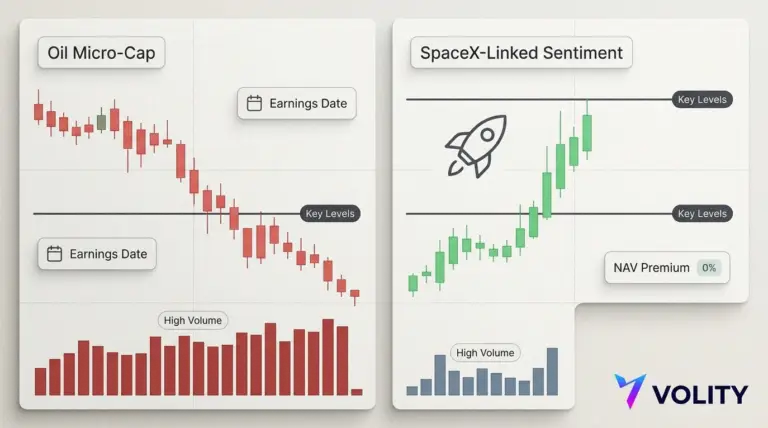
Bloom Energy, ticker BE, belongs in the momentum bucket when AI power demand dominates the story. Triple-digit year-to-date moves can keep going, but they become less forgiving with every vertical candle.
The watchlist’s warning is useful here. Watch momentum, but do not chase it as if price alone confirms value.
Smaller position sizes make sense in these names. Defined stops also matter, because late-stage momentum rarely breaks politely. It often gaps, reverses and leaves traders arguing with a screen.
The same logic applies to speculative AI names such as BigBear.ai, ticker BBAI. They can create good short-term trades. However, they do not belong in the same mental drawer as core holdings or income vehicles.
Analysts Move Prices, but They Are Not Prophets
Upgrades, downgrades and initiations belong on a daily sheet because they create event risk. Still, they are catalysts rather than commandments.
Upgrades in names such as ZS, DELL, FRT and CNO deserve attention only if price confirms the note. Volume matters. Follow-through matters. Without those, an upgrade is just another headline.
Initiations in smaller names, including HAWK, ALOY, MP, SUJA and OCTV, can bring fresh liquidity. However, they often work better as trading prompts than immediate investment cases.
Downgrades in CRDF, CRSR, EQR and CZR create a different setup. They can pressure weak holders, but they can also produce oversold bounces. Size and stop placement become the trade, not the opinion.
For investors, one analyst note rarely changes the case. A pattern of estimate cuts or target increases matters more. That is where sentiment becomes a trend.
Earnings Transcripts Can Create a Second Move
The transcript watchlist – ENVX, EGAN, BLTE, CGEN, ESLT, BKE, BIRK and BAP – points to a useful part of earnings season.
Day one often belongs to algorithms. They react to revenue, margins and guidance language within seconds. Day two and day three can be more revealing, because portfolio managers have had time to read the call.
That delayed reaction can create cleaner trends. A stock that fades an initial pop after weak commentary tells one story. A stock that holds gains after cautious guidance tells another.
So, transcript names deserve patience. Traders should listen for margin pressure, order timing, inventory comments and management tone. The best trades often appear after the first emotional move has passed.
Income Names Require a Different Clock
The income section, with GSBD, ARCC, FRO, KRP and GRNT, speaks to yield seekers rather than scalpers. These tickers should not be read like break-out tech stocks.
BDCs such as GSBD and ARCC require scrutiny of dividend coverage, credit quality and non-accrual trends. A 1% intraday move tells investors little. Credit conditions tell them much more.
High-yield energy names such as FRO, KRP and GRNT carry a different bargain. They may offer income, but they also bring commodity, shipping, regulatory and balance-sheet risk.
They are not bond replacements. They are equities with income attached, and sometimes with extra moving parts under the bonnet.
Premarket Gaps Need Confirmation
The macro section, including futures and single names such as HPE, NVDA and UBER, acts as morning radar. It asks what could swing the tape today.
Premarket gaps, like after-hours movers, deserve caution. Some fade within 20 minutes. Others extend brutally after the open, once liquidity arrives and institutions show their hand.
Waiting for the first 15 to 30 minutes can feel dull. However, that pause often saves capital. It lets traders see whether buyers defend the gap, or whether early enthusiasm melts.
Clover Health, ticker CLOV, shows why sentiment still matters. Negative commentary and weak results can form a headwind that lasts beyond one session. Such names suit advanced short-term traders, not casual dabbling.
By the Numbers
- 15 to 30 minutes: the opening window many traders use before sizing gaps.
- 8 mega-cap tickers: SPY, QQQ, AAPL, MSFT, NVDA, GOOGL, META and TSLA set much of the tape.
- 3 trading clocks: day trades, swing setups and investor-income positions.
- 2 to 3 days: the period when post-earnings drift often becomes clearer.
- 1 rule: match the trade to the timeframe before matching it to a story.
Related coverage on Volity
- Bitcoin Price Holds $73k as ETF Outflows, US Clarity Act Bite
- AI Stocks Today: QQQ Market Radar on China Risk & Rates
- Bitcoin Price Today: Trump, MiCA and Hacks Shake Crypto
- Stock Morning Note: SNOW, CRM, NOK Setups
- Bitcoin Price: BTC Eyes $82,100 as Banks Back Crypto
Key Takeaways
- Use themes, not tips: AI infrastructure, income and macro risk need separate playbooks.
- Let liquidity guide tactics: mega-caps and ETFs often express views more cleanly than thin names.
- Respect momentum: BE and BBAI can move fast, but sizing must reflect the risk.
- Treat analysts as triggers: upgrades and downgrades need price and volume confirmation.
- Wait when needed: gaps and earnings reactions often reveal themselves after the first rush.
A watchlist becomes useful when it labels risk honestly. Day trades need speed and exits. Swing trades need structure and patience. Income ideas need credit work and a longer clock.
Read that way, the sheet stops being a temptation machine. It becomes something better: a morning map for deciding which trades deserve attention, and which ones deserve to be left alone.