The Crypto Trading Starter Kit
A plain-English PDF: what to check before you trade, how orders and risk really work, and the mistakes to skip. Get it free.
Paper hands is trading slang for an investor who sells an asset quickly at the first sign of trouble, usually out of fear rather than any considered plan. The paper hands meaning is that your grip is weak, so you fold and sell the moment the price wobbles, often watching it recover without you. It is the opposite number to diamond hands, the trader who clings on through every dip.
This is general educational information about a piece of market slang and the behaviour behind it, not personal advice. Below is where the term came from, how crypto traders throw it around, the psychology that makes people panic-sell, and the more honest point that selling early is sometimes the disciplined, correct move.
- Paper hands means selling fast at the first drop, usually out of fear; diamond hands means holding through the volatility.
- The term was born on Reddit’s WallStreetBets during the 2021 GameStop saga and moved straight into crypto.
- It is mostly used as an insult, yet cutting a losing trade quickly is often correct risk management and a sign of discipline.
- A written plan with a stop-loss beats both panic-selling and stubborn holding.
What does paper hands mean?
A paper hands trader is someone who sells at the first sign of concern, usually a small dip or a scary headline, before their original reason for buying has actually been proven wrong. The image is deliberate. Paper folds and tears under the lightest pressure, so paper hands describes a grip that gives way the moment the market gets uncomfortable.
The label sits at one end of a spectrum. At the other end are diamond hands, a term for holding a position through steep drawdowns because diamonds form under heat and pressure and do not crack. Most traders live somewhere in between, and the slang exists mainly so people online can tease each other about which end they fell off.
Where does the term paper hands come from?
Paper hands was coined on the r/WallStreetBets subreddit during the meme-stock frenzy of early 2021. The community had already been using “diamond hands” to celebrate anyone who refused to sell their GameStop shares during the famous short squeeze that January, and paper hands arrived as the mocking counterpart for anyone who bailed out early and missed the ride.
From there it spread fast. The same crowd that piled into meme stocks was often deep in crypto too, so the vocabulary crossed over almost overnight, emojis included. Dictionaries and finance desks now define paper hands plainly as an investor who abandons a position at the first hint of a fall, and you can trace the full meme history back to those first Reddit posts.

What does paper hands mean in crypto?
Crypto adopted the term wholesale. Diamond hands gets the 💎🙌 emoji and paper hands gets the toilet roll 🧻, a not-very-subtle way of saying someone’s conviction is disposable. Because cryptocurrency moves so violently, the accusation flies constantly. Any time a coin dips ten per cent and someone sells, a chorus of “paper hands” is never far behind.
The tone is almost always mocking. Calling a trader paper hands is a jab at their nerve and their timing, the suggestion being that they sold in a panic right before a bounce. It is the close cousin of the jeet, the trader who dumps a token far too early and then watches it run without them. The same communities also gave us the degen who chases the riskiest tokens for fun, and the whole family of labels shares one job, which is teasing each other about how people handle risk. That social pressure is exactly what nudges some traders into clutching coins they should have sold, sometimes all the way down after a pump and dump or a rug pull has already gutted the price.
Paper hands vs diamond hands: what is the difference?
The two terms describe opposite reactions to the same moment of fear. One sells too soon, the other refuses to sell at all. Neither is a strategy on its own, and both can end badly if there is no plan underneath them.
| Trait | Paper hands | Diamond hands | A trading plan |
| Typical move | Sells fast on any dip | Holds through everything, rarely sells | Sells at a level set in advance |
| Driven by | Fear and panic | Hope and stubbornness | A written rule |
| Main danger | Selling on noise and missing the recovery | Riding a broken position down to zero | Low, as long as you follow it |
The trouble is that the loud, meme-friendly advice online almost always cheers for diamond hands and shames paper hands. That framing quietly ignores the many times when holding forever is the worse choice, which is where the balanced view starts to matter.
The psychology of paper hands: why do traders panic-sell?
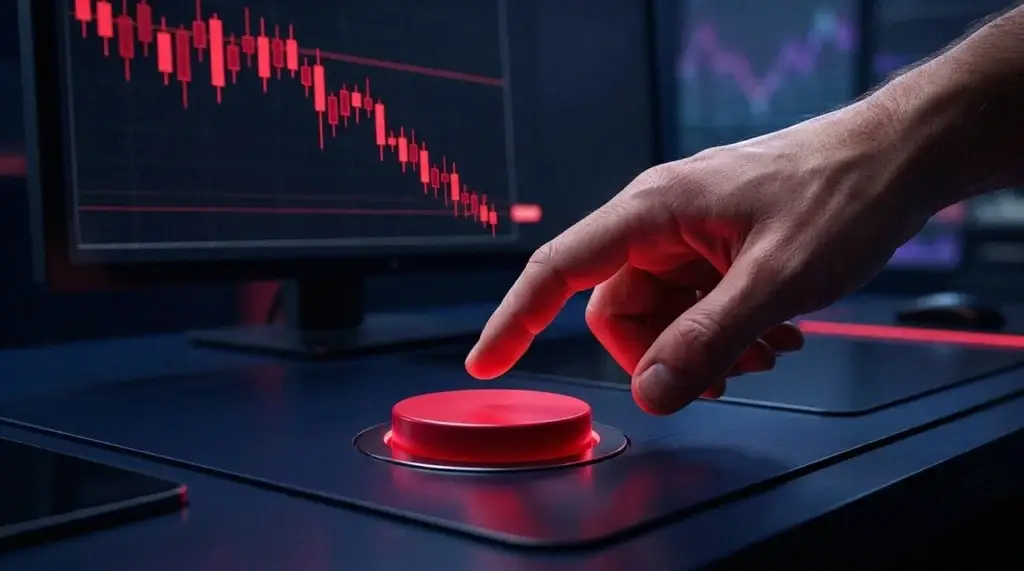
Panic selling is a well-documented reaction rather than a personal failing. When a price falls sharply, the fear of a bigger loss can overwhelm the plan, and the urge to make the discomfort stop takes over. That is loss aversion at work. Research on prospect theory by Kahneman and Tversky found that a loss hurts about twice as much as an equal gain feels good, so the instinct to stop the pain is powerful.
Several other habits feed the same reflex. The disposition effect describes how investors tend to sell their winners too early and cling to their losers too long, and paper-hands selling is the first half of that pattern. Herd behaviour makes a falling chart feel like a stampede you have to join, and the fear of missing out works in reverse, so a red candle triggers the dread of being the last one still holding. None of this points to a weak character. It is simply how normal minds respond to money and risk.
Are paper hands always a bad thing?
No, and this is the part the memes leave out. Selling quickly is often the disciplined decision. If your reason for buying has broken, or the price has hit the level where you already agreed you were wrong, closing the trade fast is exactly what a professional does. A stop-loss order exists precisely to make you sell early and protect your capital, and it works like any other market order. Following it means your plan is doing its job.
The opposite failure is just as real. A trader with diamond hands who refuses to ever sell can ride a good position straight through a broken thesis and end up a bagholder, hanging on because of the sunk cost already spent. “Never sell” is a slogan rather than a strategy, and it has quietly wiped out plenty of people who mistook stubbornness for conviction. The useful question is never whether you have paper hands or diamond hands. It is whether you are acting on a plan or on a feeling.
How do you trade with a plan instead of your emotions?
The fix for both panic-selling and stubborn holding is the same. Decide your exits before you enter, while you are calm, then let the plan do the work. Write down the price that would prove your idea wrong and treat it as the moment to leave. Set a stop-loss so that exit happens whether or not you are watching the screen. Keep your position size small enough that no single trade can do serious damage, and a normal dip stops feeling like an emergency. A wider risk management routine holds all of that together, and our free trading education hub walks through it step by step.
You can build these habits on the Volity trading platform, where crypto, indices, commodities and forex sit in one account and you trade the price as a contract for difference, long or short, on Volity MT. Because you can go short as well as long, a falling market becomes something you can plan around instead of a moment to panic. Built-in stop-loss and take-profit orders turn your exit plan into something automatic, and a free demo account lets you rehearse the discipline before any real money is at stake. Keep the health warning in view. CFDs are leveraged, with leverage up to 1:500 depending on the product, so prices move for and against you quickly, and the FCA classes them as high-risk investments.
Getting started is light by design. You can open a Volity account for $0, invest from $1, and start trading from $1. Volity’s trading execution is regulated by CySEC under UBK Markets, licence 186/12, with client funds held in segregated accounts.
Frequently asked questions
What does paper hands mean?
Paper hands is slang for an investor who sells an asset quickly at the first sign of trouble, usually out of fear rather than a considered plan. The image is that paper folds under the lightest pressure. It is the opposite of diamond hands, which describes holding a position through sharp falls, and it is normally used as a mild insult.
What is the difference between paper hands and diamond hands?
Paper hands means selling early when a price dips, while diamond hands means holding on through the volatility and refusing to sell. Paper hands is mocked for folding too soon, and diamond hands is praised for conviction. In reality either can be wrong, because selling on noise loses the recovery and holding a broken position can lose everything.
Is having paper hands actually a bad thing?
Not always. Cutting a losing trade quickly and respecting a stop-loss is disciplined risk management rather than weakness. Paper hands only becomes a problem when you sell out of blind panic instead of because your plan told you to. The aim is to act on a written plan instead of on fear.
What does paper hands mean in crypto?
In crypto, paper hands describes a trader who sells a coin at the first drop, often marked with the toilet-roll emoji. Because crypto is so volatile, the accusation is thrown around constantly, and the social pressure to prove you have diamond hands can push people into holding coins long after they should have sold.