Crypto’s uneasy rally: bitcoin blinks, ethereum hesitates, and the dollar tightens its grip
Crypto markets opened with a familiar August mood: quiet prices, thin conviction, and plenty of nervous glances at Washington.
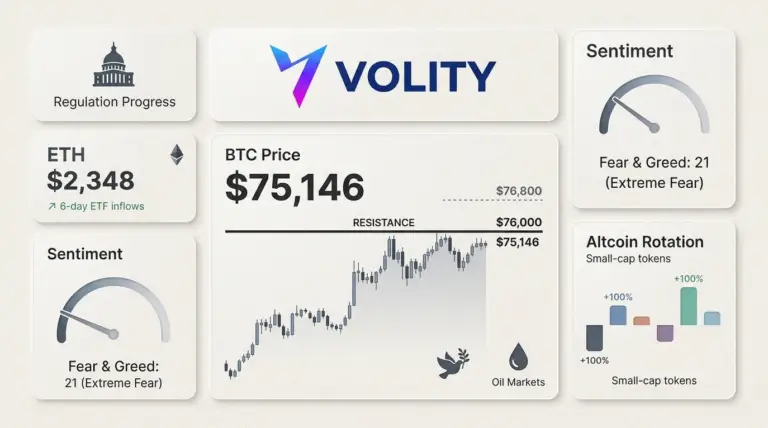
Bitcoin drifted below $65,000, while Ethereum again failed to clear $2,000. Meanwhile, a smaller token called Bitway attracted the day’s most aggressive speculation.
The larger story, however, sits beyond the charts. Stablecoin rules and ETF costs are starting to shape returns as much as headline price moves.
Bitcoin tests a narrow range
Bitcoin traded near $64,300 after failing to hold above $65,000. The immediate support zone sits around $63,900.
Below that level, traders are watching $62,400, near the lower Bollinger Band. A break there could trigger a sharper reduction in leveraged positions.
Resistance remains clustered near $65,350. Therefore, Bitcoin needs a sustained move above that level before bulls can claim control.
Institutional investors have shown more patience than short-term traders. BlackRock and VanEck continue to frame recent weakness as an accumulation phase.
That view may prove correct, but price must cooperate. For now, Bitcoin remains trapped between a fragile floor and an unconvinced ceiling.
- Support: $63,900, then $62,400
- Resistance: $65,350
- Trading character: Range-bound, with fading momentum
Ethereum still cannot conquer $2,000
Ether rose roughly 3% to about $1,920 after recovering from $1,870. Yet the rebound again slowed before the crucial $2,000 mark.
The $1,986 to $2,000 zone carries both technical and psychological weight. It also holds a dense cluster of leveraged positions.
Consequently, a brief spike above $2,000 would not settle the argument. Traders need a convincing daily close above that band.
Until then, Ether remains in a corridor between $1,850 support and $2,000 resistance. The latest bounce looks more like a recovery than a breakout.
That distinction matters. A failed push through $2,000 could pull momentum buyers into another sharp reversal.
Bitway becomes the day’s hot-money trade
Bitway, trading under the ticker BTW, surged almost 250% from recent lows. It reached about $0.775 on August 19.
Profit-taking then cut the token to roughly $0.63. Even so, BTW remained about 46% higher on the day.
Its daily relative strength index reached 87.45, an extreme reading by any conventional measure. However, overbought markets can stay overbought longer than expected.
The key level now sits near $0.50 on the four-hour chart. If that support holds, buyers may attempt another advance.
If it breaks, the post-rally unwind could be swift. This is a momentum position, not a long-term valuation case.
Bitcoin ETF costs deserve closer attention
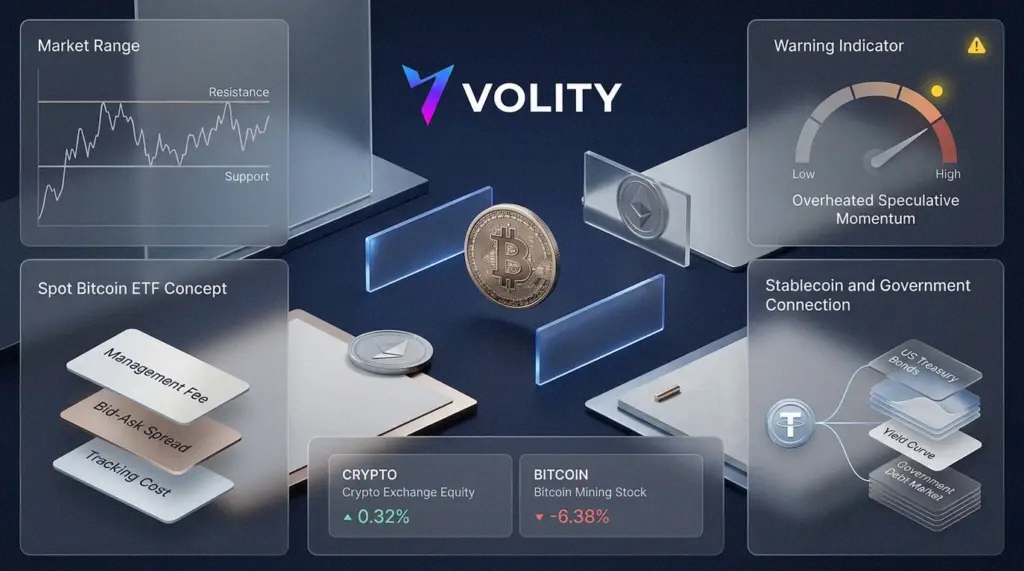
Spot Bitcoin ETFs have made ownership easier, but convenience has a price. Investors often notice the management fee and miss everything else.
BlackRock’s IBIT now charges a 0.25% annual expense ratio after its introductory waiver ended. A $100,000 holding therefore loses $250 annually before market moves.
Over ten flat years, that fee alone would remove about $2,528 through compounding. Tracking error can add another layer of drag.
Across the largest US spot Bitcoin funds, annual tracking error ranges from about 0.03% to 0.42%. Smaller funds often face wider spreads and lower liquidity.
A fund with a 0.20% fee and 0.42% tracking error can impose a 0.62% effective annual cost. That is a meaningful leak for a long-term holder.
- IBIT expense ratio: 0.25% a year
- Potential ten-year fee cost: about $2,528 per $100,000, with flat Bitcoin prices
- Tracking-error range: roughly 0.03% to 0.42% annually
Therefore, investors should compare spreads, fund size, custody arrangements, fees, and tracking precision. The headline expense ratio tells only part of the story.
Stablecoins become a dollar policy tool
The GENIUS Act has given US stablecoin policy a clearer shape. It also makes the Treasury market more central to the industry.
Compliant payment stablecoins must hold tightly defined reserves. Those assets include short-dated Treasury bills, insured bank deposits, and overnight Treasury repurchase agreements.
That structure links stablecoin growth directly to demand for dollar assets. In effect, regulated tokens become digital distribution channels for Treasury securities.
Supporters see safer reserves and clearer rules. Critics, however, see a policy framework that protects dollar dominance above all else.
The practical result remains the same. Stablecoin users now carry greater exposure to US interest-rate policy and Treasury-market conditions.
Non-dollar tokens may offer alternatives, although they will probably face greater regulatory friction. That could shape liquidity across crypto markets for years.
Crypto equities offer a different route
Crypto exposure no longer means buying coins alone. Coinbase, ticker COIN, has returned about 18% this year through August.
Its performance has outpaced several prominent crypto-linked names. The gain reflects trading activity, custody revenue, and stablecoin-related services.
Meanwhile, companies such as Marathon Digital and Riot Platforms remain more sensitive to Bitcoin’s immediate price swings. Their business models carry heavier operational leverage.
That difference matters for investors. Coinbase increasingly offers exchange and infrastructure exposure, while miners remain closer to high-beta Bitcoin trades.
Key takeaways
- Watch Bitcoin’s $63,900 support. A break below $62,400 would weaken the current range.
- Demand confirmation from Ether. A durable close above $2,000 matters more than an intraday spike.
- Keep BTW positions small. Its steep rally and RSI reading leave little room for careless entries.
- Check ETF friction. Fees, spreads, and tracking error can quietly erode multi-year returns.
- Follow stablecoin rules like rate policy. Regulation now ties digital dollars more closely to Treasury markets.
For now, crypto has neither cracked nor convincingly broken higher. Traders have ranges to respect, while investors have structural changes to price.
Related coverage on Volity
- How to Avoid Crypto Scams: A Beginner Safety Checklist
- How to Choose a Trading Platform: A 10-Point Checklist
- Demo vs Live Trading Account: A 7-Step Checklist Before You Go Live
- How to Size a Trade: Position Sizing and Risk Per Trade for Beginners
- Risk-Reward Ratio Explained: How to Set It and Why It Matters
- ETF vs Index Fund: The Difference and Which to Pick