Crypto markets daily: cards, crackdowns and a fragile bitcoin floor
Bitcoin slipped below $79,000 on Tuesday, September 8, as support near $78,000 came under pressure. Meanwhile, Visa’s stablecoin card business kept expanding, giving crypto another route into ordinary spending.
European authorities also raised the cost of poor compliance. For traders, the immediate question is simple: does bitcoin hold, or does leverage turn a modest decline into a sharper flush?
Bitcoin tests a crowded support zone
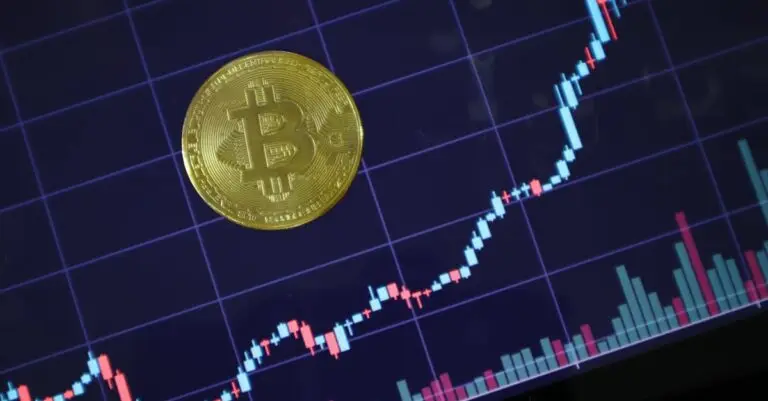
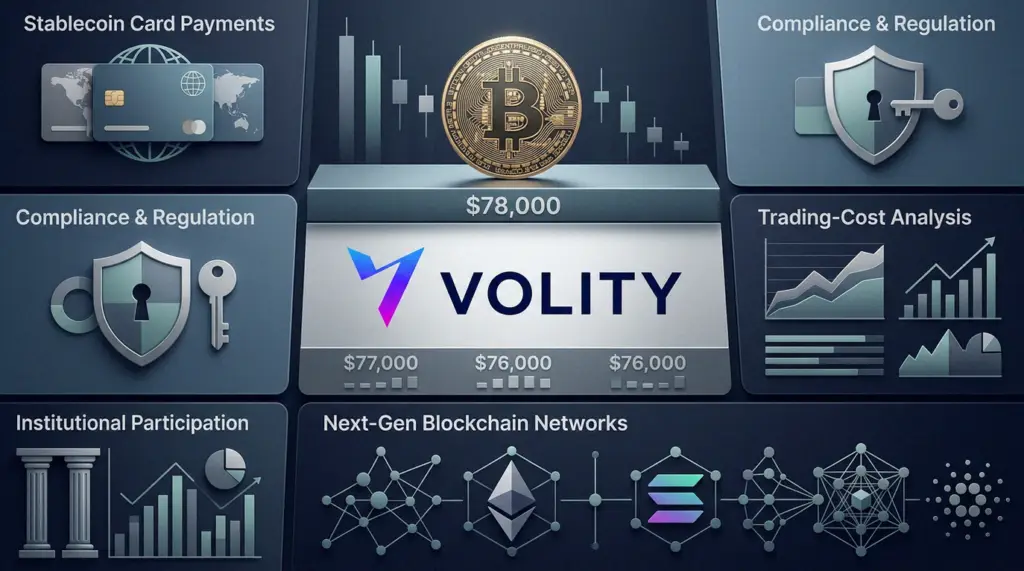
Bitcoin’s $78,000 to $78,200 range has become the market’s main line of defence. However, derivatives data suggests heavy liquidation risk sits nearer $76,000.
A break below $78,000 could pull short-term sellers towards $77,000. Therefore, a decisive move through $76,000 would matter far more than an ordinary intraday wobble.
The longer-term bitcoin story remains intact for many investors. Yet crowded positioning can make even a healthy correction feel brutal.
Liquidations tend to feed on themselves during thin trading periods. As prices fall, leveraged long positions close automatically, adding more sell orders to the book.
Traders using leverage should check their liquidation prices before the market checks them first. Limit orders may also offer a cheaper route into a volatile range.
Levels in focus
- $80,000 – first area where momentum buyers could regain control.
- $78,000 to $78,200 – immediate support zone under pressure.
- $77,000 – first downside target if support fails.
- $76,000 – liquidation-heavy area with greater cascade risk.
Visa makes stablecoins feel more ordinary
Far from bitcoin’s price drama, Visa continues building a quieter payment story. The company now has more than 160 stablecoin-linked card programmes operating globally.
Payment volume on those cards rose nearly 200% year-on-year during Visa’s fiscal second quarter of 2026. That growth does not make stablecoins risk-free. However, it shows that card issuers see demand beyond speculative trading.
Most programmes let customers spend USDC or similar tokens at the point of sale. Meanwhile, merchants receive conventional currency through conversion and settlement systems behind the scenes.
That arrangement matters because it removes friction for merchants. They need not hold crypto, manage private keys, or alter their accounting systems.
Stablecoins increasingly serve fintechs as working capital and settlement tools. Therefore, their value may rest less on retail enthusiasm than on payment utility.
For investors, the important shift is structural. Stablecoins are moving from trading screens towards wallets, cards and treasury operations.
Fees can quietly erase a trading edge
Exchange fees remain one of crypto’s least glamorous risks. Yet they can decide whether an active strategy makes money after costs.
Base spot maker fees across major centralised exchanges range from zero to roughly 0.60%. Taker fees range from about 0.04% to 1.20%.
A maker order adds liquidity, usually through a limit order that waits in the book. By contrast, a taker order fills immediately and removes available liquidity.
Exchanges often reward makers with lower charges because they improve market depth. Consequently, frequent traders should inspect fee schedules as closely as chart patterns.
- MEXC offers zero maker fees on some spot and USDT futures products.
- Coinbase Advanced can charge roughly 0.60% maker and 1.20% taker fees at lower volumes.
- Grid strategies face particular pressure, because repeated fills magnify small fee differences.
- Swing traders can often reduce costs by staging entries with limit orders.
In bitcoin’s current $76,000 to $80,000 range, rushed market orders can prove costly. However, a limit order carries its own risk: it may never fill.
Europe moves from rules to enforcement
European crypto regulation is becoming more practical and less theoretical. Italy, Sweden, France and Germany each illustrate a different side of that change.
Italy’s central bank is demanding tighter checks on crypto transfers. The focus includes anti-money-laundering controls across both custodial and non-custodial channels.
Meanwhile, Sweden’s tax authorities ordered six crypto firms to pay an additional $56 million in taxes. The message is clear: authorities increasingly treat crypto activity like any other taxable financial business.
France faces a reported $9.4 billion crypto tax-reporting test, as officials seek to match activity with declarations. In Germany, debate over bitcoin taxation has also intensified after AfD’s election performance.
These developments matter beyond local headlines. Therefore, platforms may face higher reporting costs, while users face closer scrutiny of transfers and realised gains.
Corporate buyers and banks choose cautious exposure
Corporate accumulation continues, although it remains selective. Boyaa Interactive added 205 bitcoin, lifting its reported holdings to 4,316 BTC.
That purchase supports the familiar treasury argument for bitcoin. However, most companies still prefer modest allocations or indirect exposure.
Brazilian banks offer crypto services while keeping no direct crypto exposure on their own balance sheets. That model lets them collect fees without carrying bitcoin’s daily price risk.
Elsewhere, HashKey Cloud joined a Bitcoin staking launch on Stacks. Switzerland’s CHFD stablecoin also entered testing with nine domestic institutions.
None of those projects will move bitcoin this afternoon. Yet together they build the settlement, custody and compliance systems that larger investors expect.
Networks prepare for heavier use
Protocol developers are also looking beyond the current trading session. Ethereum is targeting a quantum-resistant layer-1 by 2029, reflecting growing concern about future computing power.
Solana’s v1 upgrade reportedly tripled transaction capacity. Meanwhile, Cardano released node 11.1.1 before its planned Dijkstra upgrade.
Investors should not treat every software release as a buy signal. Nevertheless, faster networks and lower congestion reduce a genuine obstacle for institutional on-chain activity.
What traders should watch
- Bitcoin at $78,000 – a firm recovery could steady sentiment, while a break raises the odds of a move towards $76,000.
- Stablecoin payment expansion – Visa’s card growth may encourage banks to offer crypto services without holding volatile assets.
- European enforcement – tax demands and transfer checks could become templates for other jurisdictions.
- Trading costs – frequent traders should compare maker and taker fees before volatility raises the price of impatience.
Bitcoin’s next few thousand dollars will command the headlines. Still, the more durable story lies beneath the candles: cards, custody, tax reporting and payment rails are becoming harder to ignore.