Reading and trading forex pairs carries substantial risk including the loss of your entire account balance. The base and quote relationship can shift rapidly, generating rapid losses on leveraged positions. Bid-ask spreads widen during low-liquidity sessions, reducing your ability to exit at intended prices. Currency correlations change over time, destroying hedging strategies built on historical relationships. Past performance is not indicative of future results. Capital at risk.
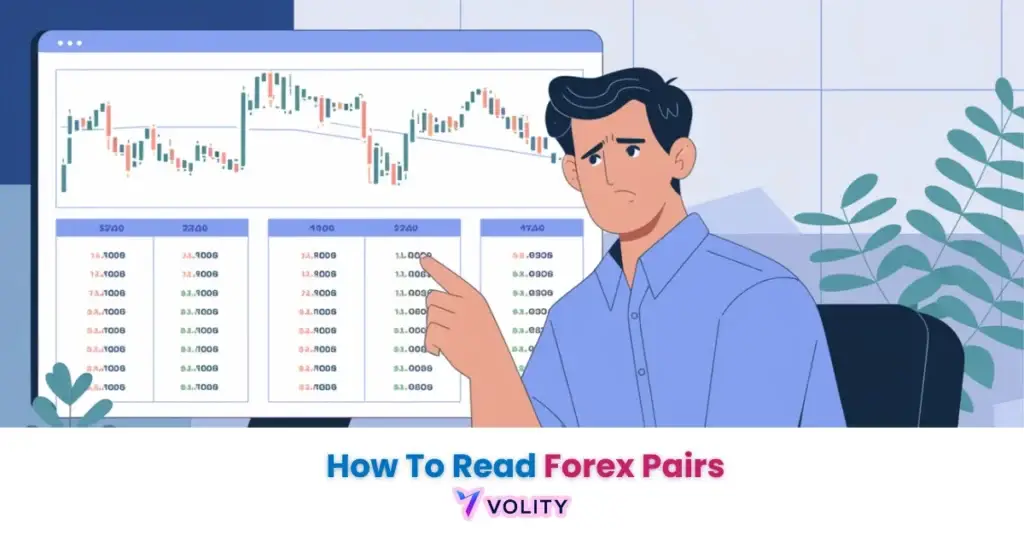
Reading a forex pair involves interpreting the value of one currency relative to another, where the first listed is the base and the second is the quote. The exchange rate indicates exactly how much of the quote currency is required to purchase a single unit of the base. In 2026, understanding this relationship is critical for navigating the $9.6 trillion daily global market and identifying profitable trend directions.
How to read forex pairs begins with identifying the “Base” currency on the left and the “Quote” currency on the right. This structural convention allows traders to determine the purchasing power of their capital across different global jurisdictions. It provides a standardized framework for measuring economic strength and policy effectiveness.
The 2026 financial environment features increased correlation between currency pairs and digital asset classes. Mastering the nuances of pair reading enables participants to hedge against inflation and capitalize on geopolitical shifts with institutional precision. Major pairs still account for over 80% of total market turnover (BIS, 2026).
While understanding Forex is important, applying that knowledge is where the real growth happens. Create Your Free Forex Trading Account to practice with a free demo account and put your strategy to the test.
What are forex pairs and how are they structured?
A forex pair is a price quote of the exchange rate between two different currencies that identifies the value of the base relative to the quote. Every forex quote contains exactly two currencies, structured in a consistent format that allows traders across the globe to agree on valuation. This standardization eliminates ambiguity in international commerce.
Forex pairs follow an ISO currency code convention with four characters total:
- The Base Currency appears first and represents the fixed unit of one.
- The Quote Currency appears second and represents the variable price paid for that unit.
- Major pairs use ISO codes like EUR, USD, GBP, and JPY.
The Bank for International Settlements (BIS) 2026 data confirms that EUR/USD remains the most liquid pair, with an average bid-ask spread of 0.1 pips during London/NY overlap (BIS, 2026). This liquidity makes EUR/USD the most tradeable pair for beginners and professionals alike.
The Exchange Rate: Measuring Value
The exchange rate is the numerical value that represents the amount of quote currency required to buy one unit of the base currency. When you see EUR/USD quoted at 1.1000, this means exactly one Euro costs 1.10 US Dollars. This relationship reveals which currency is stronger and which is weaker at any moment in time.
A rising exchange rate indicates that the base currency is gaining value relative to the quote. If EUR/USD moves from 1.1000 to 1.1100, the Euro has strengthened because you now need more Dollars to buy the same Euro. Conversely, a falling exchange rate indicates weakness in the base currency. Understanding this directional relationship is the foundation of all forex trading decisions.
Ready to Elevate Your Trading?
You have the information. Now, get the platform. Join thousands of successful traders who use Volity for its powerful tools, fast execution, and dedicated support.
Create Your Account in Under 3 MinutesMajor, Minor, and Exotic Pairs: What’s the difference?
Currency classification identifies the liquidity, volatility, and trading costs associated with different pair categories. The market divides pairs into three tiers based on trading volume and economic significance. This structure determines which pairs offer tight spreads and which carry extreme transaction costs.
Major pairs consist of the most liquid global currencies paired with the US Dollar. EUR/USD, USD/JPY, and GBP/USD represent the most frequently traded instruments globally. These pairs offer minimal spreads (0.0-0.2 pips) and attract both retail and institutional traders continuously.
Minor pairs, also called crosses, exclude the US Dollar and pair major currencies against each other. GBP/EUR, EUR/JPY, and AUD/JPY represent this category. Minor pairs offer moderate liquidity with spreads between 1.5-3.0 pips but attract fewer traders than major pairs.
Exotic pairs pair a major currency with a developing economy currency. USD/MXN (Mexican Peso), USD/TRY (Turkish Lira), and USD/ZAR (South African Rand) represent exotic pairs. In 2026, exotic pairs represent less than 10% of retail volume but account for 40% of stop-out liquidations due to extreme volatility. Most Widely Traded Currency Pairs explains liquidity variations across all major pairs. European Central Bank Forex Pair Classification provides detailed definitions of each pair category.
How do you read a forex quote for a buy vs. sell trade?
Trade execution identifies whether a participant is betting on the base currency’s strength or its weakness relative to the quote. Every forex trade involves a directional choice, you are either buying the base and selling the quote, or vice versa. Understanding this relationship unlocks profitable entry logic.
Going Long (buying) means you expect the base currency to rise against the quote. If you buy EUR/USD at 1.1000, you profit when the pair rises to 1.1100 because your Euro is now worth more Dollars. This trade generates profit when the exchange rate increases.
Going Short (selling) means you expect the base currency to fall against the quote. If you sell EUR/USD at 1.1000, you profit when the pair falls to 1.0900 because you sold high and bought back low. This trade generates profit when the exchange rate decreases. How to Read Forex Quotes provides detailed guidance on reading quote symbols and executing directional trades.
Real trading example: The Reserve Bank of Australia raised rates while the US Fed held steady, creating a “Buy” signal on AUD/USD. The rate moved from 0.6500 to 0.6700, resulting in a 200-pip gain for long positions. Past performance is not indicative of future results.
Understanding Bid-Ask Spreads and Trading Costs
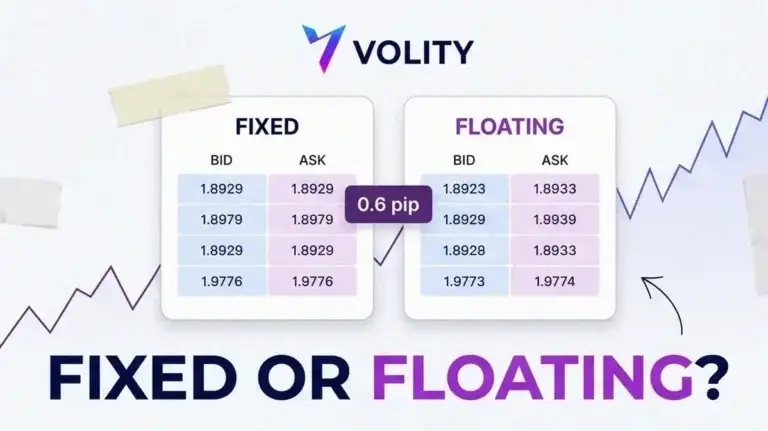
Market spreads identify the transaction cost of entering a forex pair, determined by the gap between the bid and ask prices. The bid represents the price at which the market will buy from you; the ask represents the price at which you can buy from the market. Every trade involves entering at the ask (for buys) and exiting at the bid (for sells), guaranteeing a loss of the spread amount.
| Pair Type | Example | Typical Spread (2026) | Liquidity Level | Volatility Risk |
| Major | EUR/USD | 0.0 – 0.2 Pips | Ultra-High | Low-Medium |
| Minor | GBP/JPY | 1.5 – 3.0 Pips | Medium-High | High |
| Cross | EUR/AUD | 1.0 – 2.5 Pips | Medium | Medium |
| Exotic | USD/TRY | 50.0 – 200.0 Pips | Low | Extreme |
| Commodity | AUD/USD | 0.5 – 1.2 Pips | High | Medium |
Source: Average spreads compiled from top-tier 2026 ECN broker liquidity pools.
Spread variation directly impacts profitability. A EUR/USD trade with a 0.1 pip spread costs far less than an exotic pair with a 100-pip spread. Professional traders choose pairs based on spread efficiency, selecting major pairs for scalping and tighter risk management, while avoiding exotics except for rare, high-conviction positions.
Why do currency relationships and correlations matter?
Currency correlation identifies the statistical relationship between two pairs and how they move in tandem or opposition. Understanding correlations prevents traders from unknowingly doubling their exposure to a single currency. This risk management tool separates professional portfolios from reckless speculation.
Positive correlation shows two pairs moving in the same direction. EUR/USD and GBP/USD often rise and fall together because both depend on the strength of the Euro and Pound against the Dollar. Trading both simultaneously doubles your risk without doubling your potential insight.
Negative correlation shows two pairs moving in opposite directions. USD/CHF (Swiss Franc) and EUR/USD move opposite because the Franc strengthens when the Euro weakens. Using negatively correlated pairs hedges your portfolio, profit from one pair offsets losses from the other. DailyFX Currency Correlation Guide provides real-time correlation data for 2026 pair relationships. Risk Management explains how to use correlations to reduce account drawdowns.
Turn Knowledge into Profit
You have done the reading, now it is time to act. The best way to learn is by doing. Open a free, no-risk demo account and practice your strategy with virtual funds today.
Open a Free Demo AccountTips for Choosing the Right Forex Pair to Trade
Strategic pair selection identifies the best trading opportunities based on session liquidity and economic volatility. Profitable traders choose pairs that match their timeframe and capital size. A beginner with $500 should avoid exotics entirely and focus on major pairs only.
Trading during the “London/New York Overlap” (13:00-17:00 UTC) provides the tightest spreads and highest liquidity. This 4-hour window offers the best conditions for any pair, especially for beginners learning price action. Avoiding illiquid exotics during holiday periods protects your account from flash crashes and execution slippage.
Pair selection should also consider your risk capital. Major pairs allow 100:1 leverage with tight stops; exotic pairs require 20:1 leverage with loose stops, exposing smaller accounts to margin calls faster. Forex Trading for Beginners explains pair selection frameworks aligned with account size.
Key Takeaways
- Forex pairs represent the exchange rate between two currencies, with the base currency listed first and the quote currency second.
- The base currency is always equal to one unit, while the exchange rate shows how much of the quote currency is needed to buy it.
- Major currency pairs consist of the most liquid global currencies paired with the US Dollar and offer the lowest trading costs.
- Bid and ask prices create the spread, which is the primary transaction cost for retail forex traders.
- Currency correlations help traders diversify their portfolios by identifying pairs that move in similar or opposite directions.
- Exchange rate movements indicate the relative strength of economies; a rising rate means the base currency is strengthening.
Frequently Asked Questions
This article contains references to forex pairs, currency classification, and Volity, a regulated CFD trading platform. This content is produced for educational purposes only and does not constitute financial advice or a recommendation to buy or sell any currency pair. Pair selection and trading carry substantial risk, particularly with exotic pairs and during low-liquidity sessions. Always verify liquidity conditions and spreads before committing capital. Some links in this article may be affiliate links.