Scalping ohne proprietäre Orderflow-Daten oder Latenz im Millisekundenbereich setzt Trader massivem Slippage und der Prädation durch Market Maker aus; Hochfrequenzverluste beschleunigen sich während der Ankündigungsvolatilität. Day-Trading mit unter 5.000 $ Kapital löst Zwangsliquidationen während normaler Marktvolatilität aus, die Positionsgrößenbestimmung wird unmöglich. Swing-Trading erzeugt Overnight-Gap-Risiko, bei dem Zentralbankankündigungen und geopolitische Schocks ganze wochenlange Gewinne in Sekunden auslöschen. Positionstrading bindet Kapital monatelang und verpasst dabei kurzfristigere Moves mit höherer Überzeugung; erzwungenes Halten während Drawdowns löst emotionale Kapitulationsverkäufe aus. Die niedrigeren Einstiegshürden 2026 haben mehr unterkapitalisierte Scalper auf die Märkte gebracht, die gegen KI-Algorithmen mit Mikrosekunden-Vorteilen konkurrieren. Die Wertentwicklung in der Vergangenheit ist kein Indikator für zukünftige Ergebnisse. Kapital ist gefährdet.
Trader-Typen werden nach ihrem Zeithorizont, ihrer Risikotoleranz und ihrem analytischen Fokus kategorisiert. Im Jahr 2026 wurde die Trading-Landschaft durch Konten mit niedriger Einzahlung bei regulierten Brokern und den Aufstieg des KI-gesteuerten Sentiment-Tradings transformiert. Ob Sie Hochfrequenz-Scalping, Intraday-Day-Trading, mehrtägiges Swing-Trading oder langfristiges Positionstrading wählen, der Erfolg hängt davon ab, Ihr Profil mit Ihrer Kapitalbasis und Ihren Lebensstil-Beschränkungen in Einklang zu bringen.
Trader-Typen fungieren als die primären beruflichen Klassifizierungen an den Finanzmärkten. Diese Profile reichen von ultrakurzfristigen Scalpern, die Mikro-Kursschwankungen anvisieren, bis zu langfristigen Positionstradern, die auf makroökonomische Zyklen fokussiert sind. In der Trading-Landschaft von 2026 ist die Wahl eines Stils, der zu Ihrem psychologischen Profil passt, der größte einzelne Bestimmungsfaktor für langfristige Profitabilität.
Der Aufstieg der Retail-Automatisierung und die Abschaffung traditioneller „Wohlstandsbarrieren“ haben den Zugang zu professionellen Strategien demokratisiert. Der Erfolg im Jahr 2026 erfordert es, über einfache Stildefinitionen hinaus zu einem tiefen Verständnis der Kapitalanforderungen und der für jedes Profil spezifischen technologischen Werkzeuge zu gelangen.
Das Verständnis von Types of Traders ist wichtig, doch echtes Wachstum entsteht erst durch die Anwendung dieses Wissens. Kostenloses Forex-Handelskonto erstellen, um mit einem kostenlosen Demokonto zu üben und Ihre Strategie zu testen.
Was sind die vier wichtigsten Trader-Typen im Jahr 2026?
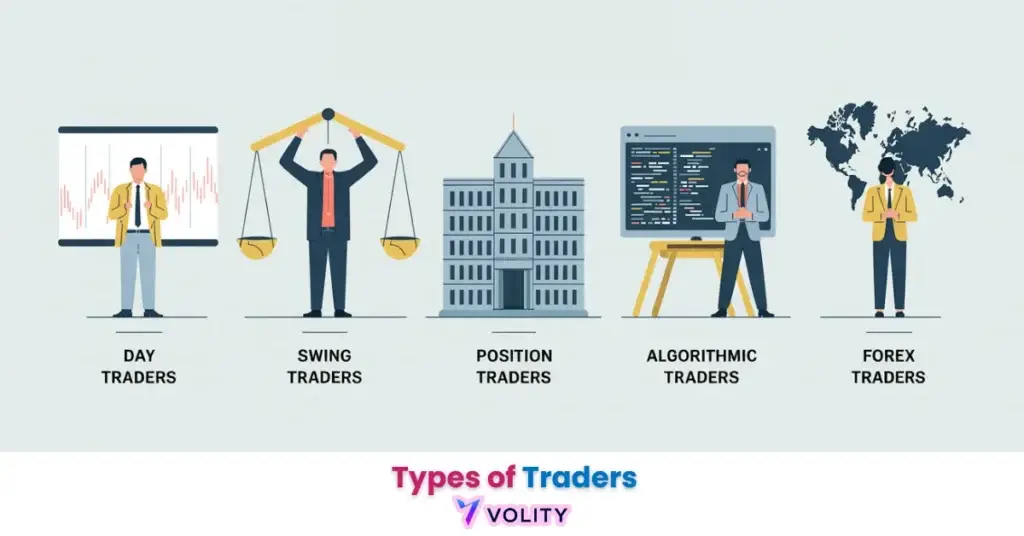
Trading-Profile identifizieren die vier primären Methoden der Marktteilnahme: Scalper, Day-Trader, Swing-Trader und Positionstrader. Jedes Profil operiert über verschiedene Zeitrahmen und trägt eigene psychologische und Kapitalanforderungen. Das Klassifizierungssystem spiegelt nicht nur die Haltedauer wider, sondern auch den gesamten für den Erfolg erforderlichen Zeitaufwand.
- Scalper: Hochfrequenzausführung auf 1m-5m-Charts für Gewinne von 5-10 Pips.
- Day-Trader: Schließen aller Positionen vor dem Sitzungsschluss, um das Overnight-Risiko zu vermeiden.
- Swing-Trader: Halten für 2-5 Tage, um mehrtägige Kurs-„Schwankungen“ zu erfassen.
- Positionstrader: Langfristige Allokation auf Basis von Makro-Fundamentaldaten (Monate bis Jahre).
Personen im Alter zwischen 25 und 34 Jahren repräsentieren 2026 derzeit etwa 40 % der globalen Day-Trading-Population (BestBrokers, 2026). Diese demografische Verzerrung spiegelt den Wandel hin zur Mobile-First-Ausführung und zur 24/7-Marktverfügbarkeit wider. Jüngere Trader sind mit Echtzeit-Marktdaten aufgewachsen und haben keine psychologische Verankerung an traditionelle Handelszeiten.
Der Anstieg des 24/7-Retail-Traders
Die Retail-Demografie identifiziert den „Jugendanstieg“ von 2026, bei dem Teilnehmer unter 30 nun fast 48 % der gesamten Marktaktivität in Schwellenregionen ausmachen. Der Wandel zur Mobile-First-Ausführung erlaubt es Tradern, Positionen von überall zu überwachen und beseitigt die schreibtischgebundenen Beschränkungen des traditionellen Day-Tradings. Wie 24/7-Märkte (Krypto/ETFs) das „Wochenend-Gap“-Risiko beseitigt haben, entfernt eine der ältesten Trading-Gefahren, Positionshalter sehen sich keinen Montags-Schock-Gaps mehr durch über das Wochenende veröffentlichte Nachrichten gegenüber.
Bereit, Ihr Trading auf das nächste Level zu bringen?
Sie haben das Wissen. Jetzt fehlt die Plattform. Schließen Sie sich Tausenden erfolgreichen Tradern an, die Volity für leistungsstarke Tools, schnelle Ausführung und engagierten Support nutzen.
Erstellen Sie Ihr Konto in unter 3 MinutenTiefenanalyse: Scalping und Day-Trading in 2026
Der Zugang zum Retail-Day-Trading hat sich 2026 deutlich geöffnet: Regulierte Broker bieten Konten mit niedriger Einzahlung, sodass man mit kleinen Beträgen starten kann. Im EWR und im Vereinigten Königreich gibt es keinen Mindestkontostand vom Typ Pattern Day Trader; ESMA und FCA regulieren das Day-Trading über Hebelobergrenzen und Negativsaldoschutz. Der erweiterte Zugang zum Day-Trading zeigte, wie hohe Mindestkontostände ein zweistufiges Trading-System schaffen können, in dem nur gut kapitalisierte Teilnehmer intraday teilnehmen. Echtzeit-Margin demonstriert den Wandel von einem Dollar-Boden zu einem risikobasierten Margin-Rahmen, bei dem Broker die Overnight-Kaufkraft auf Basis der tatsächlichen Volatilität und des Hebels der Positionen berechnen. Scalping im Jahr 2026 erfordert eine Ausführung mit ultraniedriger Latenz, und KI-Alarme sind für den Hochfrequenzerfolg obligatorisch, reine menschliche Reflexe können nicht mit Algorithmen konkurrieren, die im Millisekundenbereich operieren.
Im EWR und im Vereinigten Königreich gibt es keinen Mindestkontostand vom Typ Pattern Day Trader für das Day-Trading: ESMA und FCA regulieren den Zugang über Hebelobergrenzen und Negativsaldoschutz, und regulierte Broker bieten Konten mit niedriger Einzahlung, was den Zugang zum Intraday-Trading für Retail-Teilnehmer erweitert.
Forex-Trading für Anfänger bietet grundlegenden Kontext für jene, die mit diesem Stil neu sind.
Der Stilvergleich 2026
Die vergleichende Analyse der Handelsstile identifiziert eine klare Hierarchie der Kapitalbedürfnisse und psychologischen Anforderungen für jedes Marktprofil. Die Kapitalanforderungen spiegeln nicht nur das zum Traden benötigte Minimum wider, sondern den realistischen Betrag, der erforderlich ist, um Konto-Drawdowns ohne Zwangsliquidation zu überstehen. Der Erfolg auf jeder Ebene erfordert die Anpassung der Kapitalallokation an die Volatilität und Handelsfrequenz des Stils.
| Trader-Typ | Typischer Zeitrahmen | Fokusbereich | Overnight-Risiko |
| Scalper | 1m – 5m | Orderflow | Keins |
| Day-Trader | 15m – 1H | Chartmuster | Keins |
| Swing-Trader | 4H – täglich | Trends/Events | Hoch |
| Positionstrader | Täglich – wöchentlich | Makro/Zinsen | Sehr hoch |
| Sentiment | Ereignisgesteuert | Soziale/KI-Daten | Variiert |
Im Markt von 2026 ist Swing-Trading der „optimale“ Stil für Personen mit Vollzeitjobs; der Fokus auf Tages- und 4-Stunden-Charts erlaubt es Ihnen, das Rauschen der KI-Hochfrequenzausführung herauszufiltern, das oft Intraday-Day-Trader fängt.
Strategie
Die Lebensstil-Ausrichtung identifiziert den Prozess der Anpassung des Tagesablaufs und der psychologischen Risikotoleranz eines Traders an den passenden Markt-Zeitrahmen. Diese Ausrichtung ist das Fundament für nachhaltigen Trading-Erfolg. Der Versuch zu scalpen, während Sie einen 9-bis-17-Uhr-Job ausüben, erzeugt psychologischen Druck und schlechte Entscheidungsfindung.
Der „Teilzeit“-Profi: Warum Swing-Trading der Standard für jene mit 9-bis-17-Uhr-Karrieren ist, Sie können Charts am Abend analysieren und Trades am folgenden Tag ohne ständige Überwachung ausführen. Der „Vollzeit“-Schliff: Der hohe Stress und die für das Intraday-Scalping erforderliche Konzentration führen dazu, dass viele Trader innerhalb von sechs Monaten einen Burnout erleben. Der „passive“ Allokator: Die Nutzung des Positionstradings zum Aufbau langfristigen Wohlstands ohne Bildschirmmüdigkeit erlaubt es Tradern, normale Schlafzyklen beizubehalten und die psychologischen Kosten ständiger Entscheidungsfindung zu vermeiden.
Ein Retail-Trader versuchte, den 1-Minuten-Chart während einer wichtigen Fed-Ankündigung 2026 mit 2.000 $ Kapital zu scalpen. Hohe Volatilität verursachte einen Slippage von 15 Pips auf einer Market-Order, was zu einem sofortigen Konto-Drawdown von 10 % führte, bevor sich der Trend überhaupt bildete. Die Wertentwicklung in der Vergangenheit ist kein Indikator für zukünftige Ergebnisse.
WARNUNG: Im EWR und im Vereinigten Königreich gibt es keinen regulatorischen Mindestkontostand für das Day-Trading, doch der Versuch, mit zu geringem Kapital day zu traden, erhöht das Risiko einer sofortigen Kontoliquidation während Ereignissen hoher Volatilität.
Der Aufstieg des Sentiment- und KI-gesteuerten Traders
Die KI-gestützte Forschung identifiziert den Trend von 2026, bei dem Trader das Scraping unstrukturierter Daten nutzen, um verborgene Marktkorrelationen zu finden. Soziale Scraper nutzen KI, um das Reddit/Twitter-Sentiment auf Momentum-Signale zu verfolgen und identifizieren retail-getriebenes Kaufen oder Verkaufen, bevor sich diese Moves auf traditionellen Charts manifestieren. Korrelations-Bots finden Verbindungen zwischen Anleiherenditen und Aktien-Ausbrüchen in Millisekunden und nutzen die Verzögerung zwischen der Veröffentlichung fundamentaler Daten und der Kursreaktion aus. Das „hybride“ Profil kombiniert die menschliche Entscheidungsfindung mit KI-generierten Watchlists und nutzt Algorithmen, um Tausende potenzieller Trades zu screenen, und menschliches Urteilsvermögen, um die Ausführung zu validieren.
Fortgeschrittene technische Analyse untersucht, wie moderne technische Werkzeuge sich mit KI-Sentiment-Daten integrieren.
💡 KERNAUSSAGE: Sentiment-Trader repräsentieren die am schnellsten wachsende Demografie 2026 und nutzen KI-Werkzeuge, um soziale Medien und Nachrichtendaten nach „Momentum-Bursts“ zu durchsuchen, die außerhalb traditioneller technischer Muster auftreten.
Wissen in Gewinn verwandeln
Sie haben gelesen, jetzt ist es Zeit zu handeln. Der beste Weg zu lernen ist durch Praxis. Eröffnen Sie ein kostenloses, risikofreies Demokonto und üben Sie Ihre Strategie noch heute mit virtuellem Guthaben.
Kostenloses Demokonto eröffnenHäufige Misserfolge
Die Stil-Diskrepanz identifiziert den primären technischen Fehler, bei dem Trader Hochfrequenz-Setups auf ein langfristiges Positionstrading-Konto anwenden. Übertrading repräsentiert die Versuchung des Day-Traders, Setups mit niedriger Überzeugung einzugehen, nur weil der Zeitrahmen bequem ist, mehr Trades bedeuten nicht mehr Profit. Geduldsmüdigkeit beschreibt den Swing-Trader, der bei einem 15-Minuten-Pullback in Panik gerät und einen mehrtägigen Gewinner vorzeitig verlässt, weil kurzfristige Volatilität emotionale Ausstiege auslöste.
Risikomanagement im Trading und Forex-Trading für Anfänger behandeln beide, wie man diese häufigen Misserfolge durch strukturiertes Positionsmanagement verhindert.
Wichtige Erkenntnisse
- Trader-Typen werden nach ihren Haltedauern, ihrer Handelsfrequenz und den spezifischen technischen oder fundamentalen Werkzeugen, die sie priorisieren, kategorisiert.
- Swing-Trading ist die optimale Wahl für Personen mit Vollzeitkarrieren und nutzt Charts höherer Zeitrahmen, um mehrtägige Kursbewegungen zu erfassen.
- Im EWR und im Vereinigten Königreich gibt es keinen Mindestkontostand vom Typ Pattern Day Trader für das Day-Trading; regulierte Broker bieten Konten mit niedriger Einzahlung unter den Hebelobergrenzen von ESMA und FCA.
- Scalping bleibt der intensivste Handelsstil und erfordert eine Ausführung mit ultraniedriger Latenz und ständige Konzentration auf die Price-Action von 1 bis 5 Minuten.
- Sentiment-Trading ist eine schnell wachsende Kategorie von 2026, die das KI-Scraping sozialer Medien mit traditionellen technischen Mustern für Momentum-Einstiege integriert.
- Die Warnung vor Stil-Diskrepanz weist darauf hin, dass die Anwendung von Hochfrequenztaktiken auf langfristige Konten eine führende Ursache für das Scheitern von Retail-Portfolios ist.
Häufig gestellte Fragen
Dieser Artikel enthält Verweise auf Trader-Typen, Day-Trader, Swing-Trader, Scalper, Positionstrader, Sentiment-Trader und Volity, eine regulierte CFD-Handelsplattform. Dieser Inhalt wird ausschließlich zu Bildungszwecken erstellt und stellt keine Finanzberatung oder Empfehlung zum Kauf oder Verkauf eines Finanzinstruments dar. Überprüfen Sie immer den aktuellen Regulierungsstatus und die Plattformdetails, bevor Sie einen Handelsdienst nutzen. Einige Links in diesem Artikel können Affiliate-Links sein.