El uso de órdenes limitadas no elimina el riesgo de ejecución ni garantiza que las operaciones se completen al precio deseado. Los huecos de mercado pueden provocar que su precio límite sea ignorado por completo durante las sesiones nocturnas o ante noticias importantes. Las órdenes limitadas pueden quedar sin ejecutar si la liquidez se agota en su nivel objetivo, lo que causa oportunidades perdidas. El apalancamiento amplifica tanto las ganancias como las pérdidas, independientemente del tipo de orden. El rendimiento pasado no es indicativo de resultados futuros. Capital en riesgo.
Una orden limitada es una instrucción de negociación especializada que especifica el precio máximo que un operador está dispuesto a pagar para comprar, o el precio mínimo que está dispuesto a aceptar para vender. A diferencia de las órdenes de mercado, las órdenes limitadas priorizan la certeza del precio sobre la velocidad de ejecución, asegurando que una posición solo se abra a una tasa favorable. En 2026, dominar la colocación de órdenes limitadas es esencial para minimizar el deslizamiento (slippage) y optimizar los puntos de entrada en mercados electrónicos de alta volatilidad.
Una orden limitada identifica el umbral de precio específico necesario para activar una operación dentro del libro de órdenes de un bróker. Este mecanismo permite a los participantes del mercado realizar entradas «pasivas», esperando a que el precio alcance su nivel deseado en lugar de perseguir el impulso. Sirve como el bloque de construcción fundamental para estrategias de trading avanzadas, tanto automatizadas como discrecionales.
El panorama de trading de 2026 requiere un alto nivel de disciplina en la ejecución para combatir la creciente fricción en las transacciones dentro de mercados fragmentados. Dominar los matices de las órdenes limitadas permite a los participantes navegar por los huecos de liquidez y mantener ratios de riesgo-beneficio consistentes.
Comprender Forex es importante, pero el verdadero crecimiento llega al aplicar ese conocimiento. Cree su cuenta de trading de forex gratuita para practicar con una cuenta demo gratuita y poner a prueba su estrategia.
¿Qué es una orden limitada y cómo funciona?
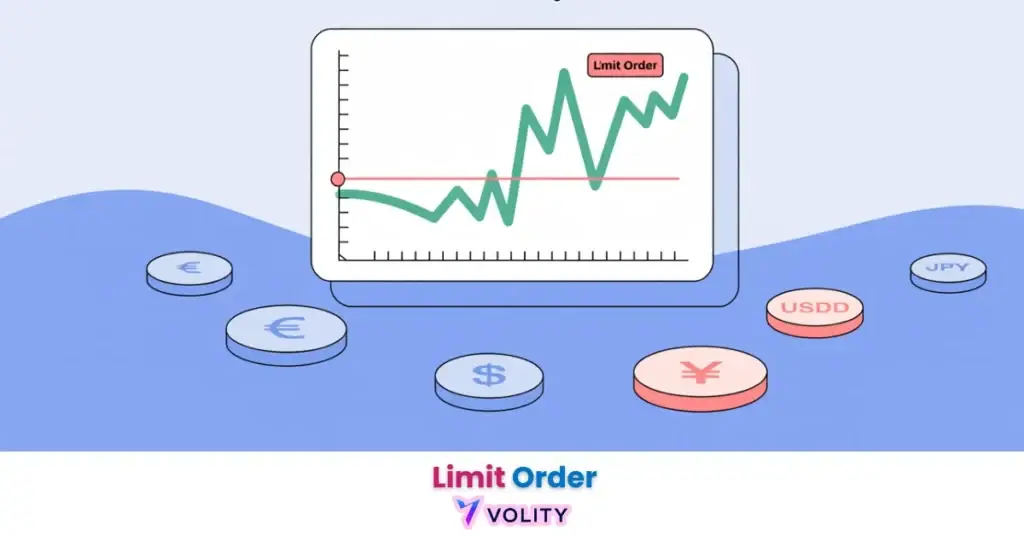
Una orden limitada es una instrucción de negociación condicional que identifica el precio máximo o mínimo al que se puede comprar o vender un valor. La orden permanece inactiva hasta que el precio de mercado toca el nivel especificado, momento en el cual el bróker intenta completar la operación. Este proceso de dos etapas otorga a los operadores un control total sobre su coste de entrada.
Tres mecanismos fundamentales definen cómo funcionan las órdenes limitadas:
- Certeza del precio frente a certeza de ejecución: Las órdenes limitadas priorizan la tasa sobre la ejecución garantizada. Usted obtiene el precio que desea, pero es posible que el mercado no ofrezca suficiente liquidez para completar toda su posición.
- El libro de órdenes: Las órdenes limitadas proporcionan liquidez al mercado al esperar a las contrapartes. Cuando coloca una orden de compra limitada por debajo del precio actual, se convierte en un «creador de mercado» (Market Maker) que ofrece comprar a ese nivel, y el bróker le acredita reembolsos por creación de mercado en algunas plataformas de 2026.
- «Precio o mejor»: Su orden limitada puede ejecutarse a un precio mejor que el especificado. Una orden de compra limitada a 1,0800 podría ejecutarse a 1,0795 si los precios de mercado caen más profundamente durante un pico de volatilidad.
En 2026, las órdenes limitadas representan el 92 % de la «liquidez en reposo» en los principales pares de divisas, formando los niveles estructurales de soporte y resistencia que se observan en los gráficos (Investopedia, 2026). Esta concentración masiva de volumen crea reacciones de precio predecibles cuando se pone a prueba el soporte o la resistencia.
Órdenes de compra limitada frente a órdenes de venta limitada
Las órdenes de compra limitada identifican entradas por debajo del precio actual de mercado, mientras que las órdenes de venta limitada identifican salidas o entradas por encima del precio actual de mercado. Esta distinción determina si la orden espera de forma pasiva o activa para su ejecución. Comprender esta inversión de dirección es fundamental para evitar ventas en corto accidentales al entrar en posiciones largas.
La lógica se divide en dos caminos: «Comprar en la caída» (Buying the Dip) significa colocar una orden de compra limitada por debajo del precio actual para acumular en momentos de debilidad. «Vender en el repunte» (Selling the Rally) significa colocar una orden de venta limitada por encima del precio actual para salir en momentos de fortaleza o establecer posiciones cortas. Ambas permanecen inactivas hasta que el precio se mueve para activarlas.
¿Listo para llevar su trading al siguiente nivel?
Ya tiene la información. Ahora consiga la plataforma. Únase a miles de traders que usan Volity por sus potentes herramientas, ejecución rápida y soporte dedicado.
Cree su cuenta en menos de 3 minutos¿Cuándo debería utilizar una orden limitada en 2026?
La selección estratégica de órdenes identifica a las órdenes limitadas como la herramienta óptima para entrar en operaciones durante retrocesos o salir en objetivos de beneficio predefinidos. La elección entre órdenes limitadas y de mercado determina si usted sacrifica velocidad por control de precio o acepta el deslizamiento a cambio de una ejecución instantánea.
Las órdenes limitadas destacan en tres escenarios:
- Evitar el deslizamiento (slippage): Las órdenes limitadas son obligatorias durante la publicación de noticias de alto impacto cuando los diferenciales (spreads) se amplían a 20-30 pips. Una orden de mercado durante el NFP podría sufrir un deslizamiento de 50 pips, mientras que una orden limitada permanece pasivamente esperando un precio justo.
- Trading en rangos: El uso de límites en soportes y resistencias horizontales establecidos le permite escalar posiciones metódicamente sin forzar una ejecución instantánea a precios desfavorables.
- Gestión de capital: Calcular el riesgo exacto es posible cuando se fija el precio de entrada por adelantado. Una orden limitada a 1,0800 con un stop 20 pips más abajo crea un riesgo fijo de 20 pips, lo que permite un dimensionamiento preciso de la posición.
El uso de órdenes limitadas en lugar de órdenes de mercado reduce los costes totales de transacción en un promedio de 1,2 pips por operación en el mercado altamente líquido de EUR/USD de 2026 (BIS, 2026). Esta diferencia se acumula a lo largo de cientos de operaciones para mejorar drásticamente los rendimientos anuales.
Orden limitada frente a orden de mercado: diferencias clave
El análisis comparativo de ejecución identifica el equilibrio entre el precio garantizado de una orden limitada y la ejecución garantizada de una orden de mercado. Cada enfoque sirve para diferentes condiciones de mercado, y los operadores profesionales alternan entre ellos según la volatilidad y la urgencia actuales. La elección determina su coste de transacción y la certeza de ejecución.
Dos compensaciones principales definen esta comparación:
- Velocidad de ejecución: Las órdenes de mercado son más rápidas para salidas de emergencia cuando necesita cerrar una posición inmediatamente. Las órdenes limitadas pueden esperar horas o días por el precio objetivo, dejándole expuesto a riesgos continuos.
- Riesgo de deslizamiento: El peligro de la «mejora de precio» frente al «deslizamiento negativo» define el resultado. Una orden de mercado podría ejecutarse más rápido, pero a un precio de 3-5 pips peor. Una orden limitada espera pacientemente y se ejecuta al precio elegido o no se ejecuta en absoluto.
- Costes de transacción: Las órdenes limitadas a menudo incurren en comisiones más bajas o incluso «reembolsos» en algunos exchanges de 2026 porque proporcionan liquidez. Las órdenes de mercado pagan una comisión de «tomador» (taker) porque eliminan liquidez del libro.
Un operador colocó una orden de compra limitada a 0,6500 mientras el precio de AUD/USD estaba en 0,6520. El precio cayó a 0,6499 y la orden se ejecutó exactamente a 0,6500. Una orden de mercado en el mismo momento podría haberse ejecutado a 0,6495 debido a la volatilidad. El rendimiento pasado no es indicativo de resultados futuros.
Cómo establecer un Stop Loss explica cómo las órdenes limitadas se combinan con niveles de stop-loss para crear estructuras de riesgo-beneficio fijas. Combinar una orden de compra limitada con un stop predefinido crea un plan de trading completo antes de que las emociones entren en la ecuación.
Por qué su orden limitada podría no ejecutarse
La identificación de fallos en la ejecución señala las razones comunes por las que un precio puede tocar su nivel límite sin activar la ejecución de la operación. Comprender estos modos de fallo separa a los operadores que culpan a la mala suerte de aquellos que ajustan su estrategia para adaptarse a la mecánica del mercado.
| Razón del fallo | Qué sucede | Impacto en el operador | Solución 2026 |
| Hueco de liquidez | No hay contraparte a su precio | La orden permanece abierta | El enrutamiento inteligente de órdenes distribuye la orden entre varios brókeres |
| Ejecución parcial | Solo se ejecutan algunas unidades | La posición está incompleta | Fill-or-Kill (FOK) asegura todo o nada |
| Alta volatilidad | El precio «salta» su nivel | Oportunidad perdida | Immediate-or-Cancel captura ejecuciones parciales durante huecos |
| Margen de spread | El Bid/Ask no alcanza el límite | Nivel técnicamente alcanzado pero no ejecutado | El acceso a cuenta ECN elimina los spreads de intermediarios |
| Vencimiento temporal | La orden vence (ej. orden diaria) | La orden se cancela automáticamente | Good ‘Til Canceled (GTC) mantiene la orden activa entre sesiones |
Fuente: guía de la FCA sobre transparencia en la ejecución
Que el precio alcance su nivel límite no garantiza la ejecución. Si su límite de compra es 1,0800 pero solo hay 50.000 unidades disponibles a ese precio y el tamaño de su orden es de 500.000 unidades, obtendrá una ejecución parcial. Las 450.000 unidades restantes permanecerán como una orden en reposo esperando a que aparezca más liquidez.
Tipos de órdenes limitadas avanzadas
La identificación de la duración de la orden señala las instrucciones específicas de tiempo en vigor que determinan cuánto tiempo permanece activa una orden limitada en el mercado. Los brókeres modernos ofrecen múltiples opciones de tiempo, y seleccionar la correcta evita que las órdenes se cancelen prematuramente o permanezcan abiertas cuando deberían expirar.
Tres tipos principales de tiempo en vigor controlan el comportamiento de las órdenes limitadas:
- Good ‘Til Canceled (GTC): El estándar para el swing trading a largo plazo. La orden permanece activa durante múltiples sesiones hasta que el precio alcanza el nivel o usted la cancela manualmente, permitiéndole establecer y olvidar entradas durante días.
- Immediate-or-Cancel (IOC): Para precisión algorítmica de alta velocidad. La orden ejecuta lo que se pueda completar inmediatamente y luego cancela cualquier parte no ejecutada, evitando que las ejecuciones parciales queden abiertas.
- Fill-or-Kill (FOK): Asegura un tamaño de posición total o ninguna operación. La orden se completa totalmente o se cancela por completo, evitando posiciones fraccionarias que complican la gestión de la posición.
Las órdenes «Iceberg» profesionales son un tipo de orden limitada especializada en 2026 que oculta el tamaño total de la posición al mostrar solo pequeños fragmentos en el libro de órdenes público. Esto evita que las grandes órdenes institucionales muevan el precio antes de que se complete toda la posición.
Convierta el conocimiento en ganancias
Ya ha leído, ahora es momento de actuar. La mejor manera de aprender es practicando. Abra una cuenta demo gratuita y sin riesgo y practique su estrategia con fondos virtuales hoy mismo.
Abrir una cuenta demo gratuitaCómo colocar una orden limitada en MT4 y MT5
La ejecución en plataforma identifica los pasos específicos necesarios para introducir una «Orden Pendiente» dentro de la interfaz moderna de MetaTrader. MetaTrader domina el trading de forex minorista, y dominar su mecánica de colocación de órdenes garantiza una calidad de ejecución consistente en todas sus operaciones.
Dos pasos principales activan la colocación de una orden limitada:
- Seleccionar «Orden Pendiente» en la ventana de órdenes: Abra la ventana de órdenes, elija «Nueva orden» y luego seleccione «Orden Pendiente» en lugar de «Orden de mercado». Esto cambia la interfaz de solicitar una ejecución inmediata a solicitar condiciones de entrada futuras.
- Elegir entre «Buy Limit» (Compra limitada) y «Sell Limit» (Venta limitada): Especifique su precio de entrada deseado por debajo del mercado actual para límites de compra o por encima del mercado actual para límites de venta. Introduzca su nivel de stop-loss y su nivel de objetivo de beneficio, luego haga clic en «Enviar» para activar.
Forex Trading for Beginners guía a los nuevos operadores a través del flujo de trabajo completo de colocación de órdenes.
Puntos clave
- Las órdenes limitadas proporcionan un control total sobre el precio de ejecución, asegurando que nunca pague más o venda por menos de su objetivo.
- Las órdenes de compra limitada se colocan por debajo del precio actual de mercado para capitalizar retrocesos esperados o niveles de soporte.
- Las órdenes de venta limitada se colocan por encima del precio actual de mercado para apuntar a niveles de resistencia o asegurar beneficios predefinidos.
- El precio frente a la ejecución es la principal compensación; las órdenes limitadas garantizan el precio pero no garantizan que la operación se complete.
- La prevención del deslizamiento es un beneficio principal de las órdenes limitadas, especialmente durante períodos de extrema volatilidad de mercado en 2026.
- Los ajustes de tiempo en vigor como GTC y FOK permiten a los operadores personalizar cuánto tiempo permanecen activas sus instrucciones limitadas.
Preguntas frecuentes
Este artículo contiene referencias a órdenes limitadas, tipos de órdenes y Volity, una plataforma de trading de CFD regulada. Este contenido se produce solo con fines educativos y no constituye asesoramiento financiero ni una recomendación para comprar o vender ningún instrumento financiero. La ejecución de órdenes limitadas depende de la liquidez del mercado y del enrutamiento del bróker; las ejecuciones nunca están garantizadas incluso cuando el precio toca su nivel especificado. Verifique siempre las características de la plataforma y las políticas de ejecución del bróker antes de comprometer capital. Algunos enlaces en este artículo pueden ser enlaces de afiliados.