Investing in financial products involves risk. Losses may exceed the value of your original investment.
Ethereum etfs usdc is a core topic for traders in 2026. The complete guide follows.
Crypto daily: markets roar, institutions pivot, and USDC hits the streets of New York
Bitcoin or Ethereum? The great institutional divide
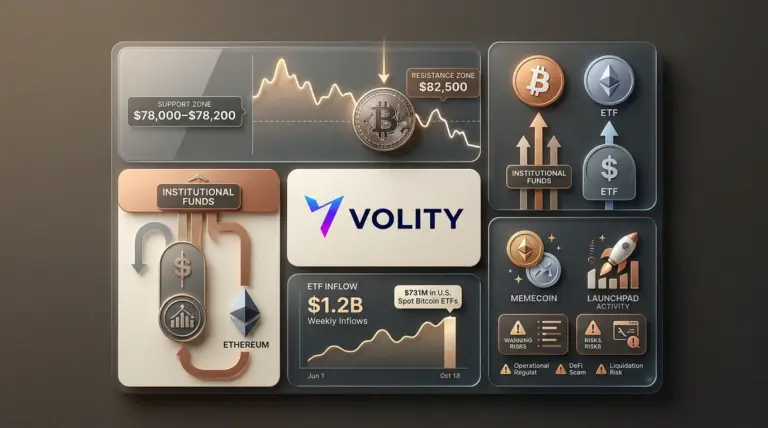
The institutional landscape of crypto is undergoing a seismic shift. Just over a year ago, Bitcoin was the dominant player in asset allocation. Fast forward to October 2025, and Ethereum ETFs are stealing the institutional spotlight. These funds attracted an astonishing $4 billion in net inflows during August, while Bitcoin ETFs faced outflows amounting to $600 million in the same timeframe. Since July, over $10 billion has been funneled into Ether ETFs, signalling a significant realignment in professional investor confidence.What fuels this shift towards Ethereum? It’s about yield, utility, and regulatory clarity:- Yield potential: Ethereum’s Proof-of-Stake allows institutions to secure annual staking yields of 3-4%-a tempting incentive missing in Bitcoin.
- Deflationary advantage: Ethereum’s EIP-1559 mechanism actively burns transaction fees, reducing supply and potentially boosting prices, whereas Bitcoin’s cap remains static.
- Regulatory green light: Recent legislation has recast Ethereum as a utility token, easing institutional adoption and clarifying legal uncertainties.
- Utility glimpse: Ethereum commands a 50% share in real-world asset tokenization and nearly 30% of DEX volume, solidifying its role in on-chain finance.
Wall Street meets Web3: U.S. stablecoin pilot hits the ground in New York
While institutions capture headlines, a trailblazing pilot puts crypto in the hands of everyday New Yorkers. This month, 160 low-income residents will receive $12,000 in USDC, the second-largest stablecoin globally, via a partnership between Coinbase and GiveDirectly.- Mechanics: After a lottery picked 160 participants, each will get $8,000 upfront, followed by five monthly installments of $800. This aims to assess whether a lump sum leads to better financial results compared to regular payments.
- Access and control: Funds will be accessible through Coinbase wallets, offering recipients the freedom to cash out, transfer, or spend without restrictions.
- Pilot objectives: The initiative seeks to evaluate whether stablecoins offer a faster, more efficient alternative to traditional cash welfare and how digital currencies might empower recipients.
Bull signals everywhere: Uptober, price rallies, and dawn of the $1 trillion perps market
October’s reputation as “Uptober” remains intact. On-chain data reveals significant inflows and vigorous trading:- Perpetuals breach the trillion: For the first time, perpetual futures trading volume has exceeded $1 trillion, indicative of heightened speculative interest and evolving market maturity.
- Bitcoin rebounds to $118,000: Spurred by U.S. government shutdown concerns and safe-haven demand, Bitcoin’s impressive resurgence has reignited enthusiasm for altcoins.
- Ethereum surges past $4,400: Driven by ETF inflows and increased staking demand, Ethereum hit a new high, reinforcing its utility narrative.
- Solana reaches $220: Encouraging ETF news has catapulted Solana to record highs, suggesting another wave of institutional fear of missing out.
- Zcash (ZEC) surprises: This privacy coin witnessed a remarkable 150% rise within a week, re-entering the spotlight as momentum builds.
Tokenization and real-world asset revolution: financial system disruption in real time
The emerging consensus that tokenization will transform the financial system has gripped insiders and is now making waves in the mainstream. Robinhood’s latest comments echo a vision where traditional assets will migrate en masse to blockchain-based token frameworks. Leading firms predict that trillions in assets will be tokenized within years. With Ethereum standing as the programmable backbone for these real-world assets, institutions are positioning themselves for exposure to Ether, not merely as a speculative play, but as a calculated investment in the future of finance.This narrative isn’t just conjecture. Stablecoin transaction volumes continue to soar, while DeFi platforms like Pendle and infrastructure providers like Citadel Wallet unveil new solutions aimed at facilitating yield markets and bulk on-chain asset transfers.Security and regulation: a maturing, still risky, new market
However, the crypto world isn’t without its challenges. In September alone, over $127 million was lost to hacks and scams, highlighting the urgent need for robust security measures. The launch of Citadel Wallet’s new ‘Suiball’ hardware wallet, designed for the Sui blockchain, illustrates the push for better self-custody options.Concurrently, regulators are taking note. In Thailand, the SEC is expanding crypto ETF offerings beyond Bitcoin, and broader regulatory frameworks are being developed in Europe and the US. Many institutional players view these changes as beneficial, believing that greater clarity will prompt increased participation.Crypto in October 2025: key takeaways and the road ahead
- Institutions lean towards Ethereum: The pivot from scarcity (Bitcoin) to yield and utility (ETH) signifies a shift in investment strategy.
- Stablecoin pilots change financial aid: New initiatives like the one in New York could revolutionise how aid-and potentially salaries-are delivered.
- Maturation alongside speculation: Record trading volumes, new hardware launches, and regulatory advances highlight a market evolving rapidly despite inherent risks.
- The tokenized future is nearly here: The transition to on-chain settlement for real-world assets indicates that today’s crypto holdings could soon become essential to mainstream portfolios.
For more on this topic see our deep-dives on Crypto Market Outlook: Key Trends for Bitcoin, Ethereum and Pi, BlackRock ETHB Staked Ethereum ETF: Crypto Yield Hunt Goes Mainstream, and Crypto Investment News: DeFi Governance Tokens and Meme Coin Breakouts.
For more on this topic see our deep-dives on BTC, ETH and XRP Outlook: Reading the Big-Three Crypto Signals, Aster Bullish Reversal and Lumera AI Storage Surge: What Investors Watch, and Crypto Market Pressure: HBAR, Bitcoin, and the Recovery Playbook.
What our analysts watch: Three reads decide whether the Ethereum institutional bid persists or fades into the next cycle. Net flow durability against Bitcoin (the ratio of Ethereum to Bitcoin ETF flows on a four-week rolling basis above 1.5 signals the rotation is structural; reversion to a ratio below 0.5 signals the rotation was a single-quarter rebalancing). Real-world asset tokenisation share (Ethereum currently holds roughly 50 percent of the on-chain real-world asset tokenisation market; share growth above 60 percent signals durable institutional conviction in the network as financial infrastructure, share decline below 40 percent signals competitive substitution). Stablecoin pilot adoption (the USDC welfare-payment pilots and similar government-payment integrations are the clearest read on whether the Ethereum-USDC stack is becoming embedded in real-economy payment flows; integration into one or more major payment programmes shifts the structural Ethereum thesis from speculation to infrastructure).
Frequently asked questions
Why did Ethereum ETF inflows overtake Bitcoin ETF inflows in 2025?
Three drivers compounded simultaneously. The Proof-of-Stake yield (3 to 4 percent annualised through the new staking-yield ETF wrappers) creates a fixed-income substitute that Bitcoin structurally cannot match, which materially expands the institutional buyer pool from pure store-of-value allocators to yield-seeking allocators. The EIP-1559 fee-burn produces a deflationary supply mechanism tied to network usage, providing a story that fits the institutional growth-versus-store-of-value framework better than Bitcoin pure scarcity. The CLARITY Act classification removed the residual security-classification risk that had constrained model-portfolio and pension allocations to Ethereum specifically. The Investopedia reference on Ethereum covers the underlying network mechanics.
What is the USDC welfare pilot and why does it matter?
The USDC welfare pilot is the New York City programme that tested distribution of welfare benefits in USDC stablecoin form to recipients selected for the trial, with the underlying transfer running on the Ethereum settlement layer. The structural significance is not the pilot scale (which was small) but the regulatory and operational template it establishes: a U.S. government payment programme settled on a public blockchain through a regulated-issuer stablecoin sets the precedent for federal and state payment programme integration. The Federal Reserve research and policy pages publish the supervisory perspective on payment-stablecoin integration.
How does Ethereum staking yield work inside an ETF wrapper?
The fund holds ETH tokens and delegates them to validators participating in the Ethereum consensus mechanism. Validators earn block rewards and priority-fee tips, which the fund passes through to shareholders net of expenses, typically distributed as monthly cash. The current run-rate is roughly 3 to 4 percent annualised, fluctuating with network usage and validator participation rates. The fund retains custody of the underlying tokens and bears the protocol-level slashing risk if a delegated validator misbehaves; that risk is mitigated through validator selection and stake distribution across operators. Compared to direct staking, the ETF wrapper trades a small fee load for the regulatory wrapper, custody, and standardised tax reporting.
What does it take for the institutional rotation into Ethereum to reverse?
Three credible scenarios. A consensus-mechanism failure that materially reduces network reliability would reset the institutional thesis (technical risk, not currently active). A regulatory action that reclassifies Ethereum away from digital-asset commodity status would reintroduce the constraint (politically unlikely under the CLARITY Act framework, but possible through enforcement edge cases). A competitive layer-one network reaching a credible threshold of institutional adoption could fragment the bid (Solana ETF flows are the clearest near-term test). The SEC market regulation pages document the U.S. policy backdrop and the SEC implementation guidance.Related guides
- Ethereum explained
- Bitcoin explained
- Cryptocurrency trading
- Best crypto investments
- Crypto trading platforms
Volity operates a trading platform and also publishes educational and analytical content about trading. The content on this page is for educational purposes only and should not be considered financial advice. Volity may benefit commercially when readers open trading accounts through links on this site.
Our content is produced and reviewed under documented editorial standards; see our comparison and review methodology.