Investing in financial products involves risk. Losses may exceed the value of your original investment.
Korean fintech merger is a core topic for traders in 2026. The complete guide follows.
**Seoul, November 29, 2025**. South Korea’s financial landscape underwent a seismic shift this week as Naver Financial and Dunamu announced their historic merger, while the cryptocurrency markets continued their volatile dance between institutional enthusiasm and technical headwinds.
The $10.3 billion Korean fintech mega-deal
Naver Financial and Dunamu officially approved their comprehensive stock exchange on November 26, creating what will become Korea’s largest fintech powerhouse valued at approximately 20 trillion won ($10.3 billion). The announcement was significant enough to draw Naver founder Lee Hae-jin before the media for the first time in nine years, his first public appearance since 2016.
Under the agreed terms, Dunamu shareholders will receive 2.54 shares of Naver Financial for every share held. This valuation reflects Dunamu’s estimated 15 trillion won valuation against Naver Financial’s 5 trillion won. The merger transforms the combined entity into a powerhouse pairing Korea’s dominant simple payment processor with Asia’s leading virtual asset exchange, Upbit.
Dunamu Chairman Song Chi-hyung will emerge as the largest shareholder with a 19.5% stake in the merged company, while Naver’s direct equity stake dilutes from 69% to 17%. The completion date is set for June 30, 2026, following regulatory approvals from Korea’s financial authorities and the Fair Trade Commission.
What makes this deal extraordinary is the vision behind it. Both companies aim to construct an integrated “Web3” financial ecosystem that bridges traditional finance infrastructure with blockchain-native capabilities. This positioning directly challenges established fintech players across Asia and beyond.
Solana’s institutional moment, then the stumble
The cryptocurrency sector this week revealed the tension between institutional money and market reality. Solana experienced a seismic shift, with network revenue reaching $2.85 billion annually, outpacing Ethereum’s comparable growth trajectory. Institutional adoption accelerated dramatically, with public companies accumulating nearly $4 billion in SOL holdings.
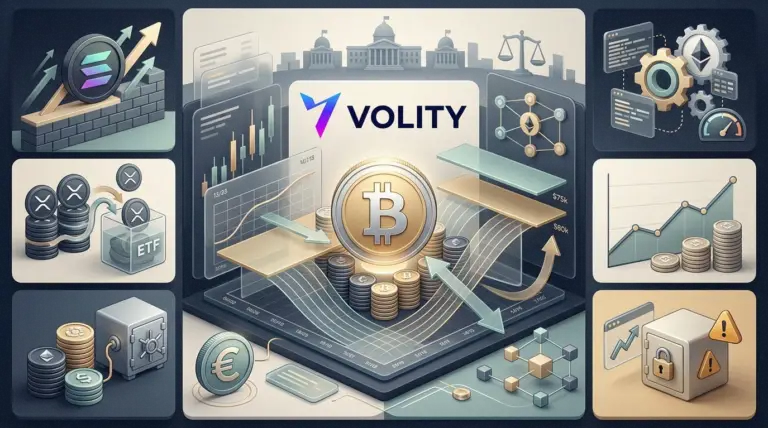
The numbers initially painted an optimistic picture. Through November, Solana’s spot ETFs had accumulated $619 million in historical cumulative net inflows, with the Grayscale SOL ETF (GSOL) commanding $77.83 million and Fidelity’s FSOL adding $32.30 million. On November 28 alone, the ecosystem recorded $5.37 million in net inflows, suggesting continued institutional confidence.
But November 26 delivered a reality check. Solana ETFs posted their first net outflow, declining $8.2 million and ending a 21-day winning streak. The 21Shares TSOL ETF led the exodus with a single-day withdrawal of $34.4 million, enough to overcome inflows from other issuers and flip the entire market negative. This reversal coincided with Upbit’s reported $36 million security breach, linked by South Korean authorities to North Korea’s Lazarus Group.
The technical picture weakened noticeably. Daily active addresses, total value locked, and fee generation all declined, signalling what analysts describe as a cooling phase. SOL price reclaimed $140 but remained underwater relative to its 20-day average of $152 and 50-day average of $168. Most ETF investors held positions acquired near $151, reducing panic selling but also suggesting caution ahead of stronger rebounds.
The infrastructure thesis remains intact
Despite the pullback, structural strengths persist. Solana’s DeFi ecosystem demonstrated resilience with total value locked reaching $11.5 billion in Q3 2025, a 32.7% quarter-over-quarter increase. Protocols like Kamino ($2.8 billion TVL) and decentralised exchanges such as Hyperliquid became increasingly critical nodes in the network’s financial architecture.
The stablecoin market on Solana surged dramatically, with USDC and PYUSD commanding a combined $14.1 billion market capitalisation. This growth reflects genuine demand for fast, low-cost settlement infrastructure, precisely Solana’s competitive advantage.
What distinguishes Solana’s proposition remains compelling: 65,000 transactions per second at a fraction of Ethereum’s cost. Trading platforms like Photon and Axiom captured 39% of Q3 network revenue by leveraging sub-second finality and $0.00025 average transaction fees to process millions of daily trades. The January memecoin frenzy demonstrated this capacity’s real-world value.
Solana’s ETF ecosystem now holds 6.8 million SOL tokens valued around $964 million. Many offerings include staking rewards, which cushion losses and potentially encourage longer holding periods. Yet signs of growing daily volatility point toward cautious positioning ahead. The sharp reversal after strong inflows on November 24-25 suggests institutions are becoming more reactive to disruptions.
For traders tracking this space, the Naver-Dunamu merger represents an inflection point for mainstream adoption in Asia’s 1.3 billion-person market. The combination of Korea’s payment dominance with Upbit’s exchange infrastructure could reshape regional cryptocurrency flows.
Meanwhile, Solana’s technical indicators suggest consolidation rather than capitulation. The ecosystem’s underlying economics, particularly its ability to capture value from high-frequency, low-cost transactions, remain intact. The question now becomes whether recent outflows represent institutional risk reduction or a temporary profit-taking event before the next wave of adoption.
For more on this topic see our deep-dives on Tron USDT Supply Soars: Stablecoin Volume and Counterparty Risks Explained, Ethereum Price Forecast: Strategies Amid ETF Flows and Mining Booms, and Pi Network Price Outlook: Break-Out Catalysts and Levels to Watch.
For more on this topic see our deep-dives on Crypto Market Trends: ETF Flows, Ethereum Breakouts & Top Plays, Crypto News: $50M USDT Heist, UNI Burn Vote, Bitcoin and Token Unlocks, and Dogecoin ETF: How It Works and What It Means for Crypto.
What our analysts watch: Three lenses dominate our reading of the equity tape. Sector rotation tells us where capital is moving (defensives versus cyclicals, value versus growth). Earnings revisions show whether analyst expectations are catching up to or trailing reality. Real yields and the dollar set the discount rate that valuation multiples respond to. When earnings estimates rise faster than the index price and real yields stabilise, the setup tends to favour patient longs.
Related coverage on Volity
- How to Avoid Crypto Scams: A Beginner Safety Checklist
- How to Choose a Trading Platform: A 10-Point Checklist
- Demo vs Live Trading Account: A 7-Step Checklist Before You Go Live
- How to Size a Trade: Position Sizing and Risk Per Trade for Beginners
- Risk-Reward Ratio Explained: How to Set It and Why It Matters
- ETF vs Index Fund: The Difference and Which to Pick
Frequently asked questions
How much money do I need to start trading stocks?
Many regulated brokers now allow account opening with no minimum deposit and offer fractional shares for as little as $1. A practical starting balance for a long-only beginner is $500 to $2,000, enough to diversify across a handful of positions without paying meaningful percentage spreads. The FCA publishes investor education resources worth reading before opening an account.
What is the difference between stocks, ETFs, and CFDs?
A stock is direct ownership in a company. An ETF is a basket of stocks (or other assets) traded as a single security. A CFD (contract for difference) is a leveraged derivative that tracks the underlying price without conferring ownership. Each has different cost, tax, and risk profiles. ESMA imposes leverage caps on retail CFDs in the EU and UK.
How do I choose a trustworthy broker?
Verify regulation with a tier-one authority (FCA in the UK, CySEC in Cyprus, BaFin in Germany, ASIC in Australia, or your local regulator). Check segregated client funds, negative-balance protection, transparent fees, and a clean disciplinary record. Avoid any platform offering guaranteed returns or pressuring deposits. The FCA Financial Services Register is free to search.
Should I day-trade or invest long-term?
Most retail accounts that day-trade lose money over time. Long-term passive investing in diversified index ETFs has historically delivered competitive returns with far less effort and lower stress. Active day-trading can work, but it requires capital, an edge proven over hundreds of trades, and the time to monitor positions intraday. Start passive; layer active only after the basics are durable.
Related guides
- Cryptocurrency trading
- Crypto trading platforms
- Best crypto investments
- Bitcoin explained
- Best trading platforms
What Volity Editorial watches: Headline-driven crypto stories often combine genuine structural moves with narrative noise. The Volity desk separates the Korean fintech consolidation (a structural change to Asian distribution rails with multi-quarter implications) from the Solana ETF outflow story (a tactical positioning shift that can reverse on any single macro pivot). Trading both as if they share the same time horizon is the mistake. Sizing the structural story bigger and the tactical story smaller is the discipline.
Volity desk Q&A
How does Korean fintech consolidation affect crypto markets?
Korean retail demand has historically been a meaningful driver of altcoin price action through the so-called Kimchi premium. Consolidation among regulated fintech platforms tends to concentrate flow inside fewer, larger venues, which improves execution quality but reduces the dispersion that produced previous outsized retail-driven moves. Liquidity migrates upward in market-cap rank during consolidation phases. The CoinDesk policy coverage tracks regulatory and structural shifts across major Asian markets.
Why are Solana spot ETFs seeing outflows?
ETF outflows in any single asset usually reflect tactical repositioning rather than structural rejection. Solana outflows in 2026 have tracked broader risk-off rotation episodes, with capital migrating toward Bitcoin during macro uncertainty before redeploying into altcoins when conditions stabilise. Treat the outflow as a positioning datapoint, not a verdict on the underlying network. The CoinDesk Solana price reference tracks the rotation in real time.
The Kimchi premium has compressed materially since 2017-2021 as regulated arbitrage channels expanded and Korean exchanges harmonised pricing with global venues. Episodic spikes still appear during retail-driven local rallies, but the structural arbitrage opportunity that defined earlier cycles has narrowed substantially. The premium is now a sentiment indicator rather than a reliable trade. The Investopedia Kimchi premium primer documents the historical evolution.
How do Asian regulatory shifts impact global crypto pricing?
Asia represents a meaningful share of global crypto trading volume, particularly in derivatives and altcoin markets. Major regulatory or structural shifts in Korea, Japan, Hong Kong, or Singapore tend to produce immediate volatility in pairs heavily traded in those venues, then propagate to global pricing within hours. Long-term price impact depends on whether the shift expands or contracts the addressable market for licensed operators. The Volity desk treats each Asian regulatory event as both a tactical volatility trigger and a structural input to the medium-term thesis.
External references
- CoinDesk policy coverage
- CoinDesk Solana price
- Investopedia Kimchi premium
Volity operates a trading platform and also publishes educational and analytical content about trading. The content on this page is for educational purposes only and should not be considered financial advice. Volity may benefit commercially when readers open trading accounts through links on this site.
Our content is produced and reviewed under documented editorial standards; see our comparison and review methodology.