Investing in financial products involves risk. Losses may exceed the value of your original investment.
Robinhood rockets on Ark’s fresh bet
Retail got a jolt after Cathie Wood’s Ark Invest snapped up 167,489 shares of Robinhood (HOOD)-a little over $22 million split between ARKK and ARKW. The message felt loud: Robinhood sits smack in the middle of the brokerage → Web3 shift.- HOOD +6%, with volumes swelling as Ark’s move hit the tape.
- Portfolio shuffles: trims in AMD and Palantir, extra love for Netflix.
- Ark’s HOOD stake now > $1B, ~5% of outstanding shares, and up ~279% to date.
JPMorgan’s line in the sand: crypto as collateral
In a landmark step, JPMorgan said it will begin accepting Bitcoin and Ethereum as loan collateral for institutional clients by year-end.- Assets sit with third-party custodians, insulating the bank from direct on-chain risk.
- Builds on JPM’s earlier crypto-backed ETF collateral pilot, nudging BTC and ETH toward the same shelf as stocks and bonds.
- Demand has been obvious for ages: unlock liquidity without selling core holdings.
By the numbers
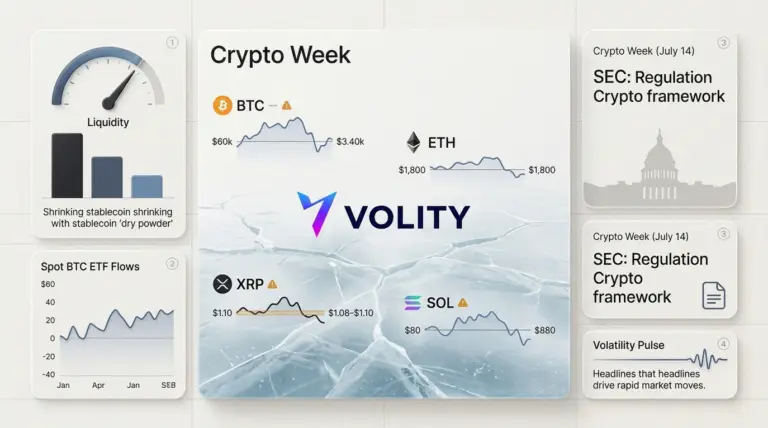
- Bitcoin is flirting with records again as inflows creep higher.
- Stablecoin payments YTD: $19.4B, a not-so-quiet drumbeat from traditional finance into token rails.
Macro + narrative: soft CPI, louder bulls
A softer-than-expected U.S. CPI print brightened risk appetite, with chatter building around a late-2025 Fed rate cut. Meanwhile, the sideshow isn’t small: HYPE and FLOKI returned to the marquee just as DeFi’s big kids retool-Aave Labs is on the acquisition trail. Add geopolitics to taste: Hong Kong-China policy talks hint at tighter coordination, and (yes) speculation over possible presidential pardons for high-profile figures like Sam Bankman-Fried keeps sentiment twitchy.What it means if you trade this stuff
- Liquidity, unlocked: Using BTC/ETH as collateral expands hedging and credit options-without triggering a taxable sale.
- Institutional spine: Wall Street’s embrace tends to dampen long-term volatility, even if near-term chop persists.
- Follow the flows: ETF and institutional product inflows are still the best breadcrumbs for the next move.
- Don’t chase shiny: Memes are fun; infrastructure and rails are the durable edge.
What to watch next
- Will other U.S./EU megabanks mirror or one-up JPMorgan’s collateral framework?
- Asia’s response, especially as Hong Kong coordinates with Beijing on crypto policy.
- Execution risk: can Robinhood (and Robinhood-likes) scale crypto-brokerage features without losing the plot?
Market snapshot
- Robinhood (HOOD): +6% on Ark’s buy
- Bitcoin (BTC): > $111,000, buoyed by renewed institutional interest
- Ethereum (ETH): Constructively bullish as on-chain activity recovers
- Memes (HYPE, FLOKI, WLFI): High volatility, headline-sensitive
Bottom line: 2025 is turning into a hinge year. Wall Street’s fear is giving way to pragmatism, and crypto is learning to speak fluent finance. The opportunities are real-but so is the whiplash. Stay nimble, track the flows, and keep your eyes on the rails being built under the noise.
For more on this topic see our deep-dives on UK Investors Get Regulated Crypto ETF Access as Bitcoin Surges, Solana ETFs and Institutional Crypto Investment Flows, and Cryptocurrency Market News: Bitcoin, Ethereum and Stablecoin Trends.
What our analysts watch: Three signals separate hype from operational convergence. Regulated-issuer tokenisation flow (BUIDL AUM, Ondo Finance issuance, JPMorgan Onyx volume) measures real institutional capital crossing into on-chain settlement. ETF and ETP creation activity, especially when ETFs trade through cash-create rather than in-kind, signals which traditional desks have built bilateral crypto execution capability. And payment-firm policy access (Fed Governor Waller “skinny” master-account proposal, OCC interpretive letters, FinCEN registrations) determines which crypto-native firms become permissible counterparties for regulated banks. The Bank for International Settlements Project Agora and Project Atlas frame the public-sector view, the FCA tokenised-securities filings cover the regulated-issuer side, and the Bank of England Payments Innovation Conference materials cover the rails layer. Volity offers regulated CFD access to BTC, ETH, and selected altcoin pairs alongside FX, indices, and commodities under CySEC oversight via UBK Markets (licence 186/12).
Related coverage on Volity
- How to Avoid Crypto Scams: A Beginner Safety Checklist
- How to Choose a Trading Platform: A 10-Point Checklist
- Demo vs Live Trading Account: A 7-Step Checklist Before You Go Live
- How to Size a Trade: Position Sizing and Risk Per Trade for Beginners
- Risk-Reward Ratio Explained: How to Set It and Why It Matters
- ETF vs Index Fund: The Difference and Which to Pick
Frequently asked questions
Is “TradFi meets Web3” actually happening, or is it marketing?
Both, depending on which layer you measure. At the asset-manager and bank treasury layer, tokenisation flow is real and growing (single-digit billions of AUM in regulated tokenised funds, scaling). At the retail wallet layer, most user behaviour still partitions cleanly between TradFi (brokerage accounts) and Web3 (self-custody wallets). The convergence is happening top-down at institutions before it reaches the retail interface.
Why do regulators care about tokenisation?
Three reasons. Tokenisation can compress settlement from T+2 to T+0 with intraday cash leg finality, which lowers systemic counterparty risk if the rails are designed correctly. It can broaden access to regulated assets across jurisdictions and account types, expanding investor protection scope. And it can introduce new failure modes (smart-contract risk, oracle risk, custody concentration) that supervisors need to understand before scale arrives.
How do stablecoins fit into the convergence story?
Regulated dollar-backed stablecoins (USDC, regulated bank-issued tokens) serve as the cash leg for on-chain transactions and increasingly for cross-border settlement between regulated counterparties. They are the part of the convergence that touches payments most directly. The regulatory framework varies by jurisdiction (US GENIUS Act, EU MiCA stablecoin rules, UK FCA approach), and harmonisation is still in progress.
What does TradFi-Web3 convergence mean for retail traders?
Practically, more wrappers and more execution venues. Spot ETFs and ETPs let traditional brokerage clients hold crypto exposure inside familiar accounts. Tokenised money-market and Treasury products let on-chain users park stablecoin balances in yield-bearing instruments without leaving their wallet. The trade-offs (custody choice, tax wrapper, leverage caps) are different at each layer; pick the wrapper that fits your time horizon, not the loudest narrative.
Are there risks specific to the convergence period?
Yes. Operational mismatches between TradFi clearing windows and on-chain finality can leave trades unsettled across calendar boundaries. Cross-jurisdiction regulatory gaps (a tokenised security legal in one venue may be unregistered in another) create grey zones. And concentrated custody at a small number of bridge providers between traditional and on-chain rails introduces single-point-of-failure risk that did not exist at this scale in either market separately.
Volity operates a trading platform and also publishes educational and analytical content about trading. The content on this page is for educational purposes only and should not be considered financial advice. Volity may benefit commercially when readers open trading accounts through links on this site.
Our content is produced and reviewed under documented editorial standards; see our comparison and review methodology.