Une checklist de routine de trading forex n’élimine pas le trading émotionnel et n’empêche pas la liquidation du compte lors d’une volatilité extrême. Le respect d’une routine ne compense pas un mauvais dimensionnement des positions ni une gestion du risque insuffisante. Les gaps de marché peuvent déclencher des ordres stop-loss en dehors des fenêtres de trading habituelles. L’effet de levier amplifie aussi bien les gains que les pertes, quelle que soit la préparation. Les performances passées ne préjugent pas des résultats futurs. Capital à risque.
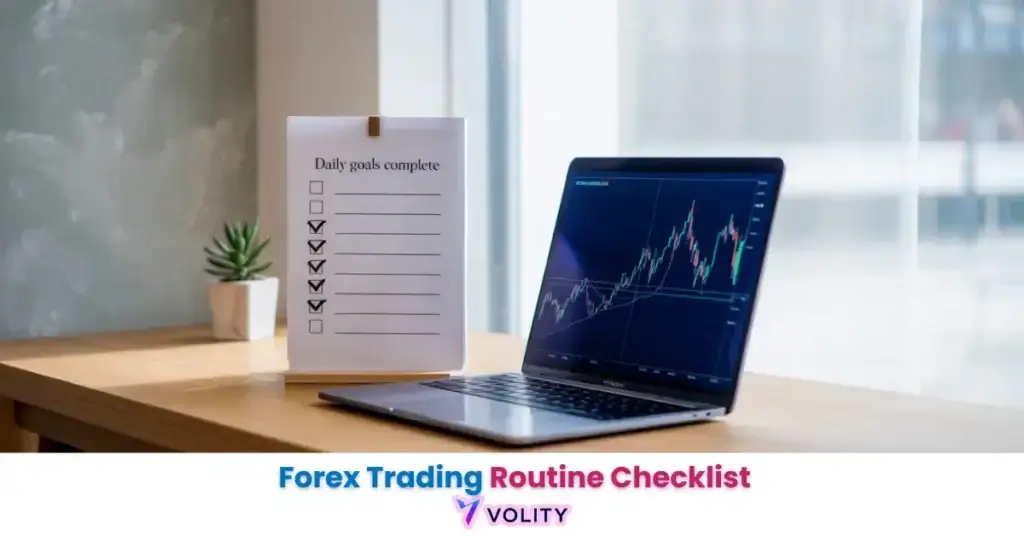
Une checklist de routine de trading forex est une séquence structurée de tâches habituelles servant à préparer, exécuter et analyser l’activité de marché quotidienne. Cette discipline garantit que les traders agissent avec une clarté objective plutôt que sous l’impulsion émotionnelle. Les traders régulièrement rentables s’appuient sur une revue comportementale structurée et une asymétrie de risque stricte, en maintenant un ratio rendement/risque de 2:1 même avec des taux de réussite modérés.
La checklist de routine de trading forex fonctionne comme le socle structurel de la performance professionnelle sur le marché des devises. Ce cadre permet aux traders de passer de la « chasse aux graphiques » réactive à une exécution proactive et fondée sur les données. Elle constitue la voie pratique pour passer de résultats irréguliers à une exécution constante et reproductible.
Le paysage du trading de 2026 s’appuie sur des audits de pré-séance pilotés par l’IA et des filtres pondérés par le sentiment pour repérer les configurations à forte probabilité. Les investisseurs utilisent ces routines pour conserver une neutralité émotionnelle pendant les périodes de volatilité macroéconomique extrême et de balayages de liquidité institutionnels.
Comprendre Forex Trading Routine est important, mais la vraie progression commence en appliquant ces connaissances. Créez votre compte de trading forex gratuit pour vous entraîner sur un compte démo gratuit et mettre votre stratégie à l’épreuve.
Qu’est-ce qu’une routine de trading forex et pourquoi est-elle essentielle ?
Une routine de trading forex est une série standardisée de tâches de préparation et d’analyse qui marque la frontière entre l’exécution stratégique et l’impulsion émotionnelle. Cette discipline prévient la « fatigue décisionnelle » en automatisant les protocoles d’entrée et de sortie. Les traders professionnels traitent leurs routines comme des procédures opérationnelles d’entreprise, pas comme des suggestions.
Les nouveaux traders particuliers échouent le plus souvent par manque de routine disciplinée et de contrôle du risque. Les traders rentables, à l’inverse, consacrent 30 à 60 minutes par jour à la préparation de pré-séance et à l’audit de post-séance.
- Définition de la « pile d’habitudes » : tâches de pré-séance, en séance et de post-séance. La pré-séance comprend l’analyse du calendrier, le marquage des niveaux et les vérifications émotionnelles.
- Amortisseur psychologique : comment les routines réduisent la « fatigue décisionnelle » du marché de 9 600 milliards de dollars. L’automatisation supprime les hésitations.
- Imitation institutionnelle : pourquoi les banques et les fonds spéculatifs fonctionnent selon des horaires stricts. La régularité crée l’avantage.
L’anatomie de la discipline professionnelle
Une préparation systématique identifie les conditions de marché précises qui justifient l’engagement de capital. Le « livre de règles » consigne quand les trades sont autorisés et quand il faut cesser de trader. Les traders professionnels considèrent le trading comme une entreprise, pas un loisir, et respectent des protocoles écrits quelle que soit la tentation émotionnelle.
Prêt à faire passer votre trading au niveau supérieur ?
Vous avez les connaissances. Il vous manque la plateforme. Rejoignez des milliers de traders qui choisissent Volity pour ses outils puissants, son exécution rapide et son support dédié.
Créez votre compte en moins de 3 minutesLe paradoxe de la rentabilité 2026 : pourquoi la routine compte
Un taux de réussite élevé ne garantit pas un compte en croissance : un trader peut avoir raison plus souvent qu’il n’a tort et rester perdant si sa perte moyenne dépasse son gain moyen. Laisser à une position le temps de se développer, au lieu de pratiquer l’hyper-scalping sur chaque tick, permet au volet gain du ratio de jouer son rôle.
La sélectivité du marché impose aux traders rentables d’attendre des conditions précises, testées au préalable. L’opportunité asymétrique exige un seuil de rendement/risque de 2:1 ou 3:1. Un trader avec un taux de réussite de 50 % gagnant 3 $ par trade gagnant et risquant 1 $ par trade perdant génère un rendement de 100 % sur le capital à risque.
Lien : Gestion du risque
La checklist de pré-séance 2026
L’audit de pré-séance identifie les catalyseurs macroéconomiques et les fenêtres de liquidité à venir qui orienteront l’évolution quotidienne des prix. Cet investissement de 30 à 60 minutes sépare les trades à forte probabilité du bruit. Les teneurs de marché fondent leur positionnement sur les calendriers économiques, rendant la connaissance du calendrier non négociable.
La checklist comprend l’analyse du calendrier économique forex à la recherche d’événements à fort impact, l’application d’un filtrage de sentiment par IA pour analyser les « changements de narratif » institutionnels, le marquage des niveaux pour fixer les zones de support, de résistance et de FVG, et une vérification de l’état d’esprit pour confirmer 8 heures de sommeil ou plus et une stabilité émotionnelle.
Un trader a passé 30 minutes à marquer les plus hauts de la séance de Londres 2026 et à repérer un virage de sentiment hawkish dans les nouvelles matinales de la BoE. En attendant un retest de la zone pré-marquée à 1,2850 plutôt que de « chasser » le breakout, le trader a obtenu un trade 3:1 à mesure que la liquidité de la séance s’élargissait. Les performances passées ne préjugent pas des résultats futurs.
Repères d’habitudes
L’analyse comparative des comportements met en évidence les différences fondamentales entre les piles d’habitudes quotidiennes des traders professionnels et des particuliers en difficulté. Les traders les plus rentables consacrent 60 minutes à la pré-séance, tandis que la plupart des autres se lancent en moins de 5 minutes. Les règles de risque diffèrent radicalement : ces traders appliquent un maximum strict de 1 % par trade tandis que la majorité recourt à un dimensionnement émotionnel et variable.
| Habitude | Traders rentables | La majorité des traders | Impact 2026 |
| Préparation | 30-60 min de pré-séance | < 5 min (on plonge) | Critique |
| Règle de risque | 1 % max par trade | Variable (émotionnel) | Survie |
| Journalisation | Chaque trade + émotions | Sélective ou absente | Avantage stratégique |
| Périmètre de marché | Sélectif (1-3 paires) | Chasse aux configs (nombreuses) | Réduction du bruit |
| Usage de l’IA | Garde-fous comportementaux | Chasse aux signaux / bots | Discipline |
L’audit de post-séance
Les audits de week-end identifient les « fuites » de stratégie et les schémas émotionnels qui nuisent à la croissance du compte sur le long terme. Une journalisation rigoureuse exige de consigner le « pourquoi » (la logique) et le « comment » (l’exécution) de chaque trade. L’examen de l’état émotionnel met en évidence les déclencheurs de « FOMO » ou de « revenge trading » qui compromettent l’objectivité.
Le retour comportemental par IA utilise des agents LLM pour détecter la « dégradation des biais » dans les entrées de journal. Un trader qui a noté « excellente configuration » à plusieurs reprises sur des trades perdants manifeste un biais de confirmation. L’IA met en lumière ce schéma, permettant une correction consciente.
Lien : Tracker de backtesting forex
Concilier une routine de trading avec un emploi de 9 h à 17 h
L’automatisation stratégique représente la solution la plus efficace pour les traders qui concilient une carrière professionnelle et la participation au marché des devises. La stratégie d’ordres à cours limité consiste à placer des ordres à des niveaux précis pendant la pré-séance « hors heures », permettant une exécution passive durant les heures de travail. Les alertes mobiles utilisent l’IA pour ne notifier que lorsque des zones à « forte probabilité » sont touchées. Le focus sur l’unité de temps 4 heures réduit le « temps d’écran » requis tout en préservant l’avantage.
Liens : Types d’ordres forex et Séances de trading forex
Transformez vos connaissances en profit
Vous avez lu, il est temps d’agir. La meilleure façon d’apprendre, c’est en pratiquant. Ouvrez un compte démo gratuit et sans risque et entraînez votre stratégie avec des fonds virtuels dès aujourd’hui.
Ouvrir un compte démo gratuitPoints clés
- La routine de trading forex est une série systématique de tâches qui standardise la prise de décision et réduit la fatigue décisionnelle émotionnelle.
- La préparation de pré-séance, qui inclut l’analyse du calendrier économique et le marquage des niveaux clés, est la marque de fabrique d’une routine professionnelle.
- L’asymétrie de risque est obligatoire et impose aux traders de maintenir un ratio rendement/risque de 2:1 pour surmonter l’écart de taux de réussite moyen des particuliers.
- La discipline assistée par l’IA utilise des garde-fous automatisés pour verrouiller les comptes et empêcher le revenge trading une fois les limites de perte quotidiennes atteintes.
- La sélectivité du marché permet aux traders rentables de se concentrer sur 1 à 3 paires, réduisant le bruit et les faux signaux d’une surveillance excessive.
- L’audit de post-séance et les revues de week-end permettent aux traders de repérer les « fuites » et d’affiner leur stratégie pour la semaine à venir.
Foire aux questions
Cet article fait référence aux routines de trading forex, aux stratégies de discipline et à Volity, une plateforme de trading de CFD régulée. Ce contenu est produit à des fins purement éducatives et ne constitue ni un conseil financier ni une recommandation d’achat ou de vente d’un quelconque instrument financier. La discipline de trading professionnelle exige le respect de règles écrites quelle que soit la tentation émotionnelle. Testez toujours vos routines sur un compte démo avant tout déploiement en réel. Certains liens de cet article peuvent être des liens d’affiliation.