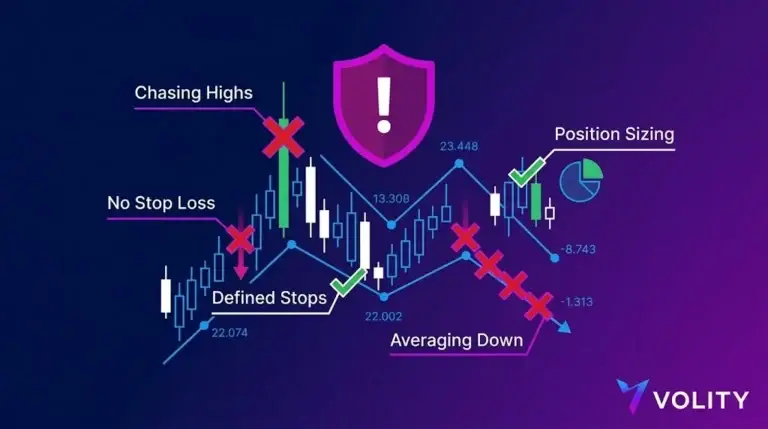
High redemption rates create catastrophic liquidity collapse when 95%+ of shareholders exit before merger closes, a de-SPAC may launch with only $5M in trust cash despite reporting $200M raised, forcing immediate dilutive capital raises or insolvency. Warrant dilution can wipe out post-merger shareholders; warrants exercised at $11.50 when stock trades at $8.00 effectively steal value from common equity holders, explaining why 2021-2022 post-SPAC performance saw 70% of shares decline below IPO levels. Sponsor conflicts of interest create misalignment in 2026 where management teams are incentivized to close any deal to claim their promote, potentially merging with targets lacking sustainable business models. Past performance is not indicative of future results. Capital at risk.
A Special Purpose Acquisition Company (SPAC) identifies a publicly listed shell company that raises capital through an IPO for the sole purpose of acquiring a private business and taking it public. In 2026, the market has transitioned into the “SPAC 4.0” era, defined by rigorous SEC 2024 disclosure rules and sponsor promotes that only vest upon reaching specific stock price hurdles. While redemption rates remain high, often exceeding 95%, the use of committed $10 PIPEs and backstop guarantees has ensured that high-quality firms in the AI and Energy Transition sectors can still access public markets with institutional-grade capital certainty.
While understanding SPAC Lifecycle and Governance is important, applying that knowledge is where the real growth happens. Create Your Free Forex Trading Account to practice with a free demo account and put your strategy to the test.
What is a SPAC and how does it function?
A Special Purpose Acquisition Company is a publicly traded shell company that raises capital through an initial public offering to identify and merge with an operating private business. Unlike traditional IPOs where operating businesses sell their own equity, a SPAC raises capital with no existing business operations, investors are purchasing management’s promise to find and close a quality acquisition within 18 to 24 months. This structure compresses what would normally be a months-long IPO roadshow and regulatory process into weeks, allowing founders of private companies to negotiate private deals directly with SPAC sponsors rather than facing the public markets with a detailed business model exposed to scrutiny.
The “Blank Check” mechanism operates through a trust account: investors’ capital is held in escrow and invested in short-term Treasury securities at a standard $10 per share value. The SPAC sponsor contributes a small amount of founding shares, typically 5-10 million shares, which represent their “skin in the game” but are not funded by the IPO. In 2026, deal sizes have settled well below the boom-year peak: Boardroom Alpha’s SPAC tracker counts 139 SPAC IPOs priced for $27.6 billion raised year to date, an average around $200 million, reflecting a shift away from the “mega-SPACs” of previous years toward more focused mid-market deals where sponsor expertise can meaningfully enhance target performance.
The Lifecycle of a “De-SPAC” Transaction
The de-SPAC transaction identifies the final stage of the lifecycle where the shell company and the private target merge to become a single public entity. Shareholders of the SPAC vote on whether to approve the proposed merger with the target company; crucially, they have the legal right to redeem their shares for a pro-rata portion of the trust account plus accrued interest (typically 5-7% annually) rather than participate in the merger. This redemption right creates the mechanism for high post-announcement share price volatility: if institutional arbitrageurs believe the target is overvalued at the proposed $10 merger price, they purchase SPAC shares immediately after IPO and redeem them after a deal is announced, capturing the guaranteed return while betting that redemptions will leave insufficient capital for the deal to proceed successfully.
Ready to Elevate Your Trading?
You have the information. Now, get the platform. Join thousands of successful traders who use Volity for its powerful tools, fast execution, and dedicated support.
Create Your Account in Under 3 MinutesSPAC 4.0: Performance-Linked Economics and Governance
SPAC 4.0 identifies the modern evolution of deal economics where sponsor compensation is tied to long-term stock price performance rather than simple deal closure. In earlier SPAC generations (2018-2021), sponsors automatically received 20% of the post-merger company’s equity simply for closing any acquisition, regardless of the target’s quality or post-merger stock performance. This incentive structure created perverse alignment where sponsors were rewarded for closing deals rather than ensuring quality, resulting in numerous post-SPAC failures in 2022-2023.
SPAC 4.0 restructures these promote mechanics: sponsor shares now only vest at specific stock price hurdles, commonly $12.50, $15.00, and $17.50 per share, with vesting conditions extending 12 to 24 months post-merger. Sponsors also forfeit 25-50% of their equity as “sweeteners” to attract PIPE (Private Investment in Public Equity) investors, institutions committing to purchase shares at $10 for 12-18 months post-closing. This aligns sponsor incentives with long-term shareholder returns rather than deal closure alone. Corporate Governance standards in 2026 SPACs now mandate independent board committee review of sponsor conflicts, a requirement that didn’t exist in earlier generations. Warrant coverage has also compressed, modern 2026 SPACs typically issue 1/4 to 1/8 warrant per unit instead of the 1/2-to-1 full warrant coverage of 2021, reducing dilution to post-merger common shareholders. Sponsor “lock-ups” extending twelve months or more past the merger have become a standard term rather than a concession, which is the structural commitment institutional allocators now demand.
Redemption Rights and Capital Certainty in 2026
Redemption rights identify the legal option for SPAC shareholders to return their shares for a pro-rata portion of the trust account before a merger closes. When a SPAC announces a merger target, shareholders must vote to approve the combination; those voting “no” or simply not voting at all can elect to redeem their shares for $10 plus accrued interest, no questions asked. In 2021, redemption rates typically ranged between 10-50%, allowing SPAC sponsors to close deals with substantial trust capital remaining. In 2026, aggregate redemption rates frequently exceed 95%, identifying an arbitrage-dominated market where institutional investors view SPAC IPOs as low-risk cash management vehicles earning 5-7% annual guaranteed returns, rather than as equity vehicles.
High Redemptions: 2026 aggregate redemption rates frequently exceed 95% because sophisticated arbitrageurs recognize that post-SPAC stock price volatility and warrant dilution create negative expected returns compared to the risk-free rate. Capital Backstops: To solve this liquidity problem, sponsors have adopted the practice of securing committed PIPE capital, private institutional investors purchasing shares at $10 per share directly from the newly-public merged company. These PIPE commitments are “locked up” for 12-18 months, ensuring capital remains in the company regardless of redemption activity. Minimal Trust Reliance: Modern de-SPACs in 2026 view trust proceeds as a “bonus” rather than a primary funding source; the real capital certainty comes from PIPE commitments and sponsor backstop funding promises.
Real trading example: A SPAC announced a merger with an AI data center provider (similar to Applied Digital) in April 2026 with a $200 million trust and a 98% redemption rate as institutional arbitrageurs exited. The deal closed successfully because the sponsor had secured a $150 million PIPE at $10.00, identifying committed capital as the primary driver of 2026 de-SPAC certainty. The merged company launched with approximately $157 million in total capital (2% of trust = $4M + $150M PIPE + sponsor commitments), enabling sufficient working capital to build its first data center infrastructure despite the near-total trust redemption. Past performance is not indicative of future results.
2026 SPAC Market Benchmarks: Post-Merger Performance
Performance benchmarks identify the historic divergence between SPAC IPO returns and the actual long-term stability of de-SPACed operating companies.
| Metric | 2021 (Boom) | 2026 (SPAC 4.0) | Trend Status |
| Avg. IPO Size | ~$265M | ~$200M | Mid-Market Focus |
| Redemption Rate | 10% – 50% | 90% – 98% | Arbitrage Base |
| Sponsor Promote | 20% (Automatic) | 10% – 15% (L-T Linked) | High Alignment |
| Warrant Coverage | 1/2 to 1 Full | 1/4 to 1/8 | Low Dilution |
| De-SPACs under $10 after a year | Majority | ~80% | Dilution-driven |
Sources: Boardroom Alpha: SPAC research and deal tracker · SPACInsider: SPAC statistics
The massive shift in redemption rates (10%-50% to 90%-98%) reflects a fundamental repricing of SPAC risk in post-2022 markets. Sponsors responded by restructuring deal economics to reduce dilution, the 20% automatic promote has collapsed to 10-15% performance-linked equity, and warrant dilution has declined by 50-75%. Securities class actions against de-SPACed companies have fallen back from their 2021 peak as the 2024 disclosure rules took hold. Post-merger performance nonetheless remains the hard part: Boardroom Alpha reports that roughly 80% of recent de-SPACs trade below the $10 trust value within a year of closing.
The Impact of SEC 2024 Rules on Disclosure
Regulatory compliance identifies the transition to SEC 2024 standards, which require SPACs to provide IPO-grade transparency during the business combination process. Pre-2024, SPAC target companies could make aggressive forward-looking revenue projections with minimal SEC scrutiny, projections of 10x revenue growth were common without supporting analysis. New Item 1609 of Regulation S-K now requires a de-SPAC target to state who prepared any projection, for what purpose, and every material basis and assumption behind it. The 2024 rules also withdrew the PSLRA forward-looking-statement safe harbour from SPACs.
Conflict of Interest reporting now requires SPAC sponsors to disclose all potential conflicts in the merger proxy statement, whether the sponsor is investing personal capital in the PIPE, whether sponsor employees will become target management, and whether the sponsor derives compensation from target customers or vendors. This transparency enables retail shareholders to identify misaligned incentives before voting on the merger. Target diligence has intensified under new Rule 145a, which deems a de-SPAC to involve a sale of securities to the shell company’s shareholders, bringing Securities Act liability to bear on the disclosure the target signs off. In 2026, this increased liability has created a market-wide shift toward hiring independent financial advisors and conducting rigorous due diligence that was often skipped in 2021-era deals.
Turn Knowledge into Profit
You have done the reading, now it is time to act. The best way to learn is by doing. Open a free, no-risk demo account and practice your strategy with virtual funds today.
Open a Free Demo AccountStep-by-Step: How to Evaluate a SPAC Investment
Due diligence represents the most effective strategy for distinguishing between high-quality sponsor teams and speculative ‘shell’ vehicles. Start by investigating the sponsor’s track record: have their previous SPAC de-SPACs outperformed or underperformed the public markets? If a sponsor’s prior three de-SPAC targets are trading 40% below merger announcement prices, this identifies a pattern of overvaluation or poor post-merger management. Scrutinize the target company’s management team: are they retaining control post-merger, or is the SPAC sponsor parachuting in new leadership? Sponsors who install fresh management in target companies often underperform relative to founder-led transitions.
Analyze the PIPE terms closely: Are major institutional investors (Blackstone, Carlyle, Apollo) committing to purchase shares at $10 for 12-18 months post-merger? If yes, this identifies institutional confidence and ensures substantial post-merger capital cushion. If the PIPE is composed of retail or smaller family offices, this suggests institutional investors lack conviction. Calculate the “Cash Per Share” available post-merger: subtract redemptions (estimate 90%+), subtract warrant dilution, subtract PIPE share dilution, divide total capital by fully diluted share count. If this calculation reveals less than $0.50 in cash per share, the target may lack sufficient runway to execute its business plan without additional raises.
Use Fundamental Analysis to examine target unit economics: Are gross margins sustainable? Is the customer concentration risk acceptable? How to Analyze Shares techniques apply equally to pre-public SPAC targets as they do to established public companies. Read the merger proxy statement with a focus on the “Risk Factors” section, this often reveals information the sponsor and target management don’t want emphasized. Red flags include: unproven technology platforms, single-customer concentration above 30%, customer acquisition costs exceeding lifetime customer value, or management teams with prior startup failures.
Key Takeaways
- SPACs are publicly traded shell companies used to take private firms public without the multi-month roadshow of a traditional IPO.
- SPAC 4.0 is the 2026 era of governance, characterized by performance-linked sponsor promotes and smaller, more focused deal sizes.
- SEC 2024 rules have brought SPAC disclosure requirements in line with traditional IPO standards, enhancing transparency for retail investors.
- Redemption rates currently exceed 95% in 2026, making committed capital from PIPE investors the primary determinant of deal certainty.
- AI and Energy Transition are the dominant sectors for 2026 SPAC targets, attracting significant institutional interest and backstop funding.
- Due diligence is critical for SPAC investors, as post-merger performance is highly dependent on the quality of the sponsor and the target’s cash flow.
Frequently Asked Questions
This article contains references to SPACs (Special Purpose Acquisition Company) and Volity, a regulated CFD trading platform. This content is produced for educational purposes only and does not constitute financial advice or a recommendation to buy or sell any financial instrument. Always verify current regulatory status and platform details before using any trading service. Some links in this article may be affiliate links.