Equity trading exposes traders to significant capital loss where sudden market corrections of 10-20% can eliminate entire positions if protective stop-losses are not strictly enforced. Leverage and margin accounts amplify both gains and losses, with a 5% adverse move potentially triggering forced liquidations before a trader has time to exit. Emotional decision-making during volatile earnings seasons or geopolitical shocks leads to panic selling at the worst possible prices, crystallizing losses that disciplined traders would avoid. Past performance is not indicative of future results. Capital at risk.
Equity trading is the practice of buying and selling shares of publicly listed companies on centralized stock exchanges to generate short-term capital gains or long-term dividends. In 2026, the market is defined by record-high valuations in the tech sector and increased participation from retail traders utilizing fractional shares and AI-powered research tools. Successful execution requires a disciplined balance between fundamental value assessment and technical momentum confirmation.
Equity trading functions as the cornerstone of active portfolio management for retail participants in 2026. These market activities identify moments of price inefficiency where traders can acquire undervalued shares or profit from rapid upward momentum. They serve as a critical mechanism for allocating capital into high-growth sectors like artificial intelligence and renewable energy.
The 2026 investment landscape requires a nuanced understanding of the differences between short-term speculation and long-term accumulation. By mastering technical filters and fundamental analysis, traders can navigate record-high market valuations while protecting their capital from sudden interest rate shocks.
While understanding Equity Trading is important, applying that knowledge is where the real growth happens. Create Your Free Forex Trading Account to practice with a free demo account and put your strategy to the test.
What is equity trading and how does it work?
Equity trading is the act of purchasing and selling company shares on public exchanges to profit from price fluctuations and dividend distributions. This market mechanism identifies the core mechanism through which capital flows from savers into businesses that require funding for growth. When you purchase a share of Alphabet, you acquire a fractional ownership stake in the corporation, entitled to a proportional share of future profits.
Equity trading operates through bid-and-ask mechanics where buyers and sellers continuously submit orders at different price levels. The bid represents the highest price a buyer will pay, while the ask represents the lowest price a seller will accept. When these prices converge, an automatic transaction executes through the exchange’s matching engine. This continuous matching process drives price discovery: if more buyers enter than sellers, the ask price rises; if sellers outnumber buyers, the bid price falls. The liquidity and efficiency of this mechanism makes stock trading accessible and affordable for any investor.
Broad equity indices have historically produced positive long-run returns, which is why equities sit at the centre of most growth portfolios. That aggregate hides significant volatility: some years deliver double-digit gains while others produce double-digit losses, and any long-run average is an average of very uneven years. Historical performance does not guarantee future results, and a start date chosen a year earlier or later changes the headline number materially.
Trading vs. Investing: Key Differences
Trading focuses on short-term price movements for quick profits, whereas investing prioritizes long-term corporate growth and compound interest. The distinction matters because it determines your tax treatment, your emotional capacity to endure volatility, and your strategy for position sizing. A trader holds shares for hours or days, capturing momentum moves before exiting. An investor holds for years or decades, allowing dividends to compound and corporate earnings growth to drive price appreciation.
The psychological demands differ dramatically. A swing trader executing a 3-5% gain within a week experiences constant decision-making urgency: should I take this profit now or hold for more? An investor holding a position for 10 years enters once, rebalances occasionally, and avoids emotional decision-making during daily price noise. Retail traders frequently confuse these frameworks, holding losing trades too long (like an investor) while taking profits too quickly (like a trader), creating a worst-of-both-worlds outcome.
Ready to Elevate Your Trading?
You have the information. Now, get the platform. Join thousands of successful traders who use Volity for its powerful tools, fast execution, and dedicated support.
Create Your Account in Under 3 MinutesIdentifying the 2 main types of equity trading in 2026
Market participants execute equity trades through two primary methods including cash market transactions and derivative instrument speculation. Cash equities represent the most straightforward approach: you purchase actual shares through a brokerage account, receive a confirmation, and hold the security until you choose to sell. The second method involves equity derivatives like CFDs or options, where you speculate on price movements without acquiring the underlying share itself. Both methods generate profits or losses based on price changes, but they differ fundamentally in leverage, tax treatment, and the mechanics of position execution.
Cash equities traditionally required a large outlay per position, because a single share of a large technology company can cost several hundred dollars. Fractional shares have removed that barrier. Fractional shares have become a common first entry point for new market participants. Fractional shares let a trader with $10 hold a slice of a share worth far more than that, building a diversified portfolio with minimal capital. This democratization has fundamentally changed who participates in equity markets: a teenager with a smartphone can now build a professional-grade equity portfolio.
How to Analyze Shares becomes critical when comparing cash equities to equity derivatives. Cash equity traders must evaluate fundamental business metrics: earnings growth, return on equity, competitive moats. Derivatives traders focus purely on momentum and technicals, bypassing fundamental analysis entirely. For 2026, utilize Portfolio Rebalancing across both cash and derivative positions to maintain your target risk profile.
5 Essential Equity Trading Strategies for 2026
Successful equity trading strategies range from long-term value investing, the patient school associated with investors like Peter Lynch, to short-term intraday momentum and algorithmic execution. Each strategy targets a specific market regime: day trading works best during high-volatility environments with strong news catalysts, while swing trading thrives in sustained trending markets. Position trading captures multi-month moves driven by fundamental shifts in earnings or sector rotation.
Day trading represents the most time-intensive approach, capturing 2-3% moves within a single market session. A day trader enters at market open, executes 3-10 trades throughout the session, and exits all positions before the close, avoiding overnight gap risk. This approach requires absolute discipline on stops and the emotional fortitude to exit winners quickly and losers even quicker. Technical Analysis and momentum indicators like RSI provide the primary signals for day traders.
Swing trading rides trend waves over 3-10 days using support and resistance levels identified through technical charting. A swing trader might enter on a breakout above the 50-day moving average, trail a stop-loss beneath the breakout level, and exit at a predetermined resistance level 5-15% higher. This time horizon balances the intensity of day trading with the patience required for longer-term investing.
Position trading captures multi-month trends where high-conviction leaders deliver 20%+ moves over months. gold trading." class="internal-link" href="https://volity.io/stocks/direct-market-access/">Direct Market Access becomes essential for scalpers executing micro-profit captures across dozens of trades per hour. Scalping represents the most equipment-intensive and psychologically demanding approach but can generate consistent returns during high-volatility environments.
An illustration of the method rather than a record of a trade: a swing trader buys a large-cap stock after it breaks above its 50-day moving average on strong volume, places a stop beneath the breakout level, and exits at a predetermined resistance level rather than waiting for a target the market never promised. Past performance is not indicative of future results. What makes that work is respecting the signal and the position size, not predicting the future.
Performance Analysis: 2026 Market Regimes
Equity return benchmarks identify the impact of interest rates and inflation on sector-specific performance during the current cycle. The data below compares key metrics across 2026 market conditions, revealing the opportunity landscape for active traders.
| Metric | What it tells you | Risk factor |
| Index level against its recent range | Whether you are buying strength or an already extended move | Interest rates |
| Sector earnings growth | Whether price is supported by profits or by multiple expansion | Valuations |
| Long-dated government bond yield | The discount rate every equity valuation is measured against | Inflation |
| Volatility index | What the market is currently paying for downside protection | Geopolitics |
| Retail participation | How crowded the trade already is | Sentiment |
This table lists what to check before a trade. It is not a forecast, and it carries no figures: read the live levels yourself.
Read each of these live rather than from any article, including this one. Trading Economics: United States Stock Market Index carries the current level and its history. When an index trades near the top of its recent range, profit-taking tends to accelerate. When earnings growth rather than multiple expansion is doing the work, an advance has firmer ground under it. Rising long-dated yields compress multiples, and a rising volatility index means the market is paying more for protection than it was.
The critical role of risk management and stop-losses
Risk management in equity trading is the process of identifying potential losses and utilizing Stop Loss Order tools to preserve capital. This principle separates professional traders from gamblers: professionals accept that some trades will lose, and they pre-plan the maximum loss they’ll tolerate. A trader using the 1% Rule never risks more than 1% of total portfolio on a single trade. A trader with a $100,000 account using the 1% Rule risks $1,000 maximum per trade. If a trade moves against them by $1,000, the stop-loss triggers and the loss is locked.
Diversification represents the second pillar of risk management. Avoiding overconcentration in Stock Market Sectors like Tech or Energy protects against sector-specific shocks. In 2026, a trader holding 50% of their portfolio in tech faces devastating losses if a recession triggers a tech selloff. Understanding Maintenance Margin and the danger of margin calls is critical for traders using leverage.
Margin calls represent the most acute risk in leveraged trading. Say you hold a $100,000 position funded with $40,000 of your own capital and $60,000 borrowed, and your broker sets maintenance margin at 30%. A 20% decline leaves the position worth $80,000 and your equity at $20,000, against a requirement of $24,000, which is 30% of $80,000. The $4,000 shortfall triggers the call, and if you cannot fund it the broker liquidates at market prices, often at the worst possible moment.
Turn Knowledge into Profit
You have done the reading, now it is time to act. The best way to learn is by doing. Open a free, no-risk demo account and practice your strategy with virtual funds today.
Open a Free Demo AccountHow to Start: Choosing a Broker and Platform
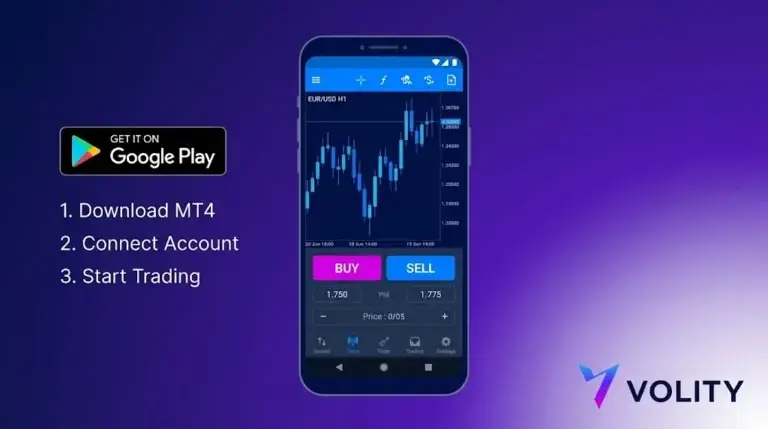
Selecting a regulated broker and a high-performance trading platform represents the first step toward building a professional equity trading operation. The ideal broker offers low commissions (or zero commissions as most do in 2026), real-time Level 2 data feeds, and customer service when technical issues arise. Regulatory compliance matters: check that your broker is authorised by the regulator in your own jurisdiction, and confirm the licence number on that regulator’s public register rather than on the broker’s website.
Stock Screeners automate the research process, filtering thousands of stocks against your criteria in seconds. A stock screener configured for value might filter for companies with P/E ratios below 15 and positive earnings growth. A screener configured for momentum might filter for stocks trading above their 50-day moving average with volume spikes. Professional traders use screeners daily to identify candidate trades before applying detailed technical or fundamental analysis.
Direct Market Access provides institutional-grade execution speeds essential for high-frequency strategies. Most retail traders do not need DMA, but active day traders capturing 1-2% moves in liquid stocks benefit dramatically from millisecond execution advantages.
Key Takeaways
- Equity trading involves the active buying and selling of public company shares to generate capital gains or dividend income.
- Trading and investing differ primarily in their time horizons, with trading focusing on short-term moves and investing on long-term growth.
- Risk management is the most critical skill, utilizing stop-loss orders to limit the impact of inevitable market volatility on a portfolio.
- Cash and derivatives markets offer different paths to exposure, with derivatives providing leverage and cash markets providing direct ownership.
- Long-run index returns have been positive, but modern traders must navigate higher volatility and interest rate uncertainty.
- Fractional shares have democratized the market, allowing new traders to build diversified equity portfolios with very small amounts of capital.
Frequently Asked Questions
This article contains references to equity trading and Volity, a regulated CFD trading platform. This content is produced for educational purposes only and does not constitute financial advice or a recommendation to buy or sell any financial instrument. Always verify current regulatory status and platform details before using any trading service. Some links in this article may be affiliate links.