Maintenance margin requirements can result in forced liquidation of your positions without advance notice if your account equity falls below required thresholds. During periods of extreme volatility, the value of leveraged positions can decline rapidly, triggering margin calls that may be satisfied by the forced sale of securities at unfavorable prices. Under UK and EU rules, brokers apply automatic margin close-outs and can restrict trading for failed margin compliance. Past performance is not indicative of future results. Capital at risk.
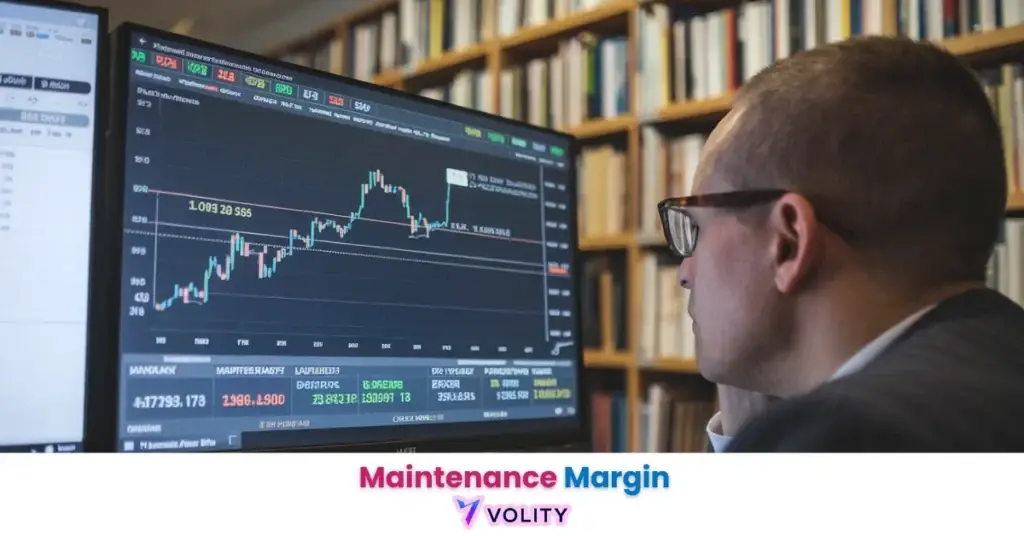
Maintenance margin identifies the minimum equity threshold that an investor must maintain in a leveraged account to prevent the forced close-out of positions. Under the UK and EU framework set by the FCA and ESMA, retail leverage is capped by product (for example 30:1 on major currency pairs and 5:1 on single equities), and a margin close-out rule requires brokers to close positions once equity falls to 50% of the required initial margin. Investors must manage their real-time margin levels with precision to avoid automatic close-outs, while negative-balance protection caps their downside.
While understanding Margin Regulatory Framework is important, applying that knowledge is where the real growth happens. Create Your Free Forex Trading Account to practice with a free demo account and put your strategy to the test.
Maintenance margin functions as the essential safety valve for the global leveraged trading system in 2026. This methodology identifies the minimum percentage of net account value that must remain unencumbered by debt to keep active positions open. It serves as a primary defense against the systemic “flash liquidations” that can occur during periods of extreme market variance.
The 2026 regulatory environment, shaped by the FCA and ESMA leverage and close-out rules, has modernized how margin is monitored. Investors utilize these real-time “intraday margin” frameworks to access greater capital efficiency while adhering to strict real-time equity requirements with Portfolio Rebalancing strategies at the core.
What is maintenance margin and why is it mandatory?
Maintenance margin is the minimum amount of equity that a trader must maintain in a margin account after a purchase has been made, identifying the regulatory floor for leveraged positions. This requirement protects brokers from losses if client positions decline in value while funded with borrowed capital. The FCA and ESMA margin close-out level, set at 50% of the required initial margin, creates a predictable safety net across all regulated UK and EU brokers.
Maintenance margin differs fundamentally from initial margin, which is set by the ESMA and FCA leverage caps that apply when opening a position. After opening, a trader’s equity may fall, but the account remains in good standing until it reaches the broker’s maintenance level and the 50% margin close-out threshold. Many brokers impose house requirements above the regulatory floor, which is why your specific brokerage terms matter more than the minimum.
Traders who understand maintenance mechanics avoid forced liquidations by managing their positions with discipline rather than reacting to a call after it has been issued.
No Minimum-Equity Day-Trading Rule for Retail Clients
Unlike some overseas markets that impose a minimum-equity day-trading classification, the UK and EU framework applies no such rule to retail clients. There is no requirement to hold a large fixed balance before you can day-trade, and no tracking of how many day trades you place within a rolling window. This keeps the door open for Leverage Explained strategies to be applied by accounts as small as $1,000–$5,000.
The absence of a minimum-equity rule does not eliminate the need to maintain your broker’s maintenance margin; it simply means there is no separate classification demanding higher balances for frequent day traders. Brokers monitor all accounts with the same real-time framework and apply the same margin close-out standard across the board regardless of trading frequency.
Ready to Elevate Your Trading?
You have the information. Now, get the platform. Join thousands of successful traders who use Volity for its powerful tools, fast execution, and dedicated support.
Create Your Account in Under 3 MinutesUnderstanding Intraday Margin Levels (IML)
Intraday margin levels represent the real-time calculation of account equity relative to market exposure, identifying potential deficits before the market close. Unlike legacy systems that only checked margin once daily, modern platforms now evaluate IML continuously through the trading session. This shift allows brokers to implement preventative controls before deficits spiral into forced liquidations.
Real-time monitoring identifies two distinct broker responses to IML deficits. Hard blocks immediately prevent transactions that would cause a deficit, stopping the trader before the problem occurs. Intraday margin calls, conversely, alert the trader to a deficit and require action within specific timeframes. Where a broker defaults to hard blocks, the problem is prevented rather than escalated, which is why the two responses are worth telling apart.
Real-time IML monitoring is the mechanism brokers rely on to keep counterparty risk down, because it catches a deficit while it is still small. Exposure-based risk calculations now automatically adjust maintenance requirements when positions spike in high-beta sectors like biotech or cryptocurrency, where volatility demands additional buffers. Your required maintenance equity isn’t static; it evolves with your portfolio’s risk profile throughout the trading day.
The Margin Call process triggers when your account equity falls below the required maintenance level, demanding immediate action to restore compliance.
How to Calculate Your Maintenance Margin Requirement
Mathematical margin assessment identifies the specific dollar amount of equity needed by multiplying the long market value of a position by the required maintenance percentage. The calculation is straightforward: if you hold $50,000 in stock with a 25% maintenance requirement, you must maintain $12,500 in equity. Any drop below this level activates broker-initiated controls to restore the account to compliance.
The “call price” represents the stock price at which your equity falls to the maintenance requirement. It is the loan per share divided by one minus the maintenance percentage, not the maintenance equity divided by the share count. If you buy 200 shares of a $50 stock for $10,000 with $5,000 of your own money, the loan is $25 per share, and at a 25% maintenance level the call price is $25 / (1 – 0.25) = $33.33 per share. Understanding this level allows disciplined traders to set mental stops above their call price, protecting themselves through voluntary exits before involuntary ones.
Portfolio margin, available only to large accounts that meet a broker’s minimum equity test, uses a different risk-based formula rather than the simple percentage approach. Instead of the standard 25% floor, portfolio margin accounts can operate with lower maintenance percentages based on sophisticated value-at-risk models. This option is reserved for institutional investors and active traders with substantial capital.
Real trading example:
Take an investor holding $10,000 of an index ETF with $2,500 of equity, against a $2,500 maintenance requirement (25% of position value). The market experienced a 10% decline, reducing the position value to $9,000 with a new maintenance requirement of $2,250. The investor’s actual equity dropped to $1,500, creating a $750 deficit. The broker issued an intraday margin call requiring the investor to either deposit $750 or sell $3,000 of their position to restore the 25% level. Past performance is not indicative of future results.
2026 Regulatory Benchmarks: ESMA and FCA Margin Rules
Regulatory benchmarks identify the strict legal requirements and timeline for satisfying margin deficits in the 2026 financial system. The FCA and ESMA leverage and close-out rules modernized how brokers monitor and enforce margin compliance, replacing older classification-based systems with a universal real-time framework.
| Requirement | UK / EU Standard | Timeline / Limit | Trigger Event |
| Initial Margin | Set by leverage cap | Per product | Opening a position |
| Maintenance margin | Broker-set | Intraday | Equity below maintenance |
| Margin close-out | At 50% of margin | Real-time | Equity at close-out level |
| Negative-balance | Guaranteed (retail) | Retail clients | Account would go negative |
| Leverage cap | 30:1 majors / 5:1 equities | Per asset class | Retail account |
Sources: ESMA and FCA retail leverage limits, margin close-out and negative-balance protection rules.
There is no fixed minimum-equity floor for opening a retail margin account in the UK or EU. Instead, ESMA and FCA leverage caps set the initial margin required to open a position, while the margin close-out rule governs the ongoing maintenance threshold at 50% of that margin. Brokers close out positions automatically as equity approaches this level, and retail clients are protected from losing more than their account balance by negative-balance protection.
Risks of Falling Below Maintenance Levels
Flash liquidations indicate the automated process where a broker sells a client’s assets to restore the maintenance margin without prior notice. During periods of extreme volatility, this forced selling can occur within milliseconds, potentially locking in losses at the worst possible moment. The broker is legally permitted to liquidate whatever assets they choose, meaning they may sell your most liquid holdings rather than your losing positions.
Forced liquidation reveals a critical asymmetry in the client-broker relationship: the broker prioritizes protecting their credit risk over protecting your portfolio. If your account drops to 22% equity and you hold both a profitable position and a losing position, the broker’s algorithm may liquidate the profitable position first because it generates immediate cash. This behavior highlights why maintaining a cash buffer above the minimum requirement protects your trading discipline.
Automatic margin close-out triggers when your equity falls to the required close-out level. Rather than a fixed penalty period, the broker begins closing your open positions in real time to bring the account back within margin. This is why maintaining a cash buffer above the minimum requirement matters: it gives you room to act before the broker acts for you. Negative-balance protection then ensures a retail account cannot fall below zero, even in a fast-moving market.
The Stock market crash amplifies maintenance margin risk exponentially. During the 2008 financial crisis and the March 2020 pandemic shock, correlations moved toward 1.0, meaning diversification provided no protection. Traders who believed their margin cushion was safe discovered that entire portfolios declined in unison, triggering simultaneous liquidations.
Turn Knowledge into Profit
You have done the reading, now it is time to act. The best way to learn is by doing. Open a free, no-risk demo account and practice your strategy with virtual funds today.
Open a Free Demo AccountStrategies for Managing Margin and Avoiding Calls
Proactive equity management represents the most effective strategy for maintaining margin stability during periods of extreme price discovery. Traders who maintain strict disciplines around position sizing, stop-losses, and cash reserves avoid the forced liquidation scenario entirely. The most successful margin traders in 2026 structure their accounts defensively, assuming volatility will spike and planning accordingly.
The cash buffer strategy involves keeping 20% of total account value in uninvested cash at all times. While this sounds conservative, it provides a massive safety margin against sudden volatility. If you hold $10,000 total with $8,000 invested and $2,000 cash, your invested portion can decline by 50% before hitting the 25% maintenance threshold. This buffer transforms your account from fragile to resilient.
Stop-loss discipline requires setting exits above your calculated call price. If your call price is $40 per share, you should set your stop-loss at $42, giving yourself a 5% cushion above the forced liquidation level. This voluntary exit preserves more capital than an involuntary one, protecting both your wealth and your psychological resilience as a trader.
De-leveraging when realized volatility rises sharply identifies another defensive approach. Rather than waiting for a crisis, proactive traders reduce position size as markets become more unstable. This reduces the dollar amount of potential losses and lowers the leverage ratio in the account. The Stop-Loss Order mechanism sits at the core of these strategies.
Key Takeaways
- [Maintenance margin] is the mandatory minimum equity an investor must hold to keep leveraged positions active in a brokerage account.
- [UK and EU rules] apply no pattern-based minimum-equity requirement, so active retail investors are not locked out by a large fixed balance.
- [Intraday monitoring] is the new 2026 standard, identifying margin deficits in real-time rather than waiting for the market close.
- [A margin close-out at 50% of required margin] is the regulatory backstop, though individual brokers often set higher maintenance requirements.
- [Forced liquidation] occurs when equity falls below the maintenance level, allowing the broker to sell assets without the trader’s consent.
- [Automatic close-outs] replace fixed penalty periods: the broker closes positions in real time once equity reaches the close-out level, with negative-balance protection capping downside.
Frequently Asked Questions
This article contains references to maintenance margin, ESMA and FCA margin rules, margin trading mechanics, and Volity, a regulated CFD trading platform. This content is produced for educational purposes only and does not constitute financial advice or a recommendation to buy, sell, or use margin in any financial instrument. Always verify current regulatory status and your broker’s specific margin requirements before using leverage. Some links in this article may be affiliate links.