Investing in financial products involves risk. Losses may exceed the value of your original investment.
Bitcoin price sec is a core topic for traders in 2026. The complete guide follows.
Crypto price action turns twitchy as Middle East risk collides with a rare US rulebook moment
Bitcoin spent the session doing what it does best when headlines turn hot. It dipped under $67,500 as traders braced for escalation around Iran.
It then snapped back towards $71,500 after President Trump paused strikes. Meanwhile, the broader tape looked less forgiving.
Uninformed money fled first, and liquidity thinned in the usual places.
However, the day’s most durable catalyst did not come from missiles or macro. It came from Washington. Recently, the SEC and the CFTC issued coordinated guidance that, for once, reads like two regulators sharing the same map.
Crypto traded two stories at once. One story priced fear, forced selling and rushed hedges. The other repriced legal risk, which has quietly been the biggest spread in the market for years.
US regulators sketch five buckets and traders start marking up the implications
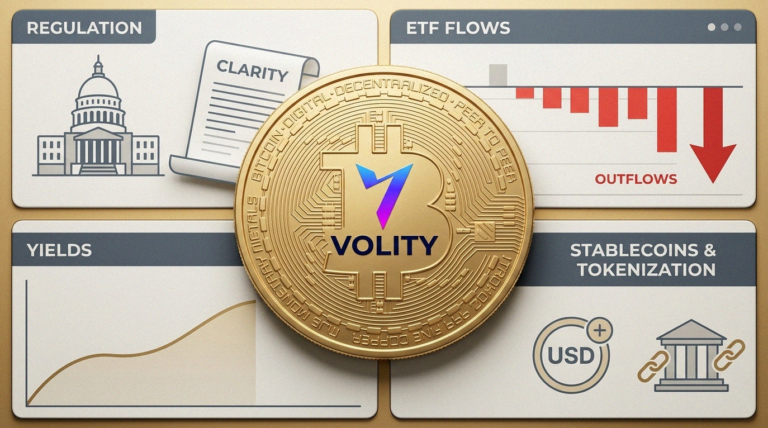
The joint framework splits crypto assets into five groupings: digital commodities, digital collectibles, digital tools, stablecoins and digital securities. Importantly, Bitcoin was treated as a non-security token, alongside a named list of other assets. That matters because it narrows where the Howey test argument can be pushed, and it reduces the chance that routine product features reopen the same old courtroom loop.
SEC Chair Paul Atkins described the guidance as a bridge to Congress. Meanwhile, CFTC chair Michael Selig called it “rules of the road” for builders. The language is political, but the market impact is practical. If a token can sit outside securities rules after launch, then staking programmes, airdrops, wrapped assets and bridges stop feeling like regulatory tripwires.
Still, the fine print will do the real work. A possible “Regulation Crypto Assets” regime was floated as a next step, which could introduce exemptions and safe harbours. Dually registered venues may find it easier to list and clear products without building two compliance stacks for the same risk.
- Non-security pathway: Tokens may shed investment contract status post-launch if ongoing managerial promises fade.
- Stablecoins: Payment-focused models sit closer to the GENIUS Act frame, while others remain case-by-case.
- DeFi latitude: Protocol staking and mining were treated as permissible features under the new taxonomy.
Bitcoin whipsaws while alts leak and options traders turn defensive
Geopolitics did the intraday damage. First, Bitcoin slid through $67,500 as Iran fears sparked de-risking. Later, the market caught a breath when Trump held back, and BTC bounced to around $71,500. However, the recovery did not fully heal altcoin bruises.
XRP traded down towards $1.40 during the risk-off leg. Solana also sagged as institutional appetite looked hesitant even when retail chatter stayed loud. Meanwhile, Ether bled with the rest of the complex, which told you this was not a neat rotation. It was a grab for cash and the nearest exit.
ETF flows offered a mixed signal. Outflows reportedly slowed to around $230m, which suggests sellers eased up rather than turned bullish. The $70,000 line became the session’s anchor, not a springboard.
In derivatives, defensive options buying picked up. Open interest positioning hinted at range trading rather than a clean trend. Meanwhile, miners watched network conditions, with mining difficulty models pointing to a potential 7.5% drop as hash rate dipped.
Dubai’s hub narrative meets the reality of regional risk
Dubai has sold itself as crypto’s neutral crossroads. Yet even that story wobbles when airports feel vulnerable and conference calendars thin out. Some events were cancelled, and travel uncertainty became its own form of volatility.
Meanwhile, compliance desks kept one eye on capital flight out of Iran. Risk teams flagged the usual danger zones: UAE off-ramps, cross-chain layering and rapid DEX routing. Any shift in enforcement focus could land suddenly on venues that have grown used to regulatory sunshine.
ETFs broaden, fraudsters stay busy, and the industry keeps cutting
NYSE raised options limits on 11 crypto ETFs, a small plumbing change that can matter during stress. Grayscale pushed plans tied to a Hyperliquid launch. CoinShares reported about $230m of inflows, although broader crypto allocations also moved through non-ETF channels.
Elsewhere, scams multiplied with the headlines. War-themed posts circulated on X, and projects warned about fake Telegram channels. Law enforcement actions included a reported $580m freeze in an FBI-Thai raid. Meanwhile, memecoin blow-ups again turned ugly, with threats and harassment following losses.
Layoffs also continued across the sector. Some cuts read as a macro hangover. Others looked like a shift towards AI tooling and leaner teams. The next bull leg may arrive with fewer jobs than the last one.
By the numbers
- BTC intraday range: roughly $67,500 to $71,500
- Key level in play: $70,000
- Reported ETF outflows slowing: about $230m
- Potential mining difficulty change: about -7.5%
- Frozen funds in enforcement action: about $580m
Key takeaways
- Trade the rulebook, not the noise: regulatory clarity can rerate tokens long after geopolitics fades.
- Respect $70,000: BTC’s ability to hold it matters more than the headline rally.
- Watch options positioning: defensive skew often precedes a tight range, then a sharp break.
- Alts remain the stress barometer: XRP and SOL weakness signals fragile risk appetite.
- Compliance risk is market risk: Iran-linked flows can trigger abrupt venue scrutiny and liquidity shocks.
The day ended with a familiar split-screen. Price action reflected fear and relief in quick succession.
Yet the more consequential move may be bureaucratic. When the SEC and CFTC finally draw lines, traders stop paying a legal risk premium on every new product.
However, in a market still addicted to leverage, clarity does not cancel volatility. It only changes where it lands.
For more on this topic see our deep-dives on MEXC Crisis Rocks Crypto: Bitcoin ETF Outflows and Trust Shaken, Bitcoin Steady, Nasdaq Rallies: Trading Iran De-escalation, and Ethereum and Bitcoin Price Plunge: Key Levels, Bear Fears and Whale Moves.
What our analysts watch: US crypto policy moves through three lanes. Congressional bills (FIT21, market structure legislation), agency rulemakings (SEC custody and ETF rules, CFTC commodity-classification framework), and enforcement decisions (settlements that establish precedent without legislation). We rank each event by binding effect: a final agency rule moves more than a CFTC chair speech, which moves more than a senator op-ed. Spot Bitcoin ETF flow data from issuers and Federal Reserve liquidity readings (TGA, RRP) frame the demand-side response.
Frequently asked questions
Why do SEC and CFTC have overlapping crypto jurisdiction?
The SEC governs securities; the CFTC governs commodities and derivatives. Bitcoin is generally treated as a commodity, while many altcoins arguably display securities characteristics under the Howey test. The result is statutory ambiguity that Congress has not fully resolved. The SEC and the CFTC publish their own guidance and enforcement priorities, which traders should read directly rather than via headlines.
How do spot Bitcoin ETF rules affect price?
The 2024 spot BTC ETF approvals created a new institutional demand channel; subsequent rule changes (in-kind versus cash creations, custody requirements) directly affect how efficiently ETF demand transmits to spot price. Watch issuer redemption mechanics and authorised-participant flow disclosures. Investopedia explains spot ETFs.
What does FATF guidance mean for US crypto rules?
The FATF sets international standards for virtual-asset oversight, which the US implements through Treasury and FinCEN. The travel rule (counterparty information sharing on transfers above 1,000 USD) is the most consequential for exchanges. Compliance posture varies between US-domiciled and offshore venues, which traders should factor into platform choice.
Where can I trade BTC under regulated oversight on Volity?
Volity offers regulated crypto exposure through UBK Markets (CySEC licence 186/12) with our Saint Lucia and Cyprus entities. Spot BTC, ETH and major altcoins sit alongside FX and equity instruments, with KYC-verified accounts and negative-balance protection on retail tier.
Related guides
- Bitcoin explained
- Cryptocurrency trading
- Crypto trading platforms
- Best crypto investments
- Risk management
Volity operates a trading platform and also publishes educational and analytical content about trading. The content on this page is for educational purposes only and should not be considered financial advice. Volity may benefit commercially when readers open trading accounts through links on this site.
Our content is produced and reviewed under documented editorial standards; see our comparison and review methodology.