Crypto markets digest: bitcoin holds $78,000 while Washington sharpens the rulebook
Bitcoin has bent, but it has not snapped.
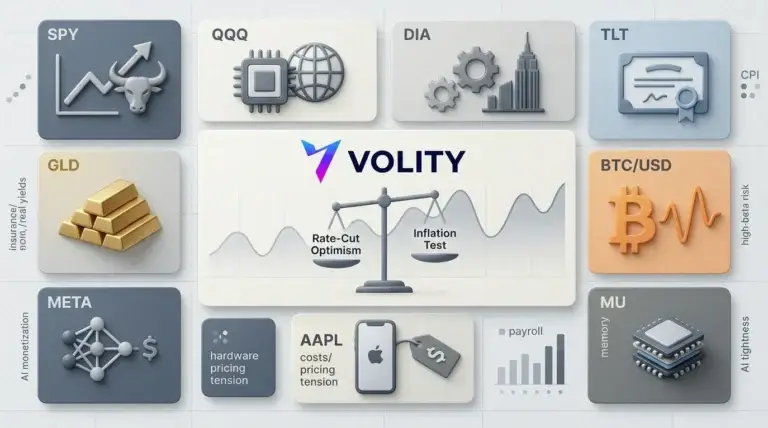
After a fast drop below $78,000, BTC has settled near the high-$77,000 to $78,000 range. Traders are watching the same three screens: Treasury yields, ETF flows and geopolitical risk.
The bond market is doing most of the pushing. U.S. Treasury yields have climbed to fresh 12-month highs, which raises the hurdle rate for risk assets. Therefore, even committed crypto buyers are showing less urgency at current levels.
Meanwhile, spot bitcoin ETFs have cooled after six straight weeks of inflows worth about $1 billion. That pause matters. For much of this cycle, passive institutional buying absorbed dips before they turned ugly.
Now, that cushion looks thinner. However, the tape still shows buyers defending the $77,000 to $78,000 zone. A clean break would invite momentum selling. A hold could force short-covering, especially if yields stop rising.
Geopolitics has added another layer of static. Reports that Iran has responded to new U.S. peace terms have kept energy traders alert. In a real escalation, BTC can attract haven-style bids. In a messy standoff, it usually gets volatility first.
Related coverage on Volity
More from this Bitcoin storyline this week:
- Bitcoin Drops Below $79k as Yields Rise, ETFs Stall
- UK Investors Flock to Safer Yields Amid Crypto Market Wobble
- Bitcoin Eyes $100k as CLARITY Act Drives Crypto Markets
- How to Navigate Crypto and Investment Hype for Smart Returns
- Bitcoin Near $80k as Tokenised Treasuries Hit $15bn
The thread continued the next day with Bitcoin dipping below $77,000 as spot ETF outflows hit $1bn.
By the numbers
- BTC: trading around $78,000 after briefly slipping below that level.
- ETF flows: six-week inflow streak ended after roughly $1 billion entered spot bitcoin funds.
- Yields: U.S. Treasury yields near fresh 12-month highs.
- Support: traders are focused on the $77,000 to $78,000 area.
- Policy: the CLARITY Act still needs 60 Senate votes.
The clarity act becomes the main policy trade
In Washington, the CLARITY Act has become the market’s medium-term obsession.
The bill cleared a key Senate committee, giving the industry its strongest policy opening in months. Some investors compare it with the early securities-law era, when legal definitions helped build modern markets.
That optimism is not harmless. Social and on-chain sentiment gauges have jumped since the committee vote. Historically, those bursts of excitement often arrive just before short-term pullbacks.
Still, traders care because the bill could redraw the map. It may separate digital commodities from securities more cleanly. It could also shift more authority toward the CFTC.
However, the politics are messy. Critics argue that some lawmakers’ crypto exposure, or donor ties, should keep them away from the vote. That ethics fight threatens the 60 votes needed on the Senate floor.
There is also a staffing question. Several CFTC seats remain open. If President Trump fills them before the rulebook changes, enforcement tone could shift fast.
For markets, the issue is simple. A friendly CFTC would probably support broader listings and lighter-touch supervision. A tougher slate could make the same law feel very different.
Institutions move, but not always in the same direction
Under the daily chop, large investors are still arranging their crypto books.
- Harvard and ETH: Harvard’s investment arm has reportedly dropped its ether ETF holdings. That trims exposure just as ETH struggles to regain leadership.
- Abu Dhabi and BTC: Abu Dhabi-linked entities continue to lean into bitcoin. That reinforces BTC’s role as the cleanest institutional crypto holding.
- Japan’s trusts: SBI, Rakuten and Nomura are preparing crypto investment trust products. These could open regulated BTC and ETH access for cautious savers.
- Intesa’s book: Intesa Sanpaolo holds about $235 million in crypto, including BTC, ETH and XRP. For a major eurozone bank, that is not a casual punt.
The split is important. Institutions are not buying “crypto” as one blob. Instead, they are separating reserve assets, payment tokens, yield assets and infrastructure bets.
Therefore, BTC dominance can rise even while broader adoption improves. ETH, SOL, LINK, XRP and BNB must each defend their own investment case.
Solana ships, BNB files, Chainlink gains ground
Beyond bitcoin, infrastructure is carrying more of the story.
Solana’s Firedancer client has reached mainnet in a limited, non-validator role. That may sound dull. However, client diversity matters after Solana’s history of outages.
If Firedancer performs well, SOL gets a stronger technical argument. It would mean more throughput, more resilience and less dependence on one client stack.
Meanwhile, VanEck and Grayscale have updated SEC filings for BNB products. That puts BNB deeper into the ETF conversation.
The regulatory question is sharp. BNB remains closely tied to a single corporate ecosystem. Therefore, approval would test how far U.S. regulators will stretch beyond BTC and ETH.
Chainlink is also gaining share in the less glamorous pipes of the market. Lombard has adopted Chainlink’s CCIP standard, while assets migrating away from LayerZero have topped $4 billion.
That points to consolidation in cross-chain messaging. The winning stack may not be the loudest. It may be the one treasuries and protocols trust not to break.
Stablecoins push closer to the checkout counter
Stablecoins remain the market’s working capital. Now, they are moving closer to everyday payments.
Circle faces renewed scrutiny over whether lost USDC can be recovered. The argument is old, but urgent. Should an issuer be able to freeze or reverse tokens, and under what process?
Institutions want compliance tools. However, crypto-native users fear censorship risk. USDC sits directly between those two demands.
Meanwhile, Visa and WeFi are testing on-chain banking for stablecoin spending. Balances can sit on public chains while cards handle the checkout experience.
Solayer Pay has also introduced a Visa card built around USDC. The pitch is direct: hold stablecoins, spend like cash, avoid manual conversion.
This is not glamorous. Yet payment rails rarely are. If it works, stablecoins become less like a trading tool and more like a bank balance with code attached.
Regulators split between permission and punishment
Global policy is not moving in one clean direction.
Poland has passed its domestic MiCA implementation bill, bringing another EU market under the bloc’s crypto framework. However, authorities are also deepening their fraud probe into Zondacrypto.
That mix sends a clear message. Licensing can expand, but enforcement will not disappear.
Myanmar has proposed life imprisonment for operators of large-scale crypto scams. The measure looks extreme. Still, it shows how strongly governments now connect crypto fraud with public anger.
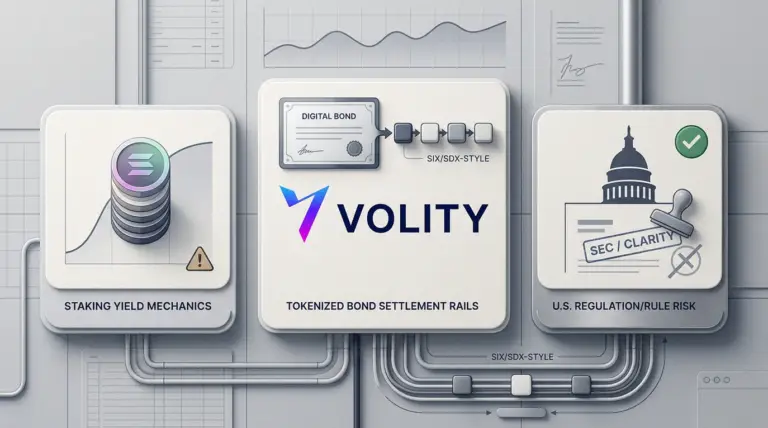
Saudi Arabia is taking the opposite route. Riyadh wants to tokenise pieces of its real economy, from property to infrastructure cash flows.
At the same time, State Street is expanding tokenised fund servicing. RedStone is also pushing real-world assets as usable DeFi collateral.
So the market is splitting. Weak venues face harsher policing. Large institutions and states are building tokenised products behind sturdier gates.
Key takeaways for traders
- BTC setup: $77,000 to $78,000 remains the near-term line. Losing it changes the chart quickly.
- Macro risk: higher Treasury yields are the main threat to another bitcoin leg higher.
- Policy trade: CLARITY Act progress could revive crypto-beta. A Senate stall would hurt sentiment.
- Rotation watch: SOL, LINK and BNB have active catalysts while BTC consolidates.
- Institutional signal: bitcoin remains the preferred clean exposure, while ETH must rebuild its story.
The market is nervous, not broken. Buyers still appear near support, but they are less reckless than last month.
For now, the best trades depend on patience. Macro can drag the tape lower. Washington can lift it sharply. Meanwhile, the plumbing keeps getting built.