Crypto market pulse: bitcoin trades like tech while regulation takes the wheel
Bitcoin is again behaving less like digital gold and more like a leveraged bet on risk appetite.
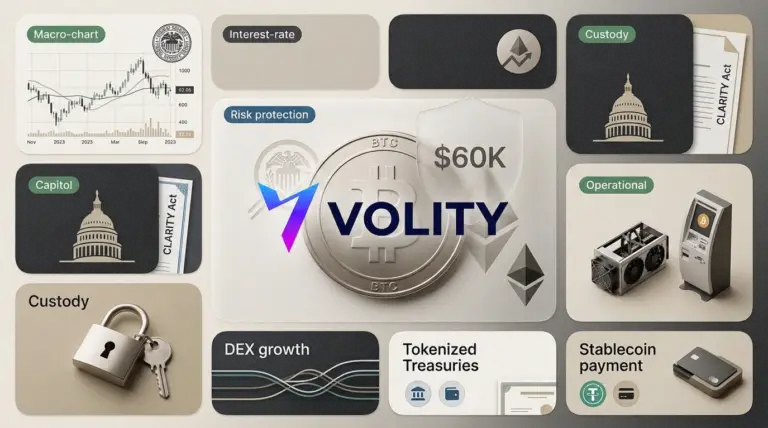
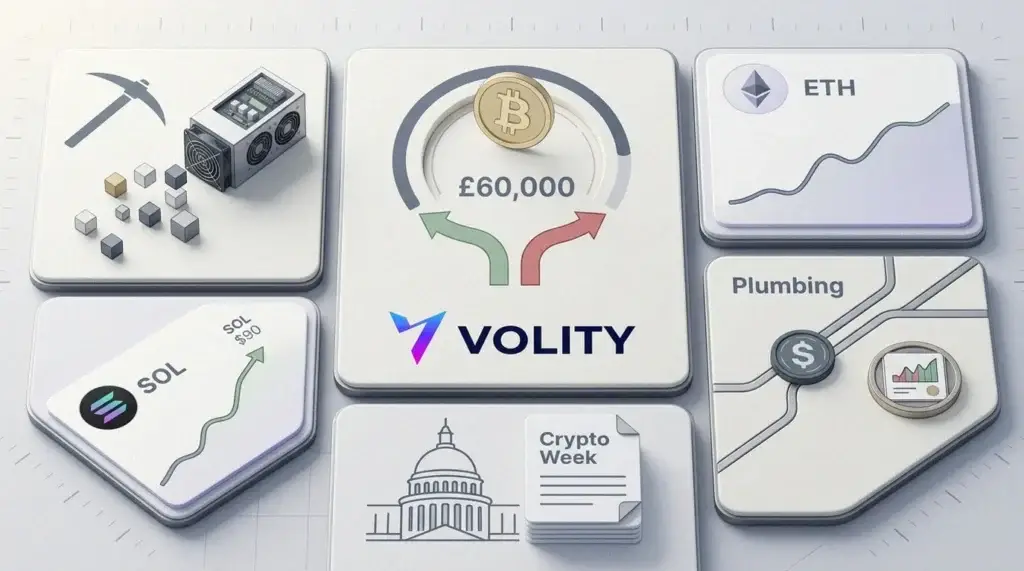
The token moved around the $60,000 line this week, with prints near $58,278 on July 1 and about $60,029 on July 2. That is not a crash, but it is not calm either. More importantly, the tape now looks tied to ETF flows, equity sentiment and macro headlines.
Meanwhile, the wider crypto market is trying to grow up in public. Banks are building stablecoin pipes. Brokers are testing tokenised equities. Lawmakers are lining up bills that could decide which businesses survive the next cycle.
So, the market’s centre of gravity has shifted. Traders still watch candles, but Washington, miners and Wall Street now move the price too.
Bitcoin is still a flow trade
Bitcoin’s old slogans are not carrying much weight today. The market wants evidence of demand, not poetry.
That means spot ETF flows remain the daily steering wheel. When inflows strengthen, traders lean into the rebound. However, when outflows pick up, Bitcoin starts to look like another expensive risk asset needing a buyer.
The recent price action supports that view. Bitcoin has hovered near yearly lows and sits roughly 40% below its October peak. Every bounce now faces a basic question: is this accumulation, or just another short-covering rally?
Equity traders will recognise the mood. Bitcoin is trading like a high-beta technology stock with a weekend schedule. It rallies when liquidity looks friendly. It slips when investors raise cash.
That does not make Bitcoin uninteresting. However, it does make the trade more mechanical. For now, the marginal buyer probably matters more than the grand narrative.
Miners add pressure to a tired tape
Miners are again one of the clearest stress points in the market.
Recent selling by miners has raised talk of capitulation. That word gets overused, but it matters here. Miners often sell when margins tighten, power bills bite and balance sheets need cash.
Miner selling also tends to arrive when the market already feels fragile. It can deepen a decline if there are few natural buyers. Still, it can also mark a late-stage clearing event, once weaker hands finish selling.
Sentiment readings also show a nervous market. Some gauges have flashed Extreme Fear, while technical commentary points to consolidation rather than a clean upside break. In plain market language, investors look defensive, not defeated.
That setup can cut both ways. A poor macro headline could push Bitcoin lower quickly. However, a sudden improvement in ETF demand could force fast repositioning.
Solana and ethereum fight for attention
Altcoins are not waiting politely for Bitcoin to make up its mind.
Solana has drawn buyers after clearing the $80 area, with bulls watching the $90 zone next. That move matters because failed breakouts have punished traders repeatedly this year. Follow-through is the whole story.
Solana is also trying to deepen its infrastructure story. The network’s move into onchain governance with validator voting gives investors another angle beyond price momentum. It suggests the chain wants a more formal political system, not just faster blocks.
Ethereum, meanwhile, has regained some attention as ETF inflows returned. Traders are watching whether ETH can push toward $1,700. However, Ethereum still needs stronger activity signals to turn a bounce into a sustained leadership trade.
The broader message is simple. Bitcoin sets the weather, but altcoins still create local storms.
Wall street moves deeper into the stack
The most important crypto story may not be the coin screen. It may be the plumbing behind it.
Standard Chartered and Circle have pushed bank-led access to USDC, showing how stablecoins are moving into mainstream financial workflows. At the same time, Robinhood has expanded its blockchain ambitions with tokenised stock trading and a dedicated Layer 2 effort.
That changes the competitive map. Robinhood is not merely offering crypto as another asset class. Instead, it is trying to recast parts of brokerage infrastructure around blockchain rails.
Cloudflare’s waitlist for an x402 stablecoin monetisation gateway points in the same direction. Crypto payments increasingly look like internet infrastructure, not just an exchange business.
The next fight may be less about which token wins. It may be about who owns the rails between wallets, banks, brokers and apps.
Regulation becomes the market-maker
Washington is no longer background noise for crypto traders. It is part of the order book.
The House Financial Services Committee has marked the week of July 14 as “Crypto Week”. Lawmakers are expected to consider the CLARITY Act, the Anti-CBDC Surveillance State Act and the Senate’s GENIUS Act.
That calendar matters because it moves the debate from speeches into sequencing. Stablecoins, exchange rules, custody and market structure all sit near the centre of the fight.
Meanwhile, regulators have been building their own framework. Recent moves include guidance around cryptoasset perpetual futures, a digital assets pilot using bitcoin, ether and USDC as margin collateral, and FDIC work linked to supervised institutions.
In other words, the market is leaving the grey zone slowly, then all at once. That may help large firms with lawyers and balance sheets. However, it could squeeze smaller platforms that relied on loose definitions.
Treasury bets reveal both conviction and strain
Corporate crypto strategies remain bold, and sometimes bruising.
Metaplanet added 2,823 BTC, even as its Bitcoin income revenue fell 41%. Forward Industries added 500,000 SOL, despite earlier crypto-related losses.
Those moves show that digital-asset treasury strategies still attract executives who want a sharper market identity. However, public investors have become less forgiving. A treasury announcement no longer guarantees a stock rally.
HashKey Capital’s launch of a Bitcoin hashrate fund with BITMAIN shows another shift. Investors are getting new wrappers around infrastructure, not just spot exposure. Mining economics, hardware cycles and power access are becoming packaged trades.
Still, the collapse in an Avalanche-linked treasury stock shows the danger. A balance sheet can amplify a token thesis. It can also expose shareholders to a falling knife.
Politics cuts across the crypto trade
Crypto also remains a political asset class, whether investors like it or not.
President Trump’s reported cryptocurrency-related income of more than $1.4 billion has sharpened scrutiny around the sector. His total earnings were listed at at least $2.2 billion in the first year of his second term.
The disclosure reportedly included major holdings tied to World Liberty Financial and direct Bitcoin wallet exposure. As a result, the policy debate now carries an obvious personal-finance shadow.
That lands awkwardly before the July legislative push. Lawmakers want to present clean rules for a maturing industry. However, the politics of enrichment may make every crypto bill harder to sell.
By the numbers
- $58,278 – Bitcoin’s quoted level on July 1.
- $60,029 – Bitcoin’s quoted level on July 2.
- 40% – Approximate fall from Bitcoin’s October peak.
- 2,823 BTC – Metaplanet’s latest Bitcoin addition.
- 500,000 SOL – Forward Industries’ Solana purchase.
Key takeaways
- Watch ETF flows. They remain the cleanest signal for Bitcoin’s next directional break.
- Track miner selling. Stress can deepen losses, but capitulation can also reset the tape.
- Respect Solana’s $80 level. Holding above it keeps the $90 target alive.
- Do not ignore Washington. July’s bills could reprice stablecoin and exchange risk.
- Treat treasury stocks carefully. They can trade like leveraged token proxies.
For now, crypto looks like a market caught between exhaustion and adoption. Bitcoin’s tape feels tired, yet the infrastructure story keeps advancing. Traders should expect noisy moves, sharp reversals and sudden winners when flows turn.
Related coverage on Volity
- How to Avoid Crypto Scams: A Beginner Safety Checklist
- How to Choose a Trading Platform: A 10-Point Checklist
- Demo vs Live Trading Account: A 7-Step Checklist Before You Go Live
- How to Size a Trade: Position Sizing and Risk Per Trade for Beginners
- Risk-Reward Ratio Explained: How to Set It and Why It Matters
- ETF vs Index Fund: The Difference and Which to Pick