Silver can be a good investment for diversification and as a hedge against currency and inflation risk, but it is more volatile than gold and swings with both industrial demand and safe-haven buying. Whether it suits you comes down to your goals, your time horizon and how well you can sit through sharp moves. Here is a balanced look at the case for and against it, and at the practical ways to get exposure.
One note before we start: this is general information for educational purposes, not personal financial advice. Silver is a volatile asset and any leveraged product carries a real risk of loss, so treat what follows as a framework for your own research rather than a recommendation.
What drives the silver price?
Silver is unusual because it lives in two markets at once, and that split personality is the key to understanding how it moves.
On one side it behaves like a monetary metal. Like gold, silver gets bought as a store of value when currencies weaken, inflation runs hot, or geopolitical risk flares up. That is the safe-haven side of the coin. On the other side it is a genuine industrial input: roughly half of annual demand comes from industry, and according to the Silver Institute’s World Silver Survey the big users are solar panels, electronics, electric vehicles and medical applications. That half of demand rises and falls with the health of the global economy.
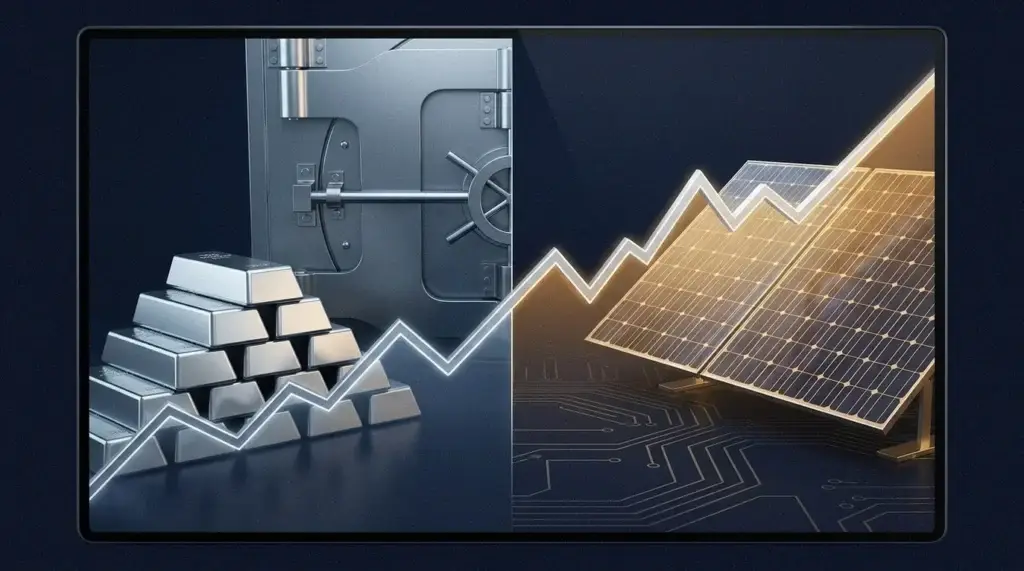
When both streams pull the same way, silver can move fast. When they diverge, say an industrial slowdown lands in the middle of a safe-haven rally, the price stalls or whipsaws. That heavy industrial exposure is also why silver is more cyclical than gold, which the World Gold Council data shows trading much more as a pure monetary and investment metal.
Is silver a good investment right now?
Asking whether silver is a good investment right now is really two questions in one: is the long-term case sound, and is the timing reasonable? The long-term case rests on structural industrial demand, solar above all, running against constrained mine supply. The timing question is harder, because silver is volatile enough to fall 20% or more in a bad stretch even while the multi-year story stays intact.
A measured view is that silver works best as a slice of a diversified portfolio rather than a single large bet, and sized so its swings never force you to sell at the worst moment. It fits some goals well, such as diversification and inflation hedging. It fits others badly, such as money you might need at short notice. So the honest answer is “it depends”, and the rest of this guide is about what it actually depends on.
How to buy silver: bars, coins, ETFs, and CFDs
There are four common routes, and they suit very different investors. If you want silver as a long-term physical holding, bars and coins make sense. If you want the price exposure without the storage, a fund or a CFD does the job. The table below lays out the trade-offs.
| Route | Capital needed | Leverage | Storage | Can go short? |
| Physical bars and coins | Full purchase | None | Vault or home, plus insurance | No |
| Silver ETF | Full purchase | Limited | None (the fund holds it) | Harder |
| Silver CFD (Volity) | Margin | Up to 1:500 (product-dependent) | None | Yes |
| Silver mining shares | Full purchase | None | None | Via a broker |
To buy silver bars or buy silver coins, you deal with a bullion dealer or a national mint and either take delivery or use insured storage. To buy silver online without ever holding metal, an exchange-traded fund tracks the price for you, while a contract for difference lets you trade the price in both directions using margin. Each route trades convenience for ownership in its own way, and the anchoring reference many investors start from is the live spot price set through the LBMA Silver Price benchmark.
UK buyers face one quirk that shapes the “cheapest place to buy silver uk” question: physical silver carries VAT, currently 20%, whereas investment gold does not. HMRC guidance spells that difference out, and it is a real cost the moment you buy, so it belongs in any comparison. When people search for the best place to buy silver uk, they are usually weighing three things: the premium a dealer charges over spot, whether VAT applies, and what storage or delivery adds. Established bullion dealers and the Royal Mint are the usual routes for physical metal, and the same premium logic applies whether you are buying gold bars or silver ones.
A CFD sidesteps the VAT and storage question altogether, because you are trading the price rather than owning any metal, though it brings its own overnight financing cost in exchange. Different tool, different cost structure, and the right one depends on whether you actually want to hold silver or simply trade it.
The gold-silver ratio: is silver cheap or dear?
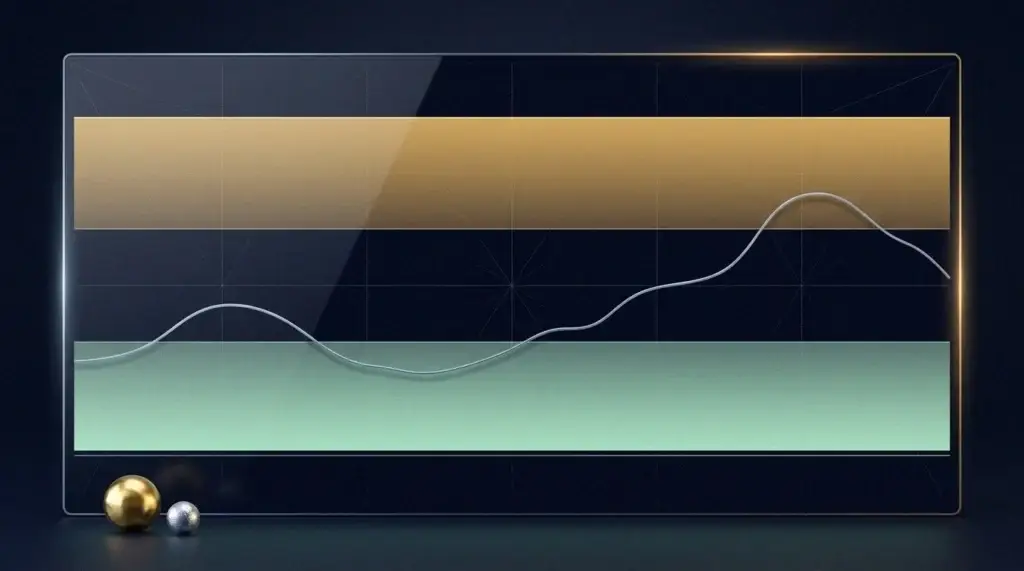
The gold-silver ratio is simply how many ounces of silver it takes to buy one ounce of gold. It is the classic gauge of whether silver looks cheap or expensive next to gold, and World Gold Council ‘s explainer is a good primer if the concept is new. As a rough map of the terrain:
- A long-term range has often sat somewhere around 50 to 70.
- Above roughly 80 to 100, silver looks historically cheap versus gold, and some investors start to rotate toward it.
- Below roughly 40, silver looks historically expensive versus gold.
The catch is that the ratio is a tendency, not a stopwatch. It can stay stretched for years at a time, so it is better used to inform a view than to trigger a trade. If you want the other half of the picture, our gold trading guide covers how gold itself behaves.
Silver price predictions
Search for silver price predictions for next 5 years, how high will silver go in 2026, or silver projections next 10 years, and you will turn up a wide spread of numbers from banks, analysts and commentators. Treat every one of them with care. Nobody can reliably predict a volatile commodity’s price, and forecasts that read as confident a year earlier are wrong often enough that the confidence itself should make you cautious. You only have to watch how far live silver quotes swing on a data service like Trading Economics to see how quickly any consensus gets overtaken by the next move.
What actually helps more than a target is a framework. Silver’s medium-term path leans on a handful of variables you can watch for yourself:
- Industrial demand, solar installations and electronics most of all, which the International Energy Agency expects to keep growing as photovoltaic capacity expands.
- Mine and recycling supply, which has struggled to keep pace with demand in recent years and produced recurring market deficits in the Silver Institute’s supply and demand data.
- Monetary conditions, meaning real interest rates and the direction of the US dollar, which move all the precious metals together.
- Investment flows, from ETF holdings to physical coin demand, which can swing sentiment quickly in either direction.
Rather than anchor on one prediction, keep an eye on those drivers. If industrial demand keeps climbing against tight supply, the structural case stays supportive. If a global slowdown hits industry, that same exposure turns into a headwind. A forecast is a guess you cannot check; the drivers are things you can genuinely monitor week to week.
What are the risks of investing in silver?
Any fair answer to whether silver is a good investment has to give the downside equal billing. The main risks are worth spelling out plainly.
- Volatility is the big one. Silver’s yearly price swings often run in the 20% to 30% range, well above gold, so the bigger upside always arrives with bigger drawdowns attached.
- Industrial recession risk cuts the other way. Because half of demand is industrial, a downturn can drag silver lower even while gold holds firm.
- There is no income. Silver pays no dividend or interest, so your entire return depends on the price going up.
- Cost drag shows up on every route. Physical silver carries premiums, UK VAT and storage; a leveraged CFD carries overnight financing. There is no free way in.
None of this makes silver a bad investment on its own. It just makes it one you have to size and time with its volatility firmly in mind, which is exactly what solid education on leverage and risk is there to help with. The FCA makes the same general point about leveraged products: they can amplify losses as easily as gains.
Trade or hold silver on Volity
Volity gives you a way to take a silver position without buying and storing any metal. Silver trades on Volity MT as the XAG/USD CFD, with leverage up to 1:500 depending on the instrument, flexible position sizes, and the freedom to go long or short as your view changes. Because silver moves so sharply, that leverage magnifies losses just as much as gains, so most measured approaches use only a fraction of it and size each position from a fixed percentage of risk. For a long-term physical holding, bars, coins or an ETF remain the better fit, and plenty of investors keep a core physical position and trade the CFD around it.
Opening an account costs nothing, and you can practise on a free demo before you commit a penny, then start trading from as little as $1. Execution runs through UBK Markets under CySEC licence 186/12. Explore the full metals range on the Volity commodity trading platform, or go straight to the market page to trade XAG/USD silver when you are ready. It also helps to see how silver stacks up against the other metals, from whether gold is a good investment to platinum and palladium.
Frequently asked questions
Is silver a good investment for beginners?
Silver can suit beginners as a small, diversifying part of a portfolio, but its volatility means it should be sized modestly. Starting with a single physical coin or a small ETF position keeps things simple, while leveraged CFDs are better left until you understand how sharply silver can move. Learn the drivers before you commit any significant capital.
Is silver better than gold?
Neither is simply better; they just behave differently. Gold is steadier and more purely monetary, which makes it the calmer hedge. Silver is more volatile and carries heavier industrial demand, so it tends to outperform gold in strong precious-metals rallies and underperform in downturns. Many investors hold both and let the two balance each other out.
How do I buy silver in the UK?
You can buy physical silver bars and coins from established bullion dealers or the Royal Mint, buy silver online through a silver ETF, or trade the price with a CFD. Remember that physical silver in the UK carries 20% VAT, unlike investment gold, so factor that cost in when you compare routes and dealers.
Can I lose money investing in silver?
Yes. Silver can fall sharply, and leveraged products such as CFDs can amplify losses well beyond the underlying price move. Silver also pays no income, so a falling price is a straight loss until and unless it recovers. Size any silver position to your own risk tolerance and treat leverage with real caution.


