Is ethereum a good investment? For some people it can earn a place as a small, high-risk part of a wider plan, but only with money they could afford to lose in full. Ethereum is the leading platform for smart contracts and pays a modest staking reward, yet the price still swings hard and the technology faces real competition. This is general information rather than personal advice, so treat what follows as a framework for your own decision.
The Crypto Trading Starter Kit
A plain-English PDF: what to check before you trade, how orders and risk really work, and the mistakes to skip. Get it free.
Key points
- Ethereum is a programmable network, so its value rests on the apps and money built on it rather than on scarcity alone.
- Ether can earn a staking reward of roughly 3% a year, something bitcoin does not offer.
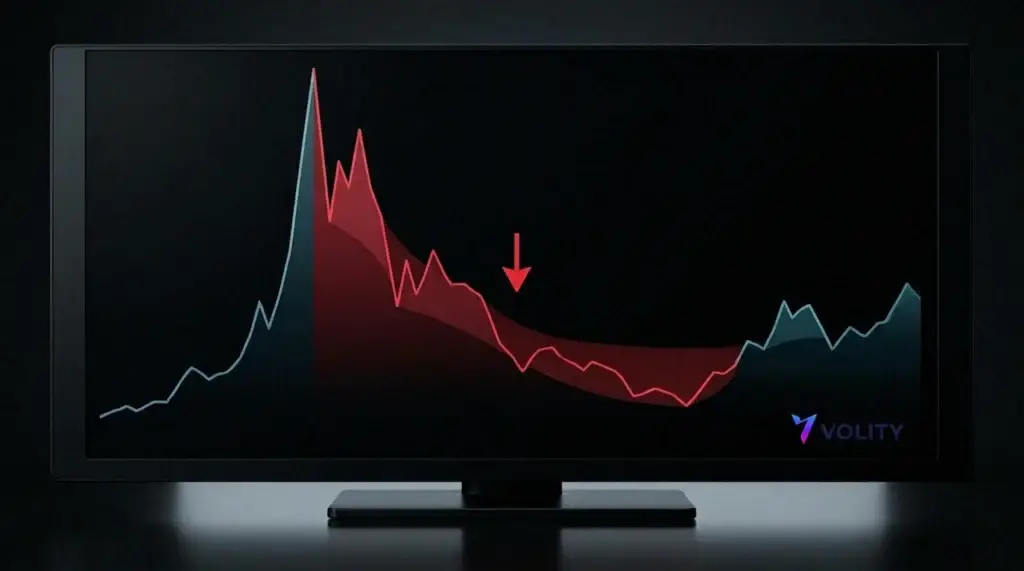
- The price is highly volatile. Ether fell about 80% from its late-2021 peak during the 2022 downturn.
- Regulators class cryptoassets as high risk. The FCA warns UK buyers they could lose everything, with no compensation scheme behind them.
- Most people get exposure by holding the coin, staking it, using a regulated fund or note, or trading a CFD that tracks the price.
What makes ethereum different from bitcoin?
The two are often lumped together, but they are built for different jobs. Bitcoin is designed to be scarce digital money, which is why many holders treat bitcoin as a potential store of value. Ethereum is a programmable blockchain that runs smart contracts, so people describe it less as digital gold and more as a settlement network for the apps and money built on it. If you are weighing the two as investments, our companion guides on whether bitcoin is a good investment and whether crypto is a good investment more broadly are the natural next reads, alongside the traditional store of value, gold.
That difference shapes the investment case. Ether, the network’s coin, pays for computation and secures the chain, so demand is tied to how much the platform is used. Supply also works differently. Bitcoin has a hard cap of 21 million coins, while ether has no fixed limit. Since the 2022 move to proof of stake, new issuance is low and a share of transaction fees is destroyed, as we cover below. Our ethereum explainer goes deeper on the coin itself.
What is the case for ethereum?
The bull case starts with dominance. Ethereum is the home of most decentralised finance and hosts a large share of the stablecoins that move value around crypto markets. When lending, trading and settlement happen on-chain, they often happen on Ethereum or the networks built on top of it, giving the platform a network effect that newer chains have struggled to match.
The second leg is yield. Because the network runs on proof of stake, holders can lock up ether to help secure it and earn a reward in return, currently in the region of 3% a year, and close to a third of all ether is now staked. That is a genuine difference from bitcoin, which pays nothing. There is also a supply angle. Under the fee change known as EIP-1559, the network burns the base fee on every transaction, so in busy periods the amount of ether destroyed can exceed the amount created, nudging supply lower. Finally, access has widened: spot ether exchange-traded funds launched in 2024, and from 8 October 2025 the FCA opened retail access to crypto exchange-traded notes in the UK.
What is the case against ethereum?
The bear case is just as important, and it begins with volatility. Ether does not move like a broad share index. It reached about $4,878 in November 2021, then fell to around $880 by mid-2022, a peak-to-trough drop of roughly 80% during that historic bear market. Anyone who held through that period needed a strong stomach and a long time horizon.
Competition is the second worry. Ethereum is not the only smart-contract platform, and faster, cheaper networks such as Solana compete for the same developers, users and trading activity. There is no guarantee Ethereum keeps its lead. Regulation adds a third layer of doubt: rules for staking services and crypto firms are still being written, with the EU’s Markets in Crypto-Assets framework rolling out and the picture differing by country. On top of that sits plain technical risk, since bugs in smart contracts, bridges and staking setups have led to large losses before.
| Concern | Why it matters |
| Extreme volatility | Drawdowns of 80% or more; the price can halve within weeks |
| Platform competition | Rival chains could pull activity and value away over time |
| Regulatory uncertainty | Rules on staking, tax and products are still changing and differ by country |
| Technical and custody risk | Smart-contract bugs, failed exchanges or lost keys can mean permanent loss |
Valuation is a further honest concern. Because ether is tied to network usage rather than earnings, there is no dividend or interest to fall back on and no simple way to value it. The Bank of England reminds holders that cryptocurrencies are not backed by any asset or government, and the Bank for International Settlements has questioned whether they can act as a reliable store of value.
Is ethereum a good investment right now?
Nobody can reliably tell you whether today is a good entry point, and anyone promising a precise price target is guessing. Ether has historically moved in multi-year cycles, with sharp rallies followed by long declines. The honest answer to “is ethereum a good investment right now” is that timing the market is extremely hard, so most careful buyers spread any purchase over months and steer clear of money they might need soon. Past cycles do not promise future ones, and a fresh fall of 50% or more has happened repeatedly.
Is ethereum a good investment in the UK?
UK readers have a few extra points to weigh. The Financial Conduct Authority treats cryptoassets as high-risk investments and states plainly that you should be prepared to lose all the money you put in, with no Financial Services Compensation Scheme cover if things go wrong. Since 8 October 2025 retail investors can access crypto exchange-traded notes listed on a recognised exchange, while the FCA keeps its ban on crypto derivatives such as CFDs and futures for UK retail clients. Any gains can also be taxable, so it is worth keeping records and checking the current UK rules on tax and cryptoassets.
Should I invest in ethereum, and how much?
The sizing question matters more than the exact entry price. A common rule of thumb among cautious investors is to keep highly speculative holdings to a small single-digit share of a portfolio, so a total loss would sting without wrecking your finances. It makes sense to clear expensive debt and build an emergency fund first, and to use only money you can afford to lose. If ether’s swings would cost you sleep or push you into selling at the worst moment, the allocation is too large. Staking can add a little income, but it does not protect you from the price falling.
How do people get exposure to ethereum?
There are four main routes, each with a different risk profile.
- Buy the coin directly on an exchange. You own the ether, but you take on custody: a wallet to protect and keys to keep safe. Our guide to investing in crypto walks through the practical steps.
- Stake it. You lock up ether to help secure the network and earn a reward, though your coins can be tied up and are still exposed to the price.
- Use a regulated product. A crypto exchange-traded fund or note gives you price exposure inside an ordinary investment account, with no wallet or keys to manage.
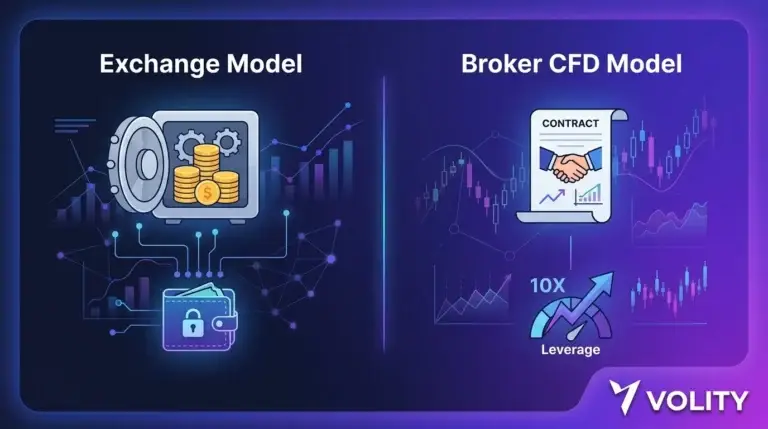
- Trade a contract for difference. A CFD tracks ether’s price without you owning the coin, and it lets you go long or short. It is a leveraged product, so gains and losses are both magnified.
Volity sits in that fourth group. On the Volity MT platform you can take CFD price exposure to ether without holding a wallet or managing keys, with leverage of up to 1:500 depending on the product and risk tools built in. Volity Trade Ltd acts as an introducing broker where clients are referred to and accepted by UBK Markets Ltd. The provider and terms for each account or service are identified in the relevant client documentation. You can open an account for $0, invest from $1 and place trades from $1. Because CFDs are leveraged, they suit active traders rather than buy-and-hold, so it is worth practising first on a free demo account before risking real money. To compare venues, see our roundup of crypto trading platforms.
Common questions about investing in ethereum
Is ethereum a good investment for beginners?
Only in very small amounts and after you understand the risks. Beginners are the most likely to buy near a peak and sell in a panic, so the safest approach is to start tiny, learn how custody and volatility work, and never invest money set aside for rent or bills. Ether is a high-risk asset, and a beginner portfolio should not lean on it.
Is ETH a good investment compared with bitcoin?
They serve different purposes. Bitcoin is built to be scarce digital money with a fixed cap, while ETH powers a platform and can earn a staking reward. Ether also tends to rise and fall with usage of the network, which makes it more sensitive to technology trends and competition. Which suits you depends on your risk tolerance and what you want the holding to do.
Can you lose all your money investing in ethereum?
Yes. The FCA warns that buyers should be prepared to lose everything, and there is no compensation scheme if a platform fails or the price collapses. A lost private key, a hacked wallet, a smart-contract bug or a failed exchange can all wipe out a holding permanently, which is why position size and secure custody matter so much.
Is staking ethereum worth it?
Staking can add a reward of around 3% a year, but it is not free money. Your ether stays exposed to the price, it can be locked up for a time, and running or delegating a validator carries technical and provider risk. A 3% reward offers little comfort if the coin drops by half, so treat staking as a small bonus rather than a reason to buy.
This article is general information and not personal financial advice. Cryptoassets are high risk and largely unregulated in many places; you should be prepared to lose all the money you invest. CFDs are complex, leveraged instruments that carry a high risk of losing money quickly. Do your own research and consider independent advice before investing.