Is crypto a good investment? It can be, for some people, as a small and high-risk slice of a wider plan, and only with money you could afford to lose in full. Cryptocurrency offers the chance of large gains and around-the-clock access. It also swings violently and pays no income, and one large study found most retail buyers lost money on their first purchase. This is general information rather than personal advice, so treat it as a framework for your own decision.
The Crypto Trading Starter Kit
A plain-English PDF: what to check before you trade, how orders and risk really work, and the mistakes to skip. Get it free.
Key points
- Crypto is an asset class, not a single asset. It spans Bitcoin, Ether, dollar-linked stablecoins and tens of thousands of smaller tokens, most of which hold little value.
- It pays no dividend, interest or earnings, so any return depends on someone paying more for it later.
- A Bank for International Settlements study across 95 countries estimated that 73 to 81 percent of retail buyers lost money on their initial investment.
- More than half the tokens listed since 2014 are now inactive or worthless, so picking long-term winners is very hard.
- Regulators such as the FCA and the EU authorities class crypto as high risk, with little or no compensation if things go wrong.
- People get exposure by buying coins directly, through a regulated fund or note, or through a CFD that tracks the price.
What counts as crypto as an asset class?
When people ask whether crypto is a good investment, they mean a whole category, not one thing. Bitcoin is the largest and oldest, built as a fixed-supply digital money. Ether powers the Ethereum network behind smart contracts and much of decentralised finance. Beyond those sit a long tail of alternative coins, or altcoins, plus dollar-linked stablecoins that try to hold a steady value. Our guide to what cryptocurrency is covers the basics first. The scale is easy to underestimate. More than 24,000 tokens have been listed since 2014, yet around 14,000 are now considered dead, with no real trading or a project that quietly closed.
What is the case for investing in crypto?
The strongest argument is asymmetric upside: a small position can grow many times over if adoption keeps rising, while your downside is capped at what you put in. Bitcoin’s supply is fixed at 21 million coins in its own software, which supports the case for it as a scarce digital store of value. Adoption is the second pillar, as regulated spot exchange-traded funds and notes now let people hold price exposure inside mainstream accounts. Access is easy too, since crypto trades 24 hours a day, all week, and a crypto exchange-traded fund or note bundles that exposure with no wallet to manage. Our companion pieces on whether Bitcoin is a good investment and whether Ethereum is a good investment go deeper on those two coins.
What is the case against crypto?
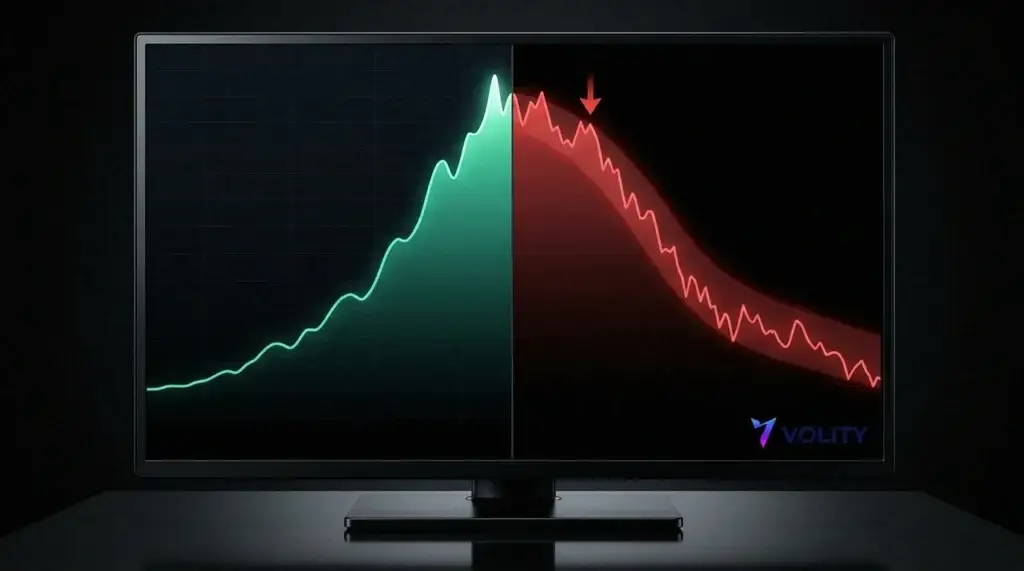
The case against starts with volatility. Large tokens routinely fall 70 to 90 percent in a downturn and can take years to recover. The results show up in the data. The Bank for International Settlements studied crypto app users across 95 countries and estimated that 73 to 81 percent lost money on their first investment, often after buying a rally and selling the crash that followed.
| Concern | Why it matters |
| Extreme volatility | Large tokens can fall 70 to 90 percent in a downturn and stay down for years |
| No cash flow | No dividend, interest or earnings, so there is no income and no simple way to value it |
| High failure rate | Most smaller tokens from past cycles are now dead, and outright scams are common |
| Custody and security | Lost keys or a failed exchange can mean permanent, unrecoverable loss |
| Regulatory risk | Rules on access, products and tax differ by country and can change quickly |
Because crypto produces no income, there is no dividend or interest to fall back on and no obvious way to value it, so its price rests largely on sentiment. Security is another weak spot. Hold coins yourself and a lost private key can wipe out your holding forever; leave them on an exchange and you depend on that platform staying solvent, as thousands learned when large venues failed. It is worth learning how to secure a crypto wallet before you buy. The idea that crypto reliably hedges a share portfolio has also weakened, as its link to equities tends to tighten during market stress.
How do stablecoins and altcoins change the picture?
Stablecoins are often seen as the safe corner of crypto because they aim to track a currency such as the US dollar. They are handy for moving value and parking cash between trades, though a peg is only as sound as the reserves and design behind it. In May 2022 the algorithmic stablecoin TerraUSD lost its peg and collapsed with its sister token, an event the Hong Kong Monetary Authority studied as a stablecoin market crash that erased tens of billions of dollars in days. Most stablecoins do not share that exact flaw, yet none should be treated as risk-free. Altcoins are where the failure rate really bites, since for every project that becomes a household name, many more launch and fade to nothing. The EU supervisory authorities warn consumers to be wary of promised fast or high returns.
Should I invest in crypto, and how much?
The sizing question matters far more than the entry price. Cautious investors often keep highly speculative holdings to a small single-digit share of a portfolio, so a total loss would sting without derailing their finances. Before buying, clear expensive debt and build an emergency fund, and use only money you can genuinely afford to lose. If crypto’s swings would cost you sleep or force a sale at the worst possible moment, the position is too big for you. Within the category it helps to look at the two majors on their own terms, whether bitcoin is a good investment and whether ethereum is a good investment, and to compare the whole asset class with the classic haven, gold.
Is crypto a good investment right now?
Nobody can reliably tell you whether today is a good entry point, and anyone quoting a precise price target is guessing. Crypto has historically moved in long boom and bust cycles, with sharp rallies followed by deep and lengthy declines. The honest answer to whether crypto is a good investment right now is that timing the market is extremely hard, so careful buyers tend to spread any purchase over months rather than committing in one go. A fresh drop of 50 percent or more has happened repeatedly, and past cycles do not promise future ones.
Is crypto a good investment in the UK?
UK readers face a few extra points. The Financial Conduct Authority classes cryptoassets as high-risk investments and states plainly that you should be prepared to lose all the money you put in, with no Financial Services Compensation Scheme cover if things go wrong. Its research has found crypto ownership climbing, with roughly one in eight UK adults now holding some form of cryptoasset. From late 2025 the FCA opened retail access to crypto exchange-traded notes on recognised exchanges, while keeping its ban on crypto derivatives such as CFDs for UK retail clients. Any gains can also be taxable, so keep records and check the current UK rules on tax and cryptoassets.
Across the EU, the Markets in Crypto-Assets regulation, known as MiCA, now sets common rules for providers. Even so, the supervisory authorities are clear that crypto sits outside investor compensation schemes, so you can still lose everything you invest, and the Bank of England reminds holders that cryptocurrencies are not backed by any asset or government.
How do people get exposure to crypto?
There are three main routes, each with a different risk profile.
- Buy the coins directly on an exchange. You own the crypto but take on custody, with a wallet to protect and keys to keep safe. Our guide to investing in crypto walks through the steps.
- Use a regulated product. A crypto exchange-traded fund or note gives you price exposure inside an ordinary investment account, with no wallet or keys to manage, where it is available to you.
- Trade a contract for difference. A CFD tracks a coin’s price without you owning it, and lets you go long or short. It is leveraged, so gains and losses are both magnified.
Volity sits in that third group. On the Volity MT platform you can take CFD price exposure to major cryptocurrencies without holding a wallet or managing keys, with leverage of up to 1:500 depending on the product, plus risk tools such as stop orders. Volity Trade Ltd acts as an introducing broker where clients are referred to and accepted by UBK Markets Ltd. The provider and terms for each account or service are identified in the relevant client documentation. You can open an account for $0, invest from $1 and place trades from $1, using your own capital and leverage rather than any funded arrangement. Because CFDs are leveraged and high risk, they suit active traders rather than long-term buy and hold, so it is worth practising first on a free demo account.
Common questions about investing in crypto
Is cryptocurrency a good investment for beginners?
Only in very small amounts and after you understand the risks. Beginners are the most likely to buy near a peak and sell in a panic, so it is safest to start tiny and never invest money set aside for rent, bills or an emergency fund. A beginner portfolio should not lean on a high-risk asset class like crypto.
Is crypto a good investment compared with stocks?
They are very different tools. Shares are a stake in a business that can earn profits and pay dividends, which gives them a value anchor. Crypto pays no income and relies on future demand, so it tends to be more volatile and harder to value. Many investors build a base of shares and funds first, then add only a small speculative slice of crypto if it suits their risk tolerance.
Can you lose all your money in crypto?
Yes. The FCA and the EU authorities warn that you should be prepared to lose everything, with generally no compensation scheme if a platform fails or a price collapses. A lost key, a hacked wallet, a failed exchange or a token that simply dies can each wipe out a holding permanently, which is why position size and secure custody matter so much.
How much of my portfolio should be in crypto?
That is a personal decision, and this article is not advice. Many cautious investors cap speculative assets like crypto at a small single-digit percentage of a portfolio, on the principle that a complete loss should be survivable. If a full write-off would damage your financial security, the allocation is too large.
This article is general information and not personal financial advice. Cryptoassets are high risk and largely unregulated in many places, and you should be prepared to lose all the money you invest. CFDs are complex, leveraged instruments that carry a high risk of losing money quickly. Do your own research and consider independent advice before investing.