Crypto markets hold their breath as bitcoin slides and regulators move in
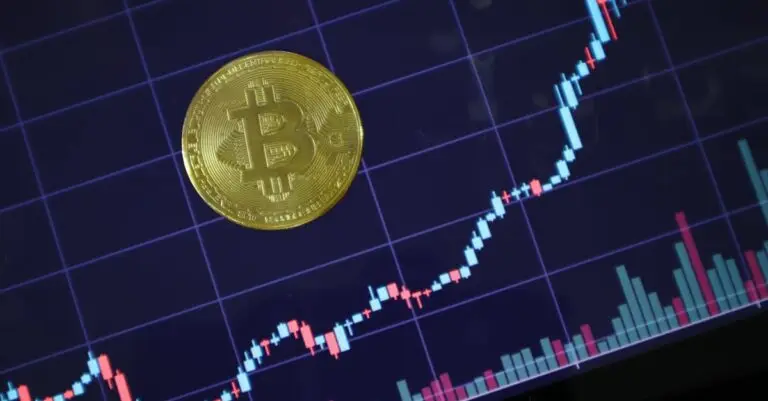
Crypto heads into the Fed’s rate decision with its collar turned up. Bitcoin has slipped below $64,000, ether is struggling near $1,900, and the easy bid in smaller tokens has gone missing. Yet the livelier story sits away from the price screens. Capital, law and market plumbing are moving fast.
Across major tokens, the tape looks bruised rather than broken. However, the rise in volume suggests traders are not casually trimming risk. They are being pushed, liquidated, hedged or forced to rethink leverage.
Market snapshot: red day, nervous week
- Total crypto market value is hovering around $2.16 trillion to $2.28 trillion, down roughly 1.6% to 2.9% over 24 hours.
- Bitcoin is trading in the low $60,000s, after briefly dipping below $64,000.
- Ether has slipped below, or near, $1,900, as ETF demand looks soft.
- Solana has lost support in the mid $70s, while XRP has also weakened.
- Turnover has surged, with one tally putting 24-hour volume near $595 billion.
Meanwhile, sentiment remains poor. A widely watched fear gauge sits around 29, firmly in “fear” territory. That does not guarantee another leg lower. Still, it tells traders that macro data now has first refusal on price direction.
The mood is unusually jumpy because this sell-off is not just about coins. It is also about cash. Stablecoins, exchange access, staking systems and prediction markets all face fresh scrutiny. The next move in bitcoin may come from Washington as much as from Binance or Coinbase.
Macro overhang: fed and stablecoin rules
The Federal Open Market Committee meets on July 28 and 29. Rates have sat in the 3.50% to 3.75% band for four straight meetings. That stability has lowered the shock value of the decision. However, oil’s recent firmness and sticky inflation expectations keep rate-cut hopes fragile.
For bitcoin, the issue is not simply whether the Fed moves this week. It is whether officials sound comfortable easing later. A softer tone would help risk assets. A stubborn inflation message would probably keep crypto funding tight.
At the same time, the GENIUS Act stablecoin rulemaking deadline is landing on the policy calendar. Six US agencies are expected to finalise capital, reserve and licensing rules for large dollar stablecoins. That matters for USDC, newer dollar tokens and every desk using stablecoins as trading fuel.
Clearer rules could help large, bank-connected issuers. However, higher reserve and capital standards may squeeze margins. They could also reshape stablecoin yield products, which have become a quiet source of return for traders.
Put plainly, the market is asking two questions at once. What will dollars cost? And who will be allowed to manufacture the on-chain version?
Prediction markets: politics finds the order book
Prediction markets once looked like a niche corner of crypto. Now, several governments treat them as a live regulatory test.
In Pennsylvania, lawmakers have introduced HB 2711, which would restrict gambling companies from offering prediction-market liquidity services. The bill would add stricter age limits, investor protections and rules resembling insider-trading controls.
Meanwhile, a federal judge has temporarily blocked Minnesota’s attempted ban on prediction markets. That allows platforms such as Kalshi and Polymarket to keep operating while litigation continues. So, the United States now has two competing instincts: states want brakes, while federal courts are asking for process.
On Capitol Hill, the CLARITY Act keeps drawing traditional finance into the crypto debate. Franklin Templeton has backed the bill, arguing that clearer rules would protect investors and help businesses plan. However, Senate work has slowed as lawmakers juggle other priorities.
Sports are also entering the fight. The NFL has asked the CFTC to curb high-risk sports prediction contracts. For traders, that is not only about football. It tests how far regulators will reach into event-based markets.
NFTs stir while spot markets sag
Oddly, NFTs are showing signs of life. Weekly sales have risen about 41% to roughly $221.5 million, led by Ethereum collections. CryptoPunks sales have jumped nearly 590%, while Pudgy Penguins and Ethena-linked activity have also improved.
That rebound remains narrow. However, it matters because NFTs often reappear when traders search for convex bets. They also matter as collateral, status assets and liquidity gauges. If blue-chip NFT floors keep firming while bitcoin dips, risk appetite may be less dead than spot prices imply.
Global regulation: sandboxes, taxes and app stores
Outside the United States, regulators are taking different routes. Zimbabwe has approved seven fintech firms for a blockchain-focused sandbox. The projects can test tokenisation, synthetic trading, crowdfunding and broader blockchain finance under supervision.
That may sound small beside US rulemaking. Still, frontier markets often care deeply about payment rails, capital controls and currency volatility. Sandbox approvals can become early hints of where digital asset usage may grow fastest.
South Korea is moving with a sharper edge. The OKX app has returned to the Korean Google Play Store after a four-day suspension. Bybit, however, remains unavailable. Local scrutiny of crypto-linked financial disclosures by public officials also points to a wider clean-up.
For market makers, Korea’s stop-start rhythm is not background noise. It affects liquidity, retail flow and venue risk. App store access has become part of market structure.
Canada and Japan are taking a more rules-based approach. Canada is moving towards formal stablecoin regulation. Japan has floated a 20% flat tax on crypto profits, which could simplify after-tax returns for local traders.
Infrastructure: lido shifts, circle goes long
The protocol layer also deserves attention. After Ethereum’s Pectra upgrade, Lido has started migrating more than 8 million staked ETH. The goal is to reduce validator count and improve efficiency.
That sounds technical, and it is. However, it can affect withdrawal queues, staking concentration, MEV patterns and liquid-staking token liquidity. ETH holders should watch the plumbing while everyone else watches the candle.
Further upstream, Circle has acquired nearly 1,000 blockchain-related patents from IBM. The USDC issuer is signalling that it wants more than payment volume. It wants infrastructure rights for settlement, tokenisation and enterprise blockchain rails.
That may prove important as stablecoin regulation hardens. In a stricter world, licences matter. So do reserves, bank partners and intellectual property.
Stablecoins: shrinking float, huge churn
Stablecoin data tell a different story from token prices. Dollar stablecoins have reportedly lost about $7.7 billion in circulating value over a recent stretch. Yet trading volume reached around $1.79 trillion.
That mix suggests heavy rotation rather than simple retreat. Traders are moving between cash, majors and venue-specific opportunities. Meanwhile, listings such as RLUSD on Upbit’s KRW, BTC and USDT markets keep feeding arbitrage desks.
Structured yield is also spreading through hybrid wrappers. Metaplanet is planning bitcoin-backed bonds with yields up to 6%. X Money has launched US services offering up to 6% on integrated payment accounts.
Yield has not disappeared from crypto. Instead, it is migrating from loose offshore venues into products that look half Wall Street, half wallet.
Risk desk: hacks and automation
Security risk continues to bite. A cyberattack on Grinex forced a suspension after about $13.1 million was stolen. For retail traders, venue choice remains a real source of return protection.
At the same time, AI-linked infrastructure incidents have revived worries about trading automation, data leakage and market manipulation. Crypto already trades at machine speed. Cyber risk and market-structure risk now sit much closer together.
Key takeaways
- Respect the calendar. The Fed meeting and stablecoin rules make the next 48 hours unusually sensitive.
- Watch funding. Stablecoin churn may create basis and cross-venue opportunities, but headline risk is high.
- Treat regulation as price action. Prediction-market rulings now matter for broader crypto product design.
- Follow the plumbing. Lido’s ETH migration and Circle’s patent push may influence long-term infrastructure winners.
- Cut weak venue risk. Exchange hacks and app suspensions can damage portfolios as surely as bad entries.
The market looks tired on the surface. Underneath, money, law and code are all moving quickly. For now, the better trade may be reading the rulebook before chasing the next bitcoin tick.
Related coverage on Volity
- How to Avoid Crypto Scams: A Beginner Safety Checklist
- How to Choose a Trading Platform: A 10-Point Checklist
- Demo vs Live Trading Account: A 7-Step Checklist Before You Go Live
- How to Size a Trade: Position Sizing and Risk Per Trade for Beginners
- Risk-Reward Ratio Explained: How to Set It and Why It Matters
- ETF vs Index Fund: The Difference and Which to Pick