Crypto’s uneasy rally: bitmart freezes, bitcoin flirts with 65k, and robinhood eyes ethereum
Crypto opened the week with one foot on the accelerator and the other near the brake. Bitcoin tested $65,000, Ethereum’s retail pipeline looked more interesting, and another exchange faced questions over frozen withdrawals. For traders, the mood is not quite bullish. It is more like hungry, suspicious, and unusually sensitive to Wednesday’s inflation print.
That mix matters. Prices have recovered enough to bring momentum accounts back to the screen. However, the BitMart complaints are a reminder that counterparty risk never really left. It just waited for risk appetite to return.
Withdrawals: bitmart’s “orderly wind-down” meets angry customers
BitMart, once a busy mid-tier centralised exchange, is under fresh pressure over withdrawal problems. A co-founder of OpenGradient, a decentralised AI network, says his market-making team cannot withdraw funds from the platform. According to those claims, attempts to remove assets have failed while customer balances remain in limbo.
More damagingly, BitMart is accused of encouraging token holders to lock assets shortly before restricting services. If accurate, that would suggest clients were pushed deeper inside the building before the exits narrowed. BitMart disputes that characterisation.
The company says it is conducting an orderly wind-down. It also says withdrawals remain available. Meanwhile, founder Sheldon Xia has denied any misappropriation of user assets. Still, traders are not paid to admire wording. They are paid to judge whether collateral can move when markets do.
At present, three gaps stand out:
- BitMart has not published a full, independently verified proof-of-reserves.
- No outside party has confirmed insolvency or misuse of client assets.
- Public complaints about stuck funds continue to circulate.
The legal answer may arrive too late for active accounts. If a user cannot withdraw, the venue effectively stops functioning as infrastructure. It becomes a credit exposure with a login screen.
That distinction matters for market makers and funds. Yield campaigns, lock-ups and preferential trading terms can look attractive during calm sessions. However, they lose their value quickly when settlement fails. Any balance held at an opaque venue deserves the same scrutiny as an unsecured loan.
Bitcoin: 65k becomes the line before cpi
Against that uneasy backdrop, Bitcoin is managing a controlled recovery. BTC pushed above $65,000 in early trading, then slipped back below that level. It recently hovered near $64,955, up roughly 0.3% on the day and 3.4% over the past week. Its intraday high stood near $65,363.
The move is not spectacular. However, it is clean enough to matter. Traders have been rebuilding risk as markets reassess the path for US interest rates. Softer labour data helped. Now Wednesday’s July CPI report carries the next vote.
Economists expect headline inflation near 3.4% annually. Core CPI is expected to drift towards 2.5%. A cooler number would strengthen the case that the Federal Reserve can stay patient. It would also support the risk trade already visible in crypto, equities and high-beta assets.
However, a hotter print would hit a market leaning towards comfort. Bitcoin’s recovery has drawn in short-term momentum buyers. The downside could move faster than the upside if inflation disappoints.
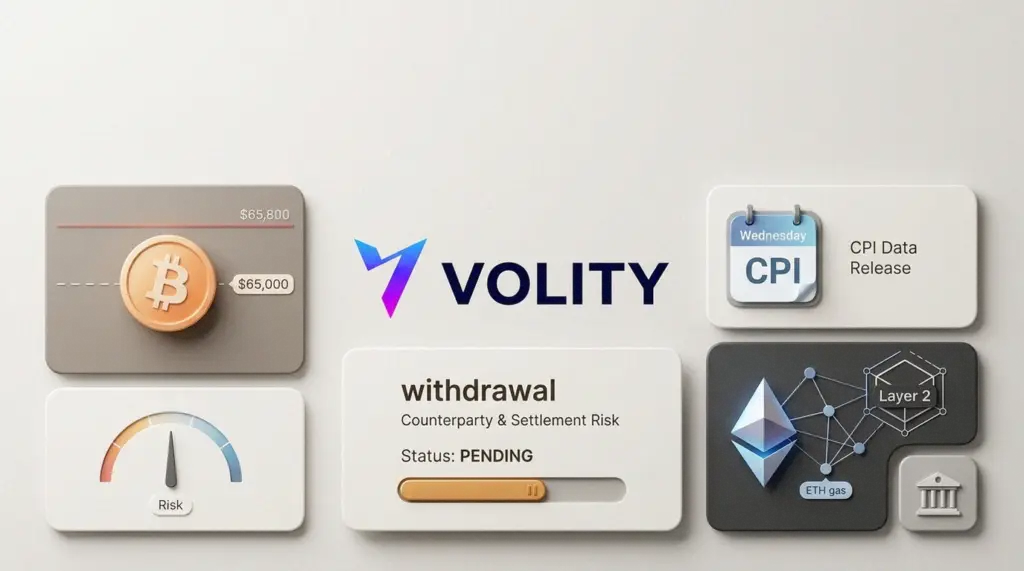
Technically, the map is narrow. Bulls need Bitcoin to hold the $65,000 area with conviction. Next, they need a push through the $65,800 zone, where sellers have reappeared several times. Until then, the rally remains a test, not a breakout.
By the numbers
- $65,363 – Bitcoin’s recent intraday high.
- $65,800 – Near-term resistance watched by active traders.
- 3.4% – Expected annual headline CPI rate.
- 27.4 million – Robinhood funded customer accounts.
- ETH – Native gas token for Robinhood Chain.
Robinhood: 27 million accounts and a quieter ethereum story
While Bitcoin trades the macro calendar, Ethereum has a more structural story forming. Robinhood Chain, built as a layer 2 on Arbitrum, could become a serious bridge between retail brokerage users and onchain finance.
Tom Lee, chair of Bitmine and co-founder of Fundstrat, has called Robinhood Chain one of 2026’s more important crypto developments. His argument is simple. Robinhood already has more than 27 million funded customer accounts. If even a fraction of those users touch Ethereum-based services, the distribution advantage is large.
The design matters. Robinhood Chain uses ETH as its native gas token. Users pay transaction fees in ETH, while final settlement occurs on Ethereum mainnet. As a result, ETH could become less like a coin sitting in a watchlist and more like the fee currency inside a familiar brokerage app.
That is not a small shift. Many retail users still find wallets, bridges and seed phrases awkward. However, Robinhood has spent years making trading feel simple, sometimes too simple. If it packages onchain products inside an existing account, it could lower the barrier for first-time activity.
Still, the market should avoid counting all 27.4 million accounts as future onchain users. That figure refers to funded brokerage accounts, not active Robinhood Chain addresses. The better signals will be daily active addresses, bridge volumes, total value locked and repeat transaction rates.
For now, the architecture deserves attention before the flows arrive. If Robinhood routes more customer activity through its L2, liquidity patterns may shift. DeFi venues, market makers and Ethereum fee watchers should monitor that change early.
Infrastructure: centralised stress, onchain ambition
The contrast is striking. On one side, BitMart faces complaints that withdrawals are stuck. On the other, brokers and market makers are building rails that push more activity onchain. Meanwhile, regulators in the US and Britain continue to study tokenised assets, onchain settlement and broker-dealer models that straddle traditional markets and crypto.
That does not mean decentralisation wins by default. Some onchain systems have poor governance, thin liquidity and fragile code. However, transparent settlement has a strong sales pitch whenever centralised venues seize up. Traders remember the lesson quickly when balances stop moving.
The industry’s centre of gravity keeps shifting. Big platforms want brokerage, crypto, tokenised assets and payments inside one interface. Users want convenience. Regulators want visibility. Traders, meanwhile, want the simple right to withdraw before someone changes the terms.
Key takeaways
- Counterparty risk is tradable risk. Exchange balances at opaque venues should count against risk limits.
- Bitcoin’s CPI setup is asymmetric. A soft print may lift prices, but a hot print could trigger faster selling.
- $65,800 matters next. A clean move above that level would improve the short-term technical picture.
- Robinhood Chain is about distribution. Real adoption, not account totals, will decide its market impact.
- Ethereum may gain from retail plumbing. More L2 activity could gradually increase ETH’s role as transaction money.
For today’s tape, the message is blunt. Crypto wants to rally, but trust remains patchy. Bitcoin needs help from inflation data. Ethereum needs real users, not just elegant rails. And anyone holding funds on a strained exchange needs to ask the only question that matters: can the money leave?
Related coverage on Volity
- How to Avoid Crypto Scams: A Beginner Safety Checklist
- How to Choose a Trading Platform: A 10-Point Checklist
- Demo vs Live Trading Account: A 7-Step Checklist Before You Go Live
- How to Size a Trade: Position Sizing and Risk Per Trade for Beginners
- Risk-Reward Ratio Explained: How to Set It and Why It Matters
- ETF vs Index Fund: The Difference and Which to Pick