Crypto’s new map: faster rails, bigger bets and a regulatory traffic jam
Wednesday, September 23, 2026. Crypto is being tugged in three directions at once. Institutions want in, networks want speed, and Washington still cannot settle the rulebook.
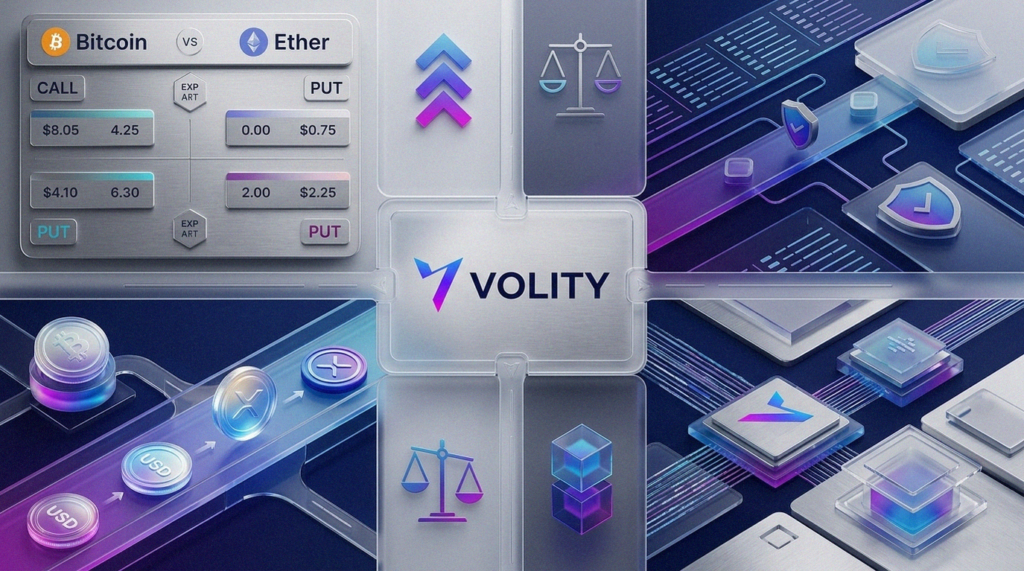
Bitcoin traded in the mid-$80,000s on Wednesday. However, traders were already watching Friday’s quarterly options expiry, involving more than $16.6 billion of Bitcoin and Ether contracts.
The market has shown some backbone. Bitcoin absorbed the Federal Reserve’s latest 25-basis-point rate rise and the Senate’s failure to move the CLARITY Act forward.
Meanwhile, US spot Bitcoin ETFs remain a decisive swing factor. One recent session recorded roughly $450 million of outflows, before buyers returned in force.
Tokenisation moves beyond the laboratory
The bigger story may sit well away from Bitcoin’s chart. CFTC chair Michael Selig has urged regulators to prepare for tokenisation, 24-hour markets and stablecoin-based collateral.
The CFTC is considering stablecoins as eligible collateral. Meanwhile, the SEC has proposed an innovation exemption for certain on-chain trading of tokenised equities.
Those steps could reshape market plumbing. Stocks, funds, bonds and commodities could trade on blockchain rails, while retaining their familiar economic purpose.
The sales pitch is straightforward: faster settlement, wider access and programmable ownership. However, the difficult questions remain legal rather than technical.
Who holds the enforceable claim on a tokenised share? Which institution corrects an error, freezes stolen assets, or resolves a failed trade?
Canada’s six largest banks are exploring a shared tokenised-deposit system. That project suggests lenders now see blockchain settlement as a business question, not a fringe experiment.
Europe is taking a tougher line. The European Central Bank wants tighter limits on stablecoin yield and changes to MiCA’s reserve framework.
Dollar- and euro-linked tokens may therefore face very different economics inside the European Union. That matters for issuers, exchanges and payment firms alike.
Washington leaves traders with a familiar problem
The CLARITY Act failed on a procedural Senate vote. As a result, crypto firms still face anti-money-laundering rules and an unsettled division of agency authority.
Senator Cynthia Lummis blamed Democrats for the impasse. However, the immediate market consequence is less partisan and more practical: uncertainty persists.
Investors still lack a settled answer on where SEC authority ends and CFTC authority begins. Each enforcement action can therefore move prices as sharply as a product launch.
Friday’s expiry could disturb a calm market
Bitcoin and Ether options worth more than $16.6 billion expire on Friday, September 25. Calls outnumber puts in both markets.
That imbalance does not promise a rally. Instead, it raises the odds of abrupt moves as dealers adjust hedges into settlement.
Bitcoin’s recovery towards $86,000 has drawn support from ETF buying. Yet trading volume and market breadth have softened after the advance.
A firm hold above the mid-$80,000s would support the constructive case. Conversely, a break lower would put ETF flows and post-Fed risk appetite back under scrutiny.
CryptoQuant chief executive Ki Young Ju believes the bull cycle could expand three to five times. Still, that projection is an opinion, not a tradable certainty.
Hyperliquid turns leverage into its own market
Hyperliquid has reached a record $18 billion in open interest. The decentralised derivatives venue now commands liquidity that increasingly resembles a centralised exchange.
Its perpetual futures market has attracted traders seeking speed and deep books. However, open interest measures outstanding bets, not conviction or profit.
When traders crowd into one direction, liquidation cascades can follow quickly. Hyperliquid’s rise is therefore both an adoption milestone and a leverage warning.
The platform is also adding NEAR spot trading. Meanwhile, NEAR has expanded tokenised-asset access through Ondo, offering 20 US shares and ETFs.
Both moves underline a broader contest. Crypto networks want to host native tokens, derivatives and traditional assets on the same rails.
Solana sells speed, but testnet is not mainnet
Solana has moved its Alpenglow upgrade to public testnet. The proposal targets roughly 150-millisecond transaction finality, against about 12.8 seconds currently.
Alpenglow would replace TowerBFT with Votor, a validator voting design using one or two direct rounds. If it works, users could gain near-instant confirmation.
That matters for payments, market-making and high-frequency strategies. Yet the full validator-client ecosystem has not yet integrated the upgrade.
Traders should treat 150 milliseconds as a technical target. It is not yet a delivered mainnet feature.
Altcoins chase specific catalysts
Lighter has gained attention after Bitwise launched a LIT staking ETP on Xetra. European investors now have a regulated route to exposure and staking-linked returns.
However, ETP buyers still need to assess fees, custody, liquidity and the mechanics behind those returns. A familiar wrapper does not erase crypto-specific risk.
Dogecoin held near $0.10 after a 25% weekly rise. PEPE, meanwhile, retained a breakout following a gain of about 45%.
Meme-coin strength often signals broad risk appetite. Yet it rarely offers a durable guide to value or future cash flows.
XRP has a possible catalyst on October 5, when an XRP Ledger delegation upgrade could go live. Still, technical upgrades do not settle XRP’s regulatory and investment debates.
Stablecoins head for the checkout line
Stablecoins are moving beyond exchange balances and into payment infrastructure. Bitpace is using Fireblocks for settlement, while LayerZero is pushing regulated stablecoins for banks.
SoFi plans to settle a $25 billion card programme through SoFiUSD on Mastercard’s network. That is a large test of whether stablecoins can serve ordinary payment flows.
Binance has also agreed to take a $100 million stake in Circle, alongside a five-year USDC arrangement. Separately, Bitpanda and RBI are building a framework for up to 18 million bank customers.
- Bitcoin: Mid-$80,000s, with $86,000 the nearby recovery marker.
- Options: More than $16.6 billion expires on September 25.
- Hyperliquid: Record open interest of $18 billion.
- Solana: Alpenglow targets 150-millisecond finality on testnet.
- Payments: SoFi targets $25 billion of card settlement through SoFiUSD.
Bitcoin still sets crypto’s daily temperature. However, the commercial battle is shifting towards tokenised securities, stablecoin payments, faster settlement and regulated market access.
Price action will keep attracting attention. The infrastructure beneath it may prove far more consequential.
Related coverage on Volity
- How to Avoid Crypto Scams: A Beginner Safety Checklist
- How to Choose a Trading Platform: A 10-Point Checklist
- Demo vs Live Trading Account: A 7-Step Checklist Before You Go Live
- How to Size a Trade: Position Sizing and Risk Per Trade for Beginners
- Risk-Reward Ratio Explained: How to Set It and Why It Matters
- ETF vs Index Fund: The Difference and Which to Pick